
Hopes from a breakthrough agreement between Russia and Ukraine.
(Baonghean.vn) - On July 22, United Nations Secretary-General Antonio Guterres announced that Ukraine and Russia had agreed to a deal allowing the resumption of grain exports from Ukrainian ports on the Black Sea. This is seen as a major diplomatic breakthrough aimed at easing the ongoing global food crisis.
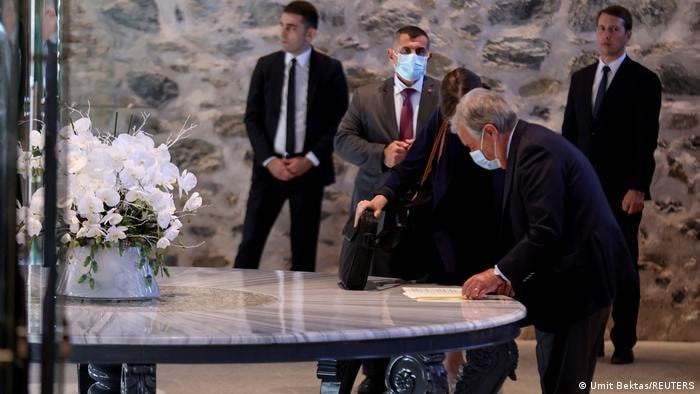 |
The United Nations played a crucial role in the months of negotiations. Photo: Reuters |
Diplomatic breakthrough
Ministers from both Russia and Ukraine signed an agreement brokered by the United Nations and Türkiye in Istanbul.
This breakthrough comes after months of negotiations and promises to lift the blockade of Black Sea ports to allow the safe passage of grains and oilseeds – Ukraine's most important exports.
To date, Russia has blocked sea access to those ports, meaning millions of tons of Ukrainian grain cannot be exported to many countries.
"Today, there is a lighthouse on the Black Sea. A lighthouse of hope - a lighthouse of possibility - a lighthouse of relief - in a world that needs it more than ever," Guterres said on Friday.
He added: “Promoting the welfare of humanity is the driving force behind these negotiations. The question is not what is good for one side or the other. The focus is on what matters most to the people of our world. And without a doubt – this is a deal for the world.”
Mr. Guterres said the agreement would bring relief and a sigh of relief to developing countries and help stabilize global food prices, "which were already at record levels even before the conflict – a real nightmare for developing countries."
The World Food Programme (WFP) estimates that 47 million people have fallen into severe food insecurity as a result of the Ukraine war, and Western officials have accused Russia of using food as a weapon.
This agreement will also allow Russian fertilizer products to access global markets without hindrance. Russia is a major producer of fertilizers, a commodity crucial for maximizing food production, and prices have risen sharply since the end of February.
Turkish President Recep Tayyip Erdogan said that "millions of people will be relieved of the risk of starvation" thanks to the agreement. "In the coming days, we will see ships begin to sail again and many countries will breathe a sigh of relief," Erdogan said.
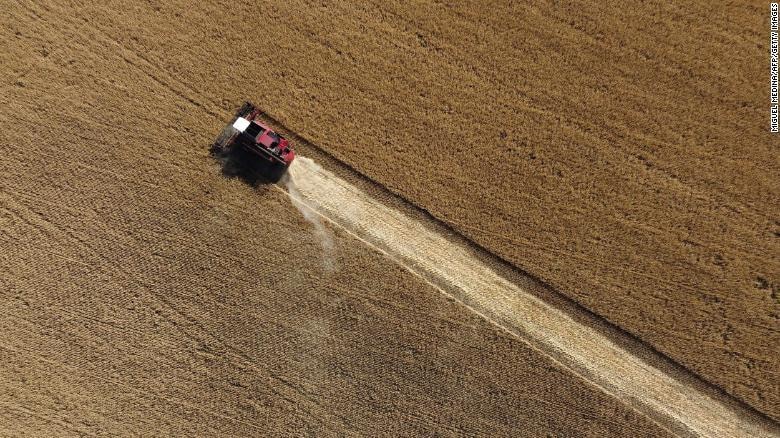 |
The World Food Programme (WFP) estimates that 47 million people are facing food insecurity due to the food crisis. Photo: Getty |
What effect does the agreement have?
According to the agreement signed on July 22, grain ships will pass through a safe corridor in the Black Sea under the guidance of Ukrainian pilots, and then through the Bosphorus Strait – a vital shipping lane in northwestern Türkiye – to access global markets.
The ships will be inspected by Russian, Ukrainian, and Turkish officials before arriving in Ukraine, to ensure that weapons are not being smuggled into Ukraine.
The vessels will also be monitored by the Joint Coordination Centre (JCC), which will be established in Istanbul and will include representatives from Ukraine, Russia, and Türkiye.
Both sides agreed that no attacks should be carried out against any vessels departing from those ports and leaving their territorial waters into the Black Sea.
Before the agreement was signed, the Ukrainian government warned Russia against any provocative actions. Mykhailo Podolyak, an advisor to the Ukrainian President's Chief of Staff, tweeted on Friday: "Russian ships are not allowed to escort shipments and Russian representatives are not allowed to be present in our ports."
The Black Sea will still not be cleared of mines; a lengthy and complex process that UN mine experts, as well as those from Türkiye and Ukraine, agree the plan is unlikely to succeed. Mines in the Black Sea have significantly hampered efforts to restart grain exports, while both Ukraine and Russia accuse the other of laying mines in the region.
The importance of grain exports
Ukraine and Russia are both important food suppliers to the world. Under normal circumstances, Ukraine – known as one of the world's breadbaskets – exports about three-quarters of its grain production. According to European Commission figures, around 90% of these exports are shipped by sea from Ukraine's Black Sea ports.
Therefore, the conflict and its impact on grain exports have far-reaching effects, particularly in the Southern Hemisphere, which is heavily dependent on these commodities. Last month, the United Nations warned that disruptions to Ukrainian agricultural production and the resulting surplus of unexported products due to the Russia-Ukraine war could push 49 million people into starvation or similar conditions. This year's harvest is underway in Ukraine, adding to the urgency of the negotiations.
The United Nations hopes that, under this agreement, 5 million tons of grain exports will leave ports each month, a figure equivalent to pre-war levels.
Ukrainian Infrastructure Minister Oleksandr Kubrakov described the agreement he signed at the ceremony in Istanbul as "a great boost to the Ukrainian economy."
The US and other Western nations praised the agreement on July 22, while affirming their focus on ensuring that "Russia is held accountable for implementing the agreement."


