
Indonesia faces a turning point: Timur Kapadze and the 4-3-3 pressing strategy.
Timur Kapadze has emerged as a leading candidate for the Indonesian national team, promising to bring a modern pressing style with a 4-3-3/4-2-3-1 formation, a departure from the three-centre-back system.
Images of Timur Kapadze meeting with Effendi Gazali have circulated, fueling rumors that the Uzbek strategist is the leading candidate for the Indonesian national team's head coach position. Kapadze has publicly stated his willingness to lead Indonesia. If the deal materializes, it could be a tactical turning point for the Skuad Garuda: high-intensity pressing, proactive play, and a tightly organized 4-3-3 formation.
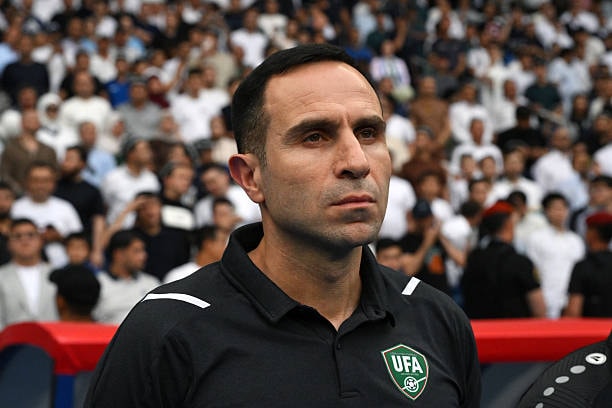
Kapadze and his compelling profile
Kapadze's reputation was built at a young age with a remarkable achievement: his role as the chief architect in Uzbekistan's historic qualification for the 2026 World Cup. This accomplishment demonstrates a coach with a modern mindset, prioritizing scientific coaching and effectiveness.
Another highlight of Kapadze is his ability to connect with the team and his tactical discipline, along with his good relationship with young players. This aligns well with Indonesia's strategy of rejuvenation and naturalization.
Modern pressing philosophy: intensity and proactiveness
Two key words in Kapadze's philosophy are intensity and proactiveness. His team typically applies pressure immediately after losing possession, seeking to regain control in the shortest possible time. When in possession, the play is organized from the back, requiring defenders to actively participate in the build-up.
Kapadze's high-pressing model not only aims to win the ball back, but also to define the receiving positions for quick transitions. The team's structure therefore always follows a clear role in each area, limiting the space behind the layers of pressure.
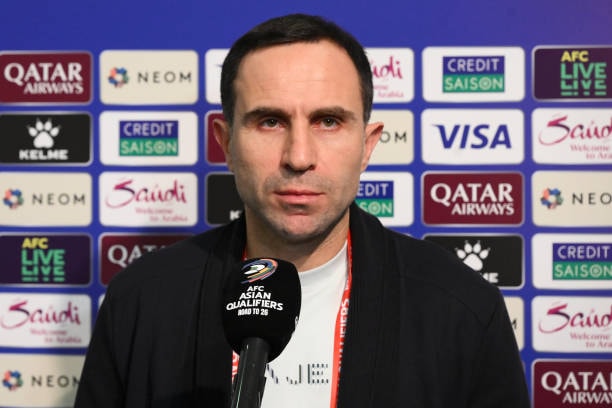
4-3-3/4-2-3-1: different from the three-centre-back formation.
Unlike Shin Tae-yong, who often prefers a three-centre-back formation, Kapadze tends to use a four-defender system, typically a 4-3-3 or 4-2-3-1. The goal: to optimize wing attacks, increase control of the midfield, and maintain better ball structure during transitions.
The combination of high-pressure pressing, quick transitions, and well-organized build-up play makes Kapadze's team unpredictable, as they can quickly change the tempo and attacking points depending on the opponent.
Indonesian personnel and key roles
If Kapadze takes over the team, he has the right pieces to operate the 4-3-3 formation:
- Defense: Jay Idzes and Rizky Ridho – center-backs with good ball-playing skills – provide the foundation for build-up play from the back; Kevin Diks and Calvin Verdonk on the flanks fulfill the roles of both attack and defense.
- Midfield: Thom Haye dictates the tempo, Joey Pelupessy provides power, and an attacking midfielder operates between the lines to create links and threaten space.
- Attack: Modern center forward Ole Romeny is the focal point for quick counter-attacks, supported by two speedy and skillful wingers, Ragnar Oratmangoen and Miliano Jonathans.
Suggested role diagram
| Area | Role | Suitable player |
|---|---|---|
| center back | Play with your feet, develop your ball skills. | Jay Idzes, Rizky Ridho |
| Full-back | All-around offensive and defensive capabilities | Kevin Dick, Calvin Verdonk |
| Axis midfielder | Regulation, power | Thom Haye, Joey Pelupessy |
| Attacking midfielder | Connecting lines, innovation | An attacking midfielder |
| Center | End point, build a wall | Ole Romeny |
| Wing forward | Horizontal stretching, breakthrough | Ragnar Oratmangoen, Miliano Jonathans |
Potential impact on Skuad Garuda
The selection of Kapadze is not just a change of coach, but a statement of ambition and direction. A more proactive Indonesia when not in possession, calmer in build-up play, and sharper in transitions is a realistic prospect if his philosophy is translated into tactical habits.
Although the final decision has not yet been made, expectations are rising for an Indonesian team with a distinctive style of aggressive pressing, structural control, and organized attack under Kapadze. The new path lies in their choice: continue with the familiar three-centre-back defensive block, or embrace the 4-3-3/4-2-3-1 formation that bears Kapadze's mark.


