
The iPhone 17 Pro Max is sealed for 250 years: A challenge to preserving both hardware and digital heritage.
Putting the iPhone 17 Pro Max into a time capsule and sending it to the year 2276 raises difficult questions about the lifespan of electronic components and the compatibility of modern technology standards in the distant future.
As part of the 250th anniversary of American Independence Day, an iPhone 17 Pro Max in Cosmic Orange was chosen to be placed in a time capsule. This was not only a symbolic act but also a real-world test of the durability of consumer technology devices over more than two centuries.
A symbol of the digital connected era.
The choice of the iPhone 17 Pro Max to be presented to future generations in the year 2276 reflects the powerful influence of smartphones on human life over the past two decades. This device represents the pinnacle of 21st-century technology for communication, work, and unlimited access to information.
Within this time-traveling box, the iPhone doesn't stand alone but is accompanied by numerous artifacts representing contemporary culture and life from across the United States. The goal is to create an authentic snapshot of present-day society for future generations to explore.
Physical barriers: Batteries and semiconductor components
Despite its significant importance, technical experts have raised many questions about the device's operational viability after being sealed for 250 years. According to an analysis from 9to5Mac, the component most at risk of degradation is the battery. Current lithium-ion battery cells have a finite chemical lifespan; even when not in use, self-discharge and electrolytic degradation still occur, potentially leading to battery swelling or chemical leaks that damage the circuit board.
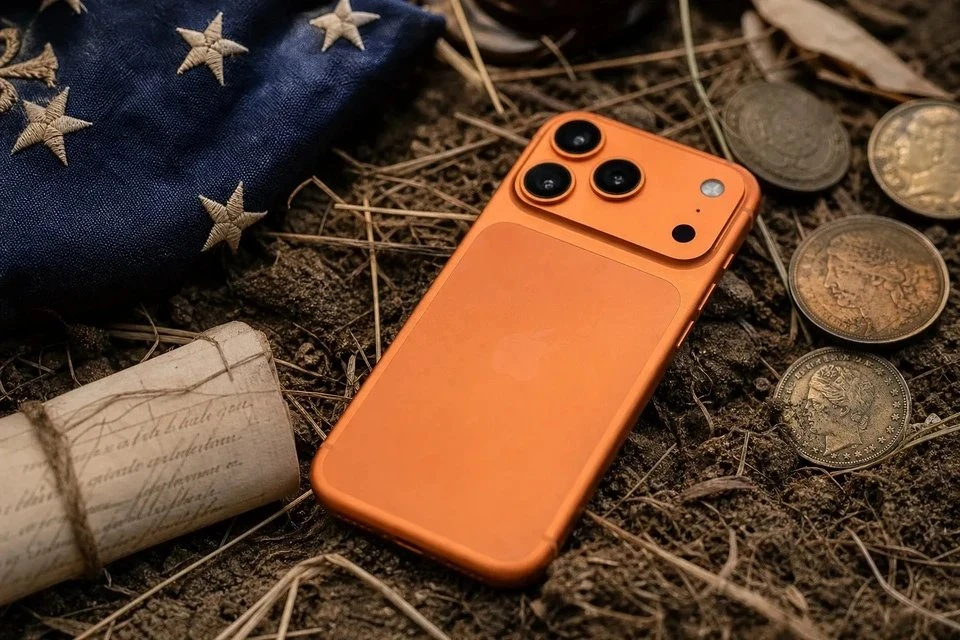
Besides batteries, components such as OLED displays, flash memory, and microscopic solder joints on processor chips also face oxidation and material aging. Preserving a complex electronic device in a static environment for 2.5 centuries is an unprecedented challenge for current industrial manufacturing standards.
The challenge of technological compatibility in 2276
Assuming the iPhone 17 Pro Max can still launch in 2276, the next issue is compatibility. Physical connectors like USB-C ports or current wireless charging protocols are likely to become obsolete or disappear entirely in the future.
Furthermore, the operating system and digital files on the device also face the risk of obsolescence. Future generations may need special emulators to read the content in the Notes app – which contains messages that people today want to send. Michael Burkhardt from 9to5Mac argues that, after 250 years, humans may have moved on to entirely new forms of interaction such as neural interfaces, making a handheld device with a screen incredibly unfamiliar.
Digital artifacts for the future
Despite the significant technical hurdles, placing an iPhone in a time capsule still holds considerable archaeological value. Even if the device is no longer functional, its hardware structure and the data stored within remain valuable physical evidence of humanity's scientific and technological capabilities in the 2020s.
The first iPhone, launched less than 20 years ago, changed the world. By sealing the iPhone 17 Pro Max, we are leaving a mark on how technology once shaped human connection before subsequent technological revolutions.


