
Iran is helping Venezuela create a military 'bubble' near the US.
Iranian-Venezuelan military cooperation does not make Caracas an existential threat to the U.S., but it does create a significant anti-access and surveillance zone in the Caribbean.
Military cooperation between Iran and Venezuela is creating a significant anti-access and surveillance zone right on the Caribbean coast, just a few hundred kilometers from the U.S. coast. While not enough to turn Venezuela into a direct threat to the survival of the U.S., these new capabilities could still inflict significant damage in the event of conflict.
Overview of Iran-Venezuela Cooperation
When discussing Iran's "axis of resistance," observers often think of forces and networks in Lebanon, Syria, Iraq, or Yemen. However, Tehran also has a strategic partner located in the Western Hemisphere: Venezuela, situated near the Caribbean Sea.
For about two decades, these two oil-dependent nations have tightened cooperation across industry, economics, and military spheres. According to Task & Purpose, this cooperation includes the transfer of fast attack craft, anti-ship missiles, drones, and even the presence of Hezbollah forces.
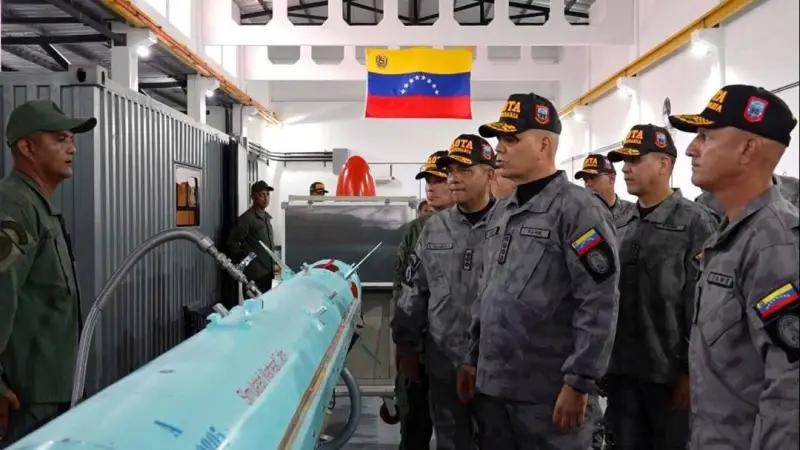
The culmination was a 20-year cooperation agreement signed in June 2022, encompassing oil and gas, industrial, and defense projects. With Iran, Venezuela became a logistical hub in the Western Hemisphere, helping to circumvent sanctions from Washington while expanding markets for oil and weapons.
Tehran also found a government willing to accept warships, aircraft, and military advisors. Conversely, Caracas received fuel, technical know-how in the field of petrochemical refining, and especially comprehensive industrial support, from car factories to drone manufacturing plants. This allowed Venezuela access to Iran's new military technology at a time when Russian equipment was becoming obsolete and difficult to replenish.
Venezuela has repeatedly and publicly emphasized its "strategic partnership" with Iran, while also showcasing domestically produced drones with designs very similar to prototypes from Tehran.
Fast attack craft and maritime defense "bubbles"
A notable aspect of Iran-Venezuela military cooperation is the deployment of Peykaap III fast attack craft, also known as Zolfaghar. These Iranian vessels, familiar in the Persian Gulf, are now deployed in Venezuelan waters.
The Peykaap III-class submarine is over 17 meters long, reaches speeds of up to 52 knots, and is equipped with two anti-ship missiles and two torpedoes. In the Persian Gulf, the Iranian Islamic Revolutionary Guard Corps (IRGC) uses them in a "swarm" tactic: mobilizing many small, highly maneuverable vessels to approach larger ships from multiple directions to launch missiles and use concentrated firepower.
In Venezuela, a similar combat strategy is being employed. What makes these ships particularly dangerous is the CM-90 anti-ship missile, an export variant of the Nasr missile developed by Iran.
The CM-90 has a range of approximately 90 km and a speed of over 1,200 km/h thanks to its active radar guidance system. While not a "game-changing" weapon, when combined with a mobile fast attack craft platform, it forms a flexible and unpredictable layer of coastal defense.
Under this arrangement, Venezuela could create an effective defensive and surveillance "bubble" along its coast, particularly around strategic naval bases such as Puerto Cabello. This would force all naval operations in the region to consider the risk of attack from small fleets of anti-ship missiles.
| System | Type | Key specifications | Operational role |
|---|---|---|---|
| Peykaap III / Zolfaghar | Fast attack craft | Length >17 m, speed 52 knots, 2 anti-ship missiles, 2 torpedoes | A "swarm" raid, approaching the large ship from multiple directions. |
| CM-90 | Anti-ship missile | Range approximately 90 km, speed >1,200 km/h, active radar guidance. | Close-to-medium range anti-ship warfare, coastal defense. |
UAV and cruise missile network
Beyond its naval capabilities, Iran's presence in Venezuela is clearly evident in the air through its drones and attack munitions. Having seen combat in Iraq, Syria, Israel, Yemen, and Ukraine, the appearance of Iranian-designed drones in Latin America is seen as the next step in this development.
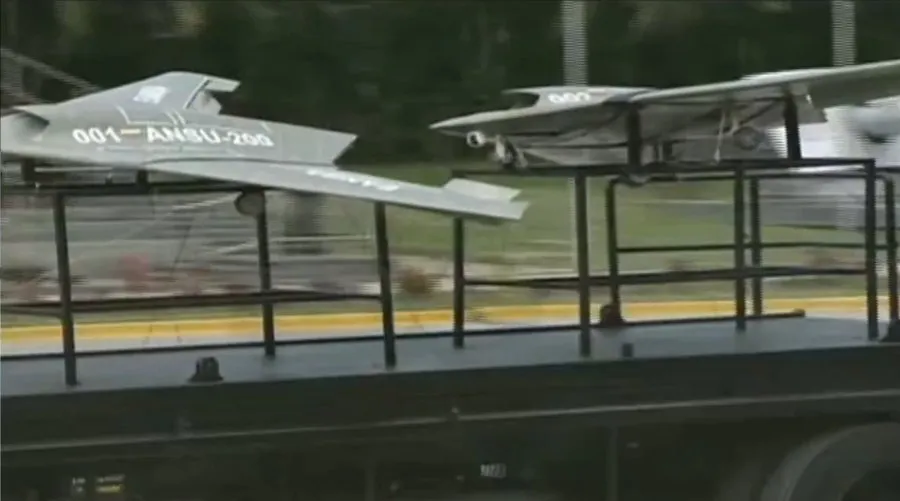
Venezuela's drone fleet currently combines older designs, domestically produced versions, and newly imported equipment. Since 2013, Venezuela has deployed the Arpía drone, which is essentially a licensed version of the Mohajer-2.
In 2022, Caracas introduced an upgraded version called Antonio José de Sucre (ANSU-100), claiming it was entirely domestically produced thanks to technology transfer from Iran.
Iran also supplied Venezuela with the more advanced Mohajer-6, a medium-range multi-purpose UAV capable of 12 hours of continuous operation and carrying Qaem-series precision-guided bombs. This enables Venezuela not only to conduct reconnaissance but also to carry out precision strikes using UAVs.
Regarding attack munitions, Venezuela has unveiled the Zamora V-1, a Shahed-style single-target attack drone. Although its range and specifications are more modest than the Shahed-136 previously seen in Ukraine, the Zamora V-1's design shows clear influence from Tehran.
Caracas also displayed the ANSU-200 bat-wing stealth drone, believed to be modeled after Iran's Shahed-171, which in turn is based on the American RQ-170 Sentinel seized in 2011. Overall, these systems suggest that Iran has provided Venezuela with sufficiently advanced technology to assemble or modify UAVs on-site.
This allows Venezuela to emulate the tactics used to attack infrastructure and ships that Iran's other partners are deploying in various conflict zones. In Iran's "export package," weapons are only one part; the rest consists of personnel, finances, and a proxy network to support the actual deployment.
Strategic significance for the US and the Caribbean region.
Overall, Iran-Venezuela cooperation does not elevate Caracas to the level of an equal rival that could directly threaten the survival of the United States. Venezuela's military structure and economic-military scale remain limited compared to the United States.
However, the combination of fast attack craft equipped with anti-ship missiles, a network of UAVs and cruise missiles, along with personnel support and a proxy network, has created a significant anti-access and surveillance zone right in the Caribbean.
This is not a second “Cuban Missile Crisis,” but a far more complex strategic environment for any U.S. military operations around Venezuela. In that environment, calculations regarding the use of force, if not handled carefully, could lead to mistakes or hasty decisions, triggering dangerous conflict scenarios at any time.


