
Iran asserts that it maintains a largely decentralized missile stockpile and defense production network.
Iran's Ministry of Defense claims that more than 70% of its missile stockpile remains undeployed, while operating a network of 9,000 domestic companies to maintain long-term combat capabilities.
Brigadier General Reza Talaei-Nik, spokesman for the Iranian Ministry of Defense, has just issued a statement asserting that the majority of the country's missile stockpile remains intact and has not been deployed in actual operations. This information was released amidst Tehran's efforts to boost its defense self-sufficiency with more than 1,000 types of domestically produced weapons systems.
Decentralized production strategy and self-reliance
According to Iranian officials, the current military capabilities are the result of continuous investment over more than 25 years. The core of Tehran's defense industry doctrine is a decentralized production model, distributing manufacturing facilities throughout the country.
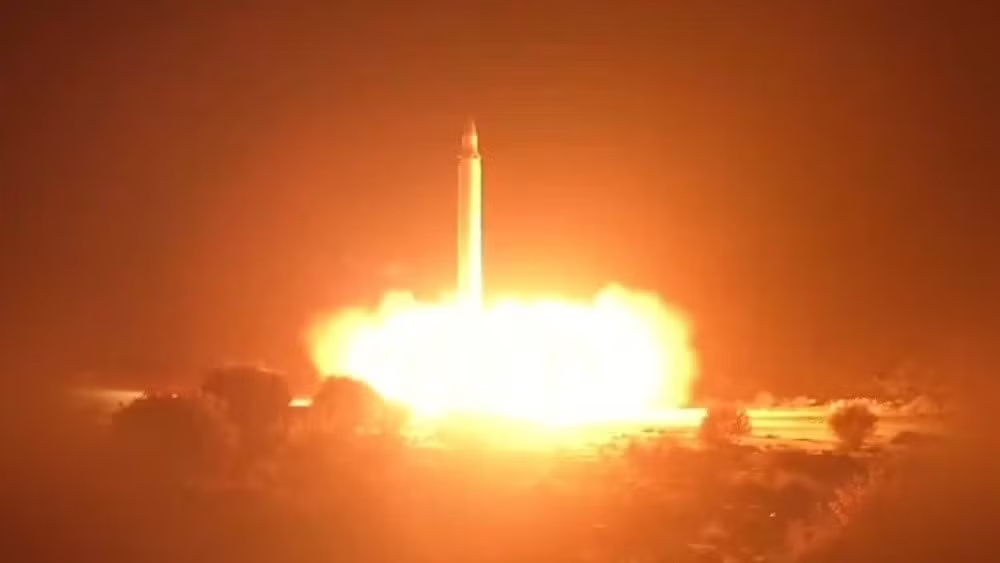
This model allows for the maintenance of supply chains and production even when some facilities are damaged, ensuring uninterrupted logistical support. Currently, around 9,000 companies are working closely with the Iranian Ministry of Defense to supply components and specialized technology, creating a vast industrial network that helps maintain readiness during prolonged periods of tension.
Western intelligence assessments of Iran's arsenal.
Western intelligence reports also present similar figures regarding Tehran's ability to maintain military strength. Despite the attacks, Iran is assessed to still control the majority of strategic resources:
- Missile:Approximately 70% of missile depots and 60% of launch infrastructure remain operational.
- UAV:Approximately 40% of the drones remain operational, although this segment has suffered the most significant losses.
- Recover:Tehran has brought more than 100 missile launchers from underground storage facilities back to combat-ready status since the beginning of April.
Position in key maritime areas
Besides its missile capabilities, Iranian officials emphasize its tight control over the Strait of Hormuz and the Gulf of Oman. This strait is currently used as a strategic lever to counter economic sanctions. The country's navy and air defense forces claim to maintain an overwhelming presence, capable of repelling enemy forces in the surrounding waters to protect national security interests.


