
Iran restores its underwater missile network despite US airstrikes.
Satellite imagery shows Tehran has reopened 50 of the 69 tunnel entrances that were attacked, exposing the challenges in neutralizing strategic missile forces.
According to satellite imagery analysis and military experts, Iran is urgently restoring its network of underground missile bases following prolonged airstrikes by the US and Israel. This move reveals significant limitations in its strategy of destroying tunnel entrances to isolate Tehran's offensive capabilities.
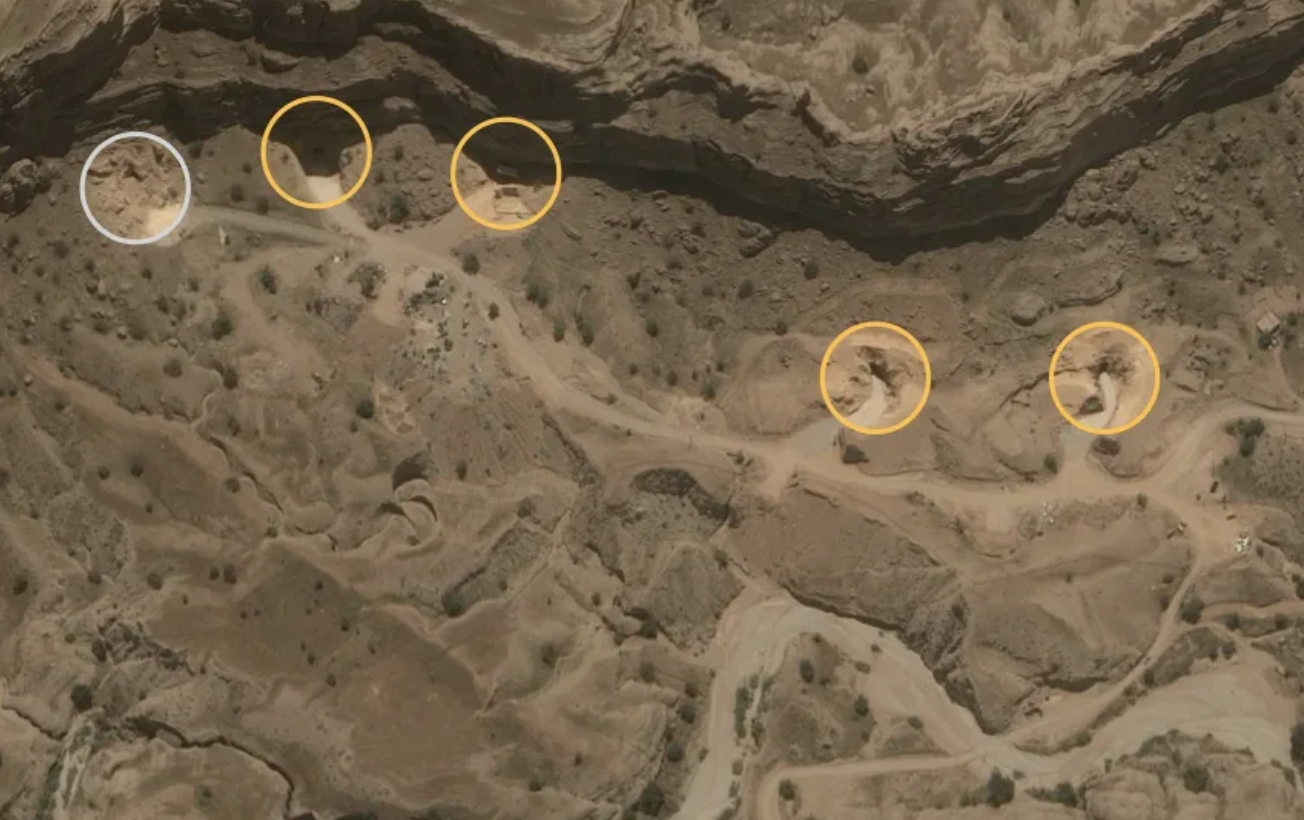
Iran's tunnel attack strategy and recovery capabilities.
Throughout the conflict, the U.S. and Israel focused on crippling Iran's missile forces by attacking tunnel entrances and access routes. Because much of Iran's strategic infrastructure is built deep inside mountains, direct destruction with conventional weapons is extremely difficult. Therefore, the opposing side chose the option of blockade to isolate the launch sites inside.
However, the latest satellite data shows that Iran used basic construction equipment such as bulldozers, excavators, and trucks to quickly clear the rubble and fill bomb craters. Focusing solely on collapsing the tunnel entrances does not seem sufficient to permanently neutralize Tehran's missile forces.
Sam Lair, a research fellow at the James Martin Center for Nonproliferation Studies, believes that Iran still maintains the ability to deploy its existing missile arsenal if it has enough launchers and operating personnel. Even if the production chain is disrupted, Tehran can still conduct launches over an extended period thanks to its massive stockpile of missiles.
Scale of infrastructure restoration at the base locations
Since the ceasefire came into effect, repair work has accelerated significantly. Satellite field analysis shows that approximately 50 of the 69 tunnel entrances attacked at 18 underground missile sites across Iran have been reopened. In addition, access routes for launch vehicles have been reconstructed, with many sections at key bases even being repaved.
Specifically, at a base near Isfahan, which had previously suffered heavy shelling, at least 18 large bomb craters surrounding the main entrances have been filled. At the facility near Khomeyn, at least 10 construction vehicles were observed working together to clear a crucial tunnel entrance in mid-April.
Current parameters and deterrence capabilities
| Rating category | Status/Data |
|---|---|
| Number of tunnel entrances restored | 50 / 69 |
| Number of submarine missile sites reported to be active. | 18 facilities |
| Estimated remaining missile cache in the bunker | Approximately 1,000 missiles |
| Time required to prepare the underground network. | Over 20 years |
Challenges to U.S. military strategy
Although the air campaign yielded short-term tactical results by reducing the intensity of missile launches, Iran's rapid recovery raises questions about its long-term strategic effectiveness. Timur Kadyshev, an expert from the University of Hamburg, points out a paradox: the attacking side had to use extremely expensive, high-tech weapons, while the defending side only needed simple construction machinery to mitigate the consequences.
Notably, the latest US intelligence assessments indicate that Iran's recovery is progressing faster than anticipated. Beyond its underground bases, Tehran is also gradually restarting its drone production lines and replacing lost launchers. This suggests that Iran's highly redundant defense network has proven effective in maintaining its core strength against large-scale military pressure.


