
Iran deployed Sejjil ballistic missiles for the first time, striking targets in Israel.
During Operation True Promise 4, Iran's Islamic Revolutionary Guard Corps (IRGC) used the Sejjil solid-fuel strategic missile for the first time to strike Israeli military targets.
Iran's Islamic Revolutionary Guard Corps (IRGC) launched a large-scale attack on March 15, marking the first time the Sejjil strategic ballistic missile has been deployed in combat. This was the 54th wave of attacks under Operation True Promise 4 since the conflict erupted in late February.
Operation True Promise 4 and heavy weaponry.
According to information from the IRGC's public relations office, the latest attack targeted centers that manage and decide on Israel's air military operations. In addition, critical defense industry infrastructure and military concentrations were also targeted in this attack.
In this attack, the IRGC deployed a range of strategic weapons including the Khorramshahr super-heavy missile carrying a warhead weighing approximately 2 tons, along with the Khaybar-shekan, Qadr, and Emad missile series.
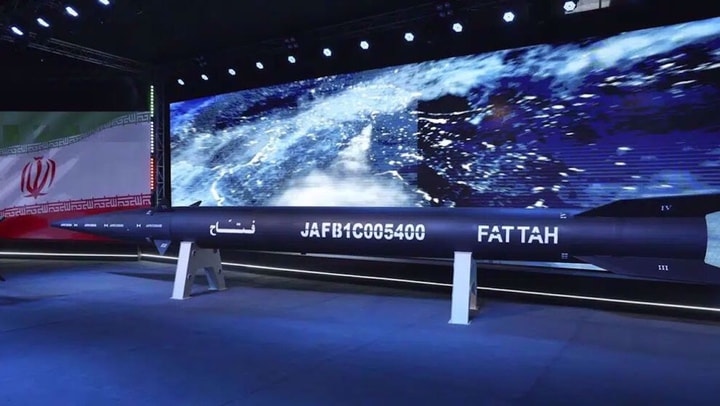
The technical prowess of the Sejjil ballistic missile.
The Sejjil (or Ashura) missile is a domestically developed intermediate-range ballistic missile (MRBM) that plays a key role in the country's strategic deterrence capabilities. Below are some notable technical specifications and operational characteristics:
- Engine and fuel:Sejjil uses a two-stage solid fuel system. The significant advantage of solid fuel over liquid fuel is that it allows for rapid deployment and firing because there is no time wasted on refueling before firing.
- Range:Approximately 2,000 km, enough to cover the entire territory of Israel and US military bases in the Middle East.
- Dimensions and weight:The missile is approximately 18 meters long and has a launch weight of 23,000 kg.
- Air defense penetration capability:The Sejjil carries a warhead weighing approximately 700 kg. Upon re-entry into the atmosphere, the warhead can reach a maximum speed of up to Mach 13, posing a significant challenge to modern missile defense systems.
Impact on the regional military landscape
Iran's first-ever use of the Sejjil in combat is seen by military analysts as a significant escalation. This indicates Tehran's readiness to deploy its most powerful long-range weapons in its arsenal in response to enemy actions.
The high combat readiness of solid-fuel missiles like the Sejjil allows Iran to shorten response times while increasing pressure on Israel's multi-layered air defense system. The appearance of this weapon could alter the tactical calculations of all parties involved in the context of persistently high regional tensions.


