
Iran has deployed the Hadid-110 suicide drone in combat for the first time.
Iran's new Hadid-110 (Dalahu) UAV system boasts a cruising speed of 510 km/h, three times faster than the Shahed-136, giving it the ability to penetrate modern air defense networks.
Iran's Islamic Revolutionary Guard Corps (IRGC) has just marked a new milestone in its unmanned combat capabilities with the first-ever deployment of the Hadid-110 (also known as Dalahu) suicide drone. This represents a significant technological upgrade, switching from traditional piston engines to jet engines, aiming to optimize its ability to deliver devastating attacks and penetrate sophisticated defense systems.
Technical specifications and outstanding advantages of Hadid-110
According to a report from Army Recognition, the Hadid-110 was designed to complement the already popular Shahed-136. The biggest difference lies in the propulsion system. While the Shahed-136 uses an MD-550 piston engine achieving a speed of approximately 185 km/h, the Hadid-110 is equipped with a smaller turbojet engine, allowing it to maintain a cruising speed of up to 510 km/h. This speed is nearly three times faster than the previous generation, significantly reducing the reaction time of enemy air defense systems.
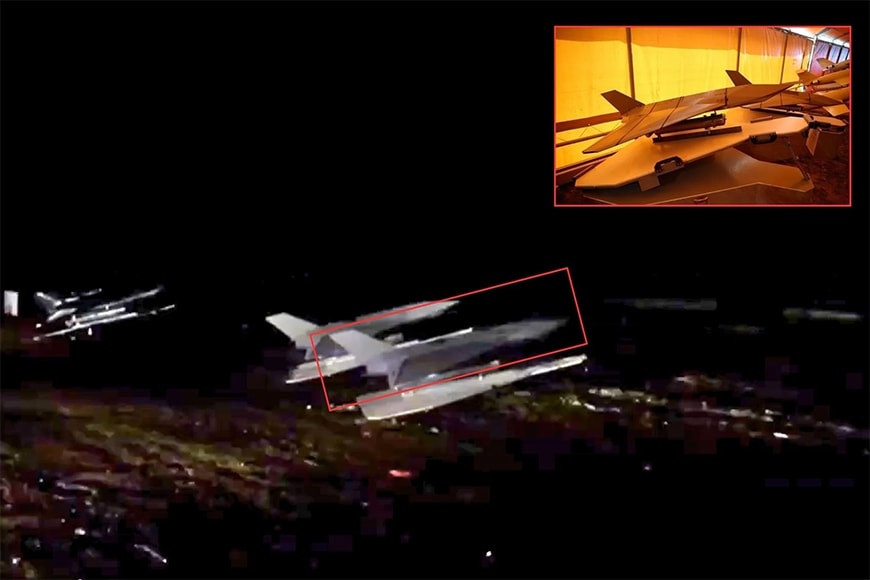
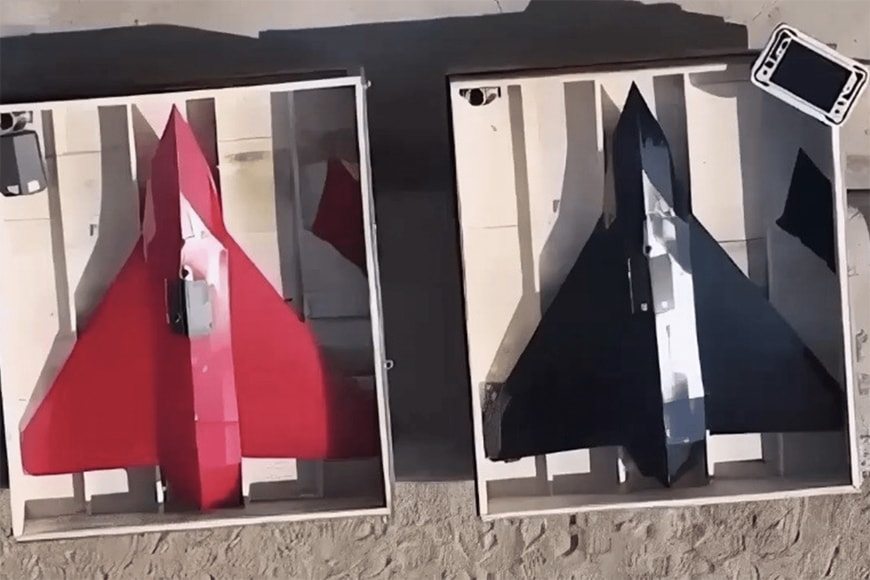
In terms of aerodynamic design, the Hadid-110 uses a delta wing configuration with angular surfaces. This structure not only optimizes thrust for the jet engine but also contributes to reducing the radar cross-section (RCS). The system is deployed using a booster rocket to leave the launch platform and reach the necessary velocity before the main jet engine activates to maintain flight.
Combat capabilities and coordinated attack tactics
Technical data indicates that the Hadid-110 has a range of approximately 350km with a continuous flight time of nearly 1 hour. This UAV is capable of operating at a maximum altitude of 9,115m and carrying an explosive warhead weighing approximately 30kg. The appearance of the Hadid-110 allows Iran to implement more complex multi-layered attack tactics.
Military analysts believe that in a saturation attack, IRGC units could launch large numbers of Shahed-136 missiles at low cost to attract radar attention and deplete enemy interceptor missiles. Immediately afterward, high-speed Hadid-110s would exploit gaps in the air defense network to seize high-value targets such as command centers, surveillance radars, or strategic logistics depots.
Context of practical deployment
This system is believed to have been deployed in Operation True Promise IV, a retaliatory strike targeting military facilities following escalating tensions with the US and Israel in late February. The US referred to the military operations as Operation Fierce Fury, while Israel called it Operation Lion's Roar.
The Hadid-110's switch to jet engines reveals a new trend in kamikaze UAV technology: positioned between the inexpensive propeller-driven UAV segment and the expensive cruise missiles. This type of weapon offers higher attack performance than conventional UAVs while maintaining significantly lower production costs than traditional cruise missiles, creating constant pressure on Middle Eastern defense systems.


