
Iran deploys Ghadir mini-submarine fleet to control the Strait of Hormuz.
The Iranian navy operates at least 16 Ghadir-class submarines equipped with cruise missiles in the Strait of Hormuz, taking advantage of their shallow-water design to enhance their deterrence capabilities.
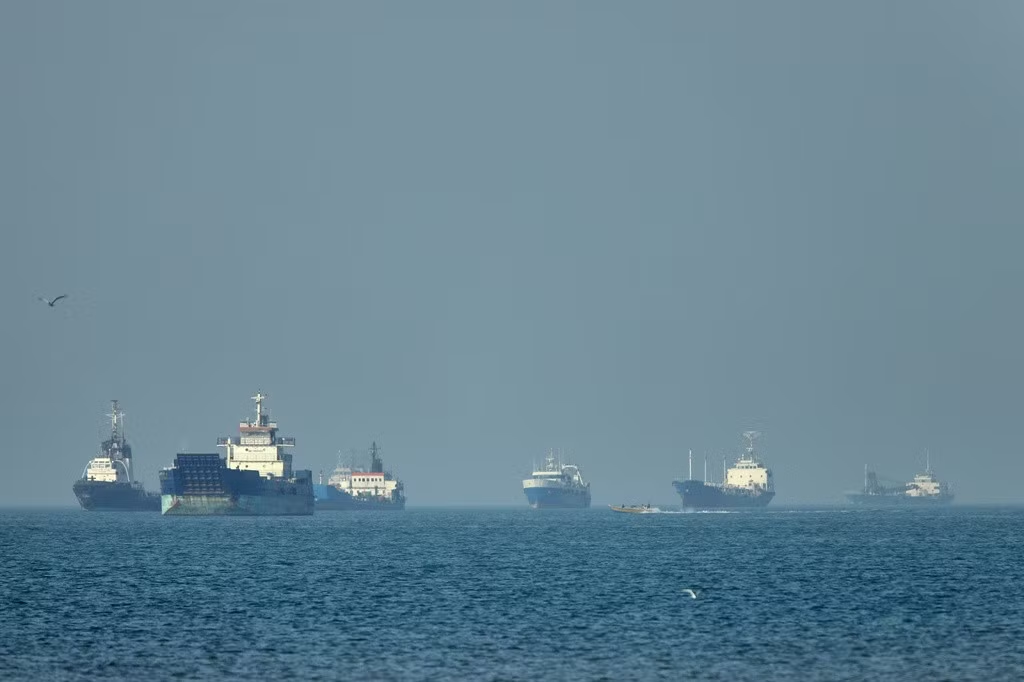
Iran has officially deployed its Ghadir-class mini-submarines to bolster its control over the Strait of Hormuz. This move comes amid heightened regional tensions after the US considered resuming plans to use military escorts to protect commercial vessels transiting this vital waterway.
Technical specifications and combat capabilities of the Ghadir-class
According to data from the International Institute for Strategic Studies (IISS), Iran currently possesses at least 16 Ghadir-class submarines. These are mini-submarines with a displacement of approximately 115 tons, developed by Tehran based on a North Korean design and production began in 2005. Due to their compact size, these submarines require a crew of fewer than 10 to operate.
In terms of firepower, each Ghadir submarine is capable of carrying a maximum of two torpedoes or two Chinese-designed C-704 anti-ship cruise missiles. Despite its modest size compared to the Kilo-class (2,000 tons) or Los Angeles-class submarines of the US (over 6,000 tons), the Ghadir is considered well-suited to the geographical characteristics of the Gulf region.
Advantages in shallow water and technical limitations
The Strait of Hormuz and the Persian Gulf are characterized by relatively shallow terrain, with a maximum depth of only about 100 meters. According to the Tasnim news agency, the Ghadir submarine was specifically designed to operate in these shallow waterways, where large nuclear submarines have difficulty hiding because sonar waves easily detect unusual objects.
However, this system still has certain weaknesses:
- Noise:Military sources believe the Ghadir submarine emits significantly more noise than modern submarines, reducing its stealth capabilities.
- Maintenance:The fleet frequently experiences technical and system maintenance issues.
- Scope of operation:Due to their small size, the submarines cannot dive deep or undertake long-range expeditionary missions, primarily serving coastal defense purposes.
Swarm tactics
Military experts believe Iran may not use mini-submarines for direct confrontations. Instead, the greatest risk lies in the deployment of mines or coordinated swarm attacks. Emma Salisbury, a researcher from the Foreign Policy Research Institute, suggests that Iran is capable of coordinating Ghadir submarines with high-speed attack boats and unmanned aerial vehicles (UAVs) to create large-scale attacks against enemy warships.
Currently, although the actual capabilities of this submarine fleet are still debated, commercial shipping through the Strait of Hormuz remains stalled due to the persistent security risks in the region.


