
Iran deploys new generation drones based on Russian technology to challenge the US military.
FPV and fiber optic drone technology from the Ukrainian battlefield is spreading to the Middle East, putting significant pressure on US defense systems in Iraq and the Gulf region.
Videos released this week by pro-Iranian Iraqi militias show that unmanned aerial vehicles (UAVs) are reshaping the way warfare is conducted in the Middle East. At Camp Victoria in Baghdad, fiber optic-controlled drones penetrated defenses, directly attacking a Black Hawk helicopter and a U.S. air defense radar system.
New UAV warfare methods in the Middle East
The emergence of first-person view (FPV) drones marks a shift in the regional conflict environment. Instead of facing traditional infantry weapons or improvised explosive devices, US soldiers now have to contend with inexpensive, maneuverable, and highly accurate UAVs. Martin Sampson, an expert at the International Institute for Strategic Studies, believes that FPV drones will become the primary method of warfare for both sides in the near future.
Notably, the U.S. military's current anti-UAV systems are primarily based on electronic jamming devices. However, the widespread deployment of these systems on armored vehicles and landing ships has not yet reached the standards seen in the Ukraine conflict. This is seen as a technical loophole that Iran is focusing on exploiting to pressure U.S. forces in Iraq and warships in the Persian Gulf.
The rise of fiber optic and naval drone technology.
Besides airborne drones, naval UAV technology is also changing the maritime landscape. In Ukraine, unmanned maritime vehicles inflicted significant damage on Russia's Black Sea Fleet. While Iran's guidance technology is not yet as sophisticated, in the narrow confines of the Strait of Hormuz, these devices still pose a significant threat to warships and oil tankers.
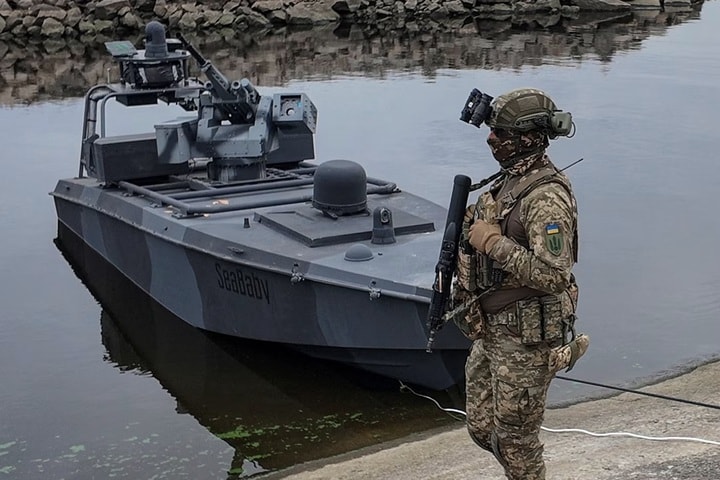
The most significant breakthrough is the use of fiber optic-controlled drones, a technique that Russia has been effectively deploying since 2024. These vehicles are virtually immune to conventional electronic warfare measures because signals are transmitted directly through wires. Former Ukrainian Defense Minister Andriy Zagorodnyuk stated that Iran is rapidly absorbing field lessons and technology from Russia to upgrade its arsenal.
The adaptability of the US military.
Currently, the U.S. military's ability to adapt to the rapid changes in UAV technology remains a subject of debate. While Iran is actively learning from battlefield experience, the U.S. is only in the early stages of training and testing specialized FPV drone units.
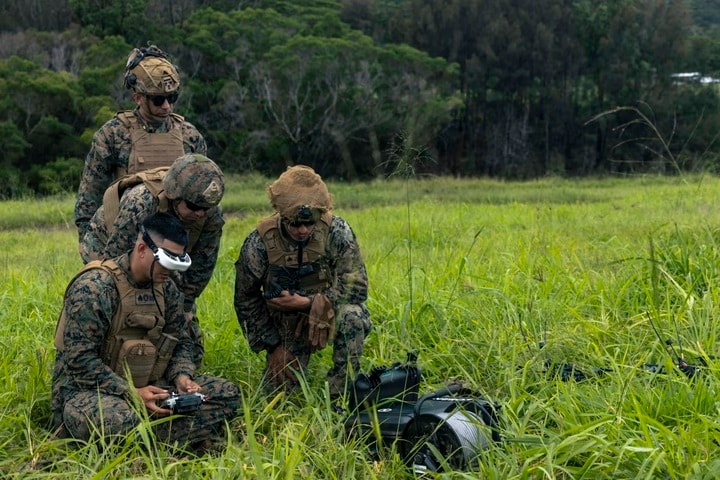
Despite numerous airstrikes by the US and Israel against Iran since late February, missile and drone attacks continue, threatening freedom of navigation in the Strait of Hormuz – a shipping lane that carries approximately 20% of the world's oil. In the Ukrainian battlefield, FPV drones are now responsible for the majority of casualties and create dangerous zones stretching for tens of kilometers along the front lines.

Military experts believe that the most effective solution to counter this threat is not just technical interception, but early detection and neutralization of the operating crews. Former Ukrainian Foreign Minister Pavlo Klimkin warned that no military, including that of the US or Europe, is adequately prepared for this high-tech warfare challenge, both in terms of mindset and practical experience.


