
Iran exports its first crude oil shipment in two months.
Iran successfully exported its first shipment of crude oil in two months, marking a significant step forward after the US and Iran reached a framework agreement to end fighting and lift the naval blockade.
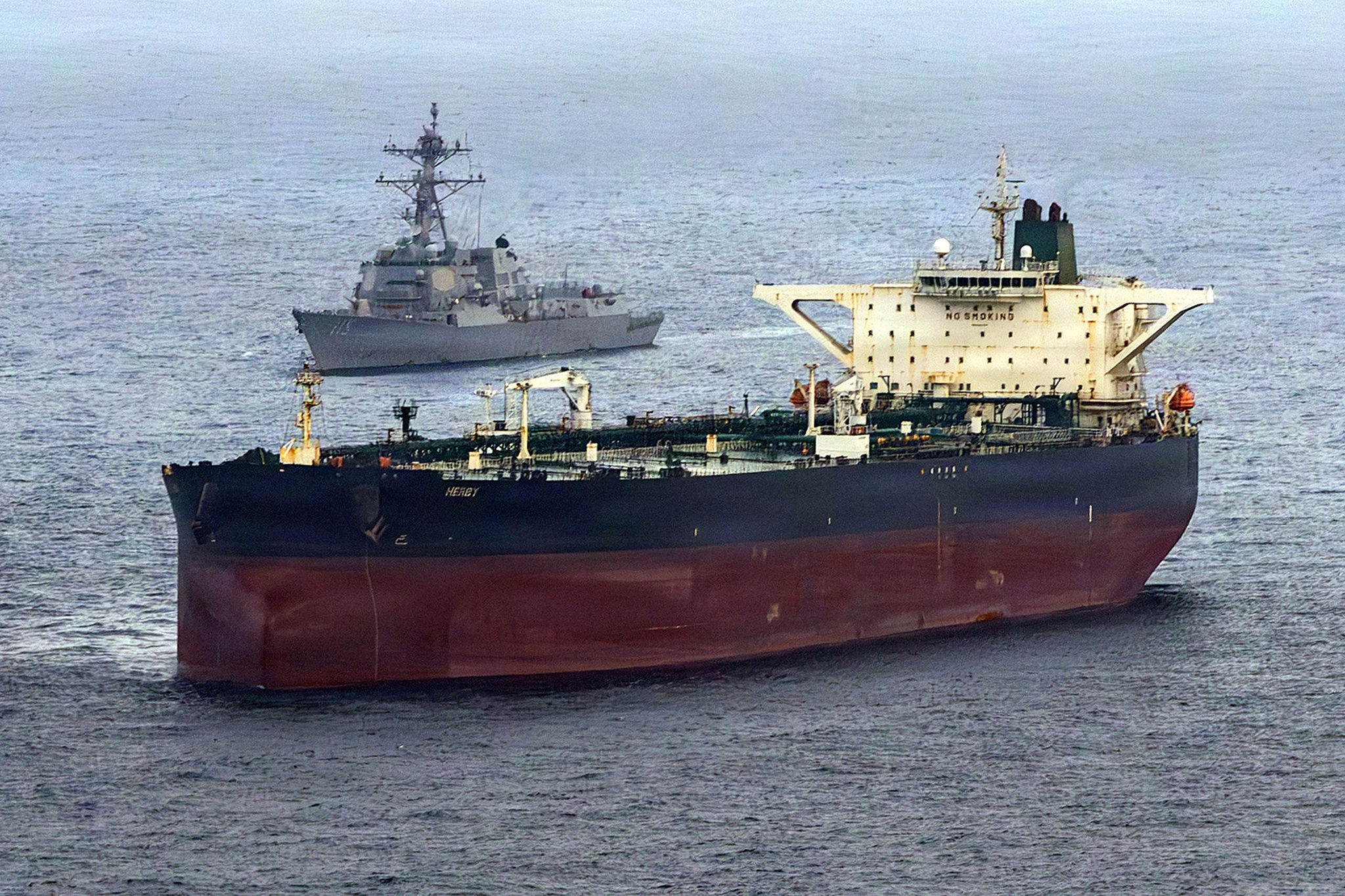
TankerTrackers, a website that tracks oil shipments and storage, reported that the first Iranian oil tankers have left the area blockaded by the US Navy in the Persian Gulf, just two days before Washington and Tehran begin talks aimed at reaching a peace agreement.
"At least two supertankers belonging to the National Iranian Oil Company (NITC), named DIONA (9569695) and HERO2 (9362073), have left the US Navy's blockade zone, carrying a total of 3.8 million barrels of Iranian crude oil," TankerTrackers reported on the X platform.
The website later added that a third NITC tanker had "left the blockade line with 1 million barrels of Iranian crude oil." TankerTrackers suggested this was Iran's first crude oil export in two months, based on digital tracking data validated by satellite imagery.
Negotiateand obstacles existing
According to a senior US official, the framework agreement between the US and Iran was electronically signed by US President Donald Trump, Vice President JD Vance, Speaker of the Parliament and senior negotiator Mohammad Bagher Ghalibaf, and Iranian Deputy Foreign Minister Majid Takht-Ravanchi. Negotiations on the final agreement are scheduled to begin immediately after the signing ceremony on June 19th in Switzerland and continue for 60 days, focusing on the future of Iran's nuclear program and plans to lift international sanctions.
Expectations of the reopening of the Strait of Hormuz caused Brent crude oil prices to fall to $78.74 per barrel in trading on June 17. US WTI crude also fell to $75.85 per barrel.
However, optimism about the agreement is being shaken by new developments as the Israeli military announced airstrikes in southern Lebanon after detecting “a suspicious vehicle” near Israeli forces’ operating area, intercepting rockets and attacking a launch pad. The Lebanese state news agency reported that the airstrikes targeting two vehicles in the town of Mayfadoun and another near Shukeen resulted in four deaths.
Immediately after the attack, the Iranian military warned Israel that it would face a strong response from “the powerful armed forces of the Islamic Republic.” Iran’s Khatam al-Anbiya Central Command also accused Israel of violating the ceasefire in Lebanon “84 times” since the peace agreement was announced. Experts believe that tensions in Lebanon – where Iranian-backed Hezbollah is clashing with Israel – could become the biggest destabilizing factor for the peace process.
Meanwhile, Iran remains cautious about the possibility of reaching a long-term agreement, emphasizing that historically, many commitments to the West have been broken and that it still remembers agreements that were not implemented.


