
Israel faces the risk of a shortage of interceptor missiles.
Experts warn that the air defense system could be "stretched" if Iran responds to a planned Israeli retaliatory attack or if Hezbollah launches a full-scale offensive.
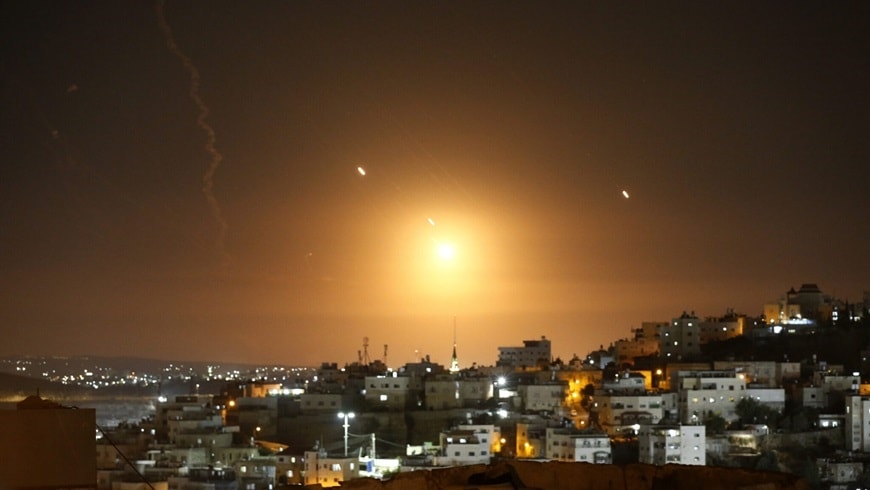
According to a British source on October 15, Israel is facing a potential shortage of interceptor missiles in its air defense system amid its year-long war with Gaza and Lebanon, and as it prepares for a possible escalation of conflict with Iran.
Citing experts and former military officials, the Financial Times reported that Washington is supporting the Israeli state in addressing this issue, particularly through its promise to send the Terminal High Altitude Area Defense (THAAD) system, but Jerusalem may increasingly find itself having to decide which targets it wants to prioritize protecting.
"Israel's ammunition problems are serious," said Dana Stroul, a former U.S. defense official. "If Iran retaliates against an Israeli attack, and Hezbollah gets involved, then Israel's air defenses will be stretched to the limit."
She added that supplies are not unlimited and Washington cannot maintain a continuous supply to both Ukraine and Israel at the same rate.
Boaz Levy, CEO of Israel Aerospace Industries, the company that manufactures interceptor missiles, added: "Some of our production lines are operating 24 hours a day, 7 days a week. Our goal is to meet all of our commitments."
Israel's multi-layered system includes the Iron Dome, used to shoot down short-range missiles; David's Sling, used to intercept medium-range missiles; and the Arrow system, designed to intercept long-range ballistic missiles.
According to Israeli military figures, since Hamas launched the ongoing conflict with an attack on October 7 last year, more than 20,000 rockets and ballistic missiles have been fired into Israel from Gaza and Lebanon. The source added that the country's air defense systems have successfully shot down the majority of missiles aimed at densely populated areas.
With the help of the U.S. and regional allies, Israel thwarted two missile attacks from Iran – one in April and a more intense attack in October when the Islamic Republic fired 180 ballistic missiles at the country.
Israel has vowed to retaliate for the October attack at a time and in a manner of its choosing. This could trigger a stronger response from Tehran and its proxy forces.
According to former IDF General Assaf Orion, Israel has not been fully tested as Hezbollah in Lebanon, backed by Iran, has not yet fully realized its capabilities.
"They've only fired about one-tenth of their pre-war estimated launch capacity, a few hundred missiles a day instead of the estimated 2,000," Orion told the Financial Times. "This is partly due to Hezbollah's choice not to launch a full-scale attack, and partly due to the IDF's weakening... But Hezbollah still has enough strength to launch a powerful operation."
Hezbollah, the force that began daily attacks on Israel following Hamas's offensive a year ago, has experienced a series of devastating security incidents in recent weeks, including the explosion of thousands of fighters' communications devices in an attack allegedly carried out by Israel, and Israeli airstrikes that killed the group's leadership.
Earlier this month, Israel launched a ground offensive in southern Lebanon to push Hezbollah away from the border, destroy their weapons depots and infrastructure, and eliminate the threat of a move similar to the offensive Hamas carried out last year from Gaza.


