
Israel and the US mend relations for their own purposes.
(Baonghean) - More than a year after the US and Israel clashed over the Iranian nuclear issue, and more than four months without any telephone conversations, Israeli Prime Minister Benjamin Netanyahu recently held an important meeting and talks with President Barack Obama as part of a visit to warm relations with the US. Naturally, this was accompanied by benefits that both sides were pursuing.
After more than a year of estrangement, with Israeli Prime Minister Benjamin Netanyahu's visit to the US, it seems neither the US nor Israel wants their close alliance to deteriorate further.
Unlike his attitude in March when he accepted the Republican invitation to speak before the US Congress to oppose the historic nuclear deal with Iran, Prime Minister Netanyahu was much more moderate this time when discussing Tehran's nuclear program.
He also affirmed that he would not abandon efforts to bring peace to the Palestinians and supported a two-state solution, establishing an independent, demilitarized Palestinian state and recognizing the existence of the Jewish state. On the US side, President Obama acknowledged that despite many disagreements, Israel's security remains a top priority in US foreign policy.
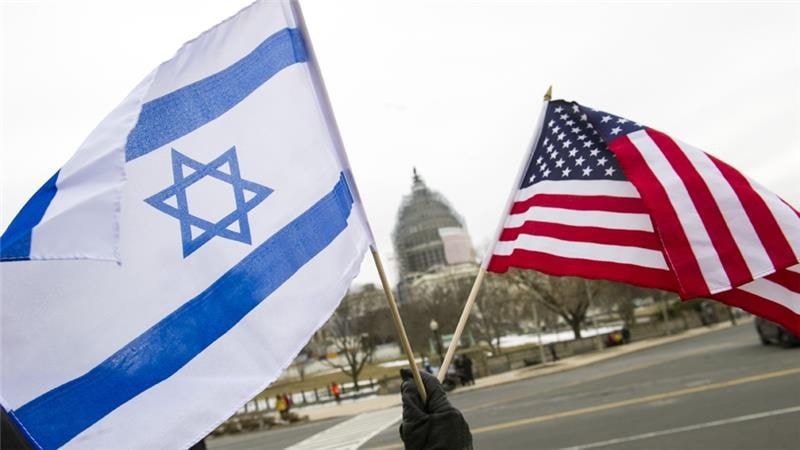 |
| Pro-Israel protesters wave flags in front of Capitol Hill in Washington in March 2015, as Prime Minister Benjamin Netanyahu addresses the U.S. Congress. (Source: AP) |
In fact, looking at the current context of the Middle East, it's not difficult to see the objectives of the Israeli Prime Minister in this visit to the United States. An Iran whose position has changed significantly, a Syria that is in turmoil with Russia's support for President al-Assad's regime, and a host of other threats to Israel's security are causing Prime Minister Netanyahu considerable headaches.
Therefore, this visit is an important step towards the US providing a new military aid package to Israel. Israel expects to receive $5 billion annually for 10 years from the US, instead of the current $3 billion. In addition, Israel wants the US to provide more advanced F-35 fighter jets, high-precision military equipment, and V-22 Osprey multirole aircraft.
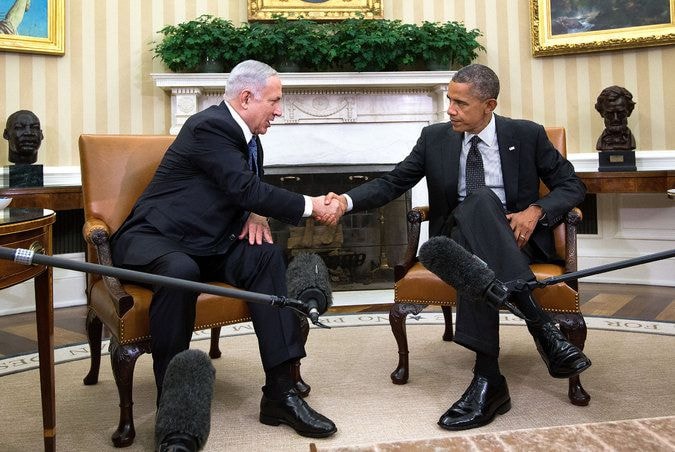 |
| Israeli Prime Minister Benjamin Netanyahu and U.S. President Barack Obama last met at the White House in October 2014. (Source: The New York Times) |
For Russia, Israel is a convenient gateway for Moscow to enter the Middle East, alongside its strategy of supporting the Syrian government. As for the US, of course, the position of the closest ally in the Middle East cannot yet be given to another nation. And certainly, the administration of President Barack Obama does not want its ally Israel to fall into the arms of Russia, especially given Russia's increasing position and influence in the Middle East.
All these factors will likely force the US to make more concessions to Israel during this time. Furthermore, through this visit and the agreements with Israel, President Obama personally wants to refute Republican accusations that he, or any Democratic politician who succeeds him, will reduce support for Israel and US influence in the Middle East.
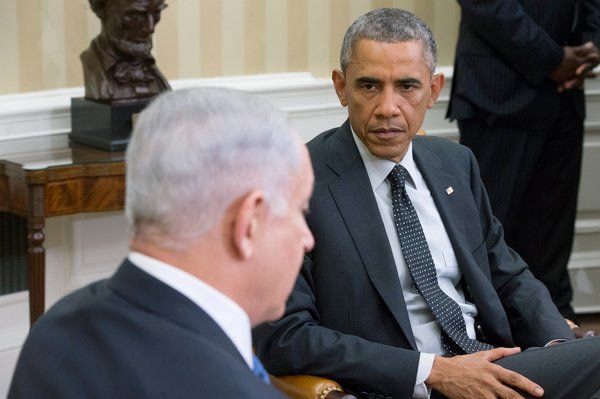 |
Prime Minister Netanyahu arrived at the White House on Monday for his first visit since meeting with President Obama last October. (Source: The New York Times). |
While not a truly significant breakthrough, the Israeli Prime Minister's visit to the US sent many messages and achieved quite a few goals for both sides. However, whether the nature of the US-Israel alliance has improved is another matter entirely.
Analysts argue that the US-Israel relationship is actually built on self-interest rather than a common goal. Therefore, whether it's cold or warm, the "range" of fluctuation in this long-standing relationship is extremely sensitive to new developments in the region that affect the interests of both sides.
Phuong Hoa
| RELATED NEWS |
|---|


