
Israel is about to hand over the Iron Beam defensive laser to the IDF.
Or Eitan (Iron Beam) has completed development and testing and is expected to be delivered to the IDF on December 30th; it is a 100 kW laser with a range of approximately 10 km, costing $5–10 per interception, and is deployed as a support system for Iron Dome.
The Or Eitan (Iron Beam) laser defense system has completed its development and testing and is expected to be delivered to the Israel Defense Forces (IDF) on December 30th. According to the Israeli Ministry of Defense, Iron Beam is a 100-kilowatt laser system with a range of approximately 10 km, optimizing interception costs to $5–10 per interception, compared to around $30,000 for an Iron Dome interception. Due to its technological characteristics, Iron Beam will be deployed in parallel to complement Iron Dome.
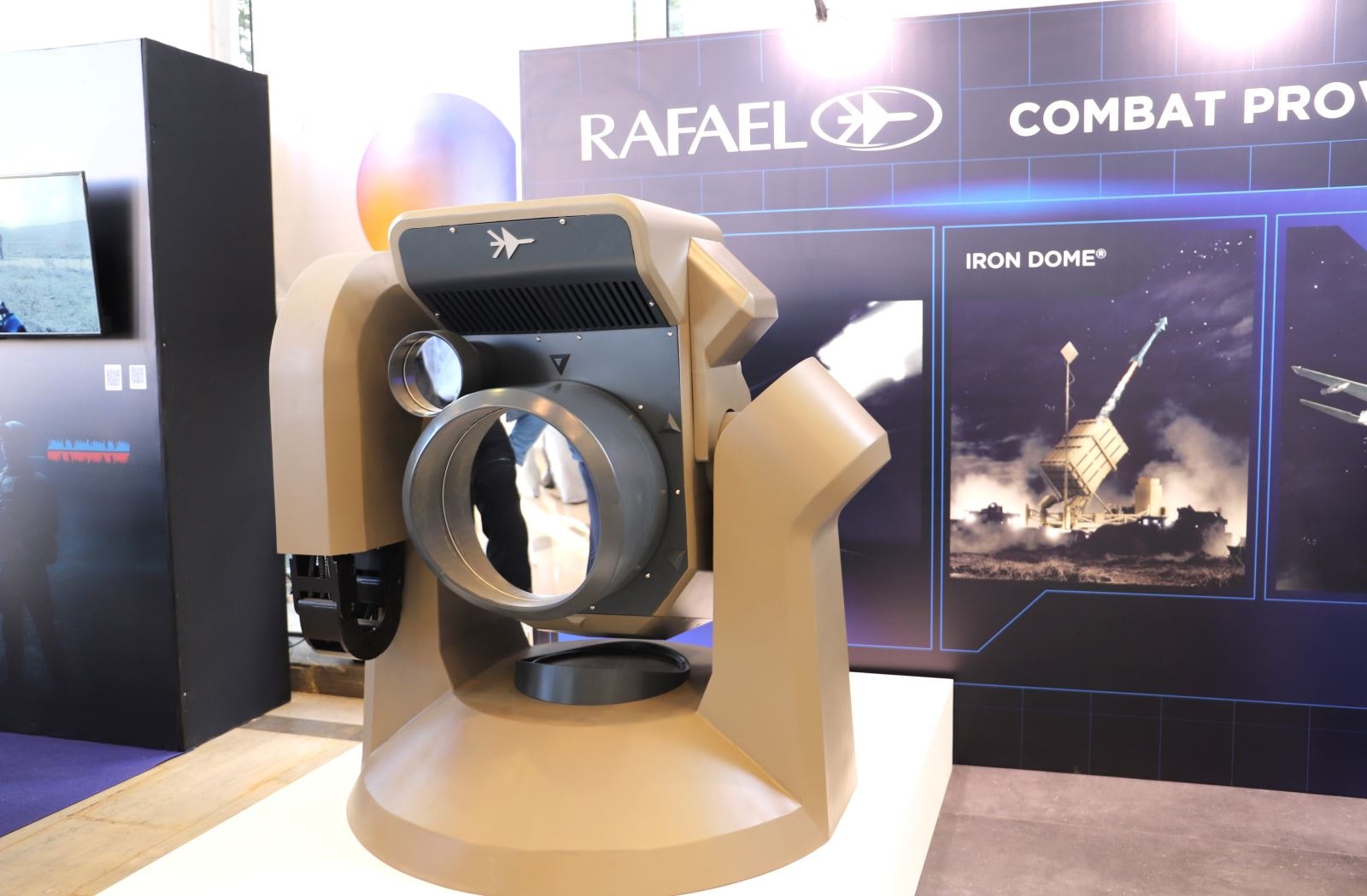
Overview and Official Statement
At DefenseTech Week 2025 in Tel Aviv, Brigadier General Danny Gold, head of the Defense Research & Development Directorate (DDR&D) of the Israeli Ministry of Defence (MAFAT), asserted that Iron Beam will “change the rules of the game on the battlefield.” He stated that in the field of defense technology, startups are now able to compete on equal footing with large corporations. According to him, a recently formed startup alliance beat leading corporations in a MAFAT tender and was selected to supply the IDF with a fleet of attack drones.
Technical analysis
Iron Beam, developed by Rafael Advanced Defense Systems, consists of three key components. The first and largest system is Iron Beam 450, an upgraded version of the original configuration, using a 450 mm aperture beamguide instead of 250 mm. This upgrade increases range, accuracy, and performance. According to published information, Iron Beam is currently the only system to achieve 100 kilowatts of power.
In principle, the system uses a powerful, divergent beam, firing 100–200 beams. When the sensor detects that a beam has hit the target, Iron Beam synchronizes all beams to the same frequency and concentrates the energy on the target. This configuration allows for the creation of a sufficiently high energy density in a short time to damage low-altitude, close-range flying targets such as rockets, UAVs, and mortar rounds.
The stated range of effectiveness is approximately 10 km. A notable limitation is the reduced effectiveness in adverse weather conditions such as cloud cover or fog. Conversely, a clear advantage is the low interception cost ($5–10 per interception) compared to missile-based interception solutions like Iron Dome ($approximately $30,000 per interception).
Deployment and operational tasks
Due to the inherent limitations of laser technology, Iron Beam will be deployed in parallel with Iron Dome to complement each other. The plan is for the 450 mm aperture system to be positioned near borders, populated areas, and strategic infrastructure to protect against missiles, rockets, UAVs, and mortar rounds. The Israeli Ministry of Defense has previously stated that Iron Beam has had successful interceptions in combat.
System variants
Iron Beam 450
- Beam guide tube: 450 mm (compared to the original configuration of 250 mm).
- Power output: 100 kilowatts.
- Effective range: approximately 10 km.
- Targets: missiles, rockets, UAVs, mortar rounds.
Iron Beam M
- A mobile, miniaturized version.
- Beam guide tube: 250 mm; power: 50 kilowatts.
- Platform: Can be mounted on the X88 truck; the entire system is housed in one vehicle.
- Effective range: approximately half that of a standard Iron Beam.
- Mission: Rapid deployment to protect mobile forces and strategic infrastructure; counter rockets, UAVs, and mortar rounds.
Lite Beam
- Power output: 10 kilowatts; the lightest and most mobile configuration.
- Platform: Can be mounted on a 4x4 or armored personnel carrier.
- Role: To provide a mobile tactical layer of protection against UAVs.
- Combined with Rafael's Trophy anti-tank missile system, it enhances the protection of mobile forces.
Variant comparison table
| Variant | Power | Radiation duct | Foundation | Effectiveness | Main objective |
|---|---|---|---|---|---|
| Iron Beam 450 | 100 kilowatt | 450 mm | Not mentioned in the source. | Approximately 10 km | Missiles, rockets, UAVs, mortars |
| Iron Beam M | 50 kilowatt | 250 mm | X88 Truck (all in one vehicle) | Approximately half the size of a standard Iron Beam. | Rockets, UAVs, mortar rounds |
| Lite Beam | 10 kilowatt | Not mentioned in the source. | 4x4 or armored personnel carrier | Not mentioned in the source. | UAV |
Technical and tactical evaluation
- Cost/effectiveness: Each interception costs $5–10, offering a cost-effective operating advantage over missile interceptor solutions.
- Weather limitations: effectiveness is significantly reduced in cloudy or foggy conditions; therefore, supplementary deployment is necessary alongside the Iron Dome.
- Defense stratification: 450 mm configuration for critical areas; M and Lite Beam versions for mobility, force protection, and infrastructure protection as needed.
The December 30th handover date marks the transition from testing to deployment, with a focus on close-range defense against targets such as rockets, UAVs, and mortars, while also supplementing the existing air defense network.


