
J-35A: A cost-effective medium-sized stealth fighter jet.
The J-35A aims to scale up the fifth-generation fighter: a medium-sized stealth airframe, AESA/IRST electronics, and twin engines; large-scale production relies on the WS-19, complements the J-20, and is geared towards export.
The J-35A is positioned as a cost-effective medium-sized stealth fighter platform, aimed at expanding China's fifth-generation aircraft fleet. According to publicly available sources, the program is based on experience from the J-20 and its naval variant, the J-35, with the goal of large-scale production once the WS-19 engine is perfected. The J-35A is expected to complement the J-20 in air combat and open up export opportunities for countries with limited access to the Western ecosystem.
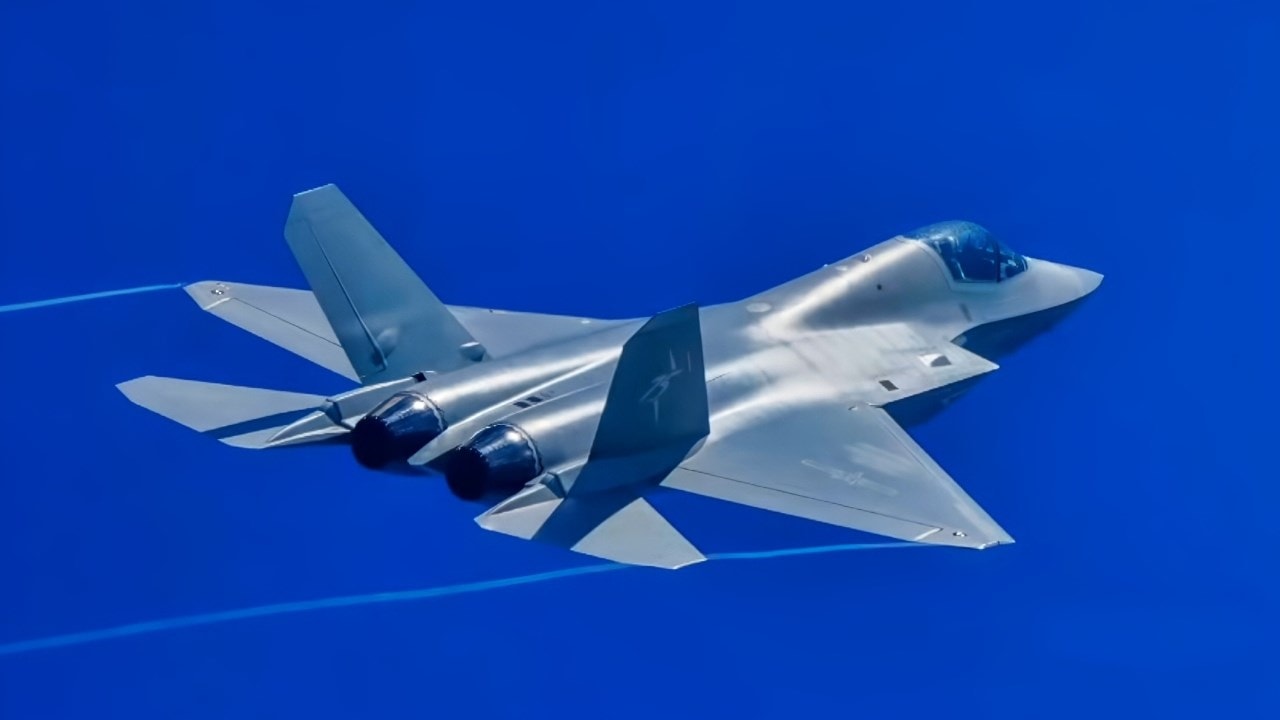
Program Overview
The J-35A's origins trace back to the FC-31, a 2012 prototype developed privately by SAC but initially not accepted for military orders due to limitations in engine, stealth capabilities, and sensors. The turning point came in 2021 with the emergence of the naval J-35 variant, featuring significant changes (folding wings, reinforced landing gear, extended tail, and a wider array of sensors). The Chinese Navy's selection of the J-35 for its new generation aircraft carriers paved the way for the land-based J-35A variant. In popular view, the J-35A is considered a "Budget F-35"—a more affordable stealth option.
Stealth design and characteristics
The J-35A employs a blended wing-fuselage structure, a slanted V-tail, DSI air intakes, and parallel lines to reduce its radar cross-section (RCS). Sharp wing edges, smooth air intakes, and a new generation radar-absorbing coating contribute to its stealth capabilities. Compared to the FC-31, the J-35A's fuselage surface is more refined, reflecting a redesign based on experience from the J-20. Some experts suggest that the J-35A's forward RCS may be lower than the J-20's, but this is an estimate.
Size and range
According to estimates, the J-35A belongs to the medium-sized segment, measuring approximately 17.3 m in length, with a wingspan of 11.5 m and a maximum takeoff weight of about 28 tons. The internal fuel tank has been expanded; its operational range is believed to approach or surpass some configurations of the F-35A, depending on the mission configuration.
Engine and performance
Unlike the single-engine F-35, the J-35A features twin engines, making it suitable for offshore combat operations. Current prototypes primarily use the WS-13E or WS-21. The WS-19 is a key component for transitioning to mass production; once completed, the J-35A is expected to reach speeds of up to Mach 1.8.
Aviation electronics
The J-35A is equipped with a next-generation AESA radar, an IRST sensor under the nose, a 360-degree electro-optical system, a large WAD cockpit display, a helmet-mounted virtual head-up display (HUD), and data links. This platform enables coordinated combat with UAVs and in-depth data sharing. Sharing the electronic architecture with the J-20 reduces lifecycle costs and creates a unified "digital warfare space" between stealth fighters.
Firepower and weapon configuration
According to sources, the J-35A's weapons bay is roughly the same size as the J-20, a rare feature in a medium-sized fighter. In stealth configuration, the aircraft can carry:
- The PL-10 short-range air-to-air missile and the PL-15E medium/long-range air-to-air missile have foldable tails to increase the number of missiles in the bay.
- Standard PL-12/15 variants.
- It has the potential to carry long-range missiles such as the PL-16 or PL-20 when these variants are perfected.
- Smart bombs and anti-radar missiles for SEAD/DEAD missions are designed to suppress and destroy air defenses.
Roles and tactics
Within the squadron, the J-35A is considered a supporting force for the J-20. The J-20 serves as a heavy stealth fighter, prioritizing long-range interception and combat command, while the J-35A is more flexible, less expensive, and easier to deploy at multiple airfields to create a high stealth density in the initial phase of a campaign. Its twin-engine configuration supports dispersed combat operations and offshore operations.
Production and workforce size
The progress of large-scale production of the J-35A depends on the completion of the WS-19. According to public assessments, this model is almost certain to enter large-scale production in the latter half of the decade. If the target is met, China could field hundreds of J-35A alongside approximately 300–400 J-20s, forming a large-scale stealth force concentrated around the Western Pacific coast.
Exports and market impact
Unlike the J-20, the J-35A was designed for export from the outset. According to sources, Pakistan is likely to be the first customer, with an order of around 40 aircraft, expected to be delivered starting in 2026. If realized, the J-35A could significantly change the stealth fighter market for countries outside the Western ecosystem.
Main specifications/equipment (according to source)
| Item | J-35A (according to source) |
|---|---|
| Length | ≈ 17.3 m |
| Wingspan | ≈ 11.5 m |
| Maximum takeoff weight | Approximately 28 tons |
| Engine | Two; prototypes used WS-13E/WS-21; target WS-19 |
| Target speed | Up to Mach 1.8 (when WS-19 is completed) |
| Radar/sensors | AESA, subnasal IRST, 360-degree optoelectronic system. |
| Cockpit | Large WAD display, flight helmet with integrated virtual HUD. |
| Data link | Coordinated operations with UAVs. |
| Weapon compartment | Approximate size of the J-20 (according to source) |


