
Telling his story through folk songs and rhymes: A grandson's tribute to Hero of the People's Armed Forces Nguyen Dang Che
At 8:00 PM on May 2nd, 2026, the art program "The River of Heroic Figures" will be performed at the Nghe An Labor Culture House. The work tells the story of Hero of the People's Armed Forces Nguyen Dang Che through the folk theater style of "vi" and "giam," from the perspective of his grandson. Reporters from Nghe An Newspaper and Radio & Television had an interview with the scriptwriter and director, Luong Minh Tu, a student at the Hanoi University of Theatre and Film, about the journey of creating the work.
"I used to hear about him as a Marvel superhero."
PV: You grew up listening to stories about him. So, do you remember the first time you heard them and felt something different?
Luong Minh Tu:When I was a child, hearing the story of my maternal grandfather – Hero of the People's Armed Forces Nguyen Dang Che – it felt like a Marvel superhero movie. In the eyes of a 10-year-old, the story of him "dying and coming back to life" was truly a spiritual miracle, something really "cool" to brag about to my friends.
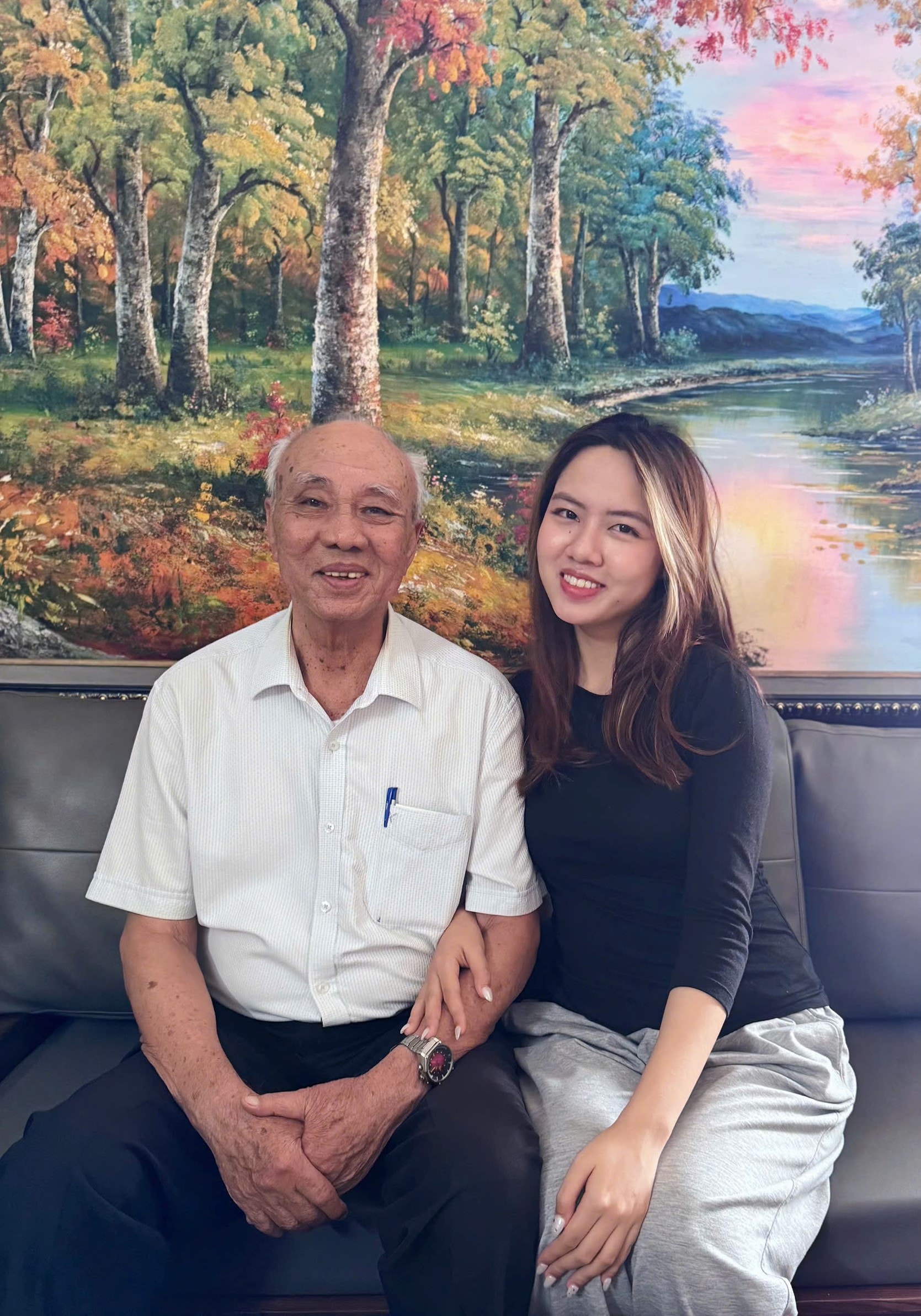
But the first time I saw something "different" was in my early years of university, when I started studying event management in depth. I often wondered, "If I were my grandfather, would I dare stand there and let them hold a living funeral/memorial service for me?" The "difference" I saw here was the transformation from childish pride to empathy for the courage of my grandfather, a flesh-and-blood human being.
PV: When you started working on this project, which role were you more in: that of a grandchild, or that of a theater professional?
Luong Minh Tu:To be honest, I'm 80% in the position of a grandchild. It's the tradition of loving culture and art inherited from my great-grandfather Do My – a patriotic Confucian scholar, my grandfather Nguyen Thanh Kham – a folk culture expert, and my maternal grandfather Nguyen Dang Che that motivated me to create this program.
However, the remaining 20% is the instinct of a theater directing student to keep me from getting bogged down in sentimentality. If I were just playing the role of my grandfather's granddaughter, I would probably only cry out of grief for him. But as a director, I have to transform those tears into light, sound, and theatrical language so that my audience will also be moved as I am when they hear the story of my grandfather.
PV: Are there any details in the stories you heard as a child that haunted you and made you decide to incorporate them into the script?
Luong Minh Tu:That was the moment of a living funeral. When I was little, I used to tell my friends, "My grandfather died and then came back to life, it's so miraculous!" in a scary, spiritual way. But when I incorporated it into my graduation script, that "scary" changed...
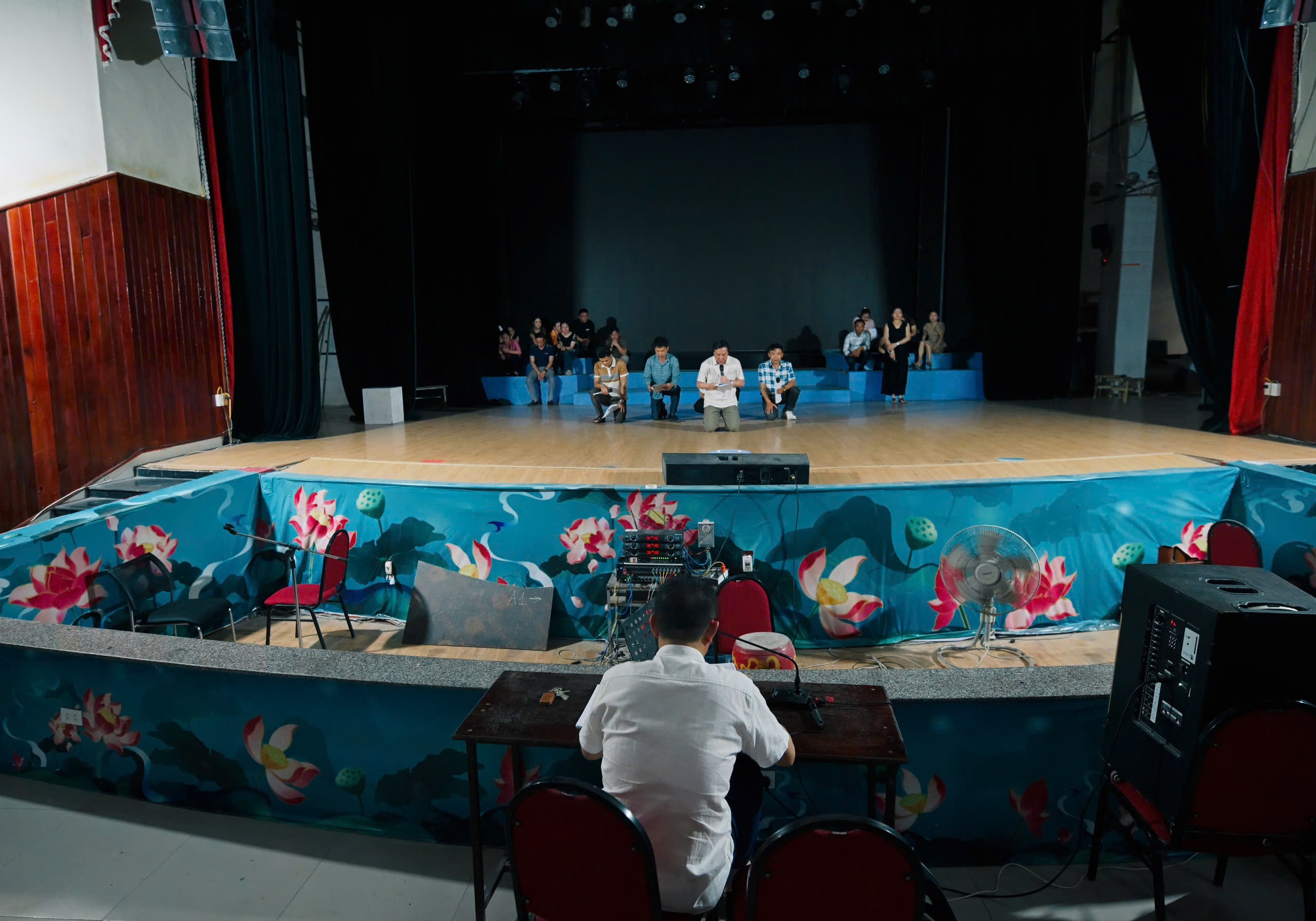
That initial horror has now transformed into profound empathy and gratitude. I am haunted by the breathtaking silence when he stood before his own altar, looking at his comrades calling his name and lighting incense as if he were deceased, and then still bravely stepped onto the Ben Thuy ferry to clear magnetic mines.
Through that poignant detail, I hope viewers will understand the price of peace: Sometimes, it's not just measured by the sound of bombs and bullets, but by the very breath and courage of ordinary people who dared to cross the line between life and death to fulfill their mission.
Interviewer: Working on a character who is very relatable, aren't you afraid that your personal emotions might influence your performance too much?
Luong Minh Tu:Not only am I not afraid, but I "take advantage" of it. As a granddaughter, I'm fortunate to have seen even the most hidden aspects of my grandfather's everyday life. Thanks to those experiences, my personal emotions now act as a "catalyst," giving my script more breath and soul.
"Choose to tell the story through a grandfather-grandson dialogue."
PV: From "listener" to "storyteller," what was the most difficult thing for you?
Luong Minh Tu:The hardest thing for me is moving from "receiving" to "building."
As a listener, I simply let my emotions guide me through the fragmented, piecemeal memories of my grandfather. But as the narrator on stage, my responsibility is to create a complete, structured "world" with its own visual language, to "decode" his spirit through directorial techniques. How can I convey, from the everyday stories of a family, the audience's understanding of the great ideals of an entire nation?
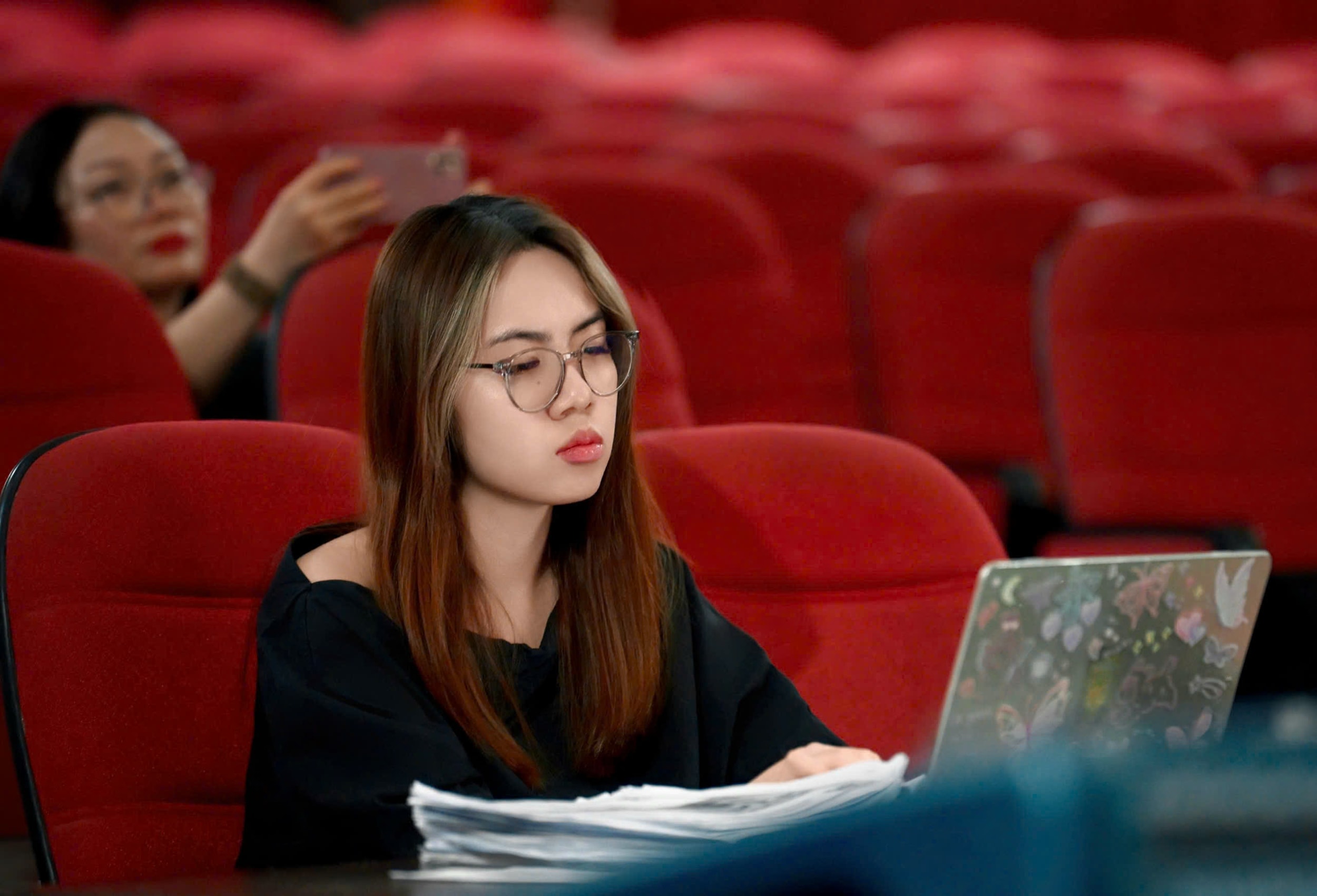
PV: I've read both the literary and stage scripts, and I've noticed that the work doesn't follow the familiar "epic" narrative style. Was this your initial choice?
Luong Minh Tu:This has been my guiding principle since I first started writing. Instead of using an MC style or a conventional "heroic" style of glorification, I chose storytelling through a heartfelt dialogue between a grandfather and his grandson.
This choice stems from my desire to make the work truly resonate with my peers. I understand that Gen Z young people tend to shy away from anything too didactic, so I wanted to use the intimacy of family relationships as a bridge. By having the grandfather recount his life journey to his grandson, I hope to transform history, often considered dry, into a natural flow of emotion, helping young people see history as truly relatable and full of life.
PV: What made you retain the detail "he didn't write performance reports" as a central focus of the work?
Luong Minh Tu:For me, this detail best illustrates my grandfather's courage and humility. He didn't write a report immediately after coming back to life because he understood that his comrades who lay buried in the Lam River were the true heroes, while he was merely an incredibly lucky man...
In the work, the Lam River is not merely a geographical setting, but a living witness with three layers of meaning: It is the repository of the souls and blood of fallen comrades; it is the cultural alluvial soil, the flow of tradition that nurtures the identity of the family and homeland; and finally, it is the timeline connecting the glorious past of his generation with the present.
PV: Why did you choose wallets and embroidered fabrics as recurring motifs throughout the film, instead of just using them in the illustrations?
Luong Minh Tu:Since I'm telling a story about the people of Nghe An, folk songs and chants are indispensable. I want to incorporate folk songs and chants throughout the program so that the audience can better appreciate the courage, loyalty, and humanity of the people of Nghe An.
PV: After completing the work, did your perspective on him and his contemporaries change?
Luong Minh Tu:Perhaps the biggest change is in my perception. If in the past I saw him as a mysterious, colorful "superhero," now I see him with respect for an ordinary man with extraordinary willpower.
What I aspire to most is to create a "point of contact" between generations. I want to use modern theatrical language to awaken dormant memories, to prove that heritage is not static, but a living bloodline flowing within young people like us…


