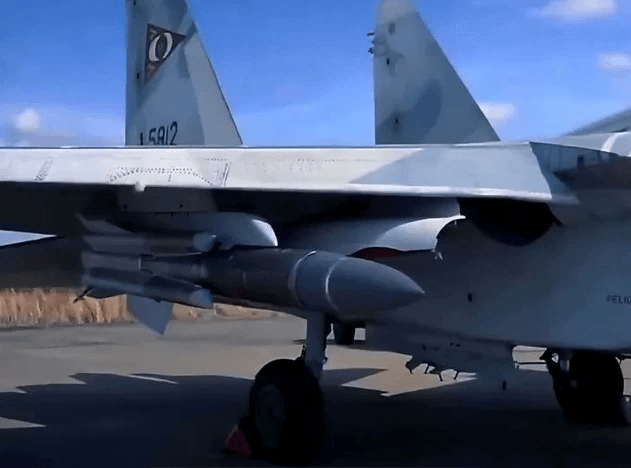
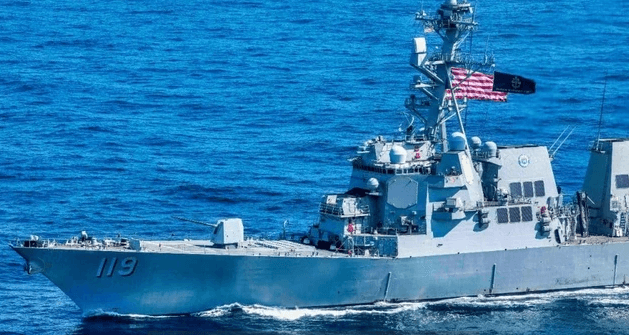
Venezuela's Kh-31A missile system challenges US warships.
Venezuela equips its Su-30MK2V with the Kh-31A supersonic anti-ship missile: Mach 3.5, range 50 km, nearly 200 kg warhead, and a wave-skimming flight path that makes it difficult for the US Iwo Jima group of aircraft to approach.
With a speed of Mach 3.5, a range of 50 km, and the ability to skim over waves, the Russian-supplied Kh-31A anti-ship missile poses a significant threat to US warships operating near Venezuela. According to The War Zone, the US Navy deployed the Iwo Jima amphibious strike group, along with the destroyer Arleigh Burke and a cruiser Ticonderoga, near the Venezuelan coast, increasing the need for vigilance against rapid air strikes.
Implementation Overview
The Kh-31A (NATO designation AS-17 Krypton) is integrated into Venezuela's Su-30MK2V Flanker multirole fighter jets. The country has approximately 21 Su-30MK2Vs, each capable of carrying two Kh-31A missiles. Videos released by Caracas show simulated firing exercises at sea targets, with Su-30s taking off from Maracay Air Base, about 100 km from Caracas.
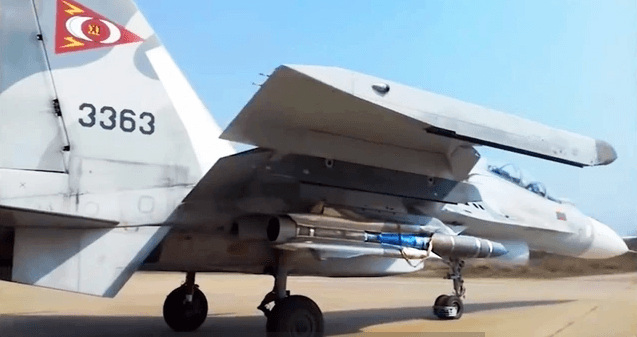
Technical analysis
The Kh-31A was developed in the late 1970s in the Soviet Union, initially for air defense suppression; an anti-ship version has been in production since 1990. The missile uses a two-stage rocket-ramjet engine: a solid-fuel booster stage brings the speed up to approximately Mach 1.8 before the ramjet further increases it to a maximum of Mach 3.5.
- Range: 50 km
- Maximum speed: Mach 3.5
- Warhead: armor-piercing, weighing nearly 200 kg, delayed-action.
- Bay clings to the sea, only a few meters above the water's surface.
- Late-stage mobility: up to 15 hours
The Kh-31A's low-altitude flight profile allows it to be detected by warship radars at short ranges, shortening the reaction time of the Aegis system and interceptor missiles such as the SM-2 or ESSM. Its end-of-course maneuverability increases the difficulty for guidance algorithms and the interception window.
Deployment tactics
With the Su-30MK2V platform, Venezuelan squadrons can launch the Kh-31A from beyond the radar horizon of enemy ships. At low altitude and high speed, the target's warning time is reduced to just a few seconds. Upon approach, the armor-piercing, delayed-detonation warhead optimizes its penetration of the steel hull before detonating inside the ship's body.
Comparing Venezuela's anti-ship capabilities.
In addition to the Kh-31A, Venezuela's anti-ship capabilities, according to available data, are as follows:
| Platform/weapon | Speed | Shooting range | Note |
|---|---|---|---|
| Kh-31A on Su-30MK2V | Supersonic (up to Mach 3.5) | 50 km | Armor-piercing warhead weighing nearly 200 kg; glides through the air; maneuvers up to 15g. |
| Otomat Mk 2 | Near sound | No data from source | Equipment on Mariscal Sucre-class ships and Constitución-class fast attack craft |
| Sea Killer (onboard helicopter AB.212) | Near sound | No data from source | Supporting role |
| CM-90 (on board Peykaap III boat) | Near sound | No data from source | Recent reception |
With the above configuration, the Kh-31A is the most powerful deterrent weapon, due to its supersonic speed and difficult-to-intercept flight profile, while the remaining weapons are subsonic.
Impact on U.S. Navy operations
According to The War Zone, the Iwo Jima amphibious assault group, along with the Arleigh Burke and Ticonderoga-class ships, is operating just a few dozen nautical miles off the coast of Venezuela. The stated purpose is to combat drug trafficking, but the scale of the deployment forces the US to consider the possibility of a rapid attack from the Kh-31A. The short response time puts even the Aegis, SM-2, and ESSM components under high pressure. This source indicates that the US previously purchased several Kh-31s for training purposes, suggesting they consider this a serious threat requiring assessment.
Risk of escalation and unintended scenarios
In recent weeks, Venezuelan fighter jets have repeatedly approached US ships in the Caribbean Sea; a Pentagon official confirmed that two Venezuelan F-16s flew close to a US warship in September. If a direct confrontation were to occur, data suggests that a single Kh-31A missile strike could disable a 9,000-ton destroyer, endangering the lives of sailors.
Although the likelihood of Caracas initiating an attack is considered low, the risk of miscalculation or overreaction in a close-range confrontation could still trigger a crisis. In this context, the Kh-31A is a crucial tactical variable, making any close-range operation require a carefully planned risk control scenario from both sides.