
A longing for a trading port.
(Baonghean.vn) - In the memories of the people of Nghe An as well as many domestic and foreign traders, Ben Thuy Port is mentioned with respect as a bustling port area.
This place was once the central trading port of Nghe An, a hub for trade throughout the country, and a major trading point for many foreign businesses. In this new era, Ben Thuy Port continues to operate with its own unique aspirations as a former trading port.
PRIDE
Every day, Ben Thuy port still receives many cargo ships. Currently, the main cargo handled at the port is coal. While the variety of goods handled is not as extensive as before, the volume of cargo loaded and unloaded is hundreds of thousands of times greater than it used to be.
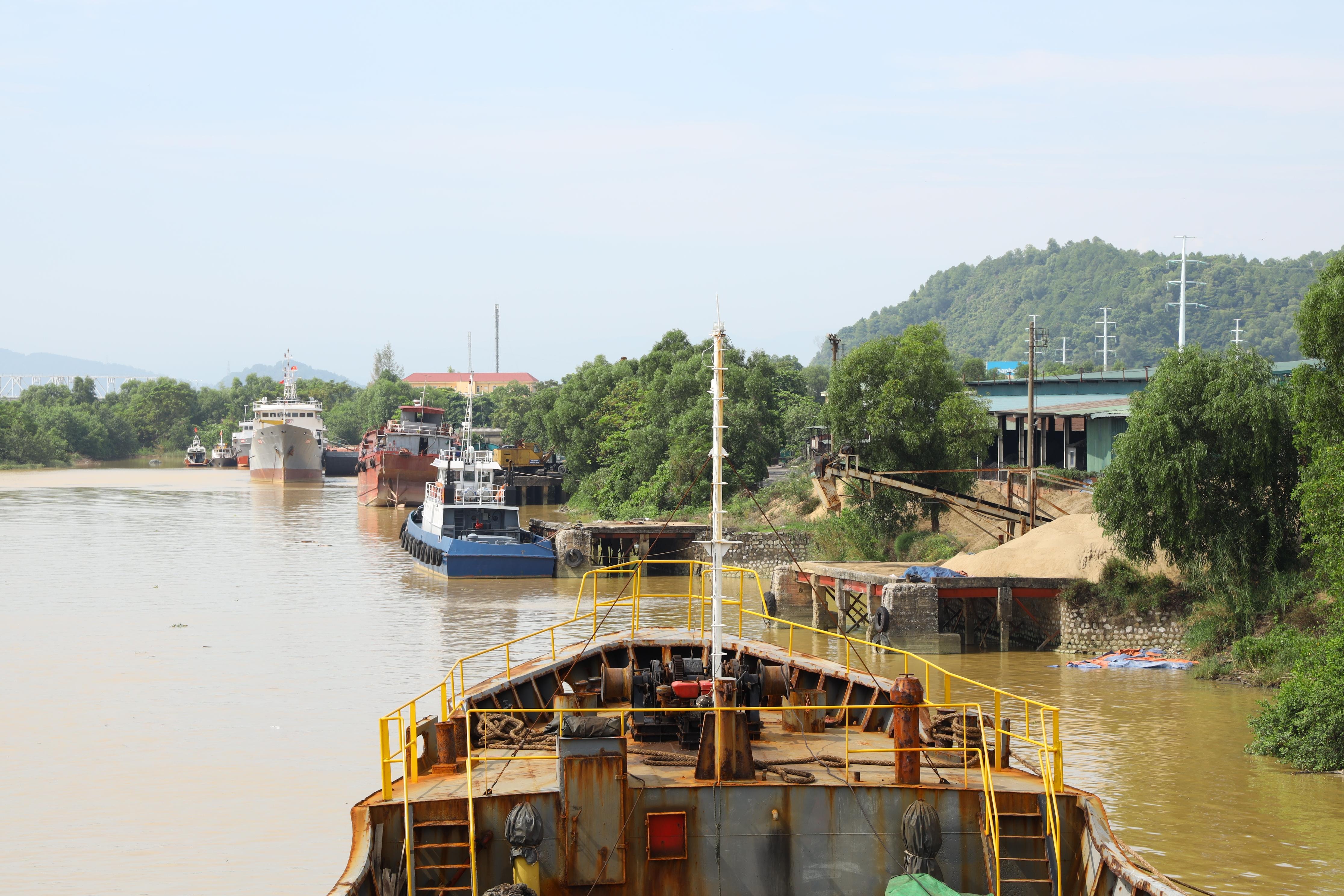 |
Ben Thuy Port. Photo: Nguyen Nguyen |
According to the operational report of Nghe Tinh Port Joint Stock Company, the business results at Ben Thuy Port in 2021 showed a throughput of 359,989 tons, an increase of 17.38% compared to 2020. Revenue reached VND 13.788 billion, an increase of 6.11% compared to 2020. It is projected that in 2022, the throughput of Ben Thuy Port will be approximately 370,000 tons, with estimated revenue of around VND 13.250 billion. Previously, in 1927, the throughput of Ben Thuy Port was only about 4,000 tons, and in 1938 it was 100,000 tons.
Between 1920 and 1929 (over 102 years ago), Ben Thuy Port was the largest trading port in the North Central region, associated with a cluster of wood processing industries, match factories, and power plants. At that time, goods passing through the port were always bustling, but according to many documents, the main goods were wood and coal. In Ben Thuy at the beginning of the 19th century, the Central Vietnam Forestry and Commercial Association also established a purchasing station and many shops selling forest products. The port also had a military outpost and a tax collection station run by the French…
Ben Thuy Port is located downstream of Ben Thuy Bridge, 12 km northeast of Cua Hoi, east of Vinh City. With its convenient transportation links, the Ben Thuy, Song Lam, and Nui Quyet areas have held a strategic position since ancient times. Therefore, Ben Thuy Port played a crucial role in the urbanization of Vinh during the French colonial period.
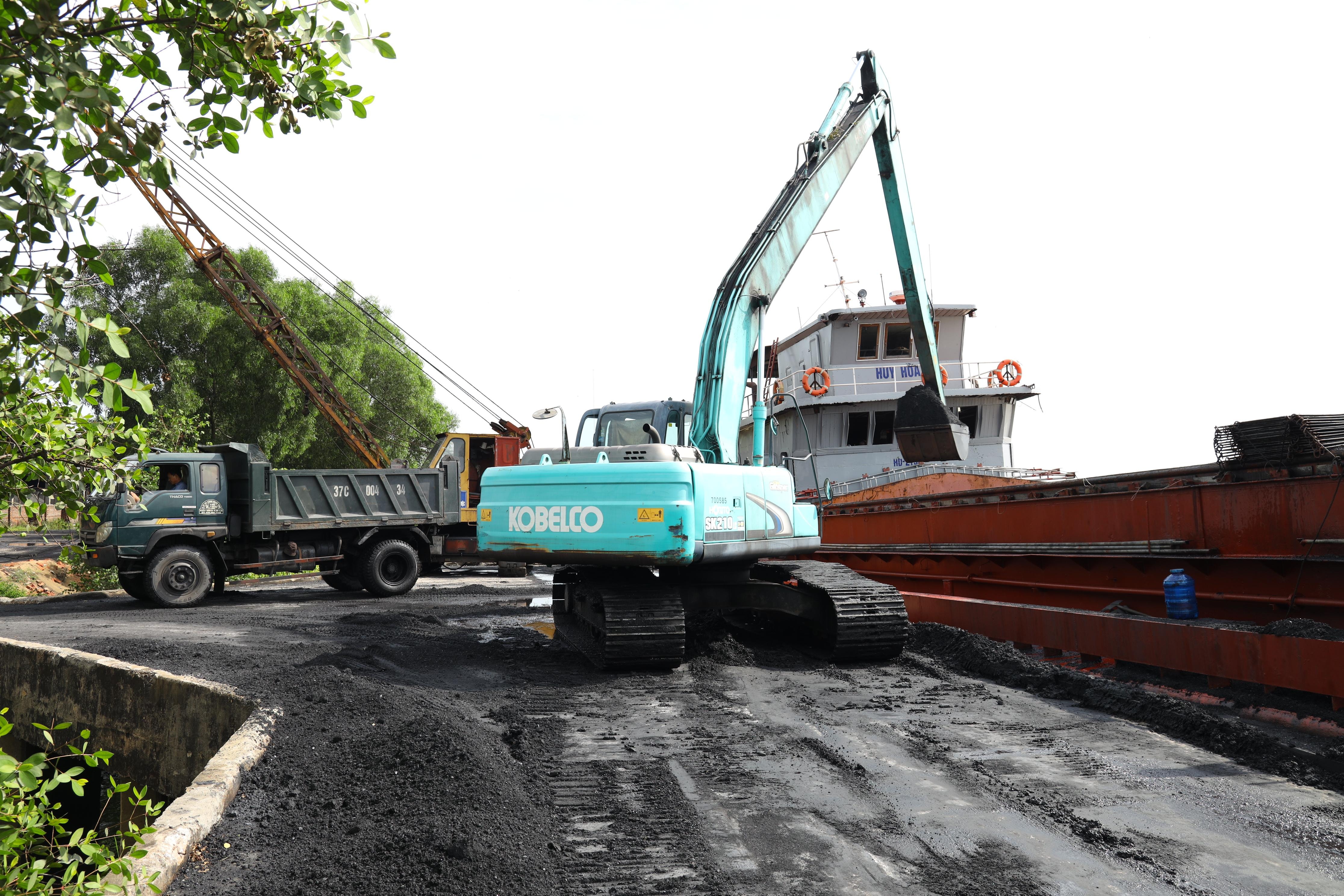 |
| Unloading goods at Ben Thuy Port. Photo: Nguyen Nguyen |
Numerous documents confirm that Ben Thuy Port was built in 1888 and that the French added more wharves and warehouses between 1897 and 1900. Thus, its history spans over 134 years. After the complete liberation of North Vietnam, on October 13, 1955, the Ministry of Transport signed Decision No. 141 "Temporarily establishing the Ben Thuy Port Management Agency". Ben Thuy Port was formed with a 150-meter-long, 10-meter-wide wooden pier made of ironwood, and four brick warehouses with tile roofs covering an area of 400 square meters.2It included a coal storage yard, a timber storage dock, an office building, a canteen, and communal living quarters. Therefore, October 13, 1955, has been considered the traditional day of Ben Thuy Port and Nghe Tinh Port. After the complete reunification of the country, on December 5, 1979, the Prime Minister authorized the construction of Cua Lo Port (an international port), a significant event for the people of Nghe An province and a milestone in the development of Nghe Tinh Port.
In the new phase, Ben Thuy Port has been built more solidly but has gradually reduced its operational scale, ceding its central position to Cua Lo Port (Nghe An), Vung Ang Port (Ha Tinh), and Nghi Son Port (Thanh Hoa). However, its contribution to the historical development of Nghe An province and the North Central region is recognized by history. Representatives of Ben Thuy Port stated that, despite facing many difficulties in the new phase, the port's staff and workers remain proud of the port's long history, and therefore actively work and produce, contributing to the trade of goods in the North Central provinces and the socio-economic development of Nghe An.
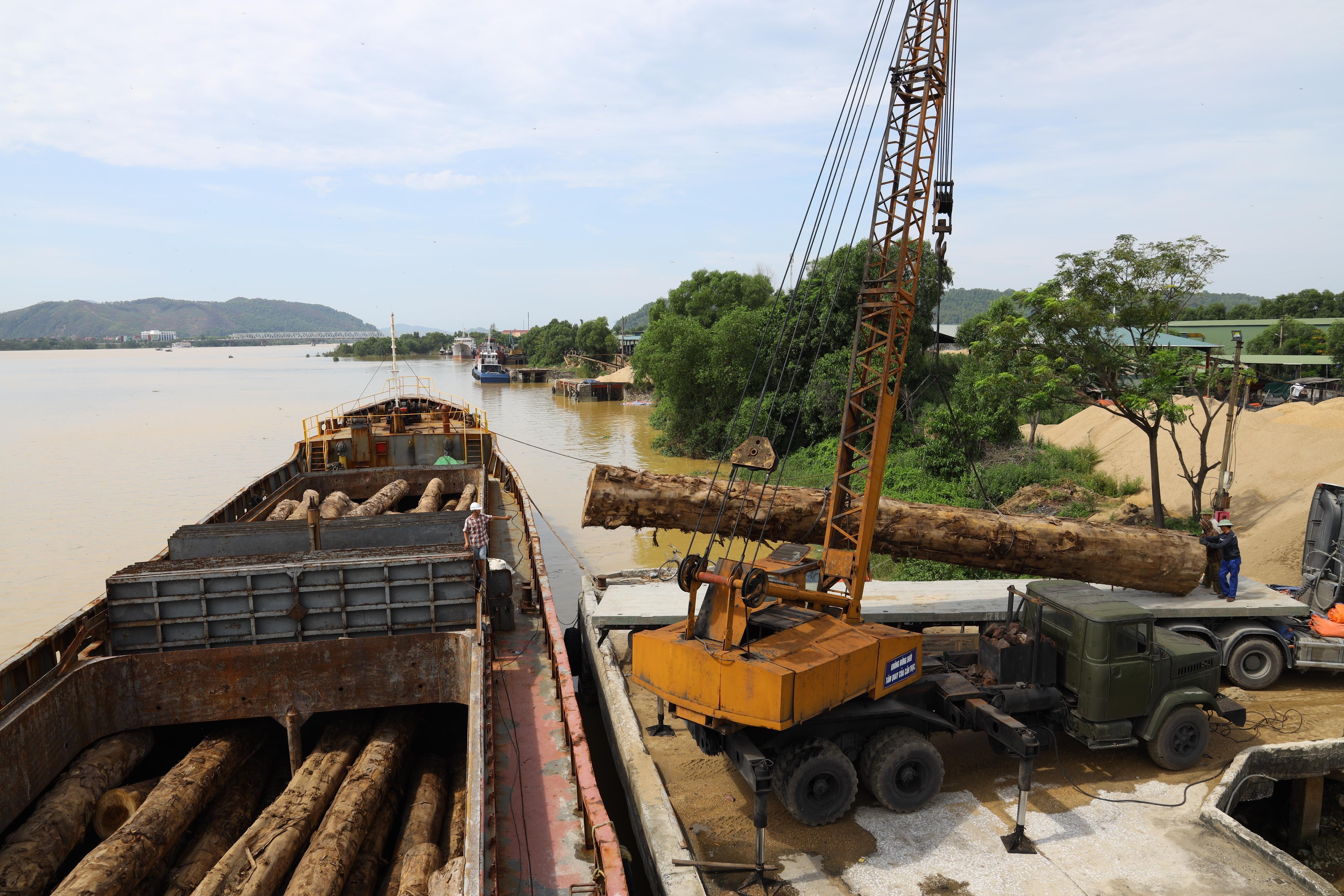 |
| Loading and unloading timber - a rare activity at Ben Thuy Port. Photo: Nguyen Nguyen. |
A BITTERNESS
Previously, Ben Thuy Port was connected to the city center by road, waterway via the Vinh River, and railway to Vinh Station, connecting to the Indochina railway system. Ben Thuy Port was once a center for connecting and trading with the North Central provinces and with Laos. Ben Thuy Port became a driving force for the economic development of Nghe An and the North Central region. Based on this, it contributed to the development of Vinh town (1898), the establishment of the Ben Thuy urban area (1914), and Truong Thi (1917). Through this, it connected and formed the largest industrial, port, and urban center in the North Central region during the French colonial period.
According to the assessment of Ben Thuy Port's leadership, with the current business situation, the port is still able to sustain its operations, pay workers' salaries, and contribute a small amount to the national budget. However, cargo handling at the port in recent years has been fragmented, with almost 98% of the goods passing through being coal. In addition, the already shallow waterways (depth of -4 to -4.5m) are experiencing siltation, affecting the docking of cargo ships. According to the design, with that depth, the largest ships can enter Ben Thuy Port. However, in recent years, due to the regulation of water levels by several hydroelectric dams upstream of the Lam River, even 2,000-ton ships have difficulty entering the port and can only dock during high tide.
 |
| Temporary wharves at Ben Thuy Port. Photo: Nguyen Nguyen |
With the fragmented nature of cargo handling at the port, coupled with the rapid sedimentation of the downstream Lam River, Ben Thuy Port is facing increasing difficulties in its production and business operations. Especially since the Provincial People's Committee approved the planning for the Ben Thuy Urban Service and Tourism Complex Project, covering over 31 hectares – including the entire Ben Thuy Port area and the land of 13 units and agencies, along with hundreds of households in blocks 13 and 15 of Ben Thuy ward – the fate of Ben Thuy Port is being debated. The port might be relocated to Hung Hoa, near the Hoi estuary, where the channel depth is better; or it might remain in its current location but with a change in its operational model, simply serving tourists; or Ben Thuy Port might cease operations altogether and merge with Cua Lo Port for more efficient operation (?).
Despite its current precarious operating conditions, Ben Thuy Port has long been recorded in history as a bustling trading port in Vietnam, and was one of the first ports to be listed on the world trading port map.
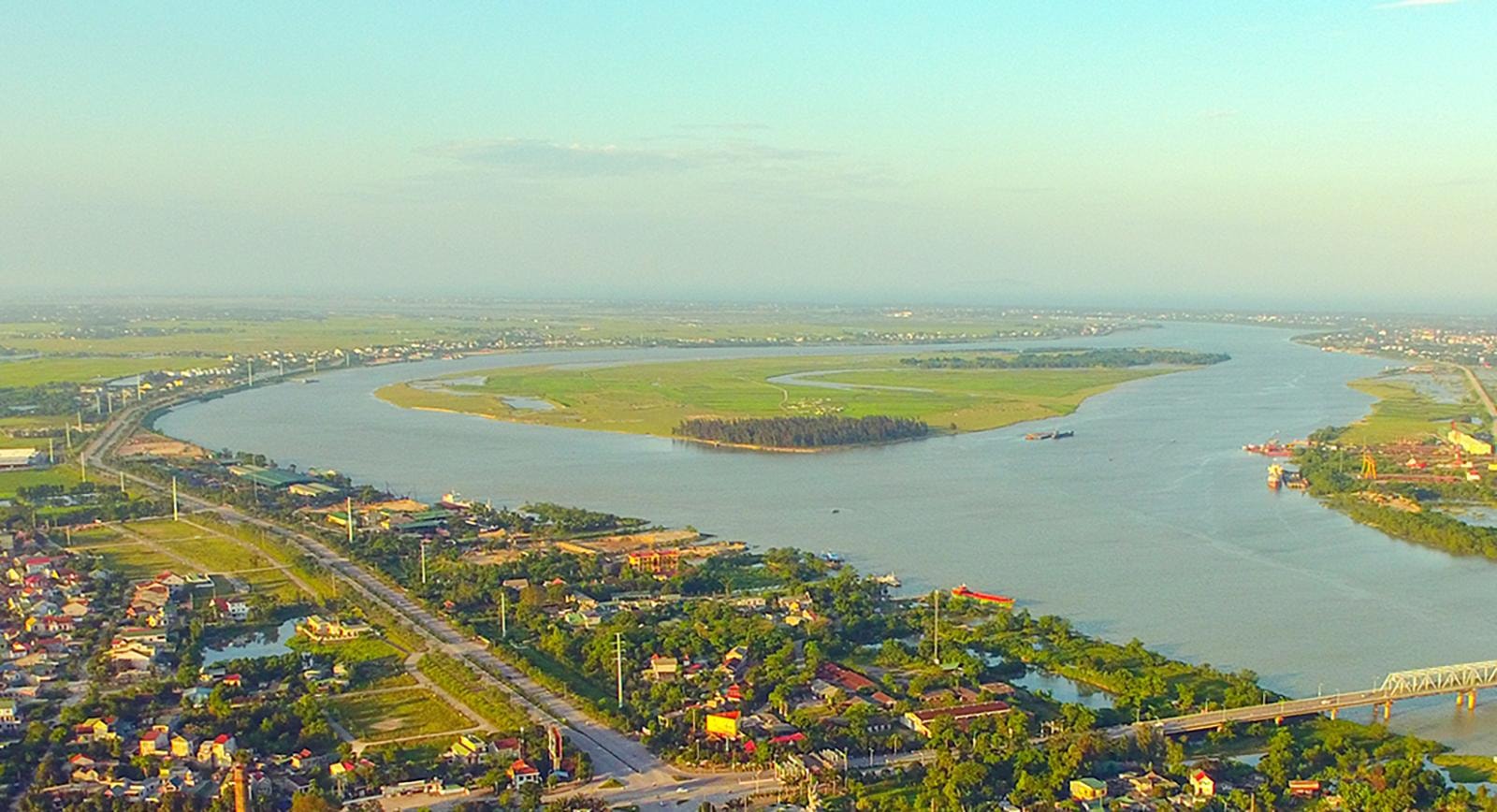 |
| Ben Thuy Port is located on the Lam River. (Photo courtesy of Nguyen Sach) |


