
Hotel: Why didn't the receptionist say your room number aloud?
Keeping your room number confidential is a hotel security standard: it protects your safety, prevents fraud, and makes it easy for you to remember. Here are 8 essential tips for a safe stay.
At the check-in counter, you'll be greeted by the receptionist, who will complete the payment and then give you the key or key card. According to industry protocol, they will speak softly, whisper, or write the room number on a piece of paper instead of reading it aloud. This is a mandatory rule, part of international security standards in the hotel industry, aimed at protecting safety, reducing the risk of fraud, and still allowing guests easy access when needed.
Safety is the top priority.
Nick OrRico, General Manager of the Fairmont Chicago Hotel (USA), said that keeping room numbers confidential helps prevent eavesdropping. "We train our staff never to say room numbers aloud. Instead, they write them down discreetly or program them directly into the key card," he said.
This minimizes the risk of strangers knowing the exact location of a guest's accommodation. This is especially important for solo travelers, female guests, or when checking in late at night.
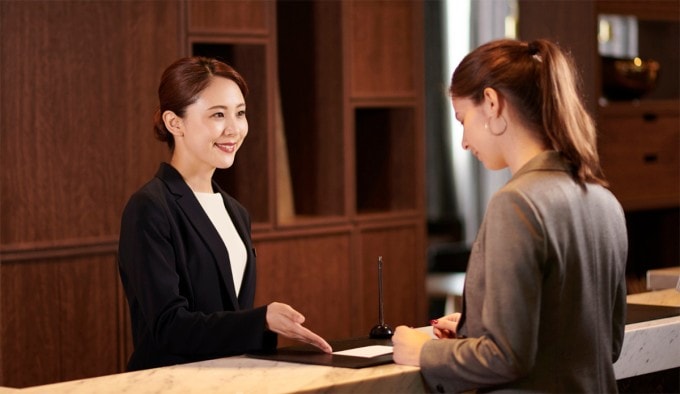
Write it down on paper so guests can easily remember it.
Greg Fregoso, manager of the Blackstone Hotel in Chicago, said that writing down room numbers on paper, in addition to security reasons, also makes it easier for guests to find their room number if they happen to forget it.
However, Alicia Wiley, General Manager of Hotel Monaco Salt Lake City, USA, advises travelers not to keep their key card together with the envelope containing the room number when moving around. "If you lose both, you're essentially handing over the key and room address to a thief," she says. The safer way is to take a picture of the room number with your phone and keep the key card separate immediately after leaving the reception desk.
Preventing exploitation and unfair charging.
Another reason is to reduce the risk of being exploited by scammers who might charge extra on your bill, according to Cameron Sperance, Director of Content at Questex Hospitality and Travel. "In Ocean's 8, actress Sandra Bullock overheard the room number at the Plaza Hotel, then returned to check in and charged the previous occupant. Writing down your room number on paper makes you less of an easy target for opportunists," Sperance said.
Although he admitted it was a detail in the film and that incorrect billing doesn't happen often, nobody wants to see unexpected charges that aren't theirs.
Hotel safety tips
- Always lock the inner bolt and the secondary lock when you are inside the room.
- Keep your valuables in a safe or locked inside a suitcase.
- If you lose your card, please report it immediately to the reception desk to get a new one (the old card will be deactivated).
- Do not share your room number or schedule with strangers, and do not post it on social media in real time.
- When someone knocks on the door, look through the security peephole before opening it. If you don't know them or feel unsafe, call the reception or security guard.
- It's best to avoid rooms on lower floors due to the risk of break-ins, as well as rooms near the elevator and at the end of the stairwell for added security.
- Solo travelers should avoid rooms with connecting doors to adjacent rooms.
- If you don't have to pay for a second person, book a room for two and ask for two keys upon check-in to create the feeling of not being alone.
In short, the receptionist not announcing the room number aloud is not just a matter of politeness, but an important layer of protection for your trip. Keeping information confidential, using separate room keys, and applying the tips above will help ensure a safe and fulfilling vacation or business trip.


