
Discover unique Christmas customs around the world.
(Baonghean.vn) - The festive atmosphere of preparing for Christmas 2017 is spreading in many places around the world. Let's explore the Christmas customs of different countries.
1. "The defecator" in Catalonia
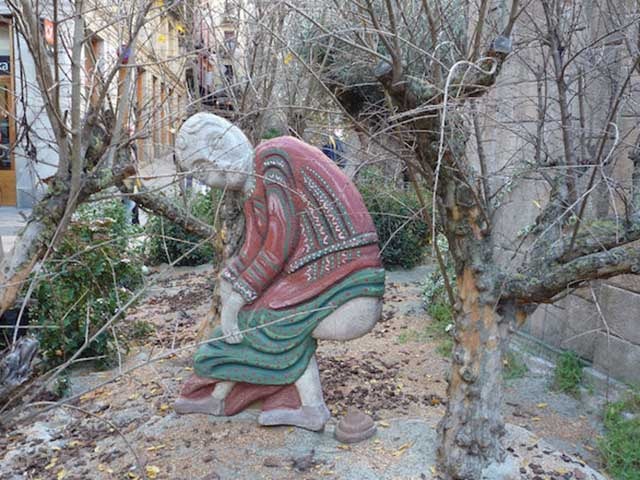 |
| Catalonia in northern Spain has a rather peculiar Christmas symbol. During the holiday, statues of Caganer, meaning "the defecator," are placed at the base of trees throughout Catalonia. Locals believe that the "defecator" is an auspicious sign, bringing a bountiful harvest and good fortune in the new year. |
2. Horse skulls in Wales
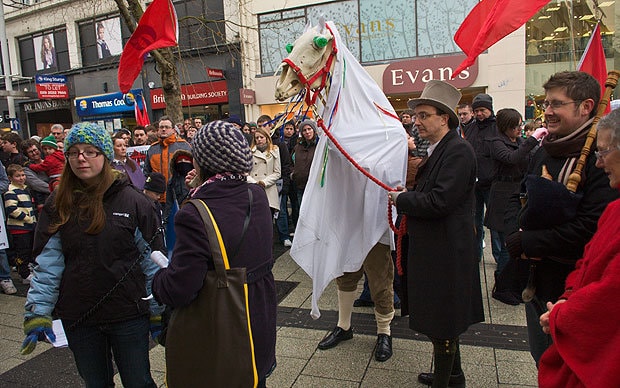 |
| A rather macabre custom in Wales called Mari Lwyd during Christmas involves parading through the streets with a horse skull and singing traditional songs. Locals believe this tradition helps ward off evil spirits as the New Year approaches. |
3. The witch Befana rides a broomstick to deliver gifts in Italy.
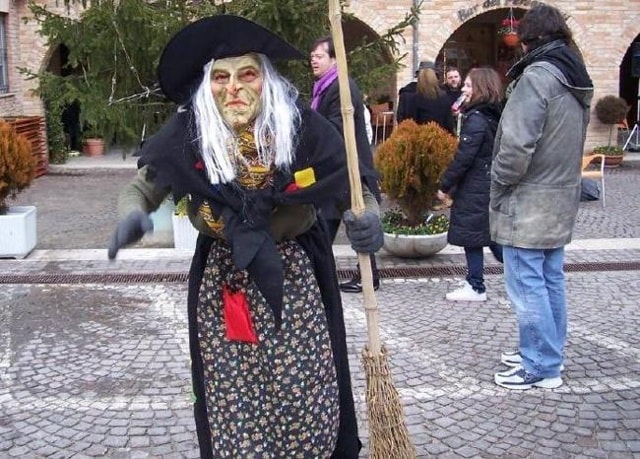 |
| According to Italian folklore, the witch Befana rides a broomstick to deliver gifts to children, not Santa Claus. Befana also uses the broom to sweep away the things of the old year. |
4. The Krampus Demon in Austria
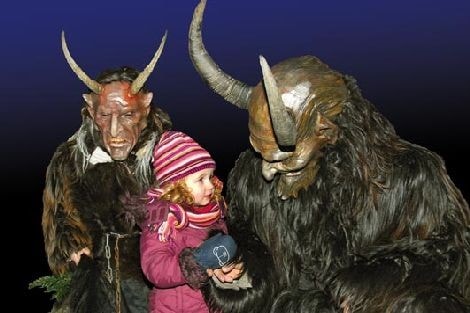 |
| In Austria, there is a character believed to be the opposite of Santa Claus: the demon Krampus. During Christmas, some young people dress up as Krampus and catch and punish naughty children on Santa Claus's "blacklist." |
5. Stuffing money into statues in Spain
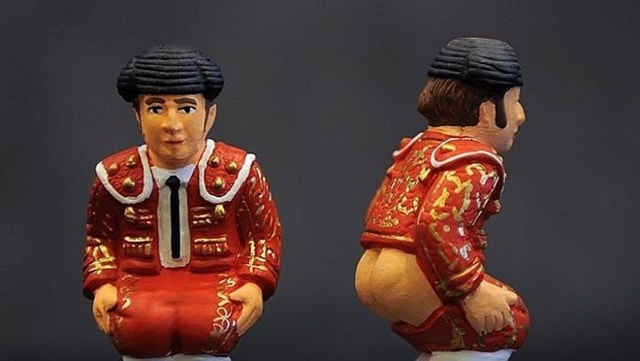 |
| In Spain, on Christmas Day, people often put money into Cagners, also known as Shitters. These are statues of an old man wearing a red hat and robe, defecating. Adults usually put money and hide it inside the Cagners, while children eagerly search for them to get the money to buy their desired items. |
6. The giant straw goat in Sweden
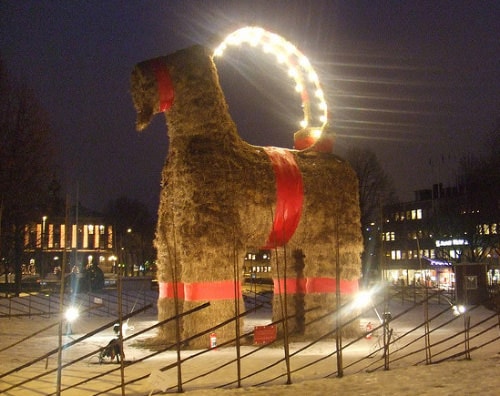 |
| Swedes have a tradition of decorating for Christmas with a giant straw goat named Gavle. Every year, the 13-meter-tall goat is erected in Gavle Castle Square, becoming an indispensable symbol of the year-end holiday. In its 50 years of existence, the giant goat has been hit by cars or set on fire 37 times. |
7. The "Santa Claus and Guns" Party in Arizona
 |
| Every year, the Scottsdale Gun Club hosts a "Santa Claus and Guns" event. This is an opportunity for families to take photos with Santa Claus and an AK-47 rifle. |
8. Christmas banana tree in India
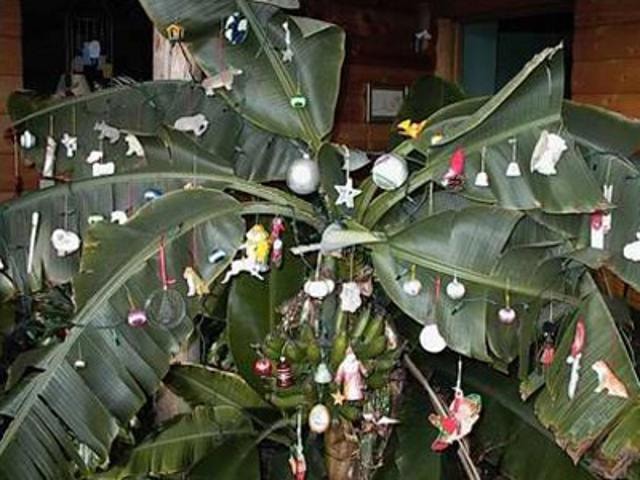 |
| Approximately 2.3% of India's population, or 25 million people, are Christian. During Christmas, instead of decorating pine trees like most other countries, Indians display and decorate other trees such as mango and banana trees. They even use the leaves of these trees to decorate their homes. |
9. Visiting graves on Christmas Eve in Finland
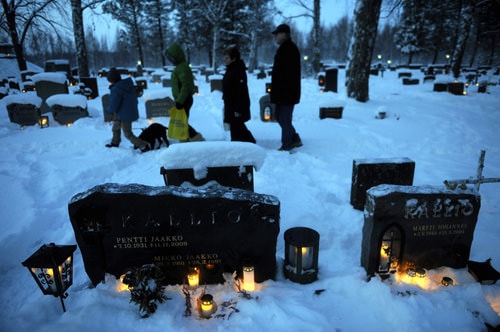 |
| Finnish families often visit graves on Christmas Eve to remember their deceased loved ones. Families whose relatives are buried far away will visit the nearest cemetery and place symbolic memorial candles. Therefore, cemeteries in Finland are always decorated and lit with candles during this time. |
10. The Night of the Turnips in Mexico
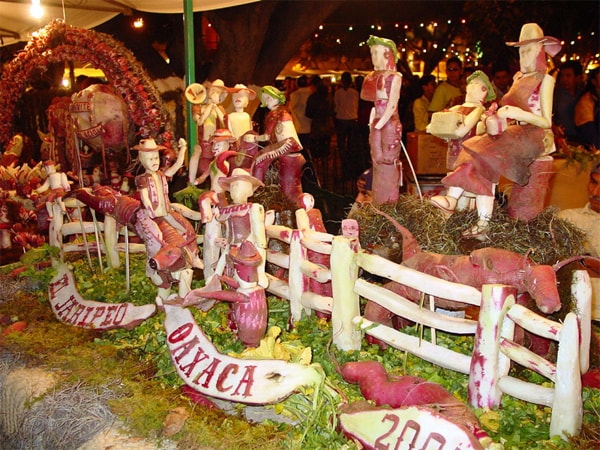 |
| The Night of the Radishes is a folk art competition held two days before Christmas in the city of Oaxaca, Mexico. Local radish growers and those from surrounding areas gather to participate in a competition to carve and shape giant radishes. |
11. Blacken your face and parade in the Netherlands.
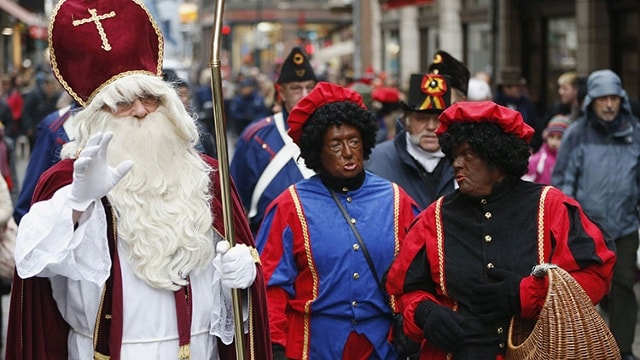 |
| In the Netherlands, Christmas Day is often celebrated with a parade of people with blackened faces (from climbing chimneys) playing the role of Zwarte Piet. According to Dutch legend, this is an escort group that accompanies Sinterklaas (similar to Santa Claus) to deliver pre-Christmas gifts to good children and also to take away naughty children. |
12. Putting gifts in shoes in Germany
 |
| In Germany, Christmas begins on the night of December 5th when children place a boot or shoe outside their bedroom. The next morning, well-behaved children receive a branch strung with candy as a reward, while naughty children receive only a bare branch. Instead of putting gifts in stockings, Germans put Christmas presents in shoes. |
Peace
(Synthetic)
| RELATED NEWS |
|---|


