
Discover the legend of 'hidden gold' at the most beautiful scenic spot on Quynh Beach.
(Baonghean.vn) - Dragon Mountain is a scenic spot in Quynh Luu district. It has great potential for developing various types of tourism. However, at this time, Dragon Mountain is still dormant…
Heart of the Sea, Quynh
With a deep love for the sea and forests, photographer Ho Xuan Thanh, head of the Quynh Land Art and Press Photography Club, has traveled to many scenic spots in Nghe An province to create his works. For him, nowhere is the sea as beautiful as Quynh beach.
Quynh Beach is the collective name for all seven beaches stretching across seven communes in Quynh Luu district and Hoang Mai town. The Quynh Luu coastline is 19.5 km long, with a landscape combining mountains, sea, rivers, and streams. This coastline boasts many long, flat, beautiful sandy beaches, and many unspoiled, undeveloped beaches. And the "nucleus," the "heart" of Quynh Beach, is Long Son (Dragon Mountain).
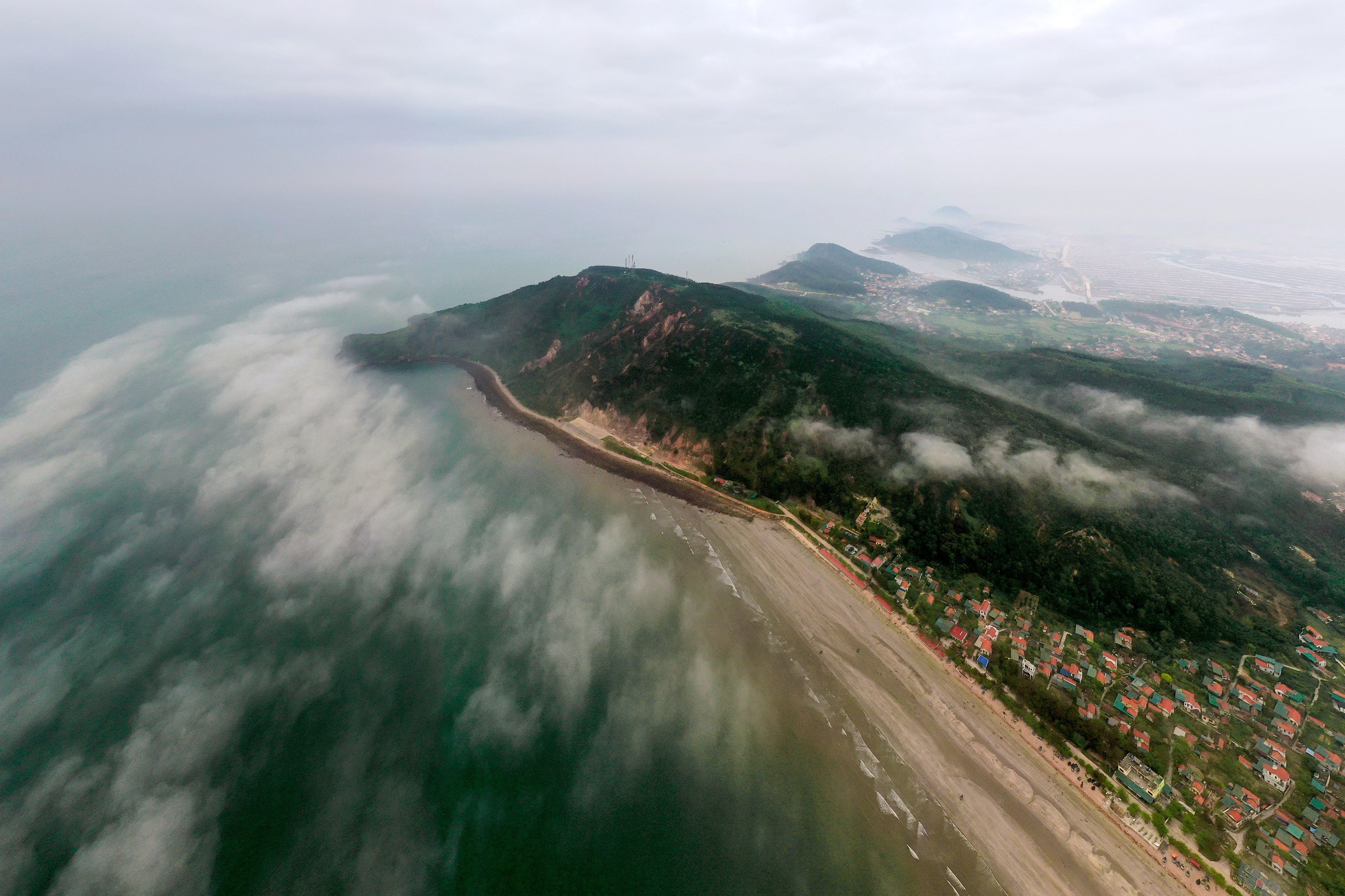
Taking us on a visit to Dragon Mountain in early April, through the account of photographer Ho Xuan Thanh, we learned that the image of the dragon has become familiar in the spiritual life of the people. Our ancestors used the word "Long" or "Rong" to name rivers, mountains, lakes, and seas. Dragon Mountain in Quynh Luu is one such place… Dragon Mountain in Quynh Luu district is a system of many low coastal mountains, stretching across many communes. Among them, there is a mountain located between the two communes of Quynh Nghia and Tien Thuy that resembles a sacred dragon stretching its head out to draw in the seawater.
The beauty of Dragon Mountain is entirely natural. Taking a boat from Lach Quen out to sea and circling the "dragon's head," you'll see many "masterpieces" created by water, waves, and wind. These include Vung Tau Beach – an ideal swimming beach with golden, flat sand and clear blue water; "Dog Island" – a small island shaped like a dog guarding the harbor entrance… and especially a system of caves formed by geological processes, seawater erosion, and weathering. These include enclosed caves, open-air caves, shallow caves, and deep caves.
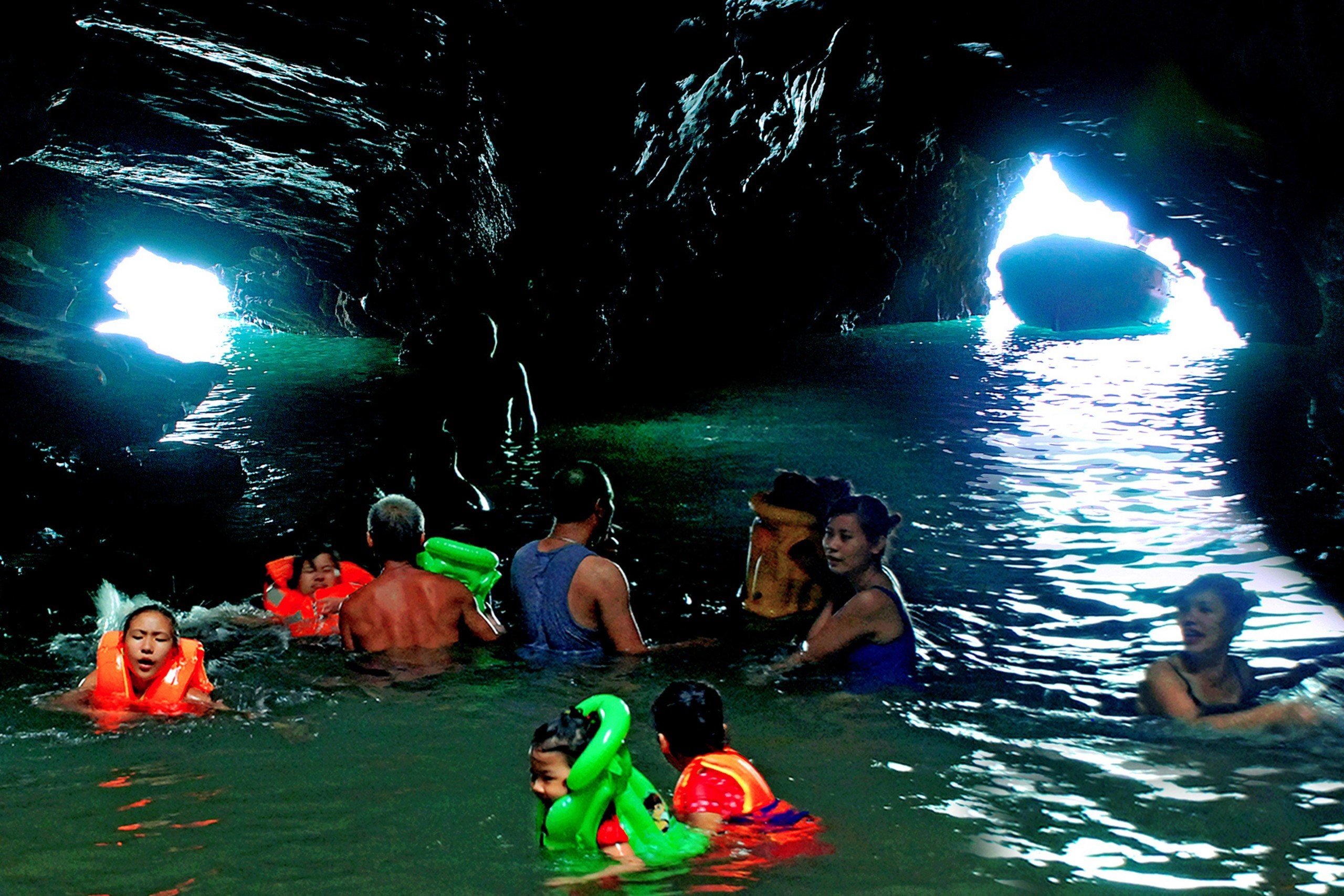
Viewed from the sea, Mui Trau Cave resembles a buffalo's nose with two "nostrils"—the two cave entrances seemingly breathing heavily. Not far from Mui Trau Cave is Mat Rong Cave (also known as Bat Cave, Bone Cave, or Vung Troi Cave). Mat Rong Cave is only visible at low tide (when the tide rises, the cave entrance is sealed), allowing boat access.
The name Dragon's Eye Cave was recently given because some photographers, during their exploration, discovered that the view from inside the cave resembled eyes looking out at the ocean. The names Bat Cave and Bone Cave, however, have existed for a long time because many bats lived inside, and an ancient fossilized skeleton was found on the ceiling near the entrance. The name "Heavenly Bay" originates from the fact that Dragon's Eye Cave is an open-air cave. The height from the top down to the cave is about 40 meters. Many tourists have used ropes to explore from the top down to the cave… Dragon's Eye Cave is very spacious, with fine, white sand beaches, and many passages leading in different directions.
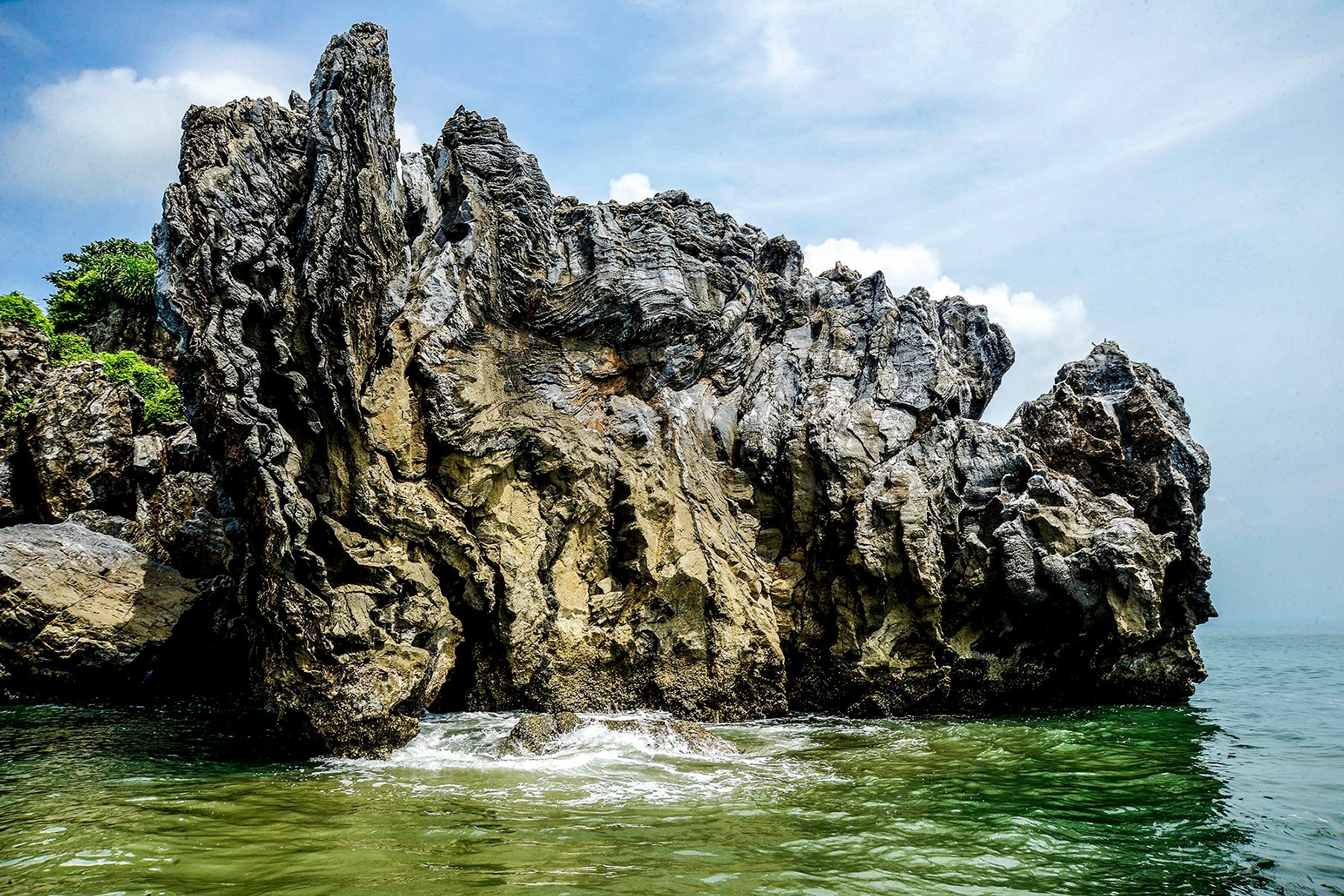
Exploring Long Son Cape, it's easy to come across isolated rocks and cliffs with layers upon layers of stunning geological formations. When the tide recedes, these rocks emerge from the sea in a myriad of shapes, creating a truly magnificent sight.
From another perspective, exploring Dragon Mountain by climbing is ideal during this season. Dragon Mountain boasts stunning forests of vibrant purple rhododendron flowers (blooming in March, April, and May), and dreamy pine hills. The mountain has a rich ecosystem, with rhododendron being the most common plant. The rhododendron trees here are all ancient, producing very large and sweet fruits. During the fruiting season (July and August), locals climb the mountain to harvest the fruit. Tons of harvested fruit are quickly bought up by traders and tourism businesses.
At the highest point of Dragon Mountain lies a vast, gently sloping grassland. The ground is quite flat, with a thick, even layer of grass. It's ideal for camping (with dozens or hundreds of people), paragliding, cloud watching, and stargazing…
It can be said that Dragon Mountain is a very suitable scenic spot for tourism development, as it combines all the elements of sea, mountains, and caves. According to local statistics, this scenic spot has as many as 46 beautiful miniature landscapes. Anywhere on Dragon Mountain can become a check-in point.
Legend of the Hidden Gold
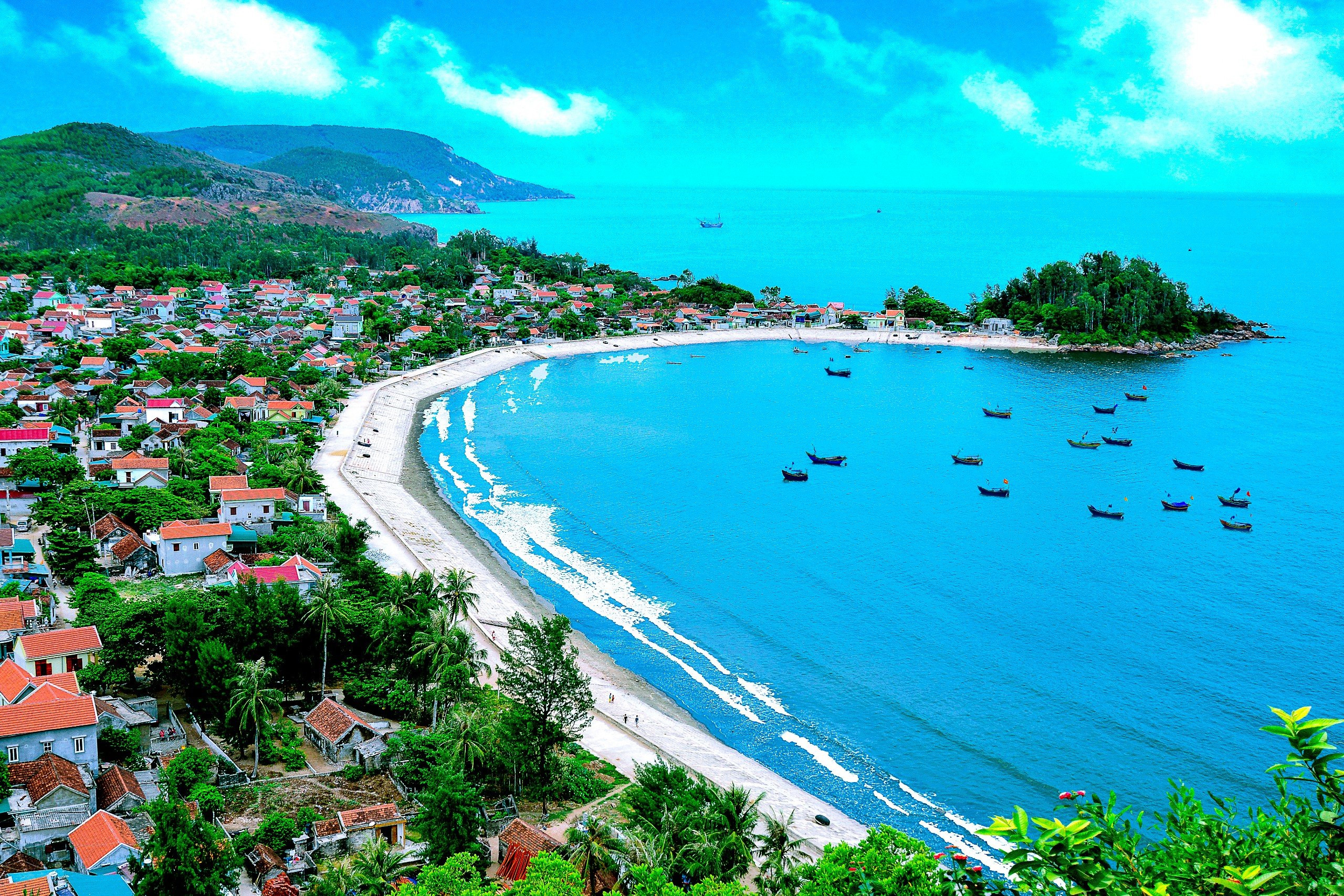
To better understand Dragon Mountain, photographer Ho Xuan Thanh led us to meet poet Ho Dinh Xich - Vice Chairman of the Literature and Arts Association of Quynh Luu District, and former Chairman of the People's Committee of Quynh Nghia Commune. At 65 years old, Mr. Xich is now a retired "old fisherman," spending his days pulling nets with the elderly at Quynh Nghia beach and researching the culture of the village and commune.
Poet Ho Dinh Xich stated: Quynh Luu may not have majestic high mountains and long rivers, but it possesses four sacred places: Kim Quy Mountain (Oi Mountain), Dragon Mountain, Ky Lan Mountain, and Phoenix Mountain. No one knows the origins of these places, but each has its own legend. Regarding Dragon Mountain, there isn't a general legend, but each individual scenic spot has its own fascinating story.
For example, the story of Hon Ong and Hon Ba – two pillars of rock standing side-by-side on Dragon Mountain – was named by the ancients to symbolize marital fidelity, remaining together despite countless storms and hardships. Another version tells the story of a father and mother who turned to stone after months of waiting for their son who went out fishing and never returned.
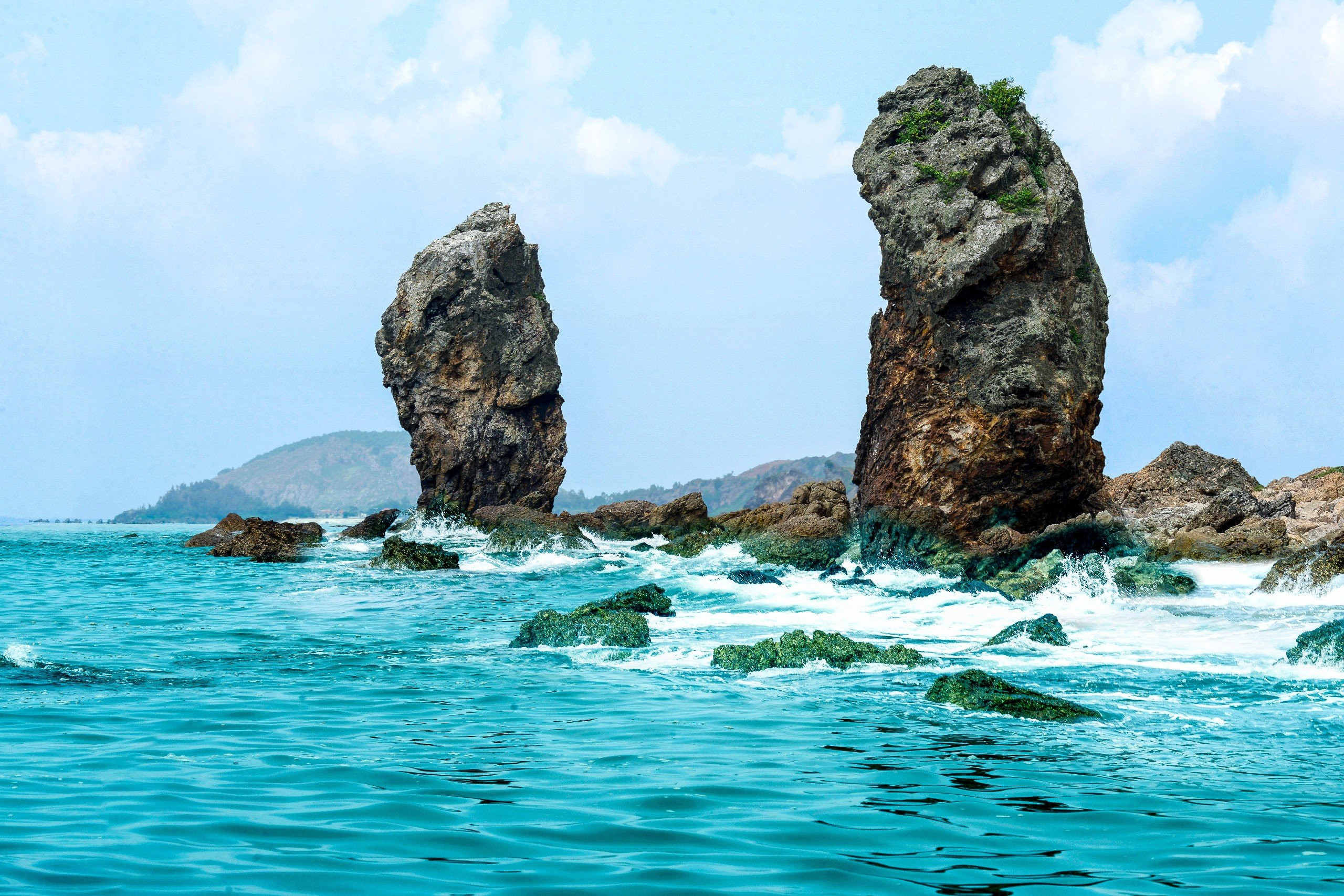
Among the many stories of Dragon Mountain, the most interesting is the story of the lid-shaped rock at the end of Quynh Nghia beach. This is a pillar shaped like a teapot lid. Ancient people say that there is gold hidden in the lid-shaped rock. If a family with five sons, five daughters, five daughters-in-law, and five sons-in-law all come here, they can open the lid to retrieve the gold. There was once such a family, but the youngest son was adopted, not biological. While opening the lid to retrieve the gold, the father accidentally called out the name of his adopted son, "Oh, my son!", startling the sacred rock and causing it to close. Fortunately, no accident occurred... Another version of the story claims that because the shape of the lid-shaped rock resembles a man's penis, it is very effective in granting wishes for children. Many families struggling with infertility have come here to offer incense and pray, and their wishes have been granted.
According to poet Ho Dinh Xich, tourism in Nui Rong (Dragon Mountain) in particular and Quynh Luu in general has developed in recent years, but it has not yet lived up to the local potential. The reasons for this underdeveloped tourism are the poor transportation infrastructure, especially the narrow and underdeveloped roads connecting the coastal road to tourist destinations. Destination promotion has also been inadequate due to a lack of resources. Furthermore, there is a lack of investors with the necessary vision and commitment to develop transportation and tourism infrastructure. Tourism development remains slow, fragmented, and small-scale, essentially dormant.
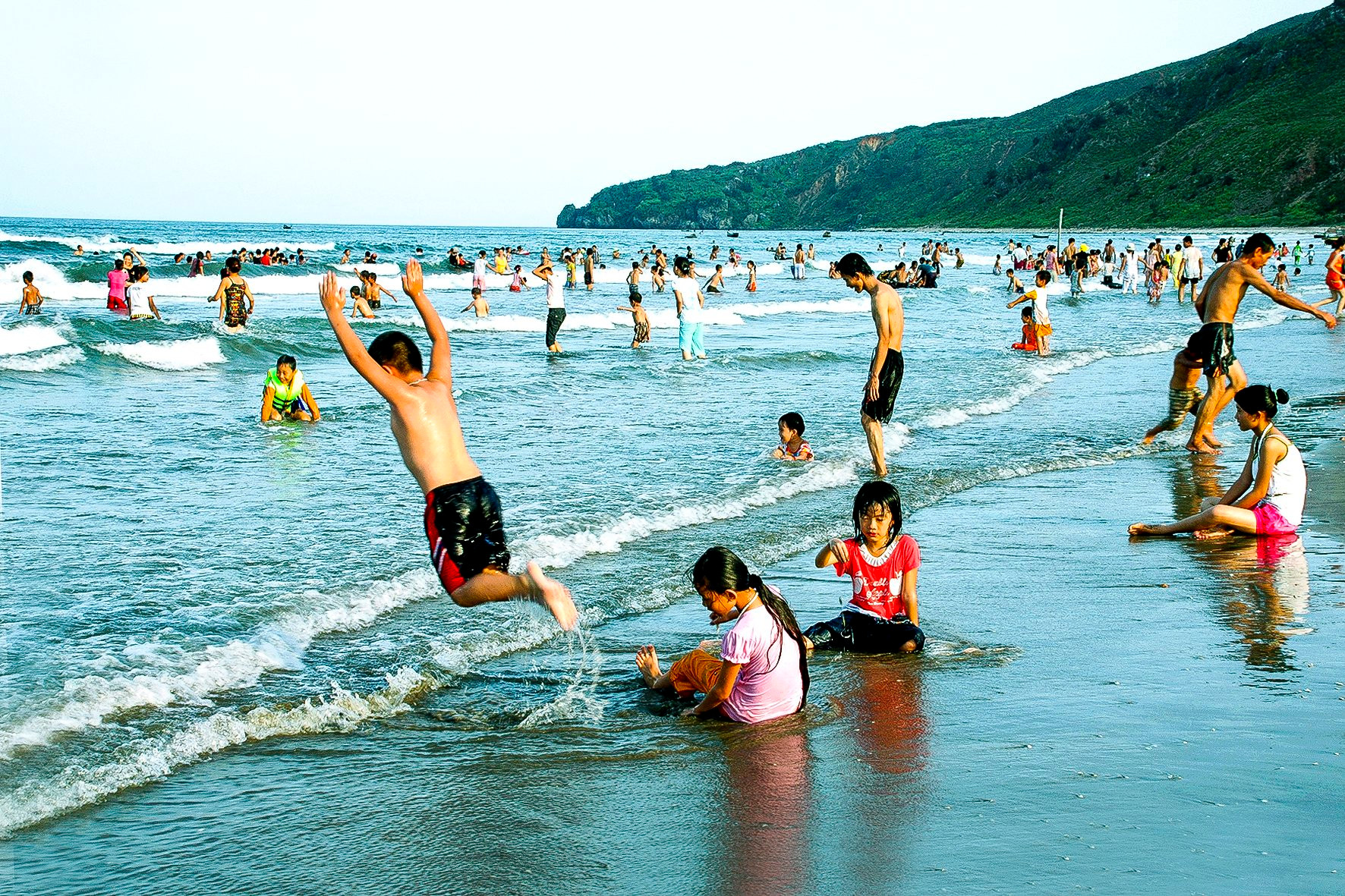
However, tourism in Dragon Mountain has great potential for development and growth. Quynh Nghia has been planned as one of the centers of the Quynh coastal tourism area (along with Quynh Bang). Dragon Mountain boasts picturesque scenery and a rare tranquil sea. The people of Quynh Nghia and Tien Thuy are hospitable. Quynh Nghia commune has many traditional crafts. Tien Thuy commune has a commercial mindset and a fishing port. Especially, when the coastal road project and the North-South expressway are completed, Dragon Mountain will become more widely known and "awakened." The key issue is that relevant authorities and sectors need to pay attention and attract more investors to come and do business and develop the area.
Dragon Mountain has a legend of "hidden gold," and it is hoped that 20 "children," or perhaps even more, will join forces to retrieve the gold!


