
When will solid-state batteries actually appear in electric vehicles?
Solid-state batteries are expected to see small-scale applications from 2030 and become widespread by 2035, according to the China Association of Automotive Engineers. Xinwangda announced a 400 Wh/kg polymer solid-state battery, warning that the 2027 target is too optimistic.
Solid-state batteries are expected to revolutionize the electric vehicle experience, but official timelines suggest users still have a long way to go. According to the technology roadmap for energy-efficient and electric vehicles published by the China Association of Automotive Engineers, full-power solid-state batteries are only expected to have small-scale applications from 2030 and become widespread around 2035, when performance, cost, and environmental adaptability are more aligned with user needs. Meanwhile, Xinwangda introduced its first-generation polymer solid-state battery with an energy density of 400 Wh/kg, but the company's leaders remain cautious about early industrialization timelines such as 2027.
2030–2035: Forecast from the China Association of Automotive Engineers
The new technology roadmap emphasizes a cautious development path for all-solid-state batteries. Specifically:
- From 2030 onwards: applications will begin to appear on a small scale.
- Around 2035: the technology is expected to become globally widespread, thanks to a better balance between overall performance, cost, and durability under a wide range of environmental conditions.
These milestones show that the path from research to commercialization still involves many transitional steps, especially in optimizing materials, safety, and production costs.
Xinwangda's 400 Wh/kg polymer solid-state battery
At the Renewable Energy Battery Industry Development Conference on October 23rd, Mr. Xu Zhongling, Director of the Central Research Institute of Xinwangda Energy Technology Co., Ltd. (China), introduced the "Xin·Bich Thien" polymer solid-state battery product. This is the company's first generation of solid-state batteries, achieving an energy density of 400 Wh/kg.
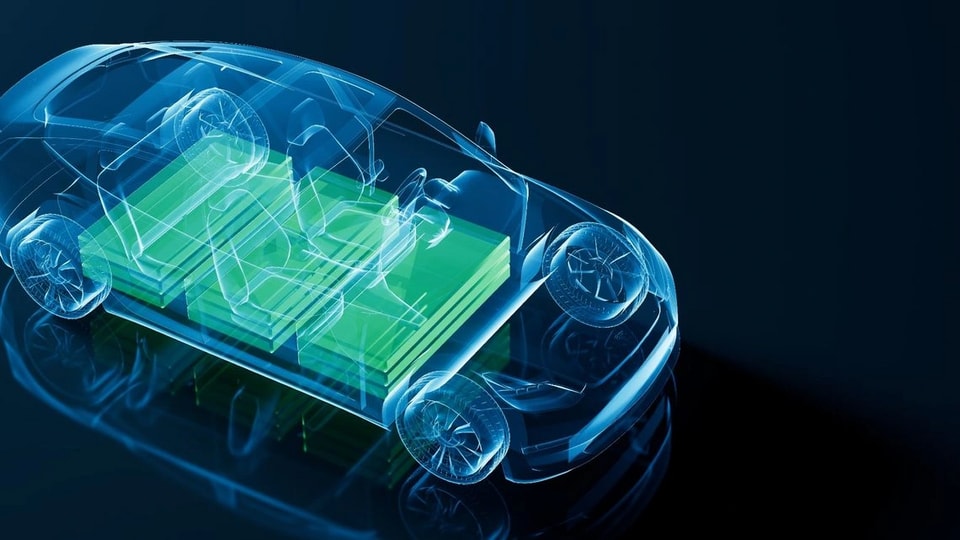
This energy density level indicates the potential for increased range of electric vehicles if implemented in future commercial products. However, the manufacturer emphasizes that the actual development roadmap must adhere to the rules of commercialization.
Mass production: caution with the 2027 deadline, coexisting with liquid lithium batteries.
Mr. Liang Ruo, Vice President and Chief Strategy Officer of Xinwangda, said that solid-state batteries could begin trial production after 2030, but will continue to coexist with liquid lithium batteries for a long time. According to him, claims from some Japanese and American companies about achieving industrialization by 2027 are "a bit overconfident."
This perspective aligns with the reality of battery technology development: older platforms like lead-acid batteries have coexisted with newer generations of batteries for over 100 years. With solid-state batteries, a complete transition requires more time to address challenges related to materials, supply chains, and reliability testing across various operating scenarios.
Significance for electric vehicle users
With the current roadmap, users can expect the first limited-scale solid-state battery applications after 2030, before seeing the technology become more widespread around 2035. During this transitional period, the market will likely continue to rely on liquid lithium batteries, while solid-state batteries are gradually tested, refined, and their application range expanded.
This means that electric vehicle models in the next few years will continue to optimize current battery technology in parallel with solid-state battery research, rather than having an immediate leap in range or charging speed simply due to a change in battery technology.
Summary of key milestones and facts
| Milestone/Information | Detail |
|---|---|
| 2030 | Solid-state batteries are expected to be used on a small scale (according to the China Association of Automotive Engineers). |
| 2035 | The technology is expected to become globally widespread; its performance, cost-effectiveness, and environmental adaptability are improving. |
| 23/10 | Xinwangda introduces the “Xin·Bich Thien” polymer solid-state battery. |
| Energy density | 400 Wh/kg (according to Xinwangda) |
| Production schedule | Trial production could begin after 2030, coexisting with liquid lithium batteries. |
| 2027 milestone | Considered "a little too confident" when talking about industrialization (according to Xinwangda's perspective). |
Conclude
New information suggests that the era of solid-state batteries in electric vehicles will arrive in an evolutionary way: starting on a small scale after 2030 and becoming widespread around 2035. Although a 400 Wh/kg polymer solid-state battery product has been announced, industry stakeholders remain cautious about early industrialization and believe that solid-state batteries will coexist with liquid lithium batteries for a long time. This trajectory aligns with the development trends of battery technology and the supply chain.


