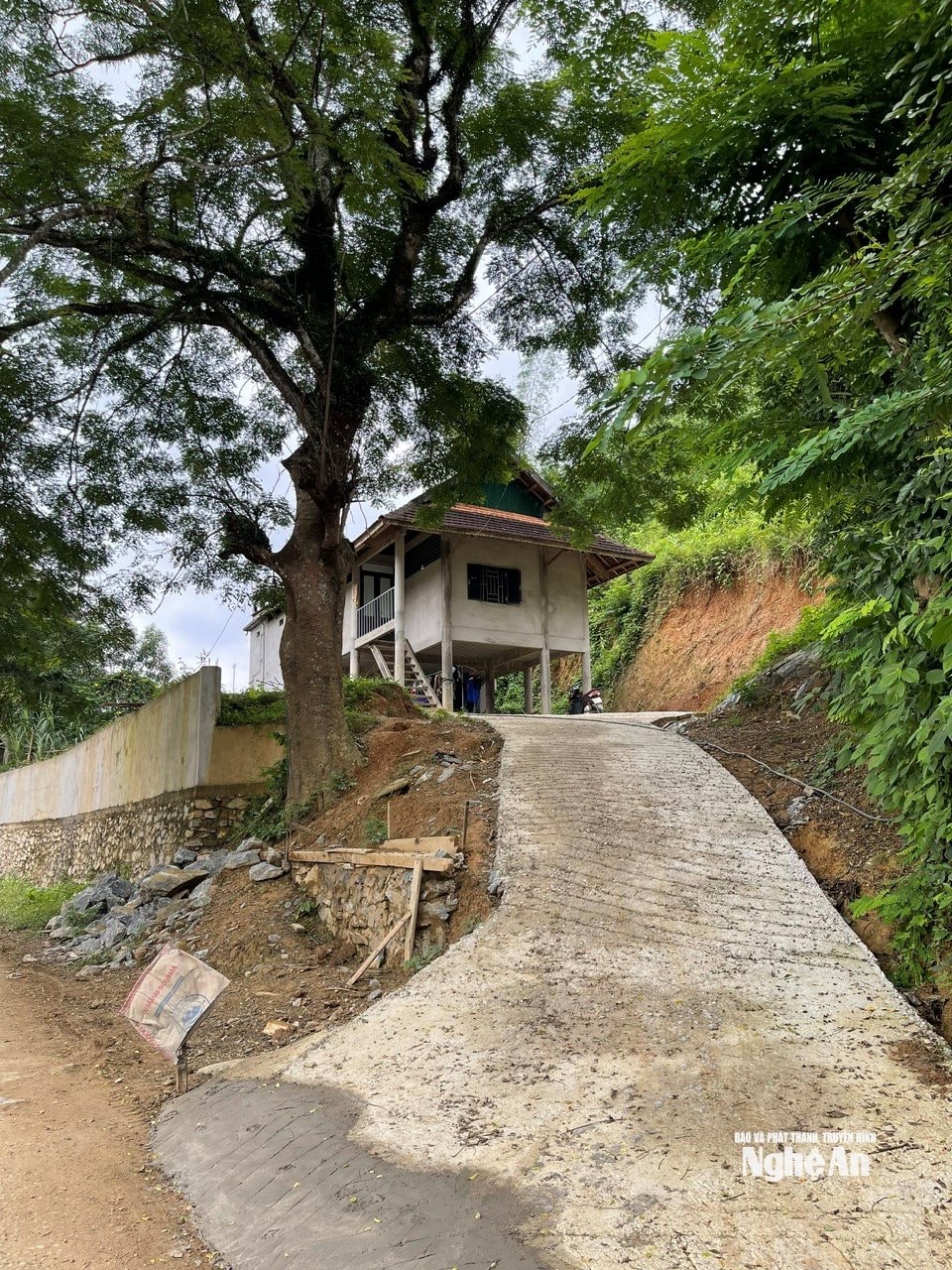
When concrete stilt houses are built on the mountain...
Having traveled to the mountainous regions of Nghe An province many times for work, I was particularly impressed by the concrete stilt houses nestled beneath the lush, sprawling mangrove forests of Con Cuong. For generations, these stilt houses have been an indispensable part of the peaceful beauty of the highlands. They also hold cherished memories for generations of the Thai, Khmu, and O Du people. It wasn't until I met that kind and talented young man from the Thai ethnic group that my curiosity was finally answered.
An unexpected idea for preserving Thai stilt houses.
I arrived at Chai village, Con Cuong commune, on a hazy afternoon. The cool chill of the highlands still lingered in this land, seeping through the fields and the traditional Thai stilt houses nestled amidst the vast expanse of the bamboo forest.
A group of workers diligently working on the stilt house roof stopped, curiously looking downwards... A moment later, a man wearing a dark blue protective jacket stepped down, extending his rough, work-worn hands towards me: "I'm Huong. It seems you're here to inquire about building concrete stilt houses, aren't you?"
He smiled gently, like many other people from the highlands, to begin the conversation with me.
.jpg)
Mr. Lo Van Huong, born in 1986, is a member of the Thai ethnic group and has been a house builder for many years. He often builds houses for people in Chau Khe, Lang Khe, Chi Khe communes and some other localities in Con Cuong district in the past. In 2009, while building a Thai stilt house in Lang Khe, the homeowner ran out of wood. Continuing the construction would be impossible due to the lack of wood, but abandoning the house was also not an option. Meanwhile, the homeowner still longed to complete the stilt house because, for the Thai people, the stilt house is not only a place to live but also a childhood memory and a cultural identity that they cannot easily abandon.
For many days, Lo Van Huong tossed and turned, anxiously worrying about the unfinished construction. With his years of experience building stilt houses, Huong came up with the idea: "Why don't we build a concrete stilt house? The materials are readily available, and the cultural identity of the Thai people won't be lost."
A seemingly simple question unexpectedly led Mr. Huong's team of builders down a different path. From their first project in 2009, the idea of replacing wooden stilt houses with concrete ones became increasingly popular. Since 2009 and 2010, Mr. Huong and his teams have undertaken the construction of dozens of these new-style stilt houses. Each year, Mr. Huong personally builds 2-3 houses. In the former Yen Khe commune, now part of Con Cuong commune, he has already built 5 such houses.
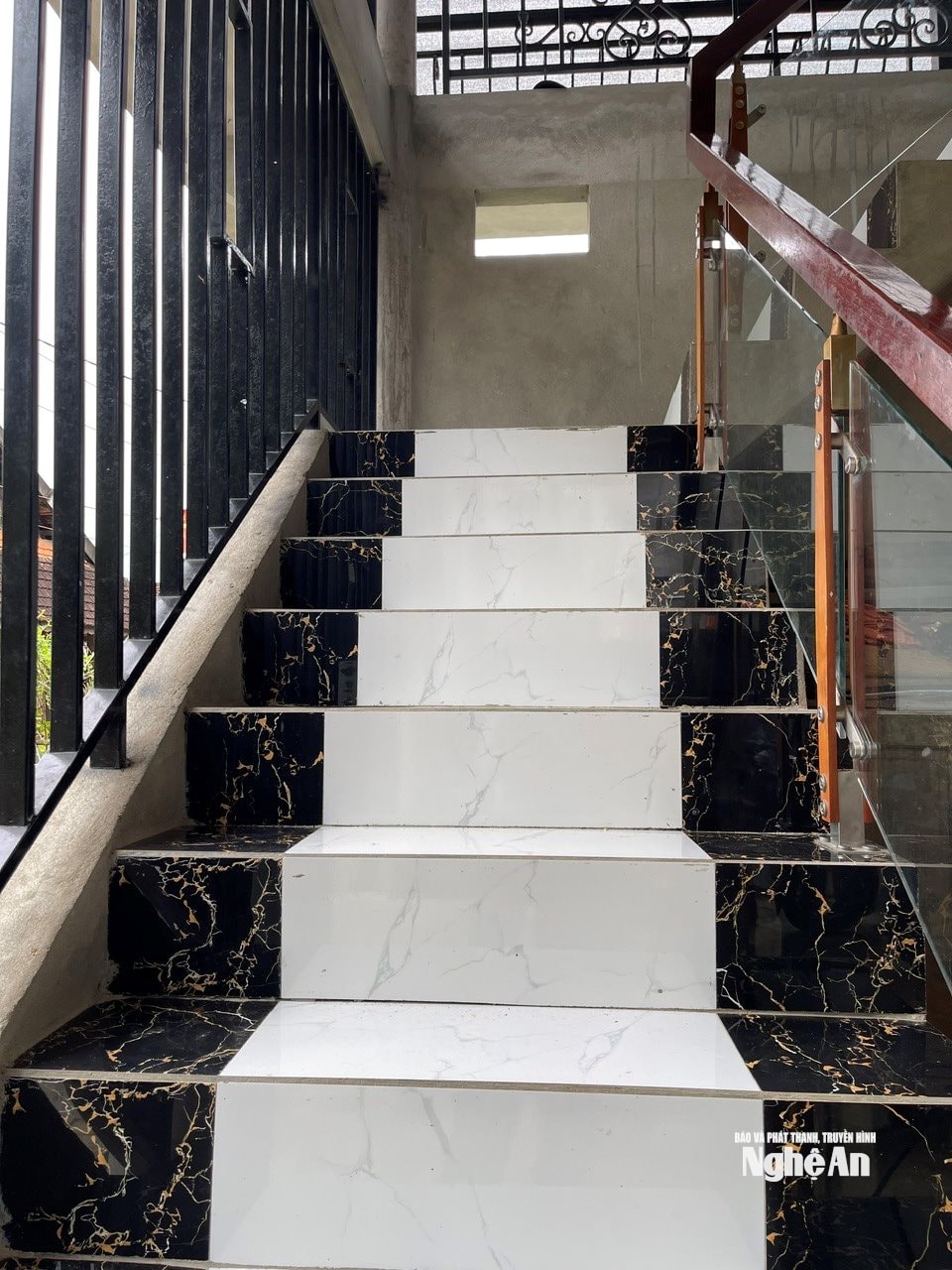
Compared to the house designs I created in 2009, 2010, and 2015, the architecture of stilt houses has changed a lot. The first houses were designed simply, but now designers create elaborate structures like raised columns and beams, making the houses much more aesthetically pleasing.
Mr. Lo Van Huong, a concrete stilt house builder.
Preserving the essence of Thai culture in a new form.
“My childhood was spent in stilt houses. So when Mr. Huong and his team built this house for my family, my husband and I were very pleased. We're used to living in stilt houses, and it's wonderful!” Ms. Vi Thi Cuong and her husband, Mr. Luong Van Nuoi, from Chai village, couldn't hide their satisfaction when sharing about their new home. The couple said that, given the increasing scarcity and high cost of wood, building a concrete stilt house was a suitable choice, both in terms of construction costs and in line with local cultural customs.
"By 2025, building a three-room concrete stilt house like mine would cost around 400 million VND, with more elaborate decorations it could go up to 500 million VND. If you build a wooden stilt house, it might cost 700-800 million VND, or even 1 billion VND, and it might not even be beautiful," Mr. Luong Van Nuoi asserted.
He also mentioned that he and his wife had to borrow a little extra from the bank, and their family grew acacia trees themselves, so they had wood for wall cladding and formwork; the team of workers, led by Mr. Huong, were all relatives, so his house was both beautiful and cost-effective.
For Ms. Lo Thi Hai in Thuy Khe hamlet, Con Cuong commune, this Thai ethnic woman also couldn't hide her satisfaction that her concrete stilt house, built in 2015, is still in good condition. The stilt house is cool in the summer and warm in the winter. "My parents and I are all Thai ethnic people. According to customs and traditions, Thai people must live in stilt houses because they are elevated," Ms. Lo Thi Hai shared.
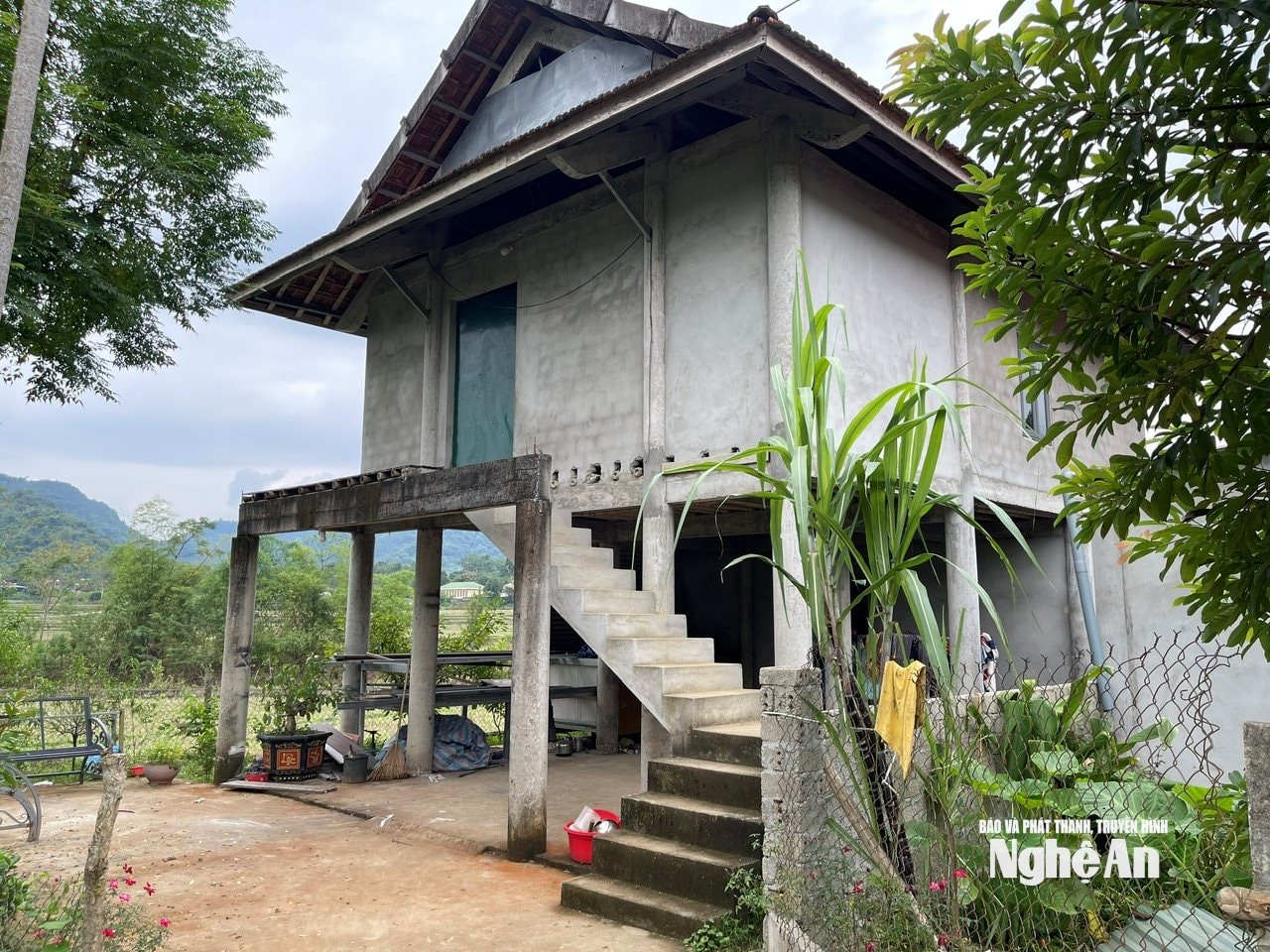
According to Dr. Vi Van An, an expert in ethnology, the stilt houses of the Thai ethnic group in Nghe An province have four styles, developing over different periods, from simple to complex. The last style featured four rows of columns, built by craftsmen from the lowlands of Thanh Chuong and Ha Nam Ninh. Later, some groups of Thai craftsmen built them independently. Over the past 15 years, models with concrete columns, beams, and floor frames have begun to appear. This change stems from practical realities, as wood is becoming increasingly scarce, and regulations on wood exploitation and transportation by the State are much stricter than before. “Concrete stilt house designs have a longer lifespan than wooden stilt houses, and materials like concrete and steel are more readily available. Importantly, the group of craftsmen who create the most beautiful designs is more favored by the people,” Dr. Vi Van An stated.
The most common concrete stilt houses built today have three bays, with some even having five. Depending on the family's financial means and the complexity of the design and construction, the cost of a completed house ranges from 300 to 500 million VND. This is significantly cheaper than building a wooden stilt house, while maintaining the same functionality and providing a sense of familiarity and comfort for the people in the highlands.
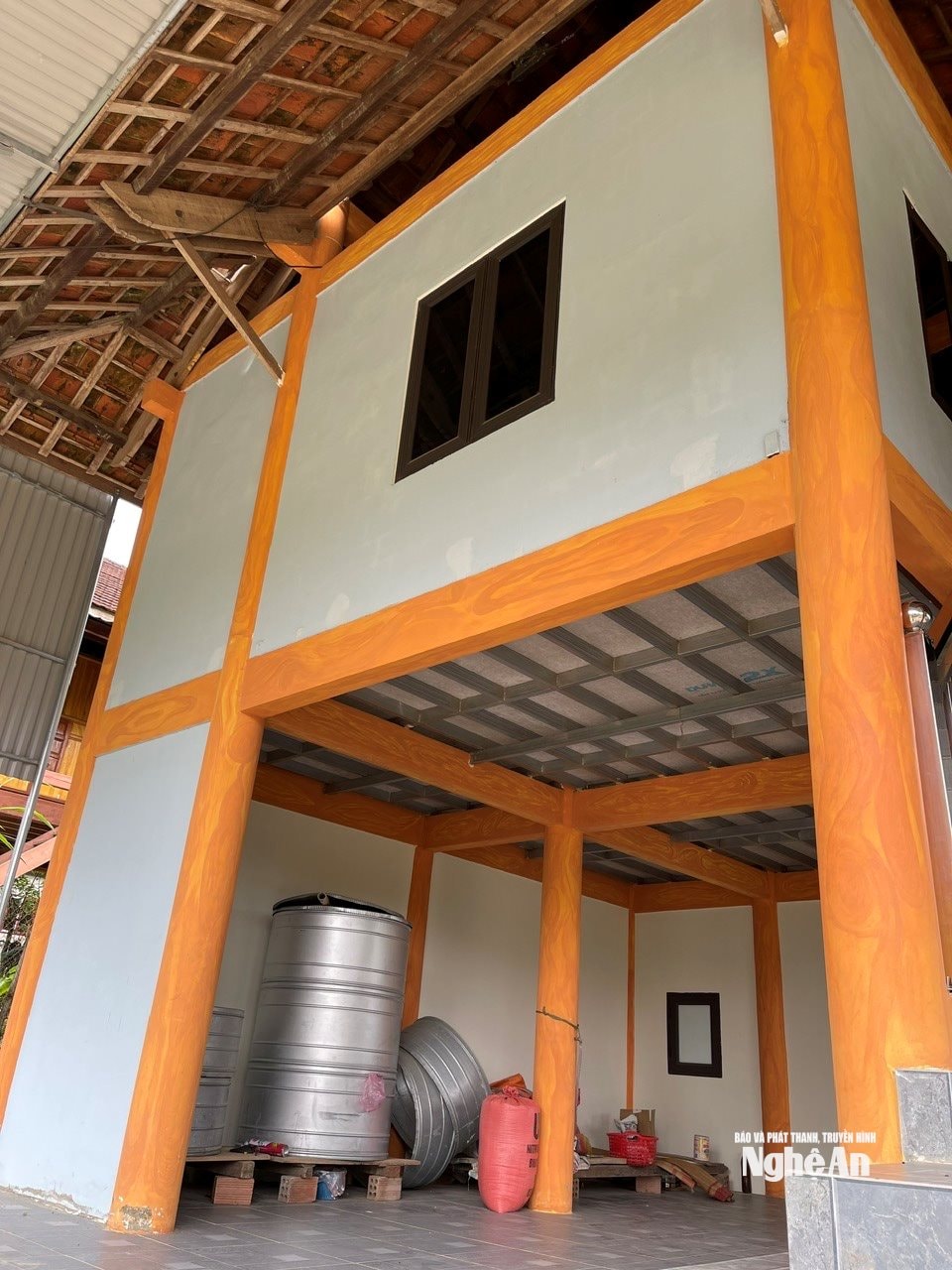
Although concrete stilt houses are chosen by many Thai ethnic villages along National Highways 7 and 48, and many O Du, Mong, and Khmu families also opt for this architectural style, the design and construction of concrete stilt houses currently lack a unified model. Depending on the economic conditions and needs of each homeowner, builders may design a simple or multi-tiered structure; they may clad the walls and floors with wooden planks or tiles, but the layout of the living space remains unchanged compared to the old stilt houses.
“In my opinion, the construction teams should focus on design. The teams should design according to a unified model for what a 3-bay or 5-bay stilt house should look like… When designing, they must understand the basic rules regarding customs, traditions, identity, and living habits of the people; the beams should be more slender,” suggested Dr. Vi Van An.