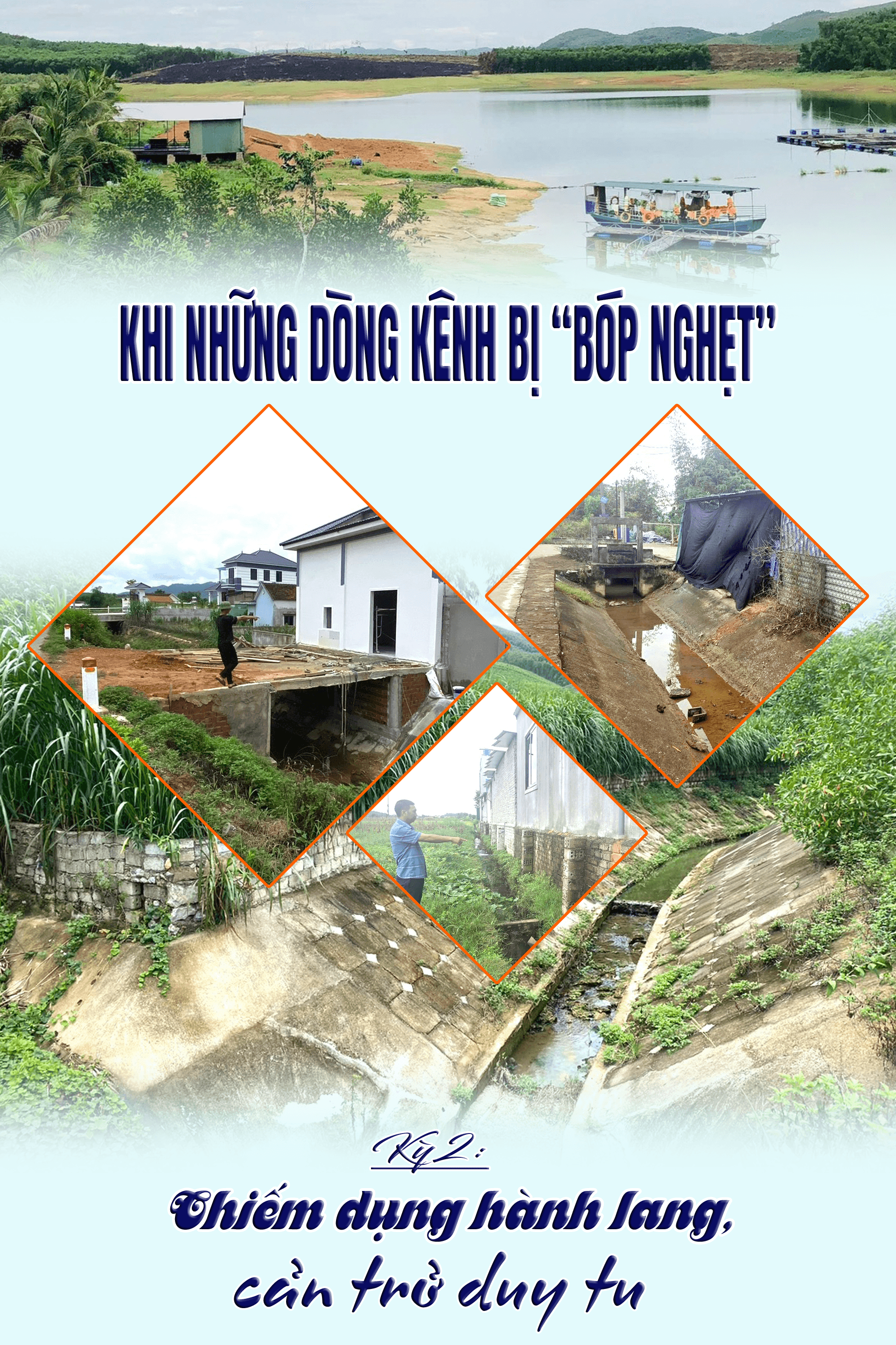
When canals become "choked":Part 2: Occupying the corridor and obstructing maintenance.
Not only are many irrigation canals in Nghe An being encroached upon for the construction of houses and shops, but they are also being turned into dumping grounds for wastewater, garbage, livestock pens, and trees. In some places, dozens of structures have sprung up right on the protected corridor, leaving the management unit with no way to access and inspect or repair them.
Reporters Team/Present:Hong ToaiAugust 17, 2026
*****
Not only are many irrigation canals in Nghe An being encroached upon for the construction of houses and shops, but they are also being turned into dumping grounds for wastewater, garbage, livestock pens, and trees. In some places, dozens of structures have sprung up right on the protected corridor, leaving the management unit with no way to access and inspect or repair them.
.png)
For decades, the N24-8 irrigation canal has been an essential waterway, providing irrigation water for approximately 200 hectares of farmland in Quynh Phu commune. However, in the last two years, this canal has not only been encroached upon by construction but has also become a receiving point for wastewater from residential areas.
Leading reporters along the canal, Mr. Ngo Quang Quy, a worker at the Quynh Luu Irrigation Enterprise, said that this situation has existed since 2024. Immediately after discovering the problem, the Enterprise's leadership repeatedly worked with local authorities and residents, but to date, no definitive solution has been found. Meanwhile, the encroachment is becoming increasingly serious.
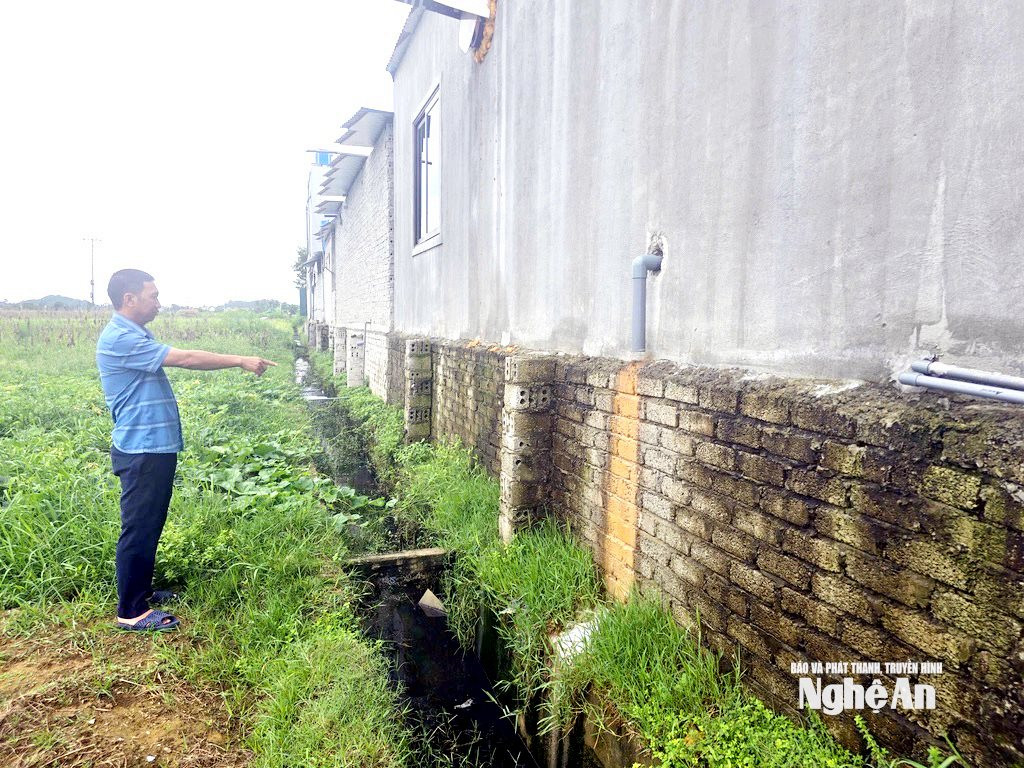
This is a secondary irrigation canal, approximately 4km long. In 2024, after purchasing land at auction from the former Son Hai commune government, several local households began constructing cafes and restaurants, some of which were built directly on the canal bank. Since then, about 20 more houses have sprung up. According to observations, only one household built according to regulations, leaving a gap at the back of the house adjacent to the irrigation canal; the remaining households all built their houses directly on the canal bank.
Not only is the canal being encroached upon, but it also has to bear the burden of domestic wastewater from households and restaurants through openly installed pipes. According to the reporter's observations, many sections of the canal are pitch black and emit a foul odor. Behind the rows of houses, garbage is piled up, in some places causing blockages in the water flow.
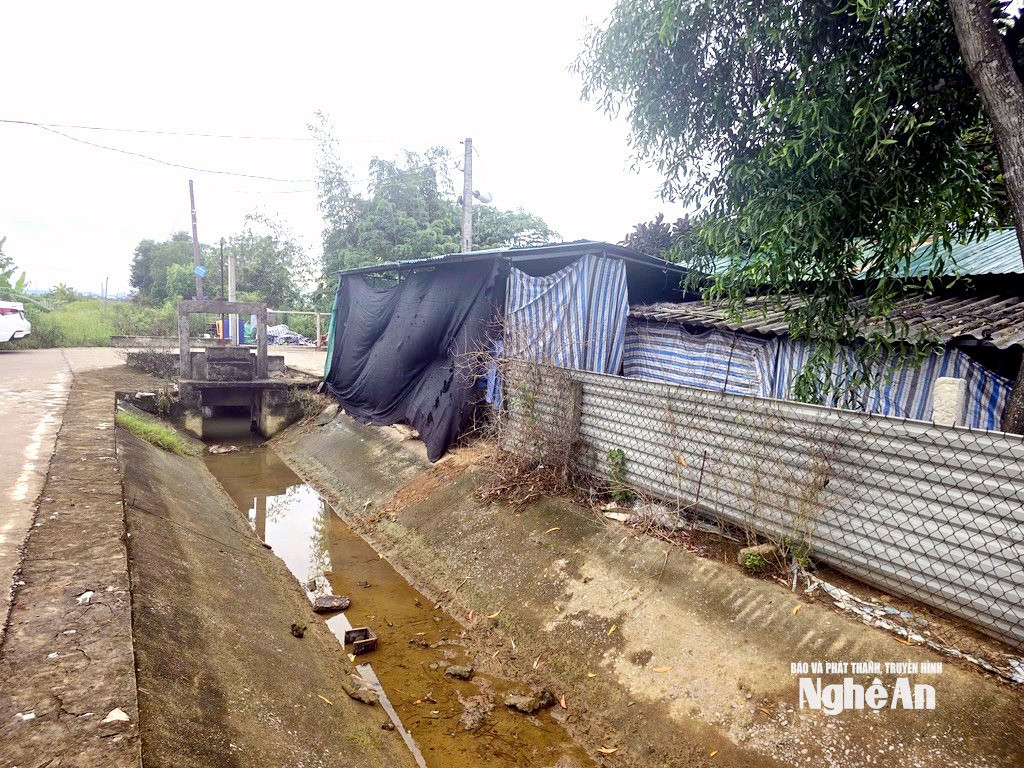
“We have to constantly go and remove the waste, which is very difficult. One side of the canal has been completely encroached upon, so we can't bring in machinery for construction whenever repairs are needed,” Mr. Quy said. From a structure whose purpose was to supply water for production, the canal now has to bear the burden of waste, wastewater, and construction projects located right on its protected corridor.
A similar situation is occurring along the 32-meter-long canal in Hamlet 2, Quynh Tam Commune.
Through on-site surveys, it was found that many households have built houses and outbuildings right at the edge of the canal; some households utilize the corridor for poultry farming, constructing barns or expanding their structures. Notably, some power poles have also been erected directly on the canal's protection corridor, narrowing the management space and posing potential safety risks.
Mr. Bui Duy Nhan, a worker managing reservoir 32, said that along the approximately 6.5km long canal, more than 20 households have built structures right along the canal's edge. Not only are they building structures, but in many sections of the canal, residents are dumping household waste into it. The management unit has to regularly organize waste collection to ensure a smooth flow of water.
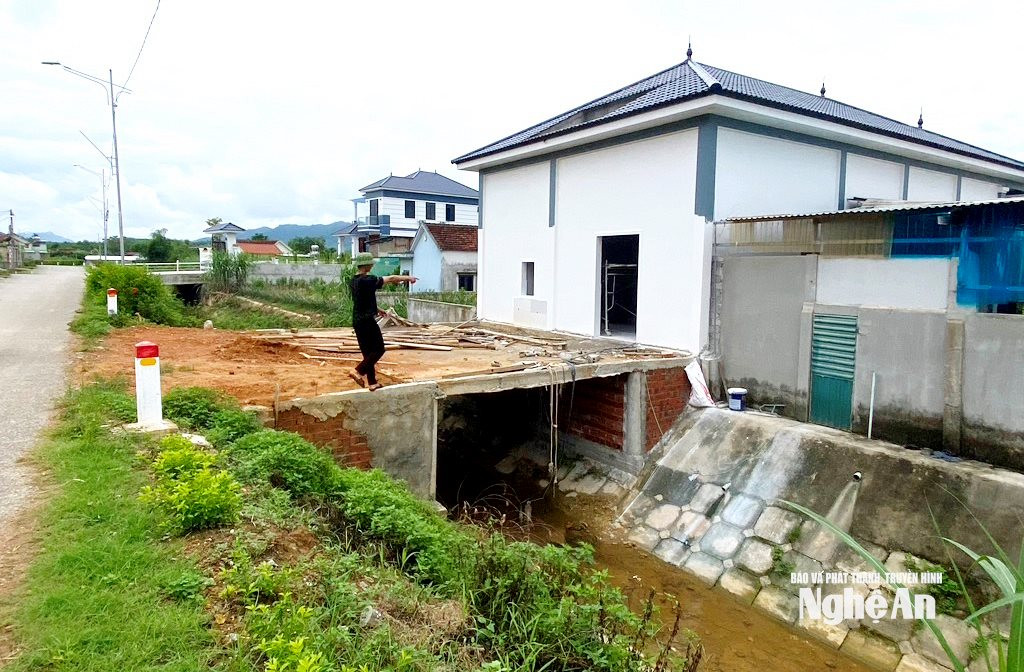
According to Mr. Vo Si Hong, the construction of structures close to the canals by residents, encroachment on the protection corridor, and dumping of garbage into the canals are increasing the blockage of water flow, directly affecting water supply, drainage, and the management and repair of the structures. These seemingly isolated actions are gradually creating significant pressure on the irrigation system. When the corridor is narrowed and waste clogs the flow, inspection and maintenance become more difficult.
.png)
Along the irrigation canal of Khe Than reservoir, passing through Tien Son hamlet, Quynh Tam commune, numerous cases of construction right on the canal's edge have recently appeared. Many houses have been built right next to the irrigation protection corridor. Some households have even built bridges leading to their houses across the canal, significantly narrowing the flow.
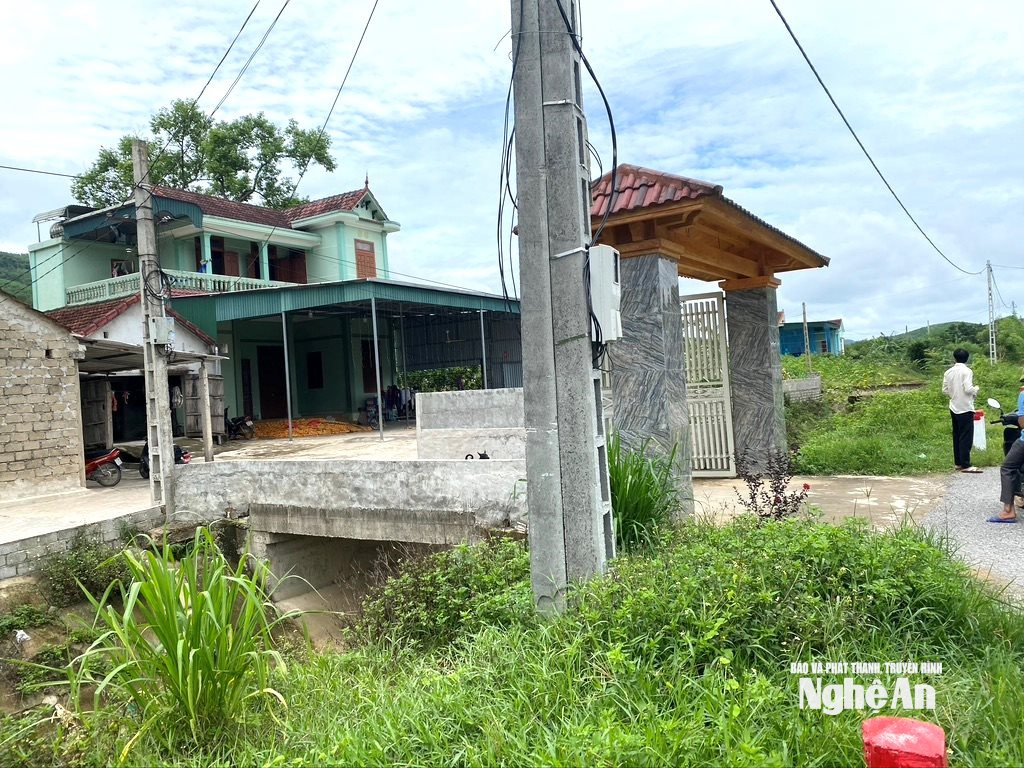
For example, Mr. Bui Ngoc N.'s household built a house right next to the canal and constructed a bridge across it, narrowing the canal's flow. Meanwhile, Mr. Ho H.'s household built a gate and fence on the protected corridor of the irrigation system.
Notably, many households are also planting sugarcane and acacia trees right along the canal's edge. According to Mr. Bui Duy Tai, a worker managing the Vuc Mau reservoir, this is a crucial canal, over 6km long, responsible for supplying irrigation water, domestic water, and drainage to many residential areas. However, along the entire route, there are currently about 25 households encroaching on the protective corridor of the structure, including 4 households planting acacia trees right at the concrete edge of the canal.
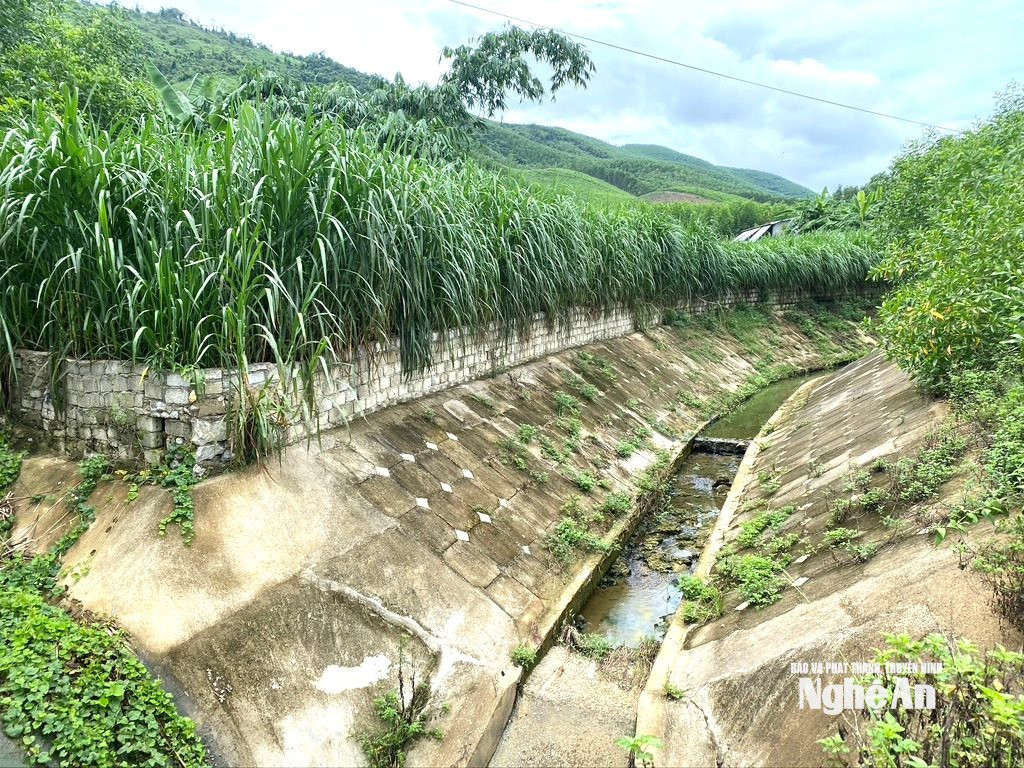
According to Mr. Tai, the growing root system of the trees can crack, lift, and break the concrete structure, causing the canal embankment to deteriorate and seriously affecting the lifespan of the structure.
Besides the risk of damage to the structure, construction and tree planting within the protection corridor also block access for management personnel to inspect, operate, repair, or handle incidents along the canal.
In the event of natural disasters or the need for emergency water regulation, accessing the infrastructure becomes difficult, directly impacting water supply and drainage for the people.
The encroachment on the irrigation canal corridors is not limited to just a few canals. In Hung Nguyen commune, many canals are also experiencing the problem of people occupying the canal banks to build houses, set up livestock farms, and plant acacia trees.
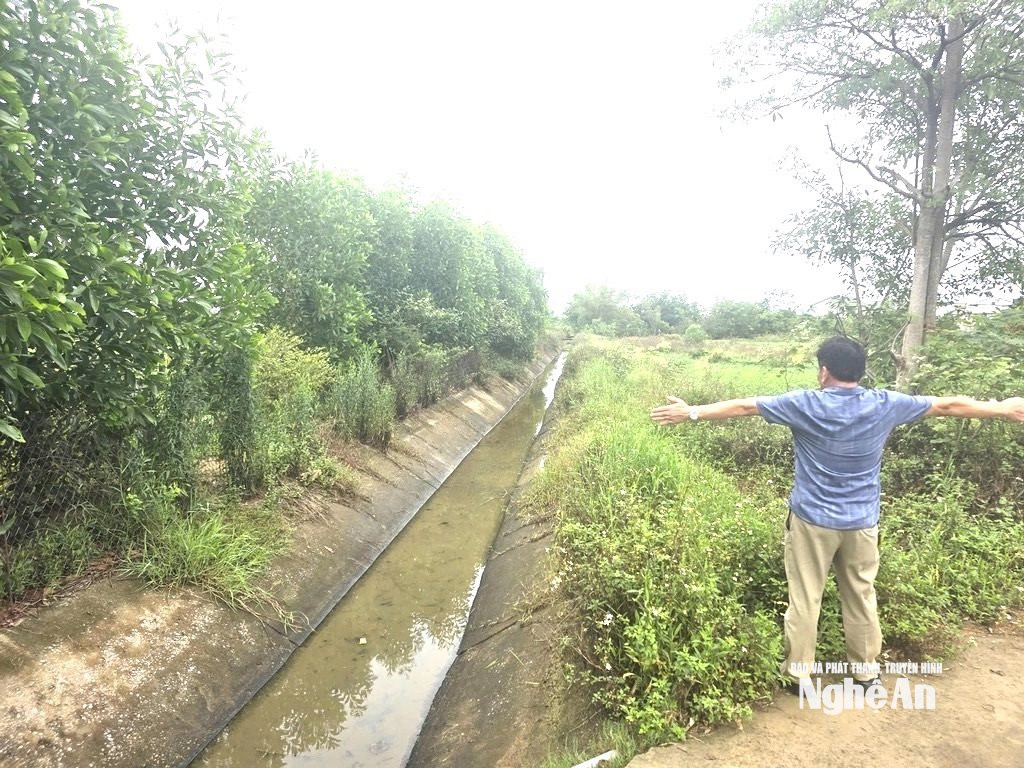
Leading reporters along the canal that serves to irrigate hundreds of hectares in the commune, Mr. Le Van Hung, Director of Hung Nguyen Irrigation Enterprise, said that this situation is becoming a pressing problem for the irrigation sector.
Pointing down to the first-level irrigation canal, Mr. Hung explained that, according to regulations, a 3-meter corridor extends from the canal's edge. However, many households have taken advantage of this area to build houses, establish livestock farms, and especially to plant acacia trees.
We've had numerous meetings with local authorities, but so far we haven't been able to resolve the issue. Our unit doesn't have the jurisdiction."
Mr. Le Van Hung - Director of Hung Nguyen Irrigation Enterprise
According to Mr. Tran Van Hoa, Head of the Engineering Department of the North Nghe An Irrigation Company Limited, the entire North Nghe An Irrigation system still has more than 600 households encroaching on the safety corridor of the irrigation works. The majority of these cases have existed for decades. The North Nghe An Irrigation Company Limited is tasked by the Nghe An Provincial People's Committee with managing, exploiting, and protecting the irrigation system to serve agricultural production, domestic water supply, and water supply for factories and industrial zones in dozens of communes and wards. However, the number of violations of the irrigation protection corridor is increasing, with the nature of these violations becoming more complex.
(To be continued)