
What should you keep in mind when you need to tow a vehicle that has broken down?
While driving, your car can break down at any time and require roadside assistance. Here are a few things to keep in mind when this happens.
In the event of a vehicle breakdown or malfunction while driving, the owner needs to know the technical specifications of their vehicle and inform the roadside assistance center of the vehicle type and drivetrain.
This is crucial because it helps the rescue center classify the vehicle and dispatch the correct type of rescue vehicle. There are three main types of drive systems: front-wheel drive, rear-wheel drive, and all-wheel drive (AWD or 4WD).
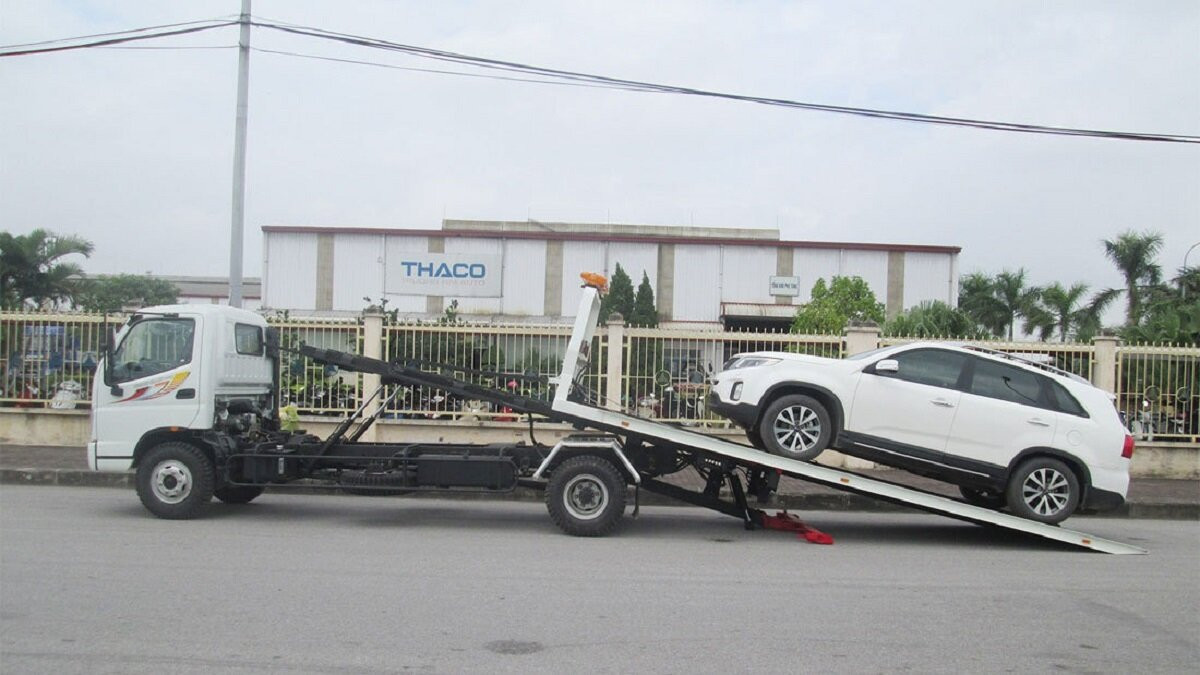
Rescue methods with different types of drive systems.
Front-wheel drive vehicle towing
Front-wheel drive vehicles can be used for both towing and hauling. However, most rescue centers will use towing due to its greater convenience. In this method, the tow truck lifts the front wheels onto the vehicle while the rear wheels remain on the ground and are towed behind.
Rear-wheel drive vehicle towing
When using a rear-wheel drive vehicle, two methods of carrying and towing are possible. Specifically, rescue personnel will lift the rear wheels onto the vehicle while the front wheels remain on the ground and are towed behind.
Vehicle recovery using a four-wheel drive system.
If it's a four-wheel drive vehicle, a tow truck should be used to avoid damaging the drivetrain. If towing is necessary, rollers should be used to keep the two wheels off the road during the towing process.
If conventional towing methods are used, the rotating wheels will exert reverse pressure on the drivetrain and gearbox while the engine is not running. This will also increase friction and damage machine parts due to insufficient lubrication.
In summary, when a vehicle uses a front-wheel drive system, lift the wheel on that side. If the vehicle has a four-wheel drive system, it is advisable to lift or carry all four wheels.


