
When "village schools" have STEM classrooms.
In the land known as the "Village of Scholars"—a place where a tradition of studiousness has nurtured generations of intellectuals and scholars—Thanh Luong Secondary School in Xuan Lam commune, Nghe An province, is creating a new and inspiring story. The STEM classroom, recently installed to international standards through the "STEM Innovation Petrovietnam" program, has already begun to radiate vitality.
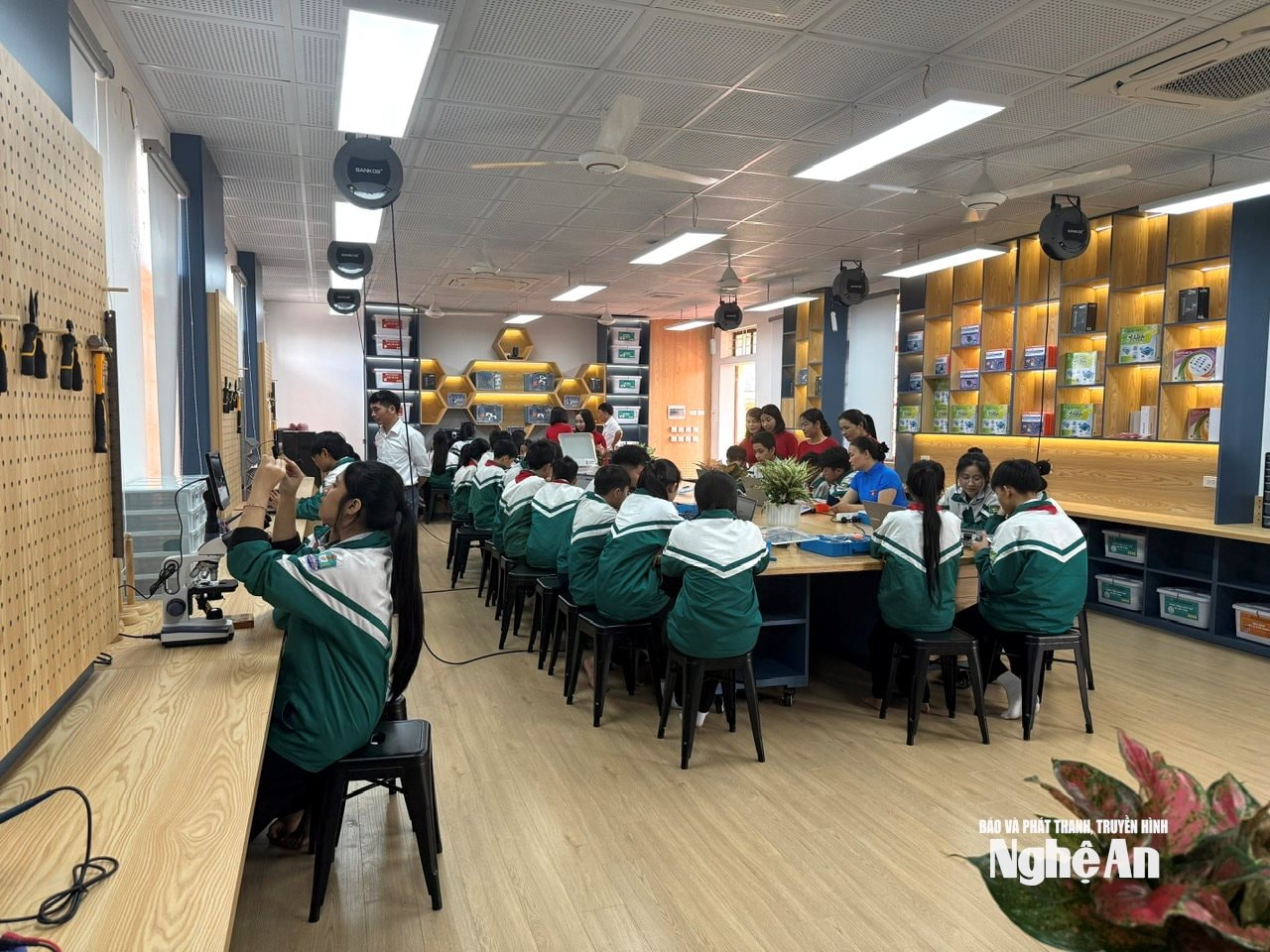
From studious rural areas to modern, technology-driven educational spaces.
When mentioning Nghe An, people often think of villages rich in scholarly traditions. Among them, Thanh Luong commune, in the former Thanh Chuong district, is famous for its name.Baccalaureate Village- A land where the tradition of learning has become an enduring spiritual heritage, preserved through generations. There, the sound of the school drum not only heralds a new school year but also awakens the aspiration to excel through knowledge.
Amidst the nation's efforts to promote scientific and technological breakthroughs in accordance with Resolution 57-NQ/TW and the fundamental and comprehensive reform of education and training as outlined in Resolution 71-NQ/TW, STEM education is gradually becoming the "key" to unlocking future capabilities for students. With the "STEM Innovation Petrovietnam" initiative by the Vietnam National Energy and Industry Corporation (Petrovietnam), many localities, including Thanh Luong Secondary School, have for the first time had access to modern science, technology, and engineering practice spaces.
The STEM classroom at Thanh Luong Secondary School was completed at the end of 2025. While not as large as urban innovation centers, the room is well-equipped and modern, featuring an interactive whiteboard, 3D printer, VEX Robotics robots, AI-IoT systems, CNC cutting machines, and a set of experiments on energy and environmental themes. For the first time, students at a rural school have had the opportunity to experience technology in model building, robot operation, and the construction of complete engineering products.
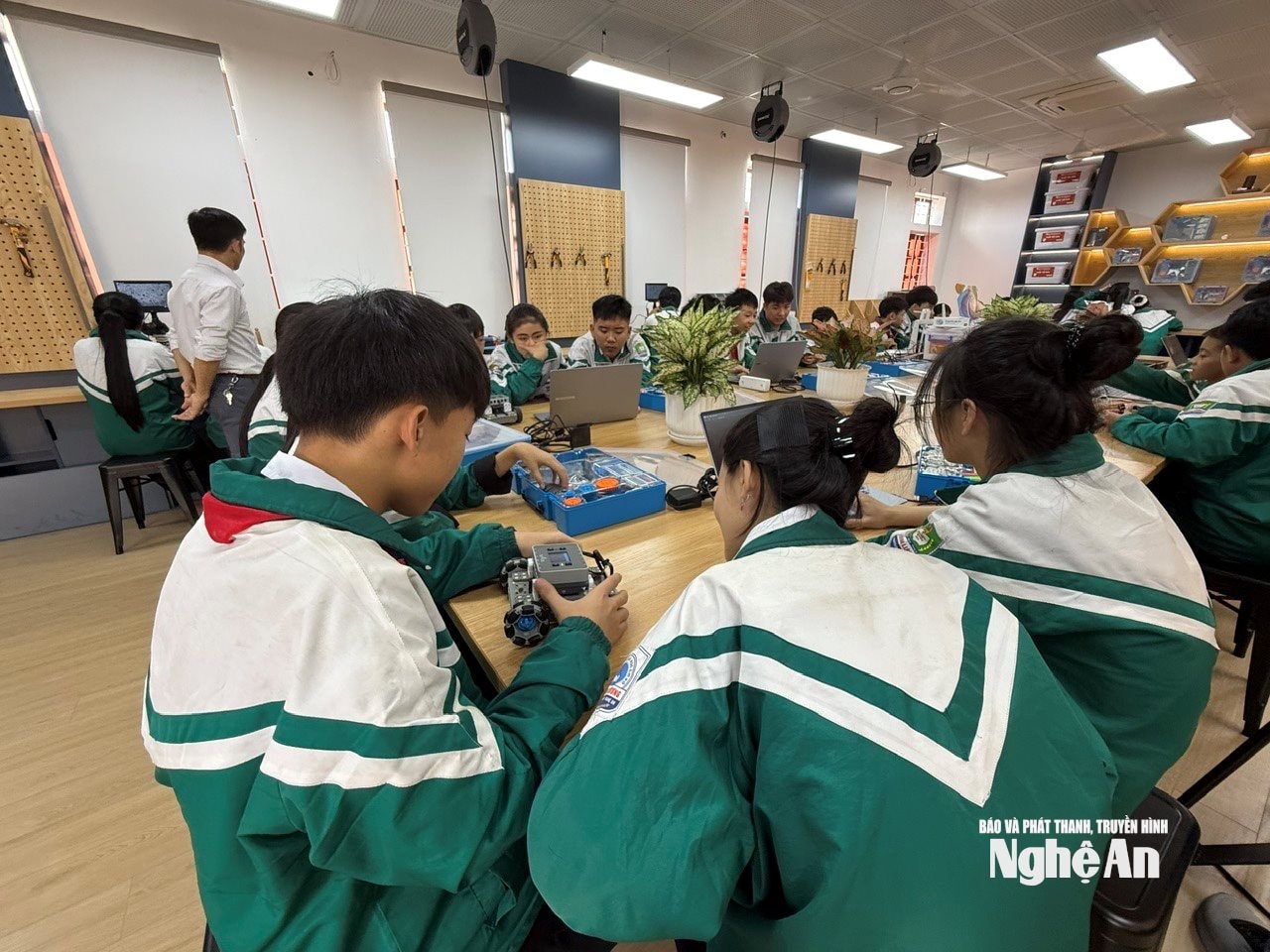
But more importantly, the appeal of STEM doesn't come from the machines, but from the innovative spirit of both teachers and students. Immediately after taking over the classroom, the school quickly established a STEM Club, developed an interdisciplinary activity plan, and focused on career experiences in Industry 4.0, creating an environment for students to continuously research and innovate.
Mr. Nguyen Trung Hieu, the school principal, shared:“The school is very happy to receive the STEM classroom project. This is an opportunity for students to learn theory and apply it in practice. We have established a STEM Club and developed an action plan to help teachers guide students in more effective and practical learning.”
Teacher's burden lightened, students' enthusiasm increased.
For teachers, STEM classrooms have brought about a major change in the teaching process. Mr. Nguyen Vo Hoan, a math and physics teacher in charge of the STEM classroom at Thanh Luong Secondary School, said:"Having STEM classrooms makes teaching and learning easier. Teachers reduce the time spent on manual preparation and increase the time spent guiding and directing. Visual aids help students understand theory in depth and see the application of knowledge in real life."
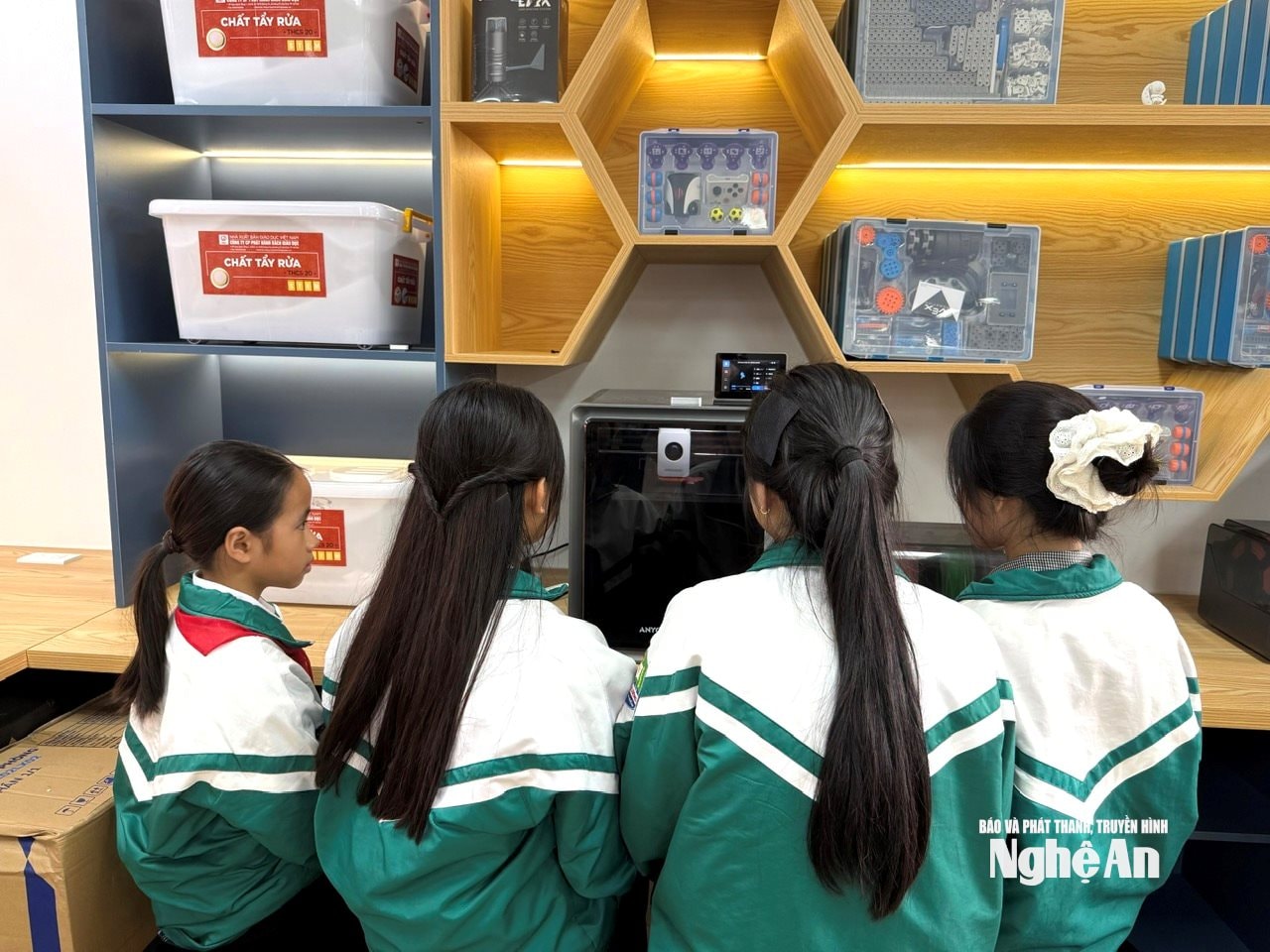
This "lightening of burden" allows teachers to focus on a more engaging and supportive teaching method, rather than just one-way transmission of information. As for students, their passion for science is ignited more strongly than ever before. (Nguyen Thi Tho, class 8A1) share:“A STEM classroom is more than just a computer room. It’s a space that combines science, engineering, technology, and mathematics. We learn by doing, participating in real-world projects such as designing, assembling, and testing products. This helps us develop creative thinking and life skills.”And Bui Ngoc Diep, a student in class 9A1, expressed her pride:“I am very honored and proud to be studying in such a well-equipped environment. I thank the corporation, the school, and the teachers for creating opportunities for me to develop myself and participate in science and technology competitions.”
In the last days of December, the STEM room at Thanh Luong Secondary School was always filled with laughter and discussions. During recess, students lingered to continue brainstorming ideas for a robotic arm model to pick up trash, analyze bacterial samples under a microscope, or design mini flood-resistant houses using recycled materials. The sparkle in their eyes showed that STEM had become an integral part of school life.
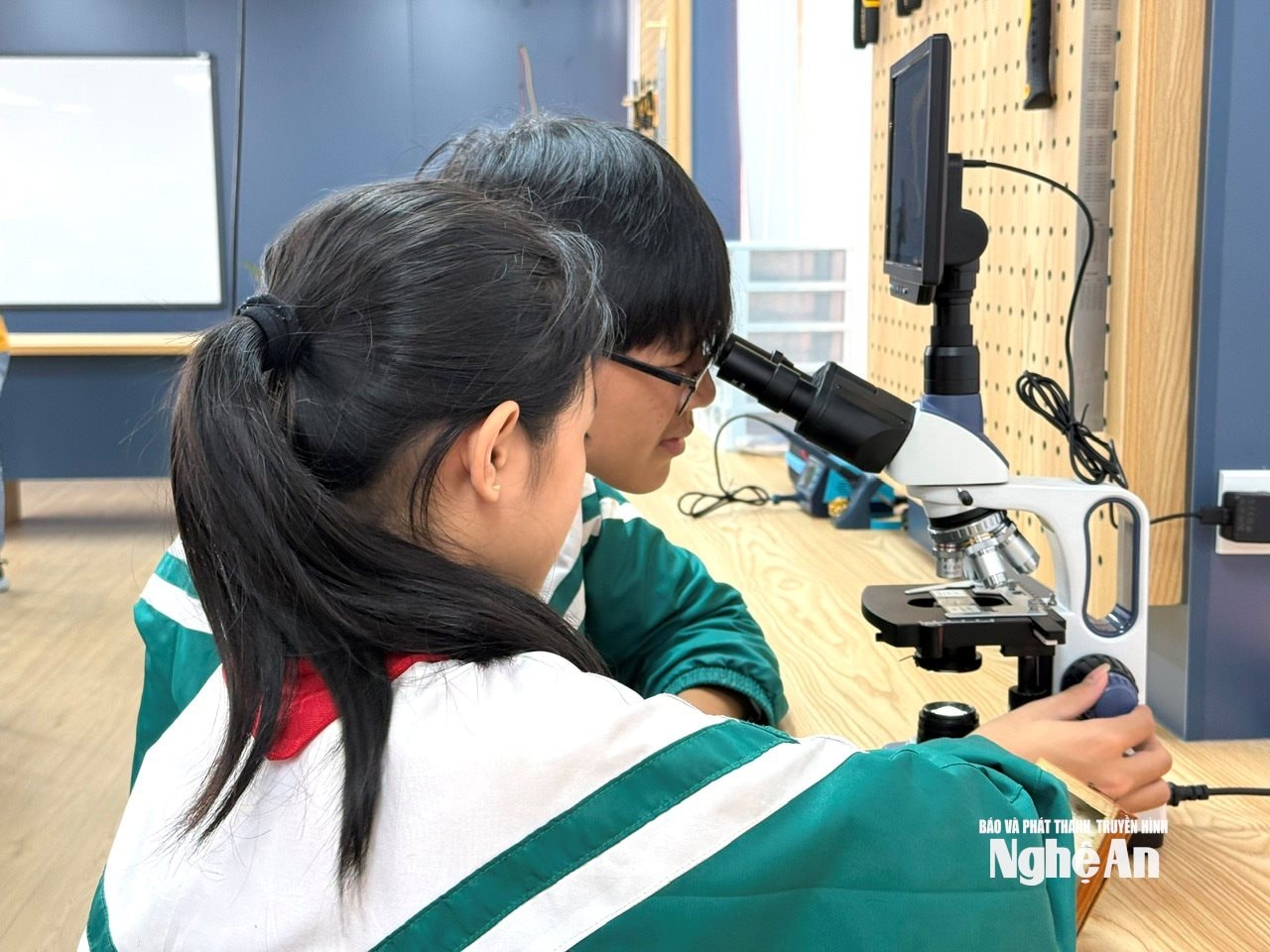
Teachers in the STEM club and subject teachers collaborate closely to enable students to: program and control robots, design 3D models, simulate environmental and green energy solutions, and create IoT products to serve rural life. From these initial steps, the school has formed a core group of students to participate in science and technology competitions at the commune and provincial levels; and simultaneously connected with experts to guide longer-term projects.
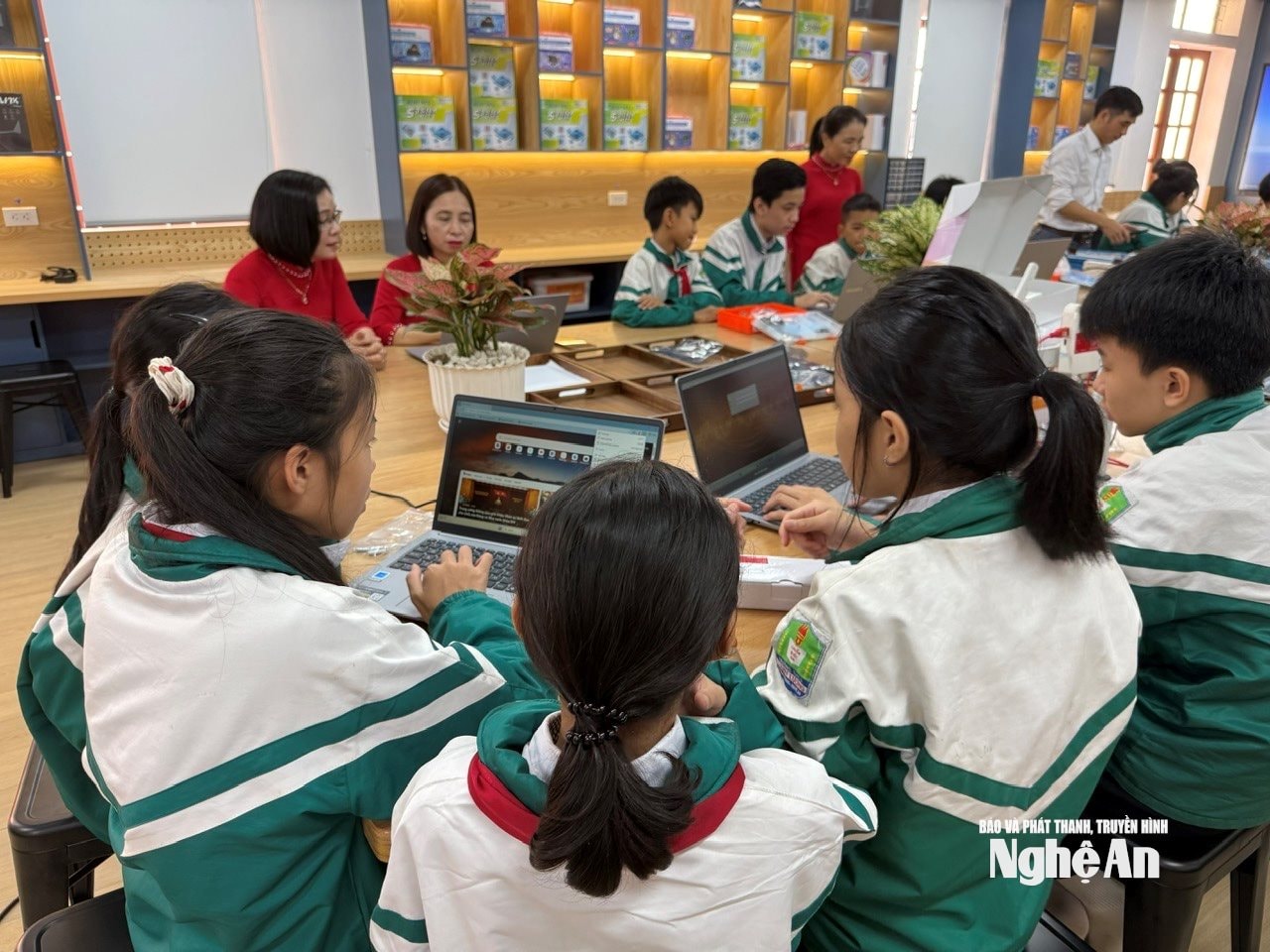
That atmosphere clearly shows one thing: when placed in the right environment, rural students don't lack ideas, they just lack "technological support." And now, that support has appeared right in the "village" school.
Spreading values from a nuclear model
Education experts recognize that standardized STEM classrooms, developed in partnership with businesses, are becoming the nucleus for expanding the STEM ecosystem in local areas. For Thanh Luong Secondary School, this is the seed of technology sown in a century-old educational land, helping students prepare for the digital age and become more confident in pursuing careers in engineering and technology in the future.
The story of Thanh Luong Secondary School having a STEM classroom in a "village" is not only a milestone in educational infrastructure, but also a milestone in the spirit of innovation and creativity in rural education.
From the village of high school graduates, students passionately involved with robots, IoT models, 3D drawings, etc., will continue to write the story of the new generation: thinking differently, acting genuinely, and ready to contribute to their homeland and country with their scientific and technological knowledge.


