
'Treasures' in sacred lands
Currently, the communes of the former Hung Nguyen district still preserve a wealth of Han Nom (Sino-Vietnamese) heritage passed down through many generations, which is valuable in affirming the cultural heritage of the homeland.
The people of the former Hung Nguyen district, now comprising Hung Nguyen and Hung Nguyen Nam communes, are always proud of their homeland's beautiful and meaningful name, and its long-standing cultural heritage, with many place names and figures recorded in history books. Throughout his many years of traveling through the villages, cultural researcher Thai Huy Bich has "unearthed" valuable treasures in the form of Han Nom (Sino-Vietnamese) heritage. This contributes to affirming the cultural heritage and fostering pride in the homeland's traditions.
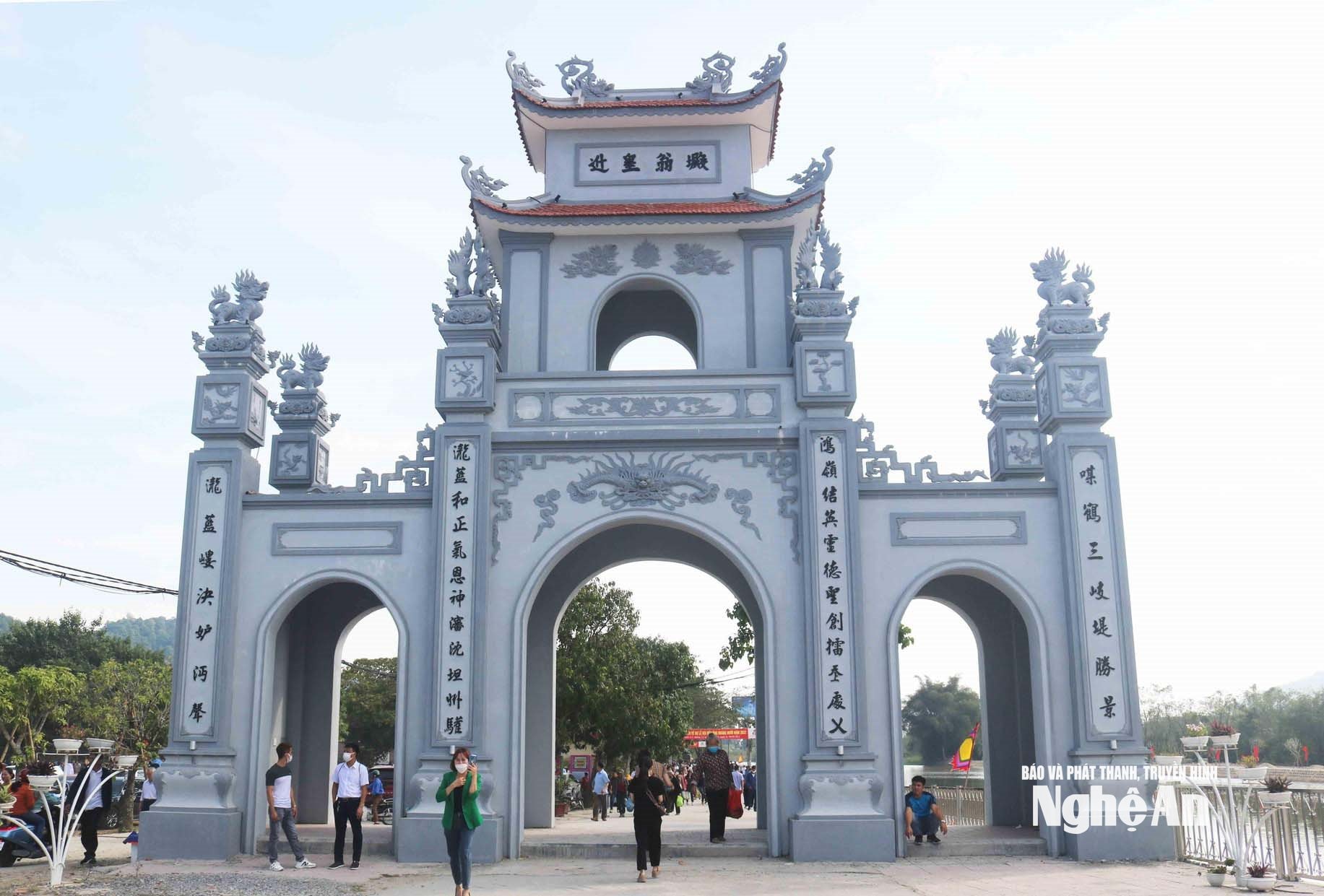
Hung Nguyen commune has a sacred temple that attracts many locals and tourists from all over to come and worship: the Ong Hoang Muoi Temple in Xuan Am village. For a time, the people didn't know exactly which deity the temple worshipped. By analyzing the changes in historical periods and the contents of the 12 royal decrees of the temple, currently preserved at the Nguyen family's ancestral temple in Xuan Am village, the deities worshipped have been initially identified.
The main deity worshipped there is the Imperial Commissioner of Nghe An, Quang Nam, and Thuan Hoa; Minister of Military and National Affairs; Grand Marshal, Duke of Vi Quoc. This deity is Le Khoi, who rendered many services to King Le Thai To in repelling the Ming invaders, bringing about peace and prosperity. Besides him, the temple also worships Thai Bao Phuc Quan Cong Lai The My; Song Dong Ngoc Nu, traditionally believed to be the daughter of Cao Son Cao Cac; and the specially appointed Deputy Commander-in-Chief Nguyen Duy Lac.
Historical records state that General Lê Khôi was worshipped at seven temples in Nghệ An province, the main one being the Chiêu Trưng Temple in Triều Khẩu commune (now Lam Thành commune). This temple was swept away by the floods of the Lam River more than 150 years ago, a period long enough to erase the memory.
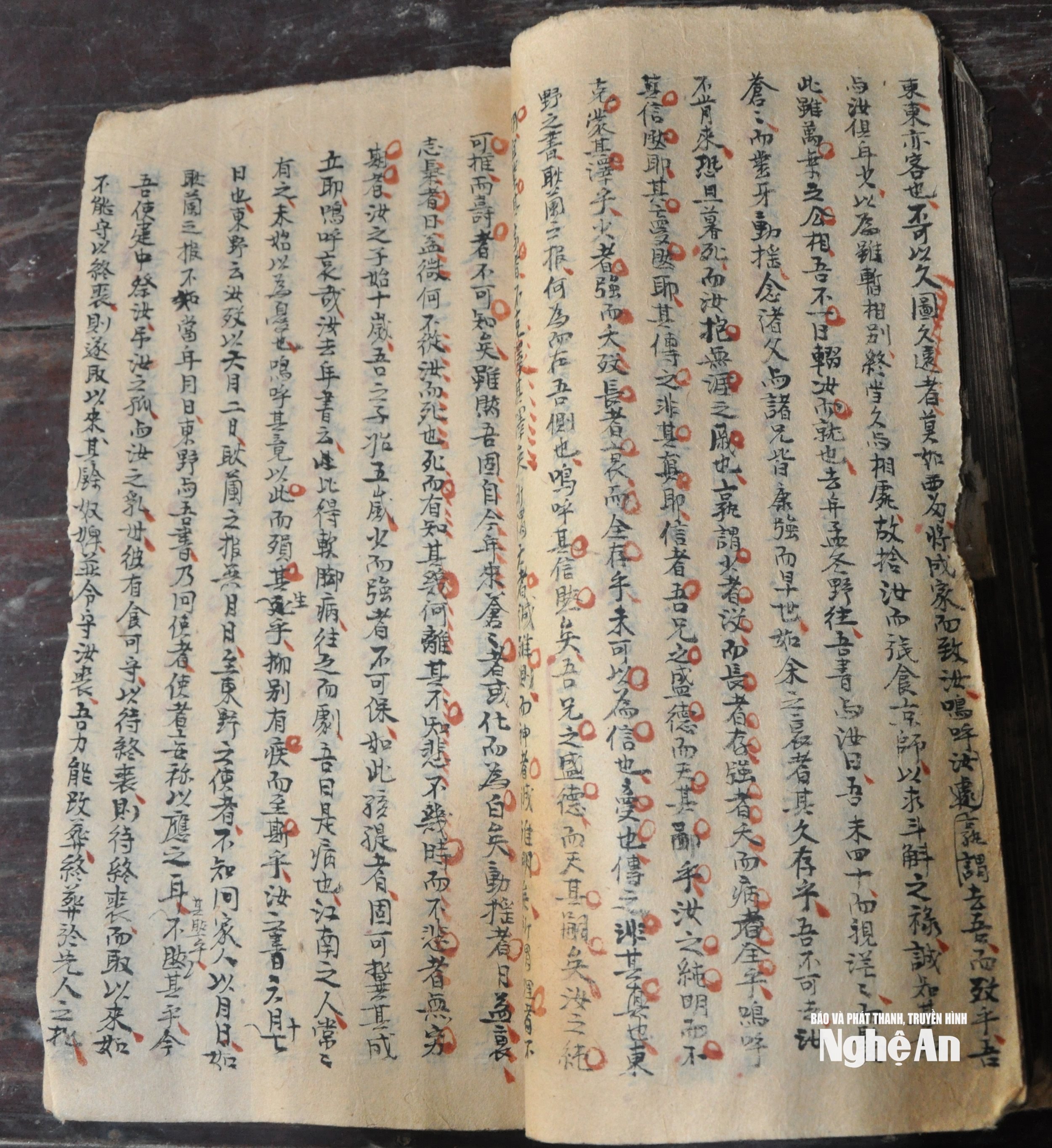
Luckily, there are 2.imperial decreeThe relics of the Chiêu Trưng Temple, discovered and preserved at the King Lê Temple in Lam Thành commune, contain information about the legend of Chiêu Trưng Đại Vương and the god Vũ Mục. These are two royal decrees issued by the Nguyễn dynasty to the people of Triều Khẩu to worship Chiêu Trưng Đại Vương Lê Khôi.
The source of Chinese-language imperial decrees concerning King Chieu Trung Dai Vuong Le Khoi is just one example of the "treasures" found in the former Hung Nguyen district. For instance, recently in Dong village, Hung Nguyen Nam commune, 10 imperial decrees were discovered, including 5 decrees conferring official titles, and the rest conferring titles on two prominent figures: Doctor Que Hai Hau Le Si Triet and My Khe Nam Hoang Dang Bat.
In addition, there are two stone steles composed by Thám hoa Nguyễn Đức Đạt, which were placed at the Văn Hội temple in Thông Lãng commune. Now, the Văn Hội stele from Đông village has been moved to the Lê Văn clan's ancestral temple, while the Văn Hội stele from Thông Lãng commune has been moved to the Lê Sỹ clan's ancestral temple.
The stele at the Văn Hội temple in Thông Lãng district contains the following passage:“Our village is a place of long-standing cultural heritage. Generations of learned scholars have been famous in the district. Previously, there was a Temple of Literature in this village. In the 22nd year of Emperor Tự Đức's reign, officials and gentry contributed money to build the Temple of Literature in Thông Lãng village…”.
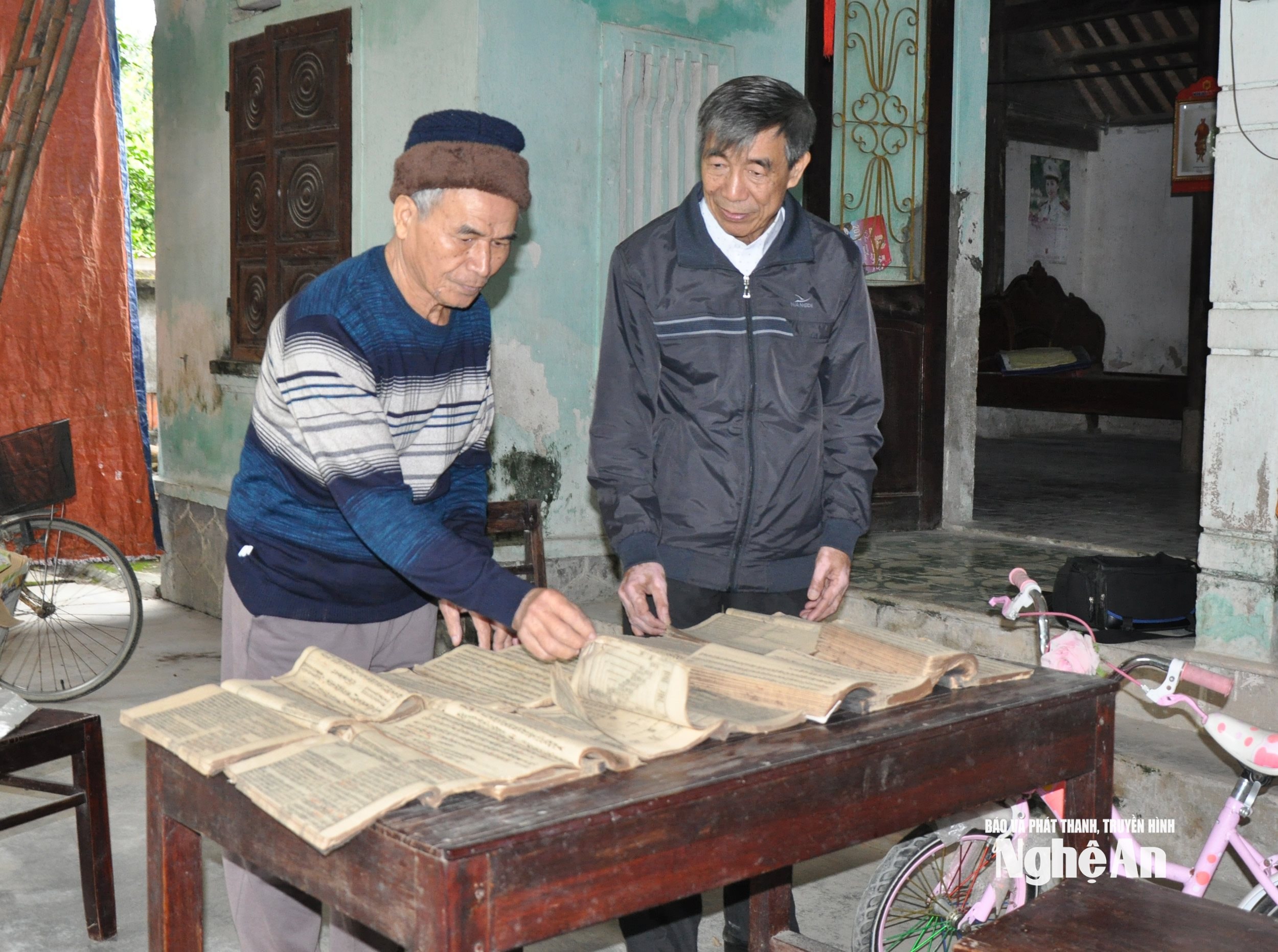
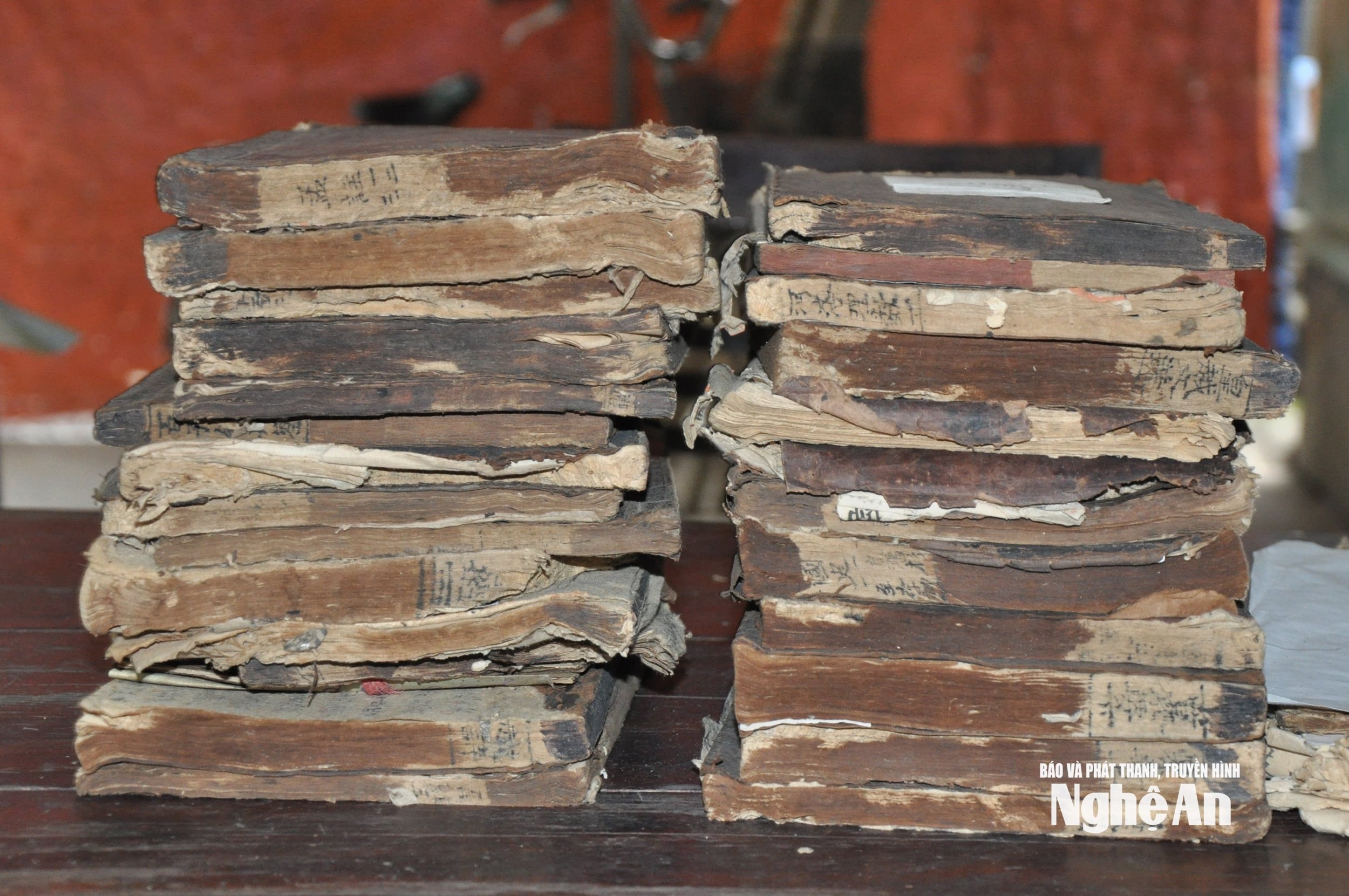
Furthermore, not to mention the dozens of couplets and horizontal plaques at ancient temples and ancestral halls, as well as the Chinese-language books preserved at the Le Hong Phong Memorial Site in Hung Nguyen Nam commune. Particularly noteworthy are the sets of Chinese-language books belonging to the families of Mr. Nguyen Dinh Ky in Hung Nguyen commune and Mr. Hoang Xuan Trach in Hung Nguyen Nam commune. These books, dating back hundreds of years, have become family heirlooms.
Mr. Ky's family collection of Chinese-language books comprises 30 volumes, including both printed and handwritten books, many of which have been confirmed by researchers to be of significant value. Meanwhile, Mr. Trach's family collection of Chinese-language books contains nearly 60 volumes, mostly medical books, passed down from his grandfather, Mr. Hoang Phat, a renowned physician.
Cultural researcher Thai Huy Bich, who has achieved many accomplishments in collecting and translating Sino-Vietnamese documents, said: “The system of Sino-Vietnamese heritage in the communes of the former Hung Nguyen district is quite rich and diverse, including imperial decrees, horizontal plaques, couplets, stone steles, and ancient books. This is considered a “treasure trove,” a valuable source of information for studying the historical and cultural traditions of this land. However, the management board of the relics and the families preserving the Sino-Vietnamese documents need to pay attention to preserving this “treasure” well to safeguard it for future generations...”


