
The US THAAD missile arsenal is running low, and production cannot keep up.
CSIS assesses that the US THAAD missile defense system is rapidly declining due to high consumption in Israel, while production capacity and additional funding remain limited.
The US-operated Terminal High Altitude Area Defense (THAAD) missile defense system is facing a potential shortage of interceptor missiles due to significant depletion during emergency deployments and years of delays in new missile deliveries. The Center for Strategic and International Studies (CSIS) warns that this gap could undermine the effectiveness of one of the pillars of US ballistic missile defense.
The gap in the delivery of THAAD missiles, according to CSIS's assessment.
According to a new report by CSIS, the U.S. Missile Defense Agency (MDA) will face an extended gap in the delivery schedule for new THAAD interceptor missiles. It is projected that no additional THAAD missiles will be added to the MDA's inventory between July 2023 and April 2027.
Although detailed figures on the THAAD arsenal and other missile defense systems are classified, CSIS analyzed procurement data from the Pentagon's audit division and indicated that 100 THAAD missiles, ordered between fiscal years 2021 and 2024, remain undelivered to the MDA. The report states that, based on the budget estimates released last June, the gap in the missile delivery schedule will only be filled from April 2027, when the MDA begins receiving the interceptor missiles for which funding was allocated in fiscal year 2021.
High losses due to emergency deployment to hotspots.
Besides the delivery gap, the MDA also faces a shortage of THAAD interceptor missiles due to increased actual demand. Reports indicate that emergency deployments to hotspots, including Israel, have significantly depleted stockpiles.
According to cited sources, the US military launched more than 150 THAAD interceptor missiles to support Israel's defense during the 12-day conflict with Iran in June. This number is equivalent to nearly a quarter of the total number of THAAD missiles the Pentagon has purchased since the system entered service. CSIS also noted that THAAD missile stockpiles grew steadily and relatively quickly between 2020 and 2023, but no additional THAAD missiles have been added to the US stockpile since July 2023.
THAAD: Role and Basic Specifications
THAAD is currently considered a symbol of American missile defense technology. This system is designed to intercept short- and medium-range ballistic missiles in the final stages of their flight. With its long range, THAAD can strike targets at distances of approximately 150-200km.
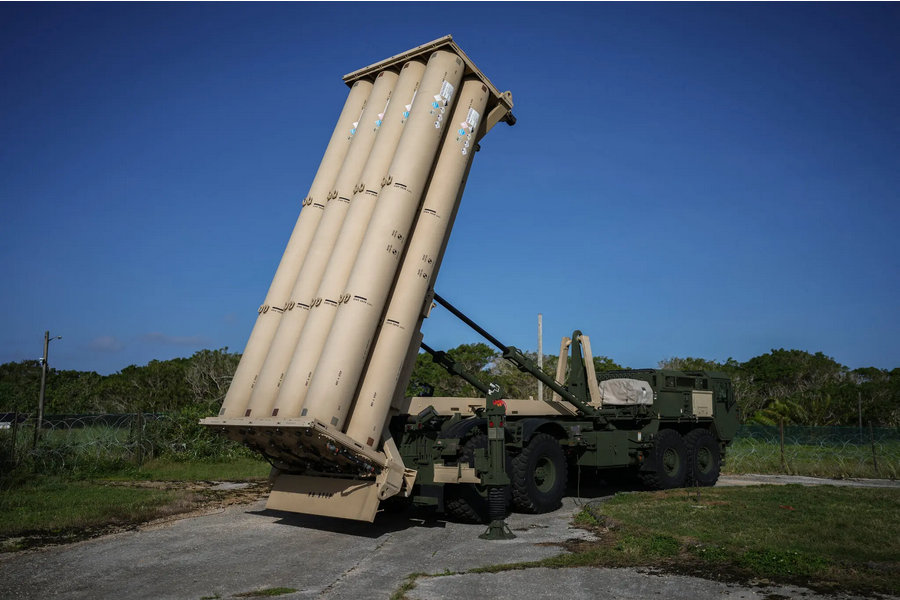
Each THAAD system consists of 6 launchers, carrying a total of 48 interceptor missiles and requiring approximately 100 soldiers to operate continuously. The system's strength lies in its ability to intercept missiles at high altitudes, serving as part of a multi-layered ballistic missile defense network. However, a notable weakness is the limited number of interceptor missiles and their high cost, approximately $12.7 million each.
Since 2010, the US has only purchased approximately 650 THAAD missiles. Of these, 534 have been delivered to the MDA as of the reporting date. The limited missile inventory, coupled with the high cost per missile, places significant pressure on logistics and stockpiling.
Production capacity: the bottleneck of the defense industry.
One of the major challenges for the U.S. is that its current THAAD missile production capacity cannot keep up with the rate of depletion in high-intensity conflict scenarios. According to reports, Lockheed Martin's current production capacity is only about 50-60 missiles per year. At this rate, replacing the missiles depleted in just 12 days of combat could take years and cost nearly $2 billion.
CSIS believes that restoring the THAAD missile stockpile is far more difficult than anticipated. The reasons cited include unstable annual budget allocations for missile procurement, causing fluctuating order quantities from year to year, and lengthy lead times for each order. Lockheed Martin plans to increase THAAD production capacity to approximately 100 missiles per year, according to The Wall Street Journal, but this plan will also take several years to implement.
Global deployment and the need for deep logistics
The US currently possesses eight operational THAAD systems globally, located at bases in Texas, Guam, South Korea, Israel, and other locations. These systems are linked to efforts to build a multi-layered ballistic missile defense network worldwide, both to protect allies from missile threats and to strengthen Washington's position in the regional security structure.
However, the report emphasizes that if THAAD missile stockpiles are in a state of alert, the overall effectiveness of the defense system will be limited. A modern defense network lacking logistical depth and sufficient production capacity could quickly weaken in a scenario of prolonged conflict or multiple hotspots appearing simultaneously.
CSIS's recommendations on managing the THAAD stockpile.
Given this situation, CSIS recommends that Washington carefully consider the rate of weapon depletion when deploying THAAD in subsequent missions. The report suggests maintaining a stable stockpile to meet the projected depletion rate, while also building additional stockpiles for emergencies.
According to CSIS, stable procurement planning, securing the supply chain, and shortening delivery times are crucial to avoiding a "locking the stable door after the horse has bolted" situation with a strategic missile defense system like THAAD.


