
North Korean missile arsenal: from Hwasong-20 to KN-25
Pyongyang is accelerating the growth of solid-fuel ICBMs and hypersonic glide warheads, including the Hwasong-20, Hwasong-18, Pukguksong-5 SLBM, and KN-23 and KN-25 SRBMs.
North Korea has been quietly building a multi-layered missile arsenal, emphasizing solid-fuel ICBMs and hypersonic glide warheads, to bolster its "nuclear shield." Notable systems include the Hwasong-20, Hwasong-18, Hwasong-17, Hwasong-16B, Pukguksong-5, along with the KN-23 and KN-25. Some types have been deployed in limited numbers, while others are preparing for testing.
Overview
Despite economic hardship and sanctions, Pyongyang is pouring resources into missile and nuclear research to create strategic deterrence. This approach has propelled North Korea into the ranks of emerging nuclear powers, alongside India and Pakistan, and even surpassing them in some technologies such as solid-fuel ICBMs and maneuverable hypersonic glide vehicles.
ICBM: Solid fuel-guided, liquid fuel-sustained.
At the October 11th military parade, North Korea unveiled the Hwasong-20 for the first time – a solid-fuel ICBM launched from a mobile launcher – with 11 axles, weighing approximately 80 tons, a three-stage design, and capable of carrying a MIRV warhead. The system's new engine has been tested, with an estimated range exceeding 15,000 km; although flight tests have not yet been conducted, observers predict that testing will soon take place before its deployment.
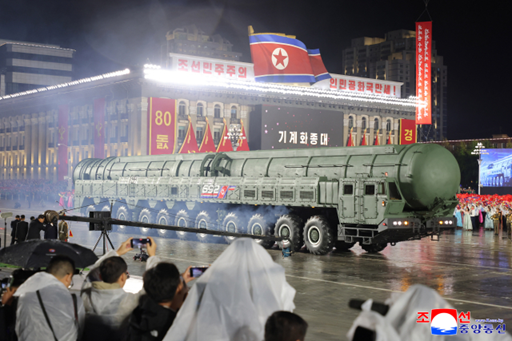
Meanwhile, the Hwasong-18 – a solid-fuel ICBM – has been deployed on a limited scale since 2023, with a more compact design than the Hwasong-20 and a range of approximately 12,000 km. In contrast, the Hwasong-17 – a large liquid-fuel ICBM – launched in 2020, successfully test-fired in 2022, weighs approximately 100 tons, and has an estimated range of 15,000 km. Compared to solid-fuel missiles, the deployment process for liquid-fuel missiles is slower and more easily detected.
The exact number of ICBMs has not been disclosed. From images of the event, North Korea displayed six Hwasong-17 launchers. It is estimated that the country may possess around a dozen mobile ICBMs of various types.
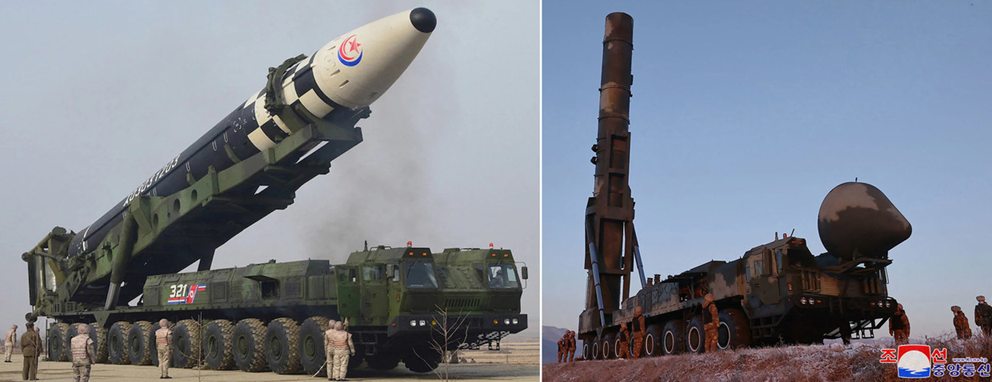
Key technical specifications (summary)
| System | Classify | Fuel/Design | Range (km) | Note |
|---|---|---|---|---|
| Hwasong-20 | ICBM | Solid fuel, 3 stages | Estimated >15,000 | MIRV, an 11-axle vehicle, has not yet been test flown. |
| Hwasong-18 | ICBM | Solid fuels | Approximately 12,000 | Limited implementation starting in 2023 |
| Hwasong-17 | ICBM | Liquid fuels | Estimated to reach 15,000 | Weighing approximately 100 tons |
MRBM: Hypersonic Gliding Warhead
Medium-range missiles (1,000–5,500 km) are not bound by treaties like those in the US and Russia. On April 2, 2024, North Korea test-fired the Hwasong-16B – a solid-fuel missile with a hypersonic glide warhead, maneuvering at the edge of the atmosphere, with a range of up to 5,000 km. This type of weapon poses a challenge to current missile defense systems.
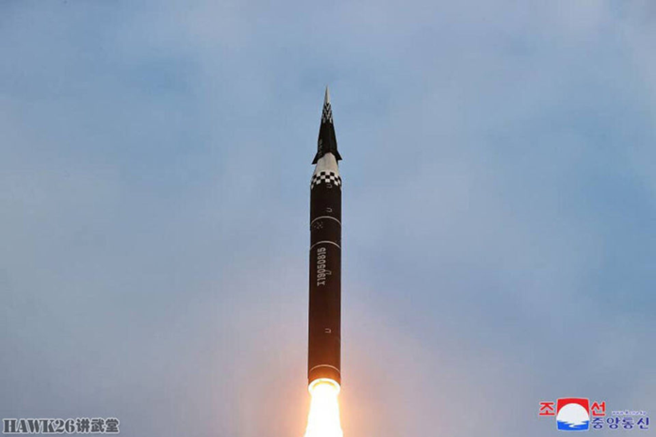
In 2025, the Hwasong-11Ma was introduced, carrying two hypersonic glide warhead missiles with a minimum range of 1,000 km. This system has not yet been tested but is expected to be tested and deployed soon. Additionally, the Pukguksong-2 (KN-15) – originally designed for submarines but later adapted for land-based launch – has a range of 1,500 km and can carry a nuclear warhead; its deployment status is unclear.
Add data
| System | Classify | Range (km) | Characteristic |
|---|---|---|---|
| Hwasong-16B | MRBM | Up to 5,000 | Maneuverable hypersonic glide warhead |
| Hwasong-11Ma | MRBM | ≥1,000 | Carrying two missiles, hypersonic glide warheads. |
| Pukguksong-2 (KN-15) | MRBM | 1,500 | Original design for submarines, ground-launched. |
SLBM: Sea-launched ballistic missile
In September 2023, North Korea launched the large submarine Hero Kim Gun-ok at Sinpo, carrying four ballistic missile launch tubes and six cruise missile launch tubes. The submarine is capable of using the Pukguksong-5 – North Korea's most advanced SLBM currently – with a range of approximately 3,000 km. Prior to this, many early SLBM prototypes were tested from surface launchers.
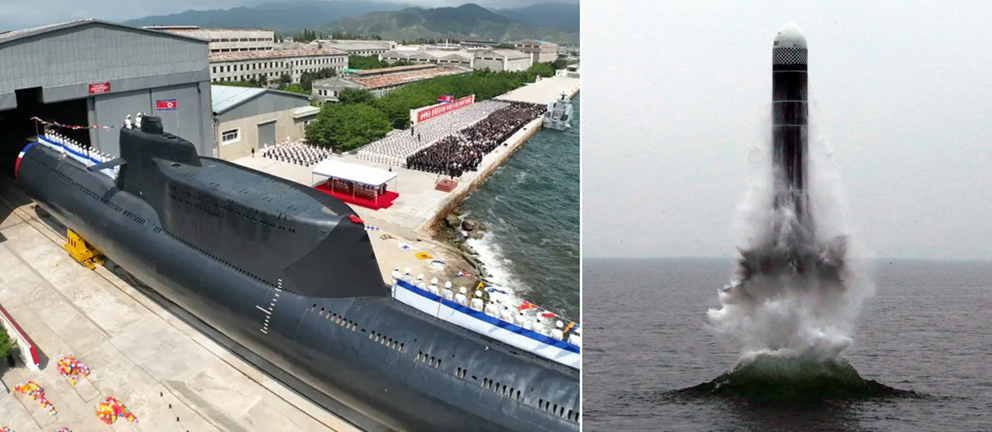
The commissioning of the medium-range missile submarine is a major step forward, placing North Korea in the group of nations possessing SLBM capabilities alongside the United States, Russia, China, and India.
SRBM: close-range firepower, platform flexibility
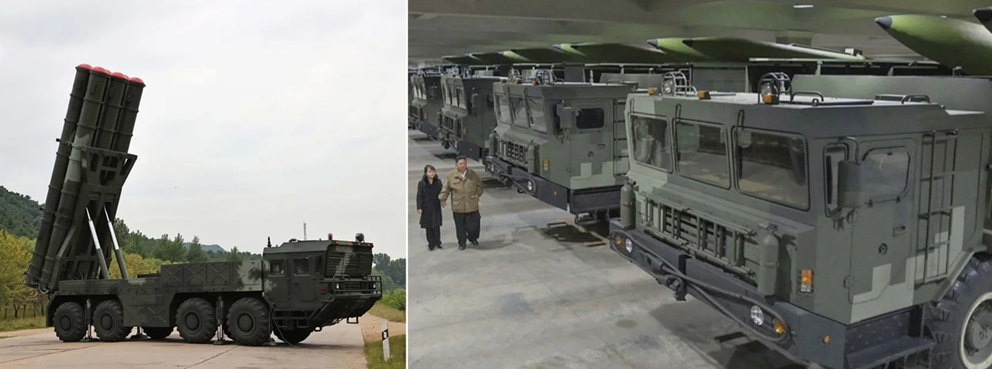
In the 300–1,000 km range, North Korea has developed various models. The KN-25 is a guided rocket artillery system that fires 600 mm projectiles, which was used in a simulated nuclear counterattack exercise in April 2024; it has a range of 400 km and can carry a nuclear warhead. The projectile has the ability to correct its trajectory, increasing accuracy and can be detonated in mid-air.
The Hwasong-11 (KN-23) – often compared to the Iskander-M – has a range of approximately 600 km, with many variants launched from trucks, trains, and offshore platforms, capable of carrying small nuclear warheads. Two other models, the Hwasong-11B (KN-24) and Hwasong-11D, have a range of approximately 400 km; they are considered to be based on the American ATACMS concept but with newer technology, longer range, and greater accuracy.
Tactics and impact
- Shifting the focus to solid fuel (Hwasong-20, Hwasong-18) shortens deployment time and reduces footprint compared to liquid fuel, while maintaining the same long-range capability as Hwasong-17.
- Hypersonic glide warheads in the MRBM range (Hwasong-16B, Hwasong-11Ma) increase the difficulty for missile defense systems, thanks to their maneuverability at the edge of the atmosphere.
- The Pukguksong-5 SLBM on board the Hero Kim Gun-ok submarine has an additional sea-launching shaft, adding a medium-level deterrent capability.
- SRBMs like the KN-23 and KN-25 provide close-range firepower, offer platform flexibility, and have nuclear warhead options.
Overall, North Korea's missile arsenal is expanding in a multi-layered direction, incorporating intercontinental ballistic missiles (ICBMs), MRBMs with glide warheads, submarine-launched SLBMs, and precision SRBMs, in order to bolster its deterrence capabilities according to stated objectives.


