
Cigarette smoke and its victims who had no choice.
Even without directly smoking, many people are exposed to secondhand smoke from those around them, putting them at risk of serious illnesses. Worryingly, this exposure often occurs within homes, workplaces, and everyday living spaces, severely impacting pregnant women and children.
When even non-smokers get sick
Passive smoking is when a non-smoker inhales smoke from the burning end of a cigarette or smoke exhaled by a smoker. This is a form of exposure to harmful substances that non-smokers have difficulty controlling, especially when living and working in enclosed spaces where people smoke.
According to the U.S. Centers for Disease Control and Prevention, cigarette smoke contains more than 7,000 chemicals, including hundreds of toxic substances and about 70 potentially carcinogenic ones. Once in the body, these substances affect many organs, particularly the respiratory and cardiovascular systems. No level of exposure to secondhand smoke has been defined as safe. Even short-term exposure can have health consequences.
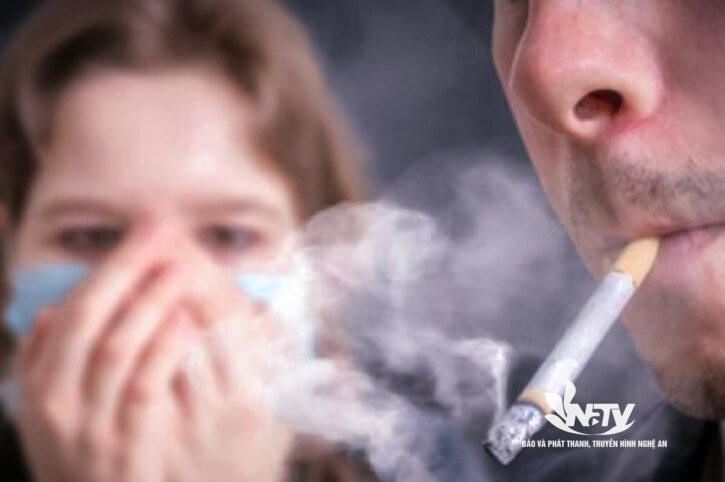
The World Health Organization estimates that more than 1.6 million people die prematurely each year due to exposure to secondhand smoke. Studies show that non-smokers who regularly inhale secondhand smoke have a 25-30% increased risk of coronary heart disease, a 20-30% increased risk of stroke, and a 20-30% higher risk of lung cancer compared to those not exposed to secondhand smoke.
These risks often don't manifest immediately after each exposure but accumulate over time. Notably, non-smokers can still become victims of secondhand smoke in their own living and working environments.
Pregnant women and young children are particularly vulnerable. Tobacco smoke can affect the fetus even before birth. Pregnant women who are frequently exposed to tobacco smoke are at risk of giving birth to underweight babies. According to professional literature, newborns whose mothers were passively exposed to tobacco smoke during pregnancy have an average weight that is about 200 grams lower than other babies.
For infants, exposure to secondhand smoke during or after birth increases the risk of sudden infant death syndrome (SIDS). Some studies show that this risk is 1.4 to 8.5 times higher in infants exposed to secondhand smoke compared to those not exposed.
Children have underdeveloped respiratory systems, making them particularly sensitive to the toxins in cigarette smoke. Regular exposure to secondhand smoke increases the risk of acute respiratory infections, bronchitis, and pneumonia; it also causes persistent symptoms such as coughing, wheezing, phlegm, and difficulty breathing. Children whose parents smoke are 1.2-1.5 times more likely to develop chronic respiratory symptoms compared to other children.
Tobacco smoke also increases the risk of asthma and makes asthma in children more severe and prone to frequent relapses. According to professional literature, passive smoking increases the number of asthma cases in young children by about 30%, and also exacerbates symptoms such as coughing, wheezing, phlegm, and shallow breathing in school-aged children.
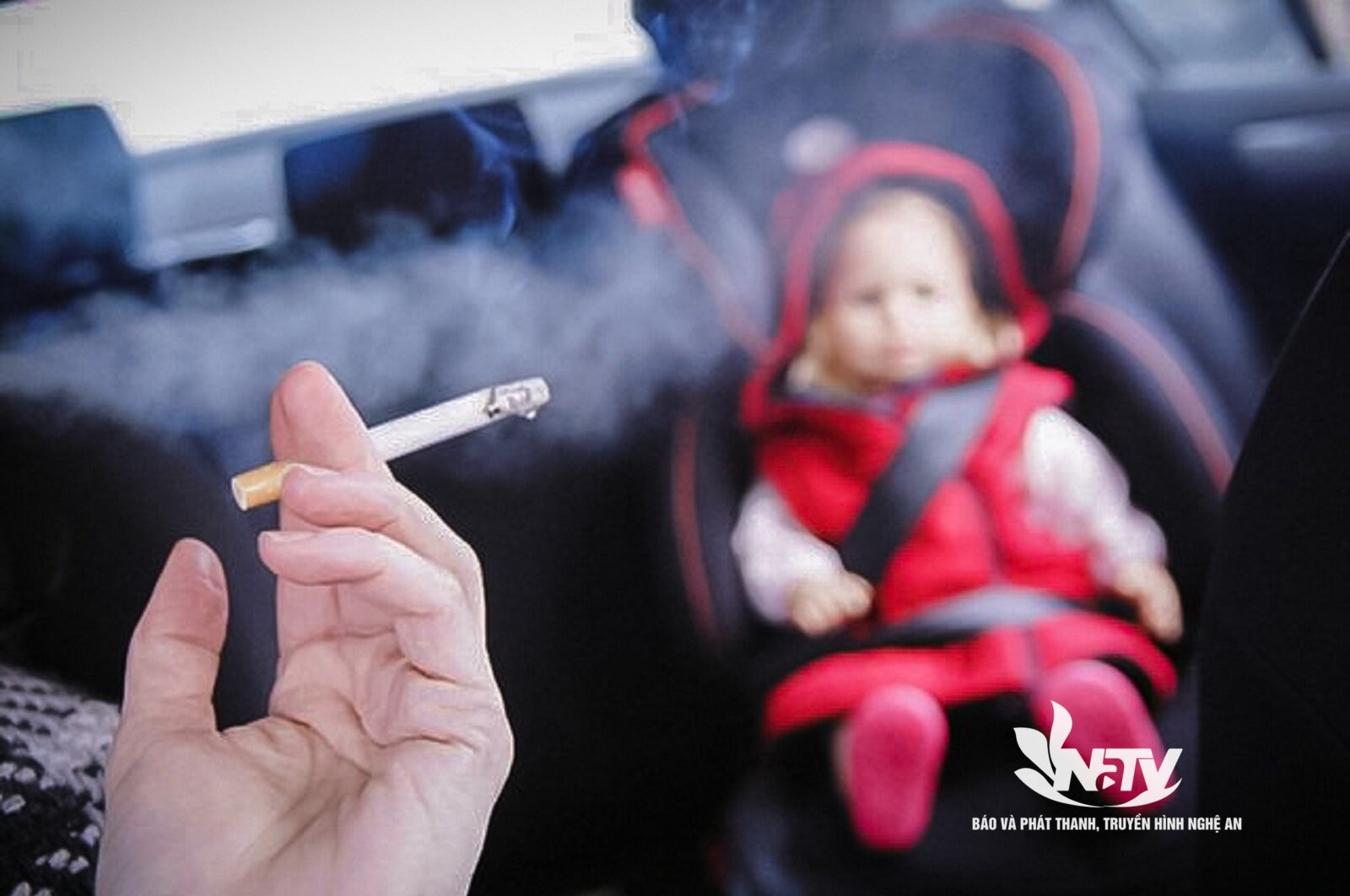
Besides affecting the respiratory system, cigarette smoke also increases the risk of middle ear diseases. Children frequently exposed to cigarette smoke have a 1.3 times higher rate of recurrent middle ear infections and a 1.4 times higher rate of chronic ear discharge compared to children who are not exposed. If the condition persists, children may experience hearing loss, affecting their learning and language development.
These effects aren't always immediately apparent. Frequent coughing, wheezing, and respiratory infections in children can be linked to inhaling secondhand smoke in their own homes. Therefore, protecting children should begin with changing adults' smoking habits.
Protecting non-smokers from minor changes
Despite increasing awareness of the harmful effects of tobacco, exposure to secondhand smoke remains a serious concern. A study using data from the 2022 Adult Tobacco Survey in 30 provinces and cities, involving nearly 72,000 people aged 15 and older, showed that 44.4% of respondents had been exposed to secondhand smoke at home and 23.1% at work in the 30 days prior to the survey.
In Nghe An province, a 2024 survey showed that the percentage of adult smokers was 10.6%, with men accounting for 21.1%. The percentage of people exposed to secondhand smoke at home was 24.2%, and at the workplace was 17.1%. These figures indicate that a segment of the population is still not adequately protected from secondhand smoke.
The home is where the risk of passive smoking is easily overlooked. Many people have a habit of smoking in the living room, kitchen, balcony, or near a window, thinking the smoke will quickly dissipate. However, smoke can spread throughout the living space, exposing household members to harmful substances. Opening doors, turning on fans, or smoking in a corner of the room cannot completely eliminate this risk.
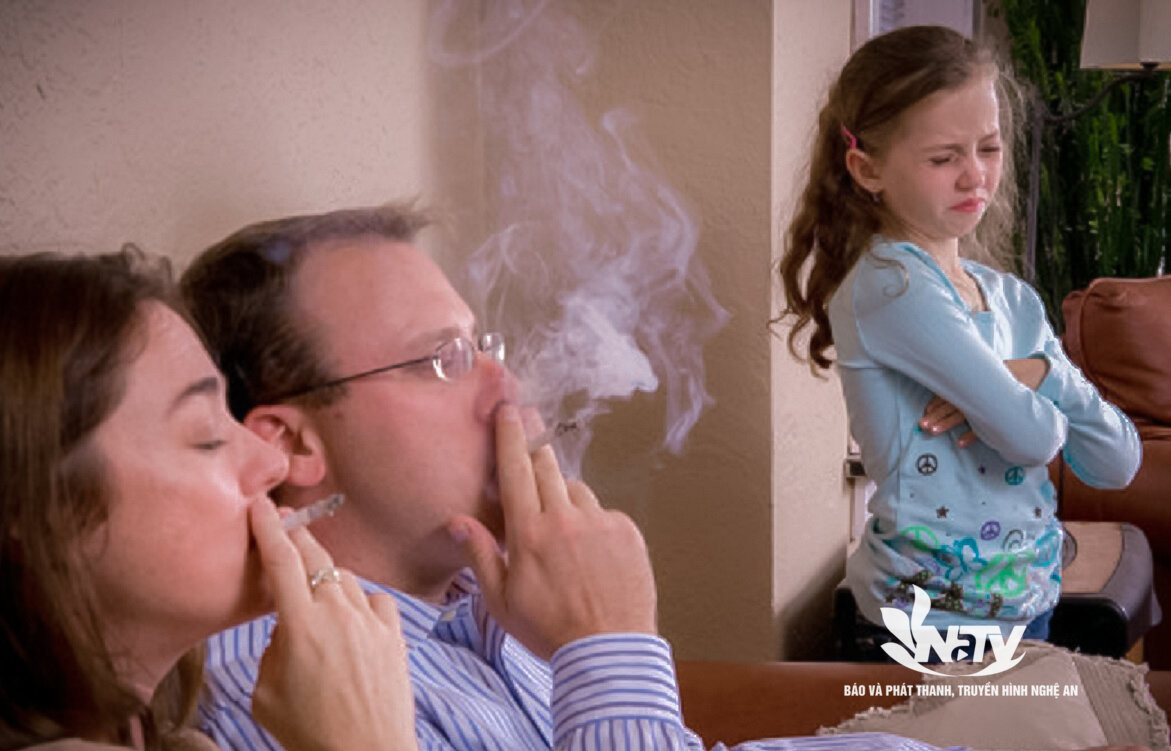
For young children, the risk is even greater because they are not yet able to choose their living environment or stay away from smokers. Children may inhale secondhand smoke from grandparents, parents, and other family members every day. Even adults only smoking when children are not in the room is not a complete solution for protection if the habit of smoking indoors continues.
Besides the home, the workplace and public places are also environments that need to be monitored. Workers and staff in restaurants, cafes, and hotels may be exposed to cigarette smoke for many hours. If smoking bans are limited to signs and lack proper checks and reminders, the right of non-smokers to breathe clean air will be difficult to guarantee.
The 2012 Law on Prevention and Control of Tobacco Harm stipulates locations where smoking is completely prohibited indoors and within premises; it also specifies indoor locations where smoking is prohibited but designated smoking areas are permitted. This is an important legal basis for protecting public health and limiting the impact of smoking on non-smokers.
However, for the regulations to be effectively implemented, a shift in individual awareness and the responsibility of relevant agencies and organizations are necessary. Within families, smokers need to quit smoking indoors, in cars, and in places where children, pregnant women, and the elderly are present. Quitting smoking is the most fundamental solution to protect one's own health and the health of those around them.
In offices, schools, medical facilities, restaurants, and public places, regulations on smoke-free environments must be strictly enforced; signs should be placed in easily visible locations, and measures should be taken to remind people and penalize violations. Public awareness campaigns should focus on specific situations in daily life, helping people understand that smoking in front of children, family members, or colleagues not only affects their own health but also harms others.
Passive smoking is not an unfamiliar risk; it's present in our daily living spaces. Protecting non-smokers doesn't necessarily have to start with big-scale solutions, but rather with not smoking indoors, not smoking when children and pregnant women are nearby, and respecting smoking bans in public places. Only when each person changes their habits and respects the right of others to breathe clean air will a truly smoke-free environment become a reality.


