
No life jackets, jumping off bridges, crawling through sewers: Alarming risk of drowning.
During the hot days at the beginning of the season, in many rivers, canals, lakes, and dams in Nghe An province, it is common to see children gathering to swim without life jackets. Worryingly, many children are also carelessly engaging in dangerous activities such as jumping off bridges or crawling through underground drains, posing a significant risk of drowning.
Swimming in canals, jumping off bridges, crawling through sewers: Dangerous games played in deep water.
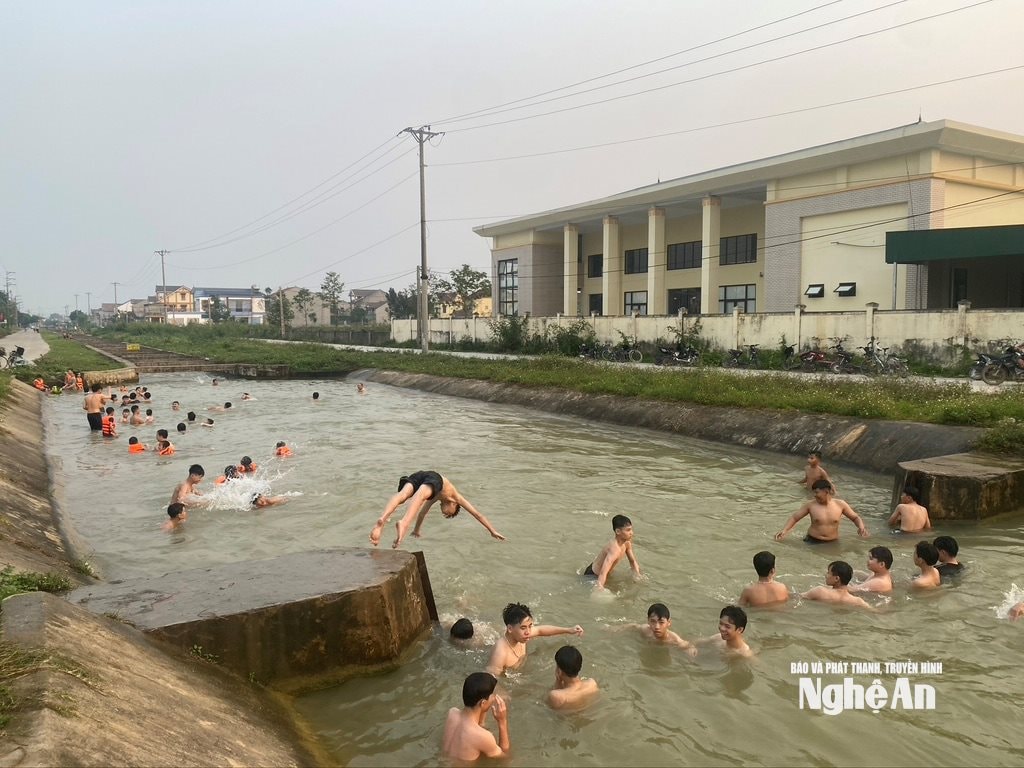
Around 5 PM each day, when the sun's heat subsides, in the communes of Yen Thanh and Quan Thanh, many people, especially children, flock to the Ba Ra Do Luong canals to cool off by swimming.
Here, most children are not equipped with life jackets or any other safety equipment, while the canal is deep, has a strong current, and has recorded many drowning accidents over the years.
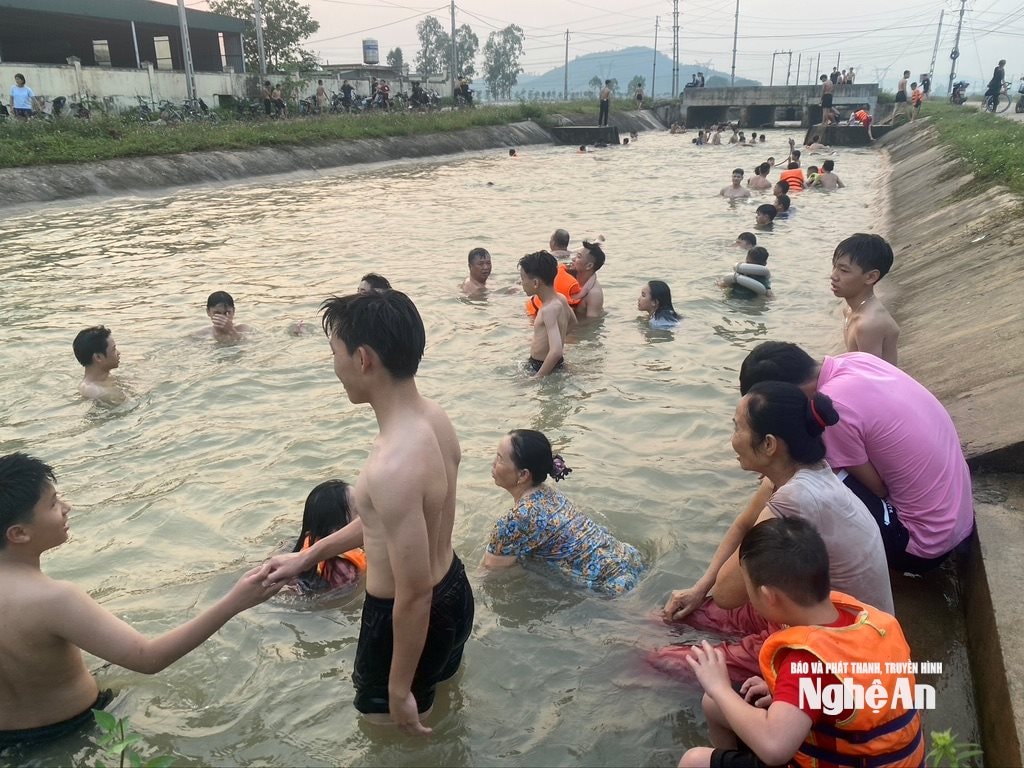
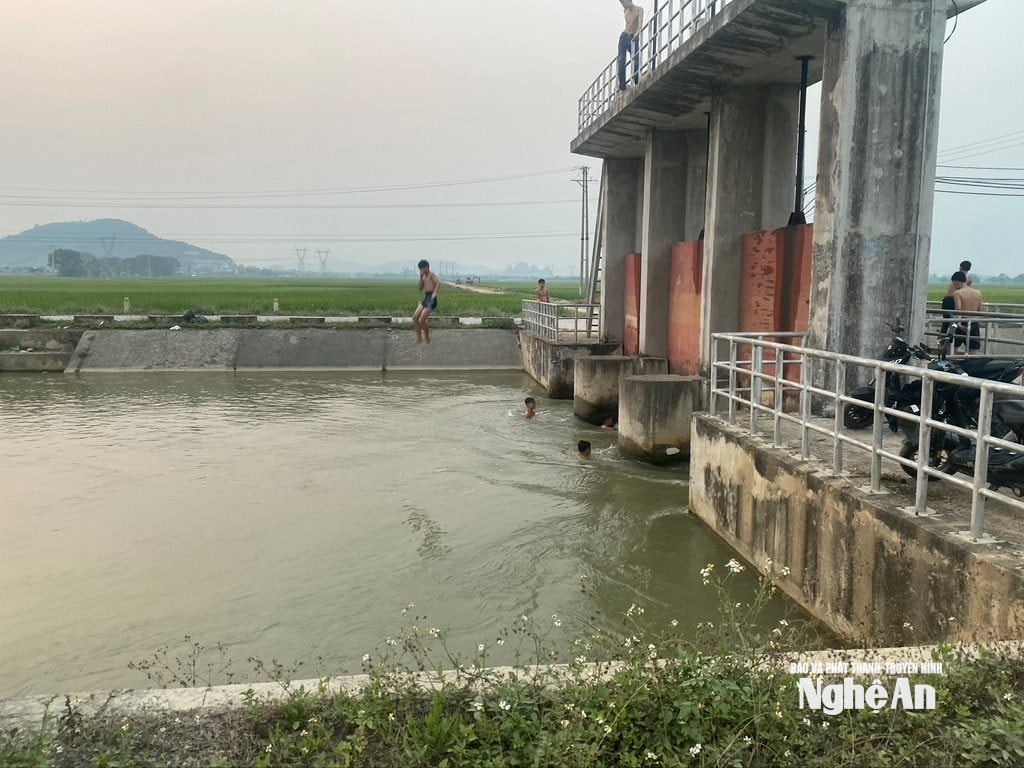
Along the N8 canal (approximately 10m wide and 2.5-3m deep), dozens of children are still swimming freely. Not only do they lack safety equipment, but many are also playing, competing, and even pulling each other into the middle of the water. Notably, instead of taking their children to safe swimming pools to learn swimming skills, some parents tie ropes to their children and lower them into the canal to "practice swimming," posing a significant risk.
Mr. Le Minh, residing in Quan Thanh commune, said that every afternoon he usually takes his children to the branch canal below the Dao River to practice swimming and cool off. However, he also admitted that he always has to supervise them closely because the water here is quite deep and the current is strong. "Just a moment of carelessness could lead to an unexpected incident," he said.
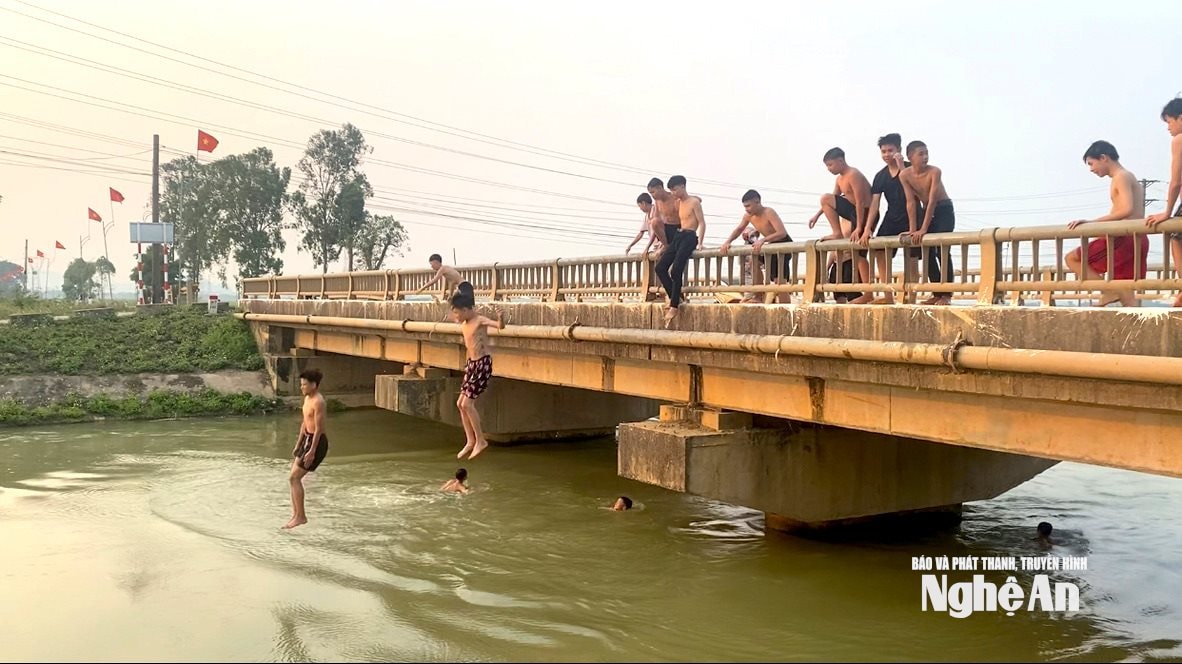
Beyond simply swimming in the canal, many children engage in adventurous activities. At the Tang Thanh bridge area (Quan Thanh commune), dozens of children stand on the bridge's railing, approximately 4-5 meters high, without life jackets, and jump into the water below. Some even cling to floating chains in the middle of the stream to play, disregarding the risk of slipping or being swept away.
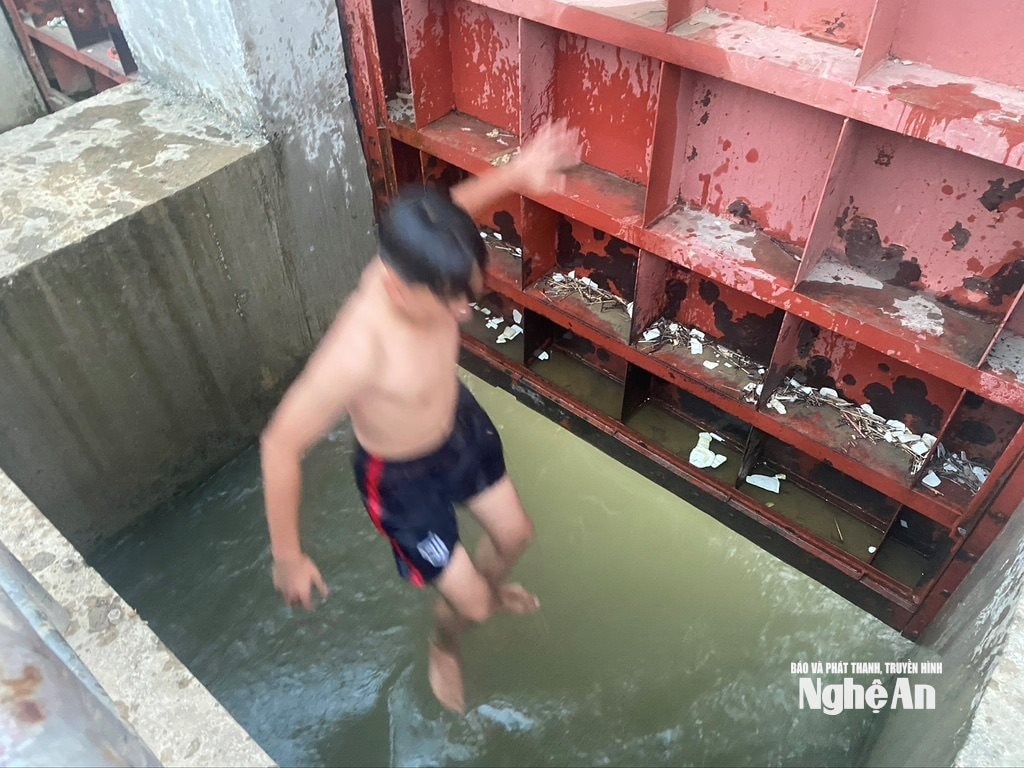
Even more dangerous, at Phuc Tang culvert (Phuc Trung hamlet, Yen Thanh commune), where there is a nearly 4-meter-long steel underground culvert system, a large number of children gather every afternoon. Many children climb onto the culvert opening, which is about 5 meters high, and jump into the water. Some even risk their lives crawling through the underground culvert system – where the water swirls strongly and is often clogged with garbage.
A 7th-grade student residing in Quan Thanh commune said: "At first, I was scared, but now I'm used to it. We jump and crawl through the sewers to seek thrills." These innocent words, however, conceal a great danger, as even a small mistake could lead to serious consequences.
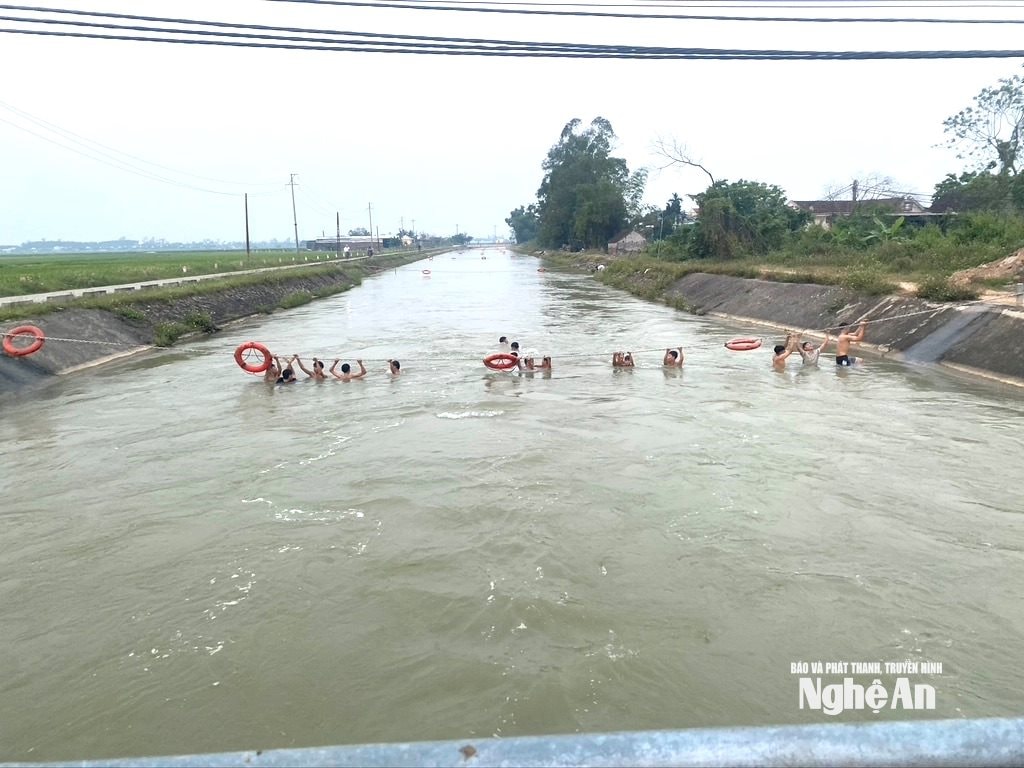
According to the People's Committee of Yen Thanh commune, the locality has many canals and ditches, including the Ba Ra Do Luong canal section, which is more than 2 km long and often attracts many children to swim in this area during the hot season.
Authorities have installed warning signs and intensified awareness campaigns on drowning prevention; however, violations continue to recur, requiring close cooperation from families in supervising their children.
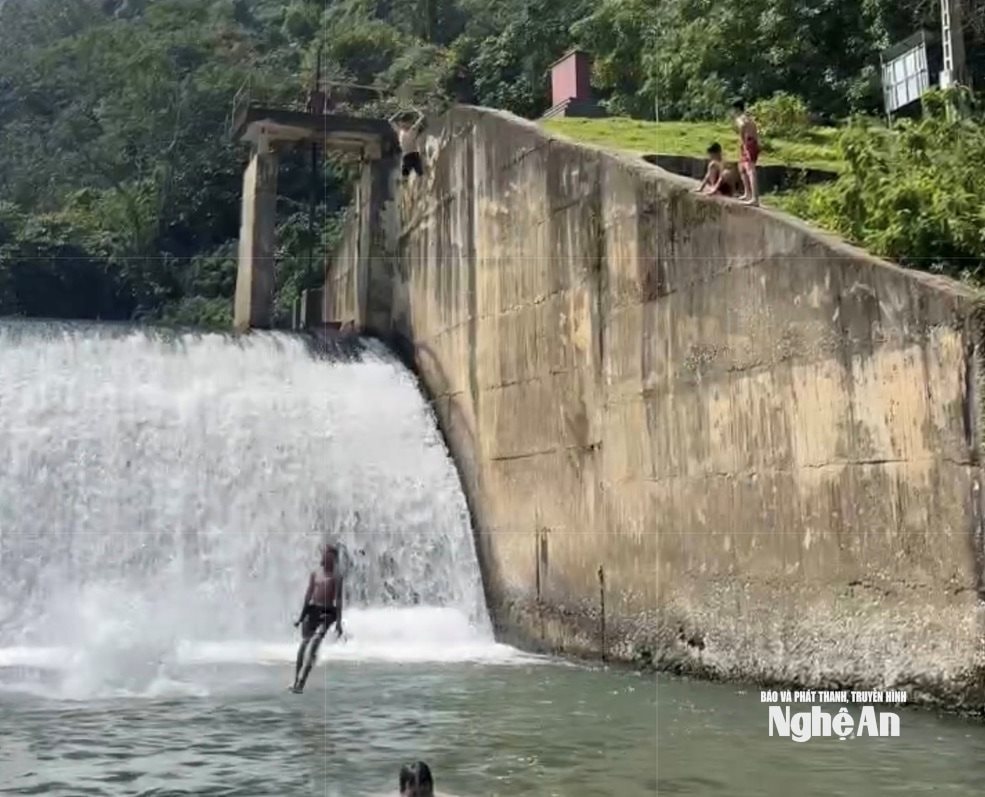
At the Pha Lai dam area on the Giang River in Mon Son commune – a structure put into operation in 2002 – the recent hot weather has also turned it into a spontaneous swimming spot. Many students climb onto the 6-7 meter high dam wall and jump into the fast-flowing water without any safety precautions.
Speaking to reporters, Mr. Pham Manh Hung, Chairman of the Mon Son Commune People's Committee, said that the locality has regularly broadcast warnings on the public address system and issued written reminders, but the number of people coming to swim still increases during the hot season.
Furthermore, in some sections of the Lam River flowing through Anh Son and Con Cuong communes, many people, including children, still gather to swim in shallow areas. However, the complex riverbed topography and unpredictable currents pose many risks.
We cannot rely solely on warnings.
Given this situation, raising community awareness about drowning prevention is essential. Parents need to increase supervision and prevent children from going to rivers, streams, ponds, and lakes unsupervised. At the same time, children need to be equipped with safe swimming skills and the ability to handle dangerous situations.
Schools also play a crucial role in life skills education by integrating drowning prevention content into the curriculum to raise students' awareness.
Local authorities need to continue reviewing and placing warning signs at dangerous locations, organizing commitment signing ceremonies in residential areas and schools; and at the same time, implement stricter control measures in areas with a high risk of drowning.
Drowning is a completely preventable accident if there is concerted effort from families, schools, and society. Raising awareness, equipping students with skills, and strengthening supervision will help reduce tragic incidents during the summer months.


