
Not okay
(Baonghean) - A representative of the people recently, speaking at the National Assembly forum, earnestly appealed to farmers not to use herbicides and rodenticides in agricultural production. He urged them, out of love for their homeland, not to transform Chinese potatoes into Da Lat potatoes. It sounds simple and down-to-earth, but the more one thinks about it, the more issues need to be discussed.
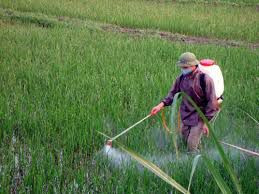 |
| Spraying herbicide (Illustrative image - Internet) |
First of all, while the appeal is valid, it doesn't quite hit the nail on the head. Without pesticides, what will farmers use to protect their crops from pests and weeds? Without chemical fertilizers, what will they use to fertilize their plants? Without growth stimulants, how can they harvest quickly, rotate the land faster to increase productivity, and boost income? Meanwhile, after all deductions, a farmer's income is only a few tens of thousands of dong a day. In short, without these measures, how will they support their families? People have to take care of themselves first before they can care for others. Therefore, appeals must be accompanied by concrete actions to help and support them.
In reality, we constantly complain about farmers' overuse of chemicals in production, but how many people have patiently helped and supported them to abandon this habit without affecting their income? To encourage farmers to produce clean products, there needs to be mechanisms and policies to support them with capital, seeds, technology, processes, and even market access. Yet, renewing a VietGAP certification costs 70 million VND. Not to mention the significantly higher prices of organic fertilizers and pesticides used in the production process. And yet, when the products are sold on the market, the price increase is negligible.
The second problem is that there has never been a plan, strategy, or program from the relevant authorities to protect and promote clean products. Therefore, when clean products are brought to market, traders mislead consumers, blurring the lines between clean and unclean. As a result, consumers don't believe in truly clean products, viewing them as the same as dirty ones. Without trust, clean products naturally lose their market share. Frankly, given the current situation, the space for clean agricultural products is very small and constantly squeezed by dirty products, and is at risk of being taken over because it's too difficult to find a market for clean products. And when the profit from cultivating plants and animals using clean processes to produce clean products isn't much higher than that of haphazard farming and raising, it's certain that few people will be interested, even though everyone wants to consume clean, fragrant products.
Therefore, simply making appeals is not enough.
Duy Huong


