
It's not the iPhone, this is the best-selling phone of all time.
Once considered an icon of the mobile era in the early 2000s, a low-cost Nokia phone has surpassed the iPhone to become the best-selling mobile device of all time.
Over the past nearly two decades, smartphones have completely transformed the way people communicate, work, and entertain themselves.
From a device used only for making calls and sending messages, smartphones have now become personal "digital hubs," serving everything from payments and photography to remote work and artificial intelligence.
Therefore, many people often assume that a particular iPhone model will hold the title of best-selling phone in history. However, the reality is quite different.
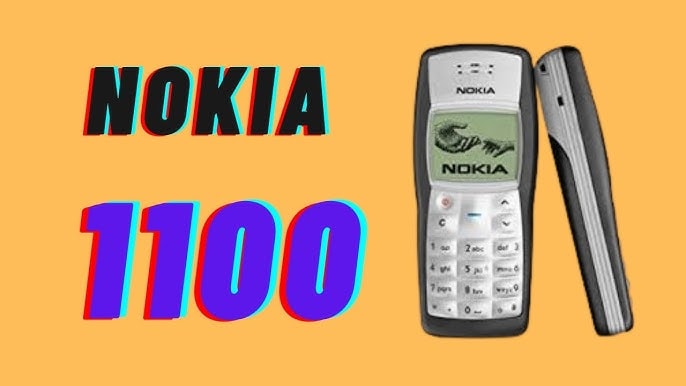
Although Apple revolutionized the global smartphone market, the number one spot in mobile phone sales still belongs to the Nokia 1100.
According to various technology industry statistics, the Nokia 1100 has sold approximately 250 million units globally, becoming the best-selling mobile phone of all time. Following closely behind is the Nokia 1110 with around 248 million units sold.
Meanwhile, the iPhone 6 and iPhone 6 Plus – Apple's most successful smartphone models – only achieved total sales of approximately 224 million units, ranking third in the history of the mobile industry.
Why did Nokia dominate the mobile phone market?
To understand why Nokia was able to achieve a nearly unbreakable record, we need to look back at the mobile phone market in the early 2000s.
Nokia launched the Nokia 1100 in 2003 and the Nokia 1110 in 2005, a time when smartphones were not yet widespread and phones primarily served basic needs such as making calls, sending text messages, and setting alarms.
At that time, the market was still competitive with many major brands such as Motorola, Sony, and BlackBerry. However, Nokia possessed a huge advantage: low prices and almost legendary durability.
The Nokia 1100 used to sell for around $100, while the Nokia 1110 was even cheaper, at only about $78. This was significantly lower than the trendy phones of the time, such as the Motorola Razr V3, which cost nearly $450.
Not only are these two phone models affordable, but they are also renowned for their long-lasting batteries, excellent shock resistance, and stable performance in various environmental conditions. These are extremely important factors in emerging markets, where users prioritize durability over high-end features.
"The king" in emerging markets
While camera phones were booming in the US and Europe, Nokia chose a different strategy: focusing on populous markets like India, Africa, and many developing countries.
The accessible price point is what made the Nokia 1100 and 1110 a popular choice for hundreds of millions of first-time mobile phone owners.
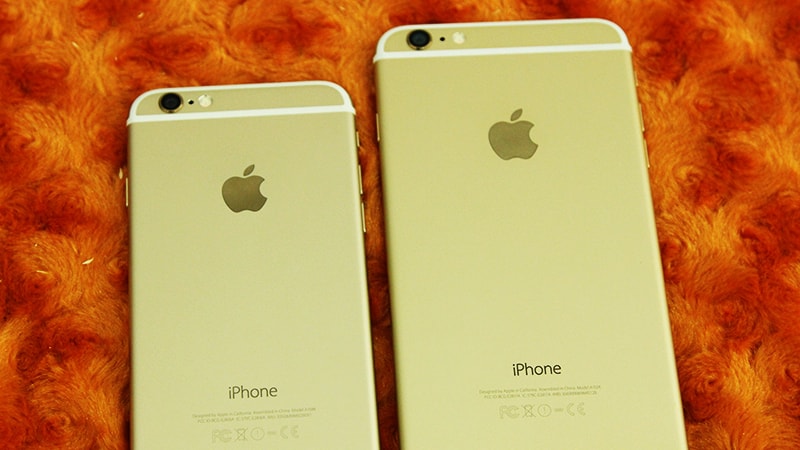
Photo: Internet.
In India, the Nokia 1110 was still widely sold at least until 2007. In Africa, Nokia's "brick phones" continued to be popular even after the smartphone era began. At one point in 2011, around 50 million Nokia 1100s were still in use across the continent.
In the eyes of many users, this is not simply a phone, but also a symbol of durability. Numerous older Nokia models still function after decades of use, making them a part of the technological memories of an entire generation.
Why is this record so difficult to break?
The smartphone market today has completely changed compared to the era when Nokia dominated.
While the early 2000s saw competition from only a few major brands, the market is now far more fragmented. Besides Apple and Samsung, the global smartphone industry also faces intense competition from Chinese manufacturers such as Xiaomi, Huawei, Oppo, and Vivo.
According to numerous market reports in 2026, Apple and Samsung currently hold only about 21% of the global smartphone market share each, indicating that no single manufacturer can maintain absolute dominance like Nokia once did.
In addition, the upgrade cycle for users' phones is also getting longer. While in the past many people changed phones after 1-2 years, now high-end smartphones can be used for up to 4-5 years thanks to powerful specifications and longer software support periods.
This makes it difficult for sales of individual phone models to reach the hundreds of millions of units sold during the era of feature phones.
In this context, the record of 250 million units sold by the Nokia 1100 will likely remain for a long time, as a special milestone of the "brick phone" era, before smartphones completely changed the world of technology.


