
Is the energy crisis pushing Zelensky into a deadlock?
Ukrainian President Volodymyr Zelensky is facing intense criticism over a corruption scandal in the energy sector, while the country's citizens are grappling with their fourth harsh winter, with power outages and heating shortages more severe than ever before.
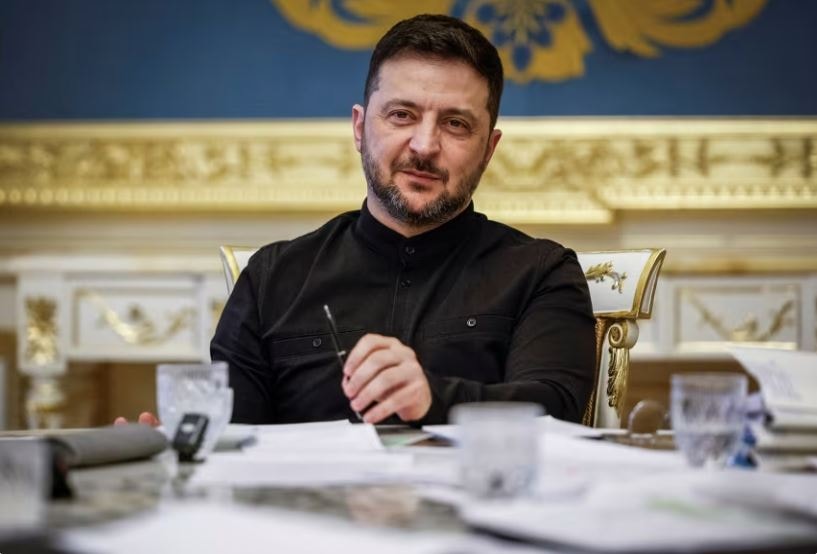
According to CNN, the scandal, centered on alleged bribery from contractors, including those working to protect critical energy infrastructure, led to the dismissal of two ministers in President Zelensky's administration and involved a former business partner from his time in the entertainment industry.
On November 12, the Ukrainian government announced the suspension of Justice Minister German Galushchenko, who had previously served as Energy Minister. Galushchenko asserted that he would defend himself against the accusations. Both he and his successor as Energy Minister subsequently submitted their resignations at the request of President Zelensky; Parliament is expected to quickly approve them.
According to investigators, approximately $100 million was siphoned off, equivalent to 10–15% of the value of the contracts. This money was lost when state-owned enterprises, including Energoatom – the operator of Ukraine's nuclear power plants – paid companies for projects to enhance security at critical facilities.
The latest corruption scandal, involving the energy sector, makes the situation particularly sensitive in Ukraine. Residents in the capital Kyiv are currently experiencing power outages lasting from 8 to 11 hours each day.
According to CNN, diesel generators, purchased during the initial power outages three years ago, are once again appearing in front of shops and cafes. Candlelight dinners have once again become a daily routine.
To date, Volodymyr Zelensky has avoided being embroiled in corruption scandals, despite warnings from the Ukrainian people since last summer with the largest anti-government protests since the full-scale conflict began.
Tymofiy Mylovanov, a former minister in President Zelensky's administration and now the president of the Kyiv School of Economics, told CNN that the president must "act as harshly as possible" if he wants to maintain public support. He explained: "People say: 'Let's see how he handles it… If he doesn't act, it means he's on their side (the accused). If he actually punishes, arrests, and prosecutes those who condone this, then fine, he'll be okay.'"
CNN suggests it's too early to assess whether this corruption scandal will cause lasting damage to President Zelensky's public trust in Ukraine. A recent survey by the Kyiv Institute for International Sociology – conducted before the new allegations surfaced – shows that public trust in the Ukrainian leader remains around 60%. This figure is lower than at the beginning of the year, but relatively stable compared to the approval ratings for 2024.


