
Kia EV6 2025 GT-Line AWD: Worthwhile upgrades, fast charging.
The 2025 upgrade adds an 84 kWh battery, NACS charging standard, automatic door handles, and chassis refinements. The GT-Line AWD boasts 320 horsepower, a range of 270 miles, and charges from 10–80% in under 20 minutes.
The 2025 Kia EV6 continues to focus on charging efficiency and driving experience. The GT-Line AWD version tested uses an 84 kWh battery, producing 320 horsepower and 604 Nm of torque, with a range of approximately 270 miles (~434 km) and DC fast charging from 10–80% in less than 20 minutes (under 18 minutes under ideal conditions). The vehicle switches to the NACS charging standard and is immediately compatible with approximately 20,000 Tesla Supercharger stations.
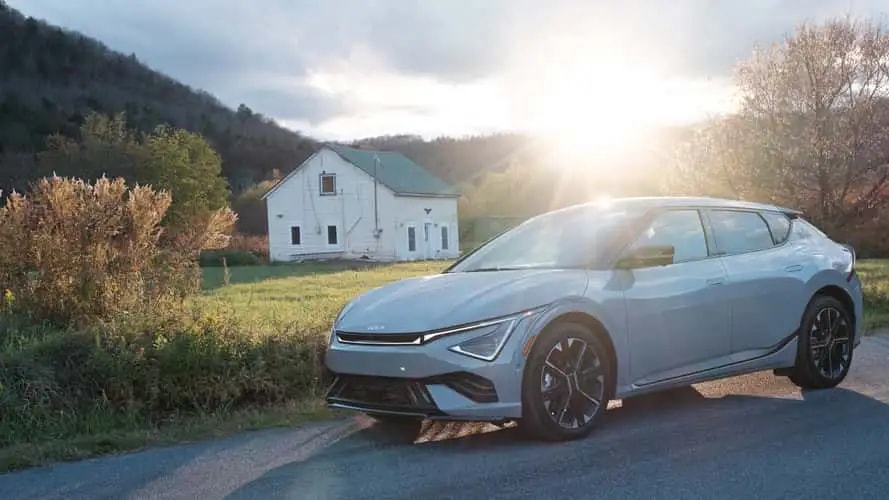
A refined look, with small but effective details.
The 2025 EV6 features a new front end design based on the Tiger Nose philosophy, along with improved headlights for better long-range illumination. The low, elongated body proportions evoke a modern wagon silhouette, contrasting with the boxy, friendly style of the Hyundai Ioniq 5. The most practical change is the door handles: they now automatically pop out on all versions, replacing the previous push-and-pull mechanism which was inconvenient.
Sturdy chassis, new tires, reduced vibration and noise.
Driving experience reveals a more stable body, less vibration, and a quieter cabin. The new Continental tires offer better grip and ride comfort compared to the previous Kumho tires. With 320 horsepower, the EV6 provides a lively driving experience, with quick and precise responses when cornering, targeting users who prefer a dynamic driving experience.
800V E-GMP platform and fast charging advantages
The EV6 2025 continues to use the 800V E-GMP electrical architecture (shared with the EV9, Ioniq 5, Ioniq 9, etc.), optimized for fast DC charging. The large battery pack achieves a maximum charging power of 240 kW; under ideal conditions, it allows charging from 10–80% in less than 18 minutes. On the Tesla Supercharger network (NACS standard), the time to reach 80% is approximately 30 minutes, in exchange for immediate access to around 20,000 stations, reducing the pressure of finding a charging spot in practice.
Battery and range: clear configurations
Kia has increased battery capacity across its product range: the standard Light model now has a 63 kWh battery; higher trims use an 84 kWh battery. Maximum range is approximately 319 miles (~513 km) with rear-wheel drive, while the Wind AWD achieves around 295 miles (~475 km). The GT-Line AWD tested had a range of approximately 270 miles (~434 km). These figures reflect the improvement in range across various configurations.
Practical cabin, familiar interface.
The EV6 retains many physical buttons – a suitable choice for users transitioning from internal combustion engines to electric vehicles. Interior materials are good for the price range. However, the control panel for switching between air conditioning and audio can be confusing when operating quickly. Sound insulation is improved, along with the overall rigidity of the body.
Software and connectivity: useful additions, but areas for improvement.
The software has been upgraded for Hyundai-Kia's new generation of EVs, adding features for battery tracking and customization, energy monitoring, usage charts, and fast charging conditions. The phone app remains slow, the third-party app store is limited, and the navigation system sometimes suggests confusing routes. A major plus is that Apple CarPlay and Android Auto now support wireless connectivity.
Pricing, assembly, and market picture
The 2025 EV6 is assembled at the West Point plant in Georgia, USA. Although federal tax incentives are no longer available, manufacturing in the US helps strengthen the supply chain. Starting prices are quoted at approximately $42,000–$42,900 depending on configuration; GT-Line AWD starts at $58,000. Other reference prices include: Light Long Range RWD $46,200, Light Long Range AWD $50,300, Wind AWD $54,300. The high-performance EV6 GT version is still manufactured in South Korea.
In the mainstream electric SUV segment in the US in 2025, the Tesla Model Y continues to lead. The Hyundai Ioniq 5 sold twice as many units as the EV6 in 2024; the Ford Mustang Mach-E and several GM EV models also surpassed the EV6. However, according to the reviewer (insideevs), after a week of real-world use, the 2025 EV6 has addressed many of its previous weaknesses and deserves more attention.
Key specifications table for the 2025 Kia EV6 (GT-Line AWD)
| Category | Parameter |
|---|---|
| Version | GT-Line AWD |
| Base price | 42,900 USD |
| Trial price | $60,740 |
| Battery | 84 kWh |
| Operating range (estimated) | 270 miles (~434 km) |
| Power | 320 horsepower |
| Torque | 604 Nm |
| 0–60 mph | 4.5 seconds (estimated) |
| Electric platform | E-GMP 800V |
| DC fast charging | Maximum 240 kW; 10–80% < 18 minutes (ideal conditions) |
| Charging standard | NACS; compatible with approximately 20,000 Tesla Supercharger stations. |
| Assemble | West Point (Georgia, USA) |
Conclude
The 2025 EV6 demonstrates Kia's focus on features that users can clearly perceive: segment-leading 800V fast charging, broad NACS compatibility, improved NVH, and practical amenities like automatic door handles. With its competitive pricing and diverse trim levels, it's a worthwhile electric SUV in the mass market segment, especially for those prioritizing charging efficiency and a clean driving experience. Positive feedback after a week of hands-on experience comes from the source author (insideevs).


