
Iran's retaliation scenario if attacked by the US.
According to international observers, despite heavy losses following Israeli and US airstrikes last summer and increasing domestic pressure, Iran still maintains a range of strategic deterrence assets. From its massive ballistic missile arsenal and regional proxy network to its ability to blockade the Strait of Hormuz, Tehran could potentially cause major disruptions to both the Middle East and the global economy if a conflict with Washington were to erupt.
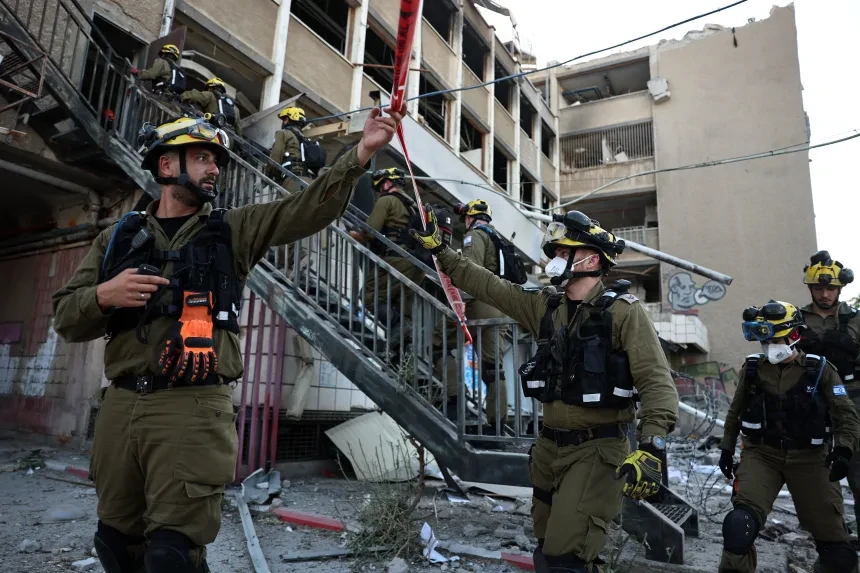
Ready for a "battle for survival"
For nearly half a century, Iran has been preparing for a military confrontation with the United States. Aware of the disparity in traditional military power, Tehran has focused on developing an asymmetrical strategy aimed at imposing extremely high costs, forcing its adversary to back down.
Currently, even as negotiations continue, the US military is significantly increasing its air and naval presence in the Middle East. The tough rhetoric from US President Donald Trump and the open possibility of attacking Iran further fuel concerns about a devastating, large-scale war.
Experts believe that how Tehran uses deterrence tools will depend on the level of threat it perceives.
The Tehran regime possesses a great deal of formidable capability. If they consider this a life-or-death struggle, they could deploy everything they have.
Senior expert Farzin Nadimi from the Washington Institute analyzes the situation.
Here are the main possible responses Iran could take in the event of an attack:
A rain of missiles and drones.
Iran currently possesses thousands of ballistic missiles and unmanned aerial vehicles (UAVs) with a range that can cover US military bases in numerous Middle Eastern countries, as well as the entire territory of Israel.
The ability of Iranian weapons to penetrate air defenses has been proven. In June 2025, following a surprise Israeli attack, Tehran retaliated with waves of missiles and UAVs, overcoming Tel Aviv's sophisticated interceptor systems and inflicting significant damage. Iranian officials assert that the arsenal used in that conflict has been fully replenished.
According to US officials, these combat-proven weapons systems continue to pose a persistent threat. Iran has developed, tested, and deployed more than 20 types of ballistic missiles, capable of threatening targets as far away as Southern Europe. Its Shahed suicide drones have also demonstrated their destructive power in real-world battlefield conditions.
We have between 30,000 and 40,000 American troops stationed at eight or nine facilities in the region. All of them are within range of thousands of Iranian suicide drones and short-range ballistic missiles.
US Secretary of State Marco Rubio emphasized this last month.
According to US officials, despite being technologically backward and far behind the West, the scale of Tehran's arsenal makes any decisive attack plan by Washington extremely difficult. Tehran has also repeatedly warned that it will target US allies in the region.
In the past, when US bombers attacked Iranian nuclear facilities last summer, Tehran launched missiles at al-Udeid Air Base in Qatar – the largest US military base in the Middle East.
Activate the "Resistance Axis" network.
Over the past two years, Israel has dealt heavy blows to Iran's proxy networks, significantly weakening Tehran's ability to extend its reach beyond its borders. Nevertheless, these armed groups continue to declare their readiness to defend the Islamic Republic.
Iraqi militia groups such as Kataeb Hezbollah and Harakat al-Nujaba – organizations that have repeatedly attacked US forces in the past, along with the Hezbollah movement in Lebanon – have all affirmed that they would come to Iran's aid if it were attacked.
Last month, the commander of Kataeb Hezbollah, Abu Hussein al-Hamidawi, called on those loyal to Iran worldwide to "prepare for an all-out war."
However, this network is facing numerous obstacles. In Lebanon, Hezbollah's power has been significantly weakened after 13 months of conflict with Israel and is now grappling with domestic pressure to disarm. In Iraq, powerful militia groups are being constrained by a central government under considerable pressure from the US to limit Tehran's influence.
Meanwhile, the Houthi forces in Yemen, despite constant bombing by the US and Israel, have emerged as one of Iran's most dangerous "extensions." This group has attacked Saudi Arabia, the United Arab Emirates (UAE), Israel, and even US warships in the Red Sea. In late January, the Houthi released a video showing a burning ship accompanied by a short, threatening message: "Coming soon."
Economic warfare and the "choke point" of Hormuz
Tehran has repeatedly warned that a war against Iran would not be confined to the Middle East but would create a global earthquake. As one of the leading energy producers, Iran holds strategic leverage due to its ability to disrupt global energy markets and trade routes.
Iran controls the Strait of Hormuz – a narrow waterway that carries more than one-fifth of the world's oil and a large portion of its liquefied natural gas (LNG). Tehran has threatened to close the strait if attacked. Experts warn that this scenario could drive fuel prices skyrocket and trigger a global economic recession.
A prolonged disruption in the Strait of Hormuz is an extremely dangerous scenario. Even a partial disruption would cause prices to skyrocket, supply chains to break, and global inflation to be amplified.
Umud Shokri, an energy strategist in Washington, offered his assessment.
However, a blockade of Hormuz may be Iran's last resort, as it would also cripple its own economy and severely impact neighboring Arab nations – countries that are already lobbying the Trump administration to abandon its attack plans and commit to not allowing Washington to use their territory as a military springboard.
Instead of a complete blockade, Iran could employ asymmetrical warfare. Its military says it has built deep underground naval bases along the coast, with dozens of fast attack craft ready to deploy in the Persian Gulf. The ability to lay mines, use suicide drones, and employ swarm tactics could turn this region into a nightmare for Western navies.
History has proven this capability. In the late 1980s, during the "Tank War," Iran laid mines in the Persian Gulf, nearly sinking the USS Samuel B. Roberts while it was escorting Kuwaiti oil tankers.
In 2019, a series of oil tankers were attacked in the Gulf of Oman amid escalating US-Iran tensions.
Combined with the Houthi forces' ability to threaten trade through the Bab al-Mandab Strait in the Red Sea, Iran wields immense power to inflict economic damage on a global scale.
"The next war may not start in the heart of Tehran, but will erupt right in the Strait of Hormuz and the Persian Gulf," concluded expert Nadimi from the Washington Institute.
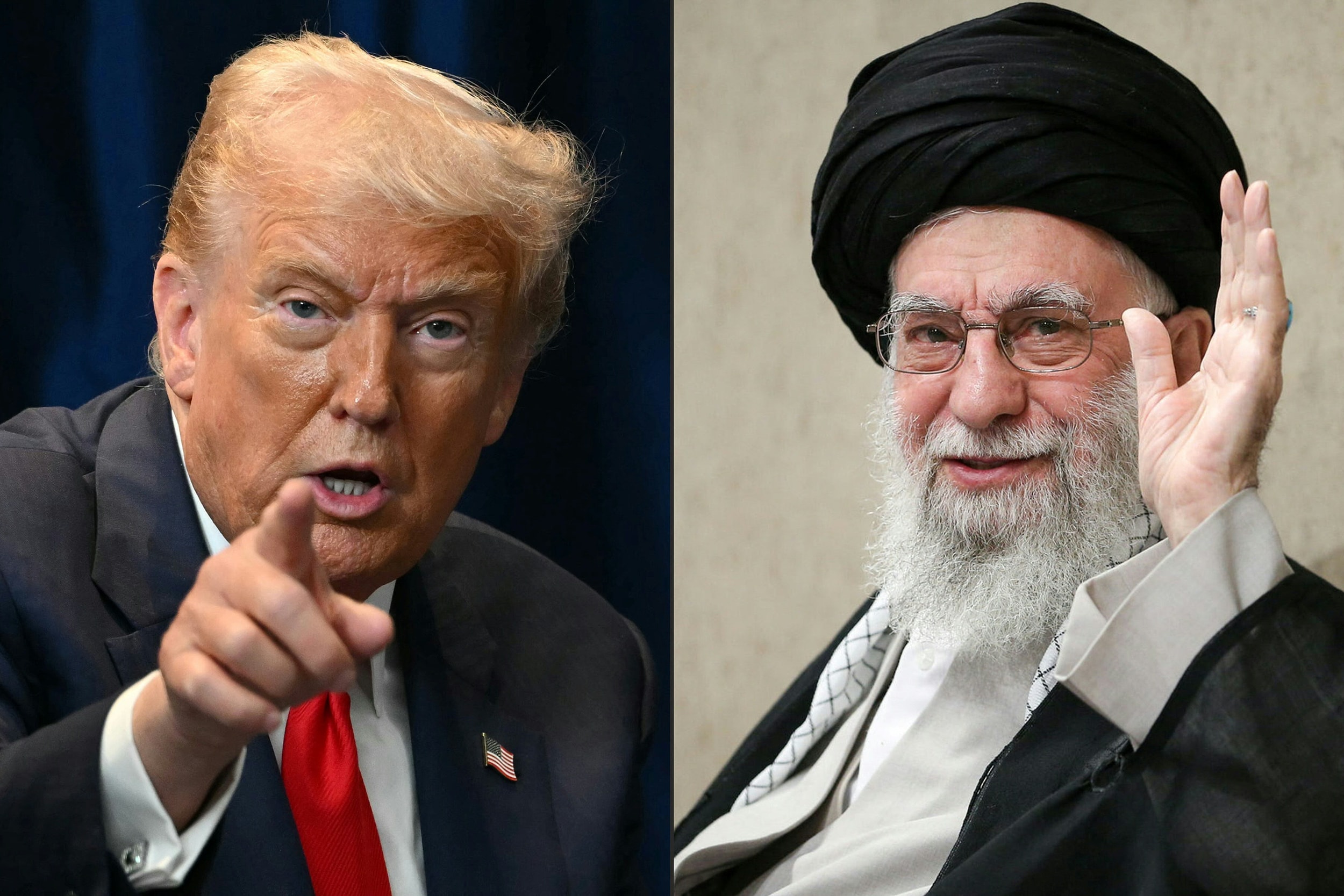
In a recent development, according to AFP, US Special Envoy Steve Witkoff revealed that President Donald Trump is wondering why Iran has not yet "surrendered" to the immense military pressure from Washington.
Currently, the US and Iran are holding negotiations mediated by Oman in Geneva, Switzerland, to defuse tensions. President Trump has set a 15-day deadline for Tehran to present a new nuclear agreement. On the Iranian side, Foreign Minister Abbas Araghchi said a draft proposal would be finalized in the next few days.
Despite pressure from the US deployment of aircraft carriers and military equipment to the region, Iran's Supreme Leader Ali Khamenei asserted that Washington would not be able to defeat the Islamic Republic. Tehran continues to deny accusations of developing nuclear weapons, while emphasizing that the core objective of negotiations is the lifting of economic sanctions.
Notably, Special Envoy Witkoff confirmed he met with exiled opposition figure Reza Pahlavi at Trump's direction. This move came shortly after Washington left open the possibility of supporting "regime change" in Iran.


