
Creating a stable, groundbreaking, and feasible legal framework for the development of special urban areas.
The government is developing laws on special urban areas and special economic zones to create a stable and groundbreaking legal framework, promoting sustainable development and international competitiveness.
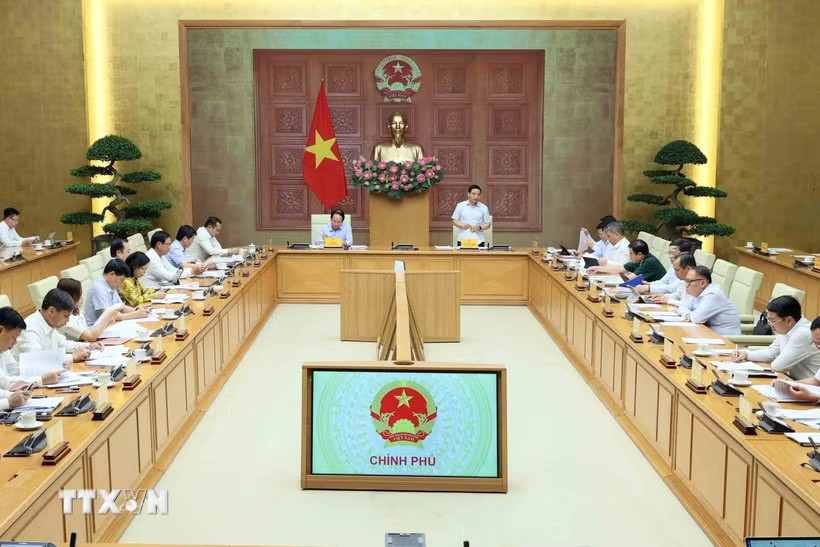
On the afternoon of July 2nd, at the Government Headquarters, Deputy Prime Minister Nguyen Van Thang and Deputy Prime Minister Le Tien Chau co-chaired a meeting to review the draft law on special urban areas and special economic zones.
Attending the meeting were leaders from the following ministries and agencies: Finance, Justice, National Defense, Public Security, Interior, Industry and Trade, Construction, Agriculture and Environment, Science and Technology, Culture-Sports and Tourism, and the Government Office; and leaders from the following localities: Ho Chi Minh City, Hanoi, Hue, Hai Phong, Can Tho, Khanh Hoa province, An Giang, Bac Ninh, and Quang Ninh...
Based on the policy outlined in Resolution No. 09-NQ/TW dated May 19, 2026, of the Politburo on building and developing Ho Chi Minh City in the new era, and the directives of General Secretary and President To Lam, the Prime Minister has assigned the Ministry of Justice to take the lead and closely coordinate with the People's Committee of Ho Chi Minh City and relevant agencies to develop the Law on Special Cities in accordance with the procedures stipulated in the Law on Promulgation of Legal Documents.
According to a report from the Ministry of Justice, the Ministry has coordinated with the People's Committee of Ho Chi Minh City and relevant agencies to develop the draft law and related documents; sent them to ministries, localities, and organized workshops and seminars to gather feedback.
The Ministry of Justice has identified the objective of developing the draft law as creating a stable, groundbreaking, and feasible legal framework regarding the position and role; policy mechanisms; authority and responsibility for the construction, management, development, and protection of special urban areas in general, and Ho Chi Minh City in particular; and specific mechanisms that can be extended to other special urban areas and cities.
Specifically, the draft law stipulates: thorough and comprehensive decentralization of power to local governments, including policy piloting; and specific policy mechanisms for urban development.
Regarding special economic zones, Deputy Minister of Finance Nguyen Duc Tam said that the Ministry has proposed eight criteria for defining "special economic zones" to the competent authorities.
Specifically: It is a coastal economic zone established by a decision of the Prime Minister, including economic zones located across multiple commune-level administrative units; consistent with socio-economic development orientations and ensuring national defense and security; with a population of 50,000 or more; a relatively independent and easily controllable area with a size of 500 km2 or more; an international airport or a seaport of class I or higher; favorable conditions for mobilizing investment resources to develop technical and social infrastructure; potential and advantages for developing priority industries; the ability to leverage local potential and create a ripple effect of development throughout the country and the region; conditions that ensure environmental requirements, sustainable development, and climate change adaptation; and prioritized by competent authorities for the development of industries into national breakthrough growth poles.
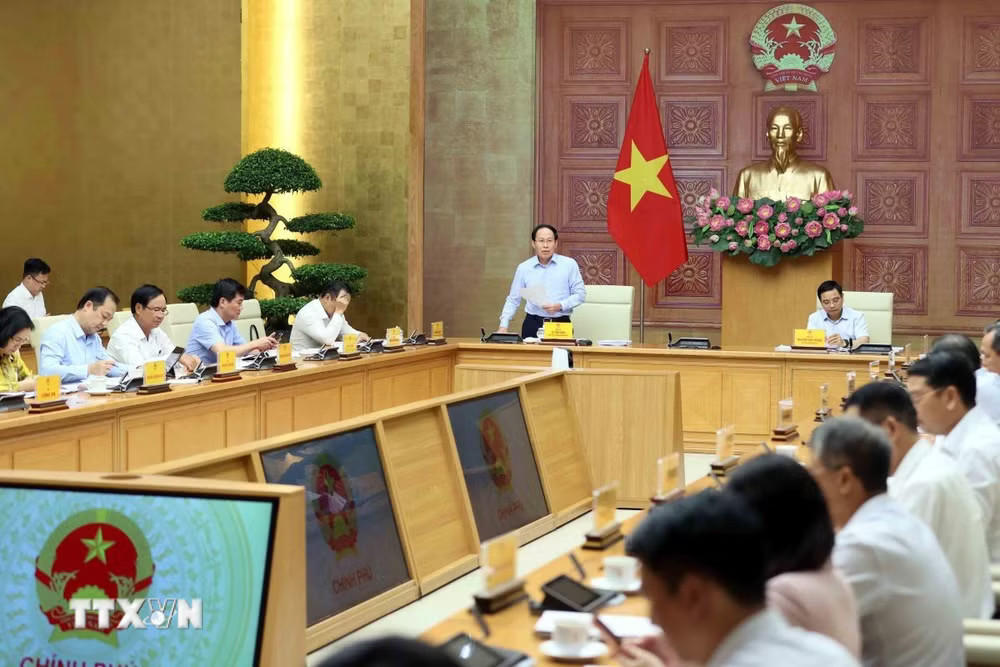
It is expected that six major groups of mechanisms and policies will be implemented to promote socio-economic development in special economic zones, including: Government organizational structure; Planning and construction; Development resources; Marine economic development; Free trade zones and duty-free shop operations; and Other special mechanisms and policies.
Regarding the integration of specific mechanisms and policies for special economic zones into the Special Urban Area Law Project, the Ministry of Justice and the Ministry of Finance have worked together, exchanged ideas, and proposed two implementation options.
Option 1 allows special economic zones to immediately apply the mechanisms and policies in the Special Urban Area Law Project.
Option 2 integrates the draft plan on special economic zones into one chapter of the Law on Special Cities, in which the draft law will consist of four parts: General provisions for special cities and special economic zones; Mechanisms and policies for special cities; Mechanisms and policies for special economic zones; Implementation organization and enforcement provisions.
During discussions on the draft law, leaders of ministries, sectors, and localities debated and provided feedback on its name, scope of application, proposed methods, timeline, approach, organizational structure, and related regulations.
Speaking at the meeting, the two Deputy Prime Ministers acknowledged that this is a difficult task, requiring very high quality but with a very tight timeframe. Therefore, ministries, departments, and localities must focus intensely, work scientifically, clearly define responsibilities, tasks, and deliverables.
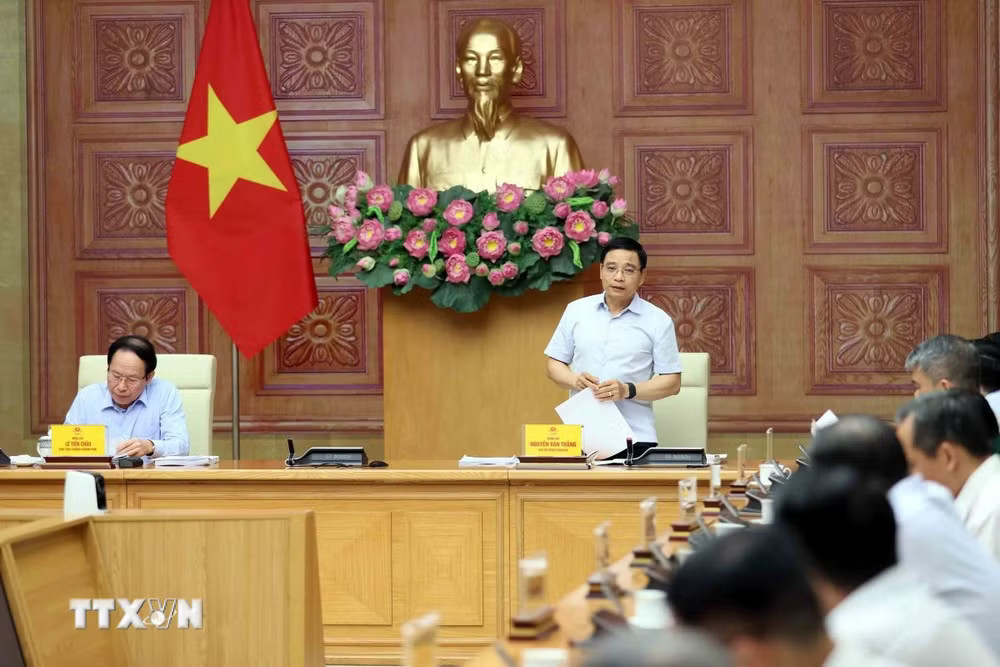
Deputy Prime Minister Nguyen Van Thang shared his views on the name of the Law and suggested that the Ministry of Justice and the Ministry of Finance coordinate to conduct thorough research and come up with a suitable name that best reflects the Law's identity.
Regarding organizational models, the Ministry of Interior, the Ministry of Justice, and the Ministry of Finance will coordinate in reviewing, developing, analyzing, and evaluating the advantages and disadvantages of each option to submit to the Prime Minister, the Government, and other competent authorities for consideration and selection of the optimal option.
While generally agreeing with the view of applying policy mechanisms to special zones based on policies for special urban areas, Deputy Prime Minister Nguyen Van Thang suggested that necessary differences could be further stipulated in this law.
Deputy Prime Minister Le Tien Chau urged ministries, sectors, and localities to fully absorb the directives of Deputy Prime Minister Nguyen Van Thang, emphasizing that the draft law must have a complete political, legal, and practical basis, and a clear impact assessment.
The enacted laws need to be highly feasible, create genuine impetus for development, form institutional competitive advantages for cities and growth poles; and remove bottlenecks in planning, land, infrastructure, finance, culture, and society.
“Special mechanisms must be accompanied by commitments to growth and revenue collection. We must not allow a situation where special mechanisms are requested but growth is not commensurate or revenue collection decreases. In particular, regulations need to be carefully reviewed to ensure they are consistent with the Constitution,” Deputy Prime Minister Le Tien Chau noted.


