
Developing a high-tech workforce.
Looking ahead to the 14th National Congress of the Party, experts and scientists hope that the document will emphasize the central role of education and training, science and technology, digital transformation, and STEM education...

"The common thread" in the vision for national development.
Mr. Nguyen Tien Thao, Director of the Higher Education Department (Ministry of Education and Training), stated that at the working session with the Socio-Economic Subcommittee of the 14th National Congress of the Communist Party of Vietnam, General Secretary To Lam clearly pointed out that the "red thread" running throughout the documents is the full understanding of the dialectical relationship between stability and development; stability for development and development for sustainable stability.
Following that direction, Vietnam needs to escape the "middle-income trap," striving to become a developing country with a modern industrial base and upper-middle income by 2030, and a developed country with high income by 2045.
From the perspective of national human resource development, Mr. Nguyen Tien Thao emphasized that to overcome the middle-income trap, it is necessary to shift from low-cost labor to high-tech human resources; develop education, improve the quality of training, especially for highly skilled human resources in basic and STEM fields; and promote the application of digital transformation in education and training, linked with fostering work discipline and increasing productivity.
According to the Director of the Department of Higher Education, as the country enters an era of development, the human factor plays a crucial role in realizing the goal of becoming a high-middle-income country by 2030 and a high-income country by 2045. To achieve this, it is necessary to train a highly skilled, professional workforce capable of working in cutting-edge technology and engineering sectors; capable of absorbing, mastering, and innovating based on advanced global science and technology.
To realize this goal, Mr. Nguyen Tien Thao proposed the issuance of a general framework for admission to STEM fields, ensuring the quality of input and transparency in the admission process. Training programs should integrate content on developing industrial work habits and labor discipline, especially in engineering and technology fields; and strict regulations should be issued regarding the conditions for opening new programs, linked to innovation capacity and quality monitoring mechanisms.
Furthermore, higher education institutions should be encouraged to pilot a "dual" training model, closely integrating schools, businesses, and independent evaluation organizations. Simultaneously, social media should be promoted to highlight the role, opportunities, and career value of technology and engineering fields, thereby attracting talented students and meeting the sustainable development requirements of the country in the new era.
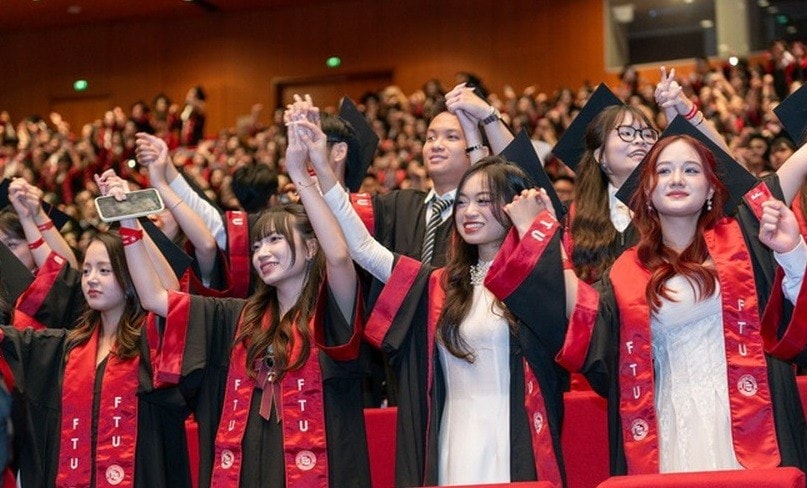
Creating breakthroughs in high technology and the digital economy.
Associate Professor Tran Thanh Nam – Vice Rector of the University of Education (Vietnam National University, Hanoi), commented that the draft Political Report of the 14th Party Congress clearly affirms priority areas for development such as STEM, high technology, and the digital economy. This is an important orientation, reflecting a strategic vision in the context of increasingly fierce global competition.
According to Associate Professor Tran Thanh Nam, to create a breakthrough in human resource development, it is first necessary to build a plan to forecast the demand for high-quality labor according to each stage of the country's development.
Based on this, the State needs to have a policy of investing strategically in training human resources in high-tech fields such as artificial intelligence, biotechnology, and digital technology through scholarships, elite training programs, and a strong system of research institutes. Training programs should also be designed based on specific competency-based output standards, emphasizing digital skills, foreign languages, innovative thinking, and entrepreneurship.
Furthermore, STEM education and experiential education need to be strengthened in a way that connects them with practical production and business. Linking training with businesses and focusing on hands-on experience will help learners adapt to the labor market more quickly.
For teacher training, it is necessary to raise entrance standards, prioritize attracting talented students, and invest in building a modern teaching environment with smart classrooms, laboratories, and practice facilities that meet standards. Encouraging applied research and strengthening links between universities, research institutes, and businesses are also important solutions to update new knowledge and promote innovation.
Based on international experience, Associate Professor Tran Thanh Nam suggests that Vietnam can learn from the model of South Korea – a country that has succeeded by building a comprehensive human resource development strategy, focusing on improving the quality of education and reducing exam pressure to stimulate creative thinking. Accordingly, Vietnamese education needs to gradually eliminate the mentality heavily focused on degrees, shifting the focus to developing vocational skills, practical abilities, and the capacity for lifelong learning.
The draft document for the 14th National Congress also clearly points out the profound impact of globalization and the Fourth Industrial Revolution on education. A modern education system not only improves the quality of human resources but also creates a national competitive advantage, enabling learners to work in an international environment, attract investment, and promote scientific cooperation.
In fact, digital transformation is fundamentally changing the way we teach and learn. Vietnam has the advantage of a young population and high internet and smart device access rates, but it still faces many challenges. Statistics show that in 2021, nearly 47% of students in rural areas lacked the necessary equipment for online learning, and about 60% of teachers in remote areas lacked effective online teaching skills. This necessitates synchronized investment policies to bridge the digital divide between regions.
In the context of integration, the demand for language skills and soft skills such as critical thinking, teamwork, and global communication is increasingly high. The draft document has correctly identified the direction by encouraging the application of advanced educational programs and methods, but it needs to specify a roadmap for improving digital and foreign language proficiency for learners, while also focusing on protecting and promoting Vietnamese cultural identity and character.
Creating human resources to lead development.
According to Associate Professor Tran Thanh Nam, STEM education, machine learning, and artificial intelligence need to be integrated into the curriculum early on; alongside this, teacher training and development should be prioritized, and new technologies such as AI, virtual reality, and online learning should be applied to personalize learning. Developing a synchronized digital infrastructure for schools, especially in disadvantaged areas, will contribute to narrowing the gap between urban and rural areas.
Furthermore, it is necessary to promote foreign language teaching from the primary school level, encourage bilingual programs and international student exchanges; expand cooperation with leading universities and research institutes worldwide, and develop international joint training programs. Alongside this, build an innovation ecosystem within schools, encourage students to participate in scientific research, entrepreneurship, and lifelong learning, aiming towards the formation of a learning society in the digital age.
In his paper submitted to the National Scientific Conference "Strategic Breakthroughs in Human Resources, Especially High-Quality Human Resources in the New Context," Dr. Nguyen Si Dung, former Deputy Head of the National Assembly Office, emphasized that the era of self-improvement requires Vietnam to proactively create a new generation of human resources – not only with strong professional skills, but also with independent thinking, global integration capabilities, and the ability to innovate.
According to Mr. Dung, the current developments are not simply a growth cycle, but the result of the accumulation of internal strength, the resurgence of national will and aspirations after half a century of peace and nearly four decades of reform.
Vietnam is entering a new phase of development, where the goal is not just to survive or catch up, but to rise and assert its position as a developed nation on the international stage. In this context, human development needs to be established as the focus of all national strategies, going beyond the responsibility of the education sector or a few ministries and agencies alone.
It is time for Vietnam to shift from a mindset of "training human resources to meet immediate needs" to "creating human resources to lead development"; from viewing people as beneficiaries to establishing people as the subjects of development. This is the key to turning aspirations into reality and building sustainable national strength in the 21st century.
To achieve quality growth, industrialization and modernization, and deep integration, Associate Professor Dr. Tran Thanh Nam emphasized that Vietnam needs high-quality human resources. An open and modern education system will train a generation of citizens with the knowledge, skills, and qualities to meet the requirements of national development and defense.


