
Experiences of living with floods in Nghe An
(Baonghean.vn) - For many people in the communes outside the Lam River dike, flooding occurs every time it rains. Living with floods has become commonplace for them, even for their daily meals and drinking water.
Every year, during the rainy season, water from upstream causes the Lam River to rise, flooding and isolating hundreds of households in Hamlet 1, Chau Nhan Commune, Hung Nguyen District (Nghe An Province).
However, with the mindset of "living with floods," the households here have developed many plans to ensure the safety of people and property - building self-rescue mounds, raising kitchen cabinets, and constructing flood shelters; people are no longer afraid of floods or caught off guard whenever floods come.
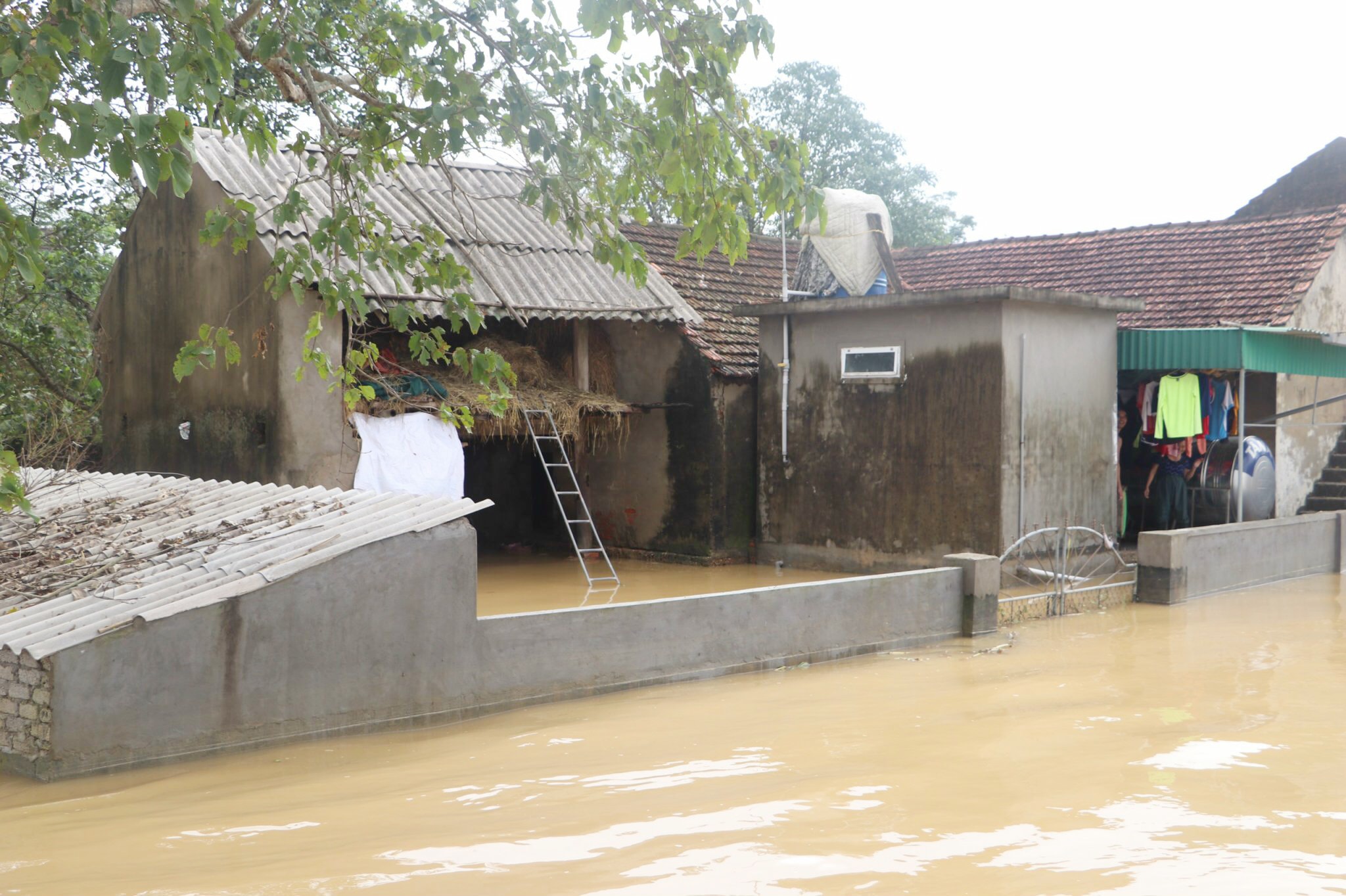 |
| Residents of Chau Nhan commune are affected by flooding. Photo: Quang An |
Chau Nhan commune was formed by merging Hung Chau and Hung Nhan communes in 2019. The former Hung Nhan commune, with over 1,000 households living outside the Lam River dike, was considered the "flood epicenter" of Hung Nguyen district.
As is all too familiar, every year during the rainy season, more than 1,000 houses belonging to households in Chau Nhan commune (formerly Hung Nhan) are flooded due to water flowing from upstream.
According to many locals, if it rains continuously for 3 days, the water level could rise by 1.5-2 meters, turning the former Hung Nhan commune into a semi-submerged island, isolated from surrounding areas.
To cope with flooding, for many years now, when building houses, households living outside the Lam River dike have raised their house foundations 1-1.5 meters above the road level.
Families with better financial means build 2-3 story houses or stilt houses to avoid floods; those with average incomes build mounds for self-protection and design them with upper floors.
Ms. Cao Thi Nguyet (Hamlet 1, Chau Nhan Commune) recalled that she had witnessed many historical floods in her life, such as in 1978, 1988, and 2000, when floodwaters rose very quickly at night, causing people to scramble to the dikes to escape; local authorities mobilized forces to evacuate the elderly and children.
The floodwaters rose rapidly, sweeping away many belongings, household items, and even livestock and poultry.
Since 2011, with support from the State, some households in Hamlet 1, Hung Nhan commune (formerly) have built flood-resistant shelters. The State provided 10 million VND in support and a 10 million VND loan, while the local government mobilized labor to assist.
Starting from the model of flood-resistant stilt houses, over the years, with experience and a mindset of living with floods, households have creatively built self-rescue mounds and elevated storage areas at low cost and convenience for people's daily lives, while also creating shelters when floods occur.
With self-rescue mounds, people usually build an attic next to their main house with an area of about 15-20m2, raised 2.8-3m above the house floor, with stairs to bring buffaloes, cows, pigs, goats, etc. up to escape the flood.
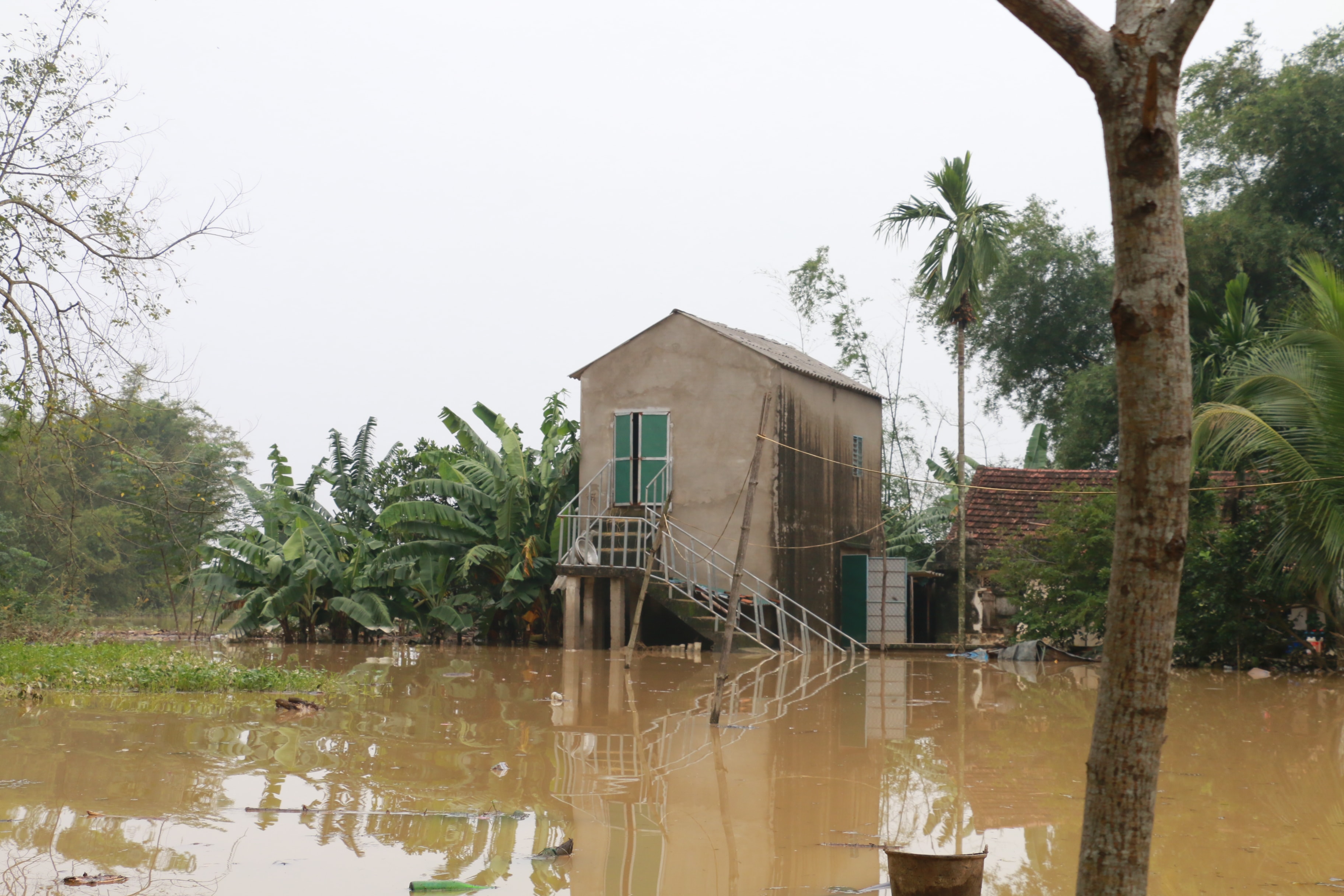 |
| Those households facing greater hardship were fortunate enough to receive government assistance years ago to build flood-resistant houses. Thanks to this preparation, even when submerged in floodwaters, people on the other side of the Lam River are still proactively overcoming the natural disaster. Photo: MH |
Mr. Nguyen Van Ngu (Hamlet 1, Chau Nhan Commune) said that the cost of building a self-rescue sandbar ranges from 30-50 million VND depending on the area. Wealthier families will build flood-resistant huts costing around 100 million VND, with 4-8 reinforced concrete pillars, a first-floor slab, stairs to the upper floor, and a tiled or corrugated iron roof.
With these flood response methods, people no longer worry every time floods come, and do not have to evacuate to the dikes when the water suddenly rises.
In addition, during the flood season, to ensure a supply of clean water, households also build cylindrical water tanks up to 4-5 meters high; water is channeled through plastic pipes from the roof down to the tank. When floodwaters surround the area, people still have clean water to use even after the water recedes and they have moved to stilt houses or attics.
In the homes of people living outside the dike, there are always small wooden boats and bamboo basket boats readily available – the main means of transportation during the flood season.
In addition to the flood shelters, elevated platforms, and self-rescue mounds built by the local people, the former Hung Nhan commune also had a community flood shelter built right within the grounds of the former Hung Nhan Commune People's Committee headquarters.
Community flood shelters are designed with water systems, kitchens, etc. When major floods occur, the elderly and children will be moved to live together in the community shelter to ensure their safety.

With elevated flood shelters, residents are prepared whenever floods arrive. (Photo: Ta Chuyen/VNA)
Mr. Phan Dinh Hoan, Chairman of the People's Council of Chau Nhan commune (formerly Chairman of the People's Committee of Hung Nhan commune), said that due to the unique characteristics of the commune as a "flood-prone area" located entirely outside the Lam River dike, the government and people are always proactive and ready to live with floods according to the "four on-the-spot" principle.
Currently, out of more than 1,000 households living outside the dike, while many families with better economic conditions have built 2-3 story houses, about 70% of households have built flood-resistant shelters, self-rescue mounds, or elevated storage areas to ensure the safety of lives and property when floods occur.
Furthermore, with a proactive approach to flood response, local authorities also pay special attention to raising public awareness about flood preparedness.
When information about storms and tropical depressions that could cause heavy rain and rapid rise in the Lam River's water level is received, people prepare plans to move their property, cattle, pigs, and chickens to flood shelters and sandbanks for self-protection. Thanks to this, the damage to people and property caused by floods in Chau Nhan commune in recent years has been minimized.
Not only in Chau Nhan commune, but also in some other frequently flooded areas such as Hung Loi commune (Hung Nguyen district) and Nam Cuong commune (Nam Dan district), people have proactively built flood shelters and self-rescue mounds to cope with floods.
Nghe An province suffers heavy losses from floods every year. However, with experience gained over the years and a proactive approach with creative flood response plans, people in some of the "flood-prone" areas of Nghe An province have felt somewhat more secure when the rainy season arrives; losses of life, property, and livestock have also decreased significantly in recent rainy seasons.


