
Tips for handling a car that has been submerged in water.
A crucial piece of advice for drivers is to never force the engine to restart when it stalls, to avoid bending, breaking, or puncturing the connecting rods and cylinder walls.
Water not only negatively affects the electrical system and stains the interior, but more seriously, it can damage the engine when it enters the combustion chamber. This can lead to water compression, also known as hydrolock.
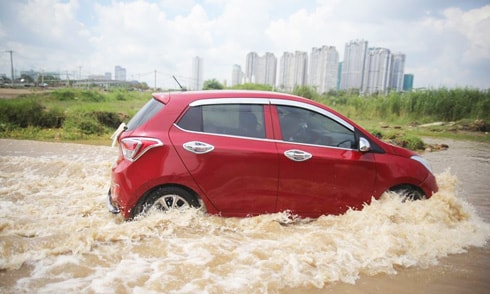 |
| The engine, electrical system, and engine oil are easily damaged when a car drives through flooded areas. |
Here are the parts of a car most vulnerable to water damage and basic troubleshooting steps:
Engine
Drivers should absolutely not attempt to restart the engine, turn off the electrical system, and if possible, push the vehicle to higher ground with a slope. This will prevent water from entering the combustion chamber through the air intake and allow water to drain out through the exhaust pipe.
GCall a tow truck to check the extent of water ingress into the engine. If the damage is minor, the car can be driven slowly to a garage for further inspection when the water level on the road allows. In more serious cases, the damaged car will need a specialized vehicle to tow or transport it to a garage.
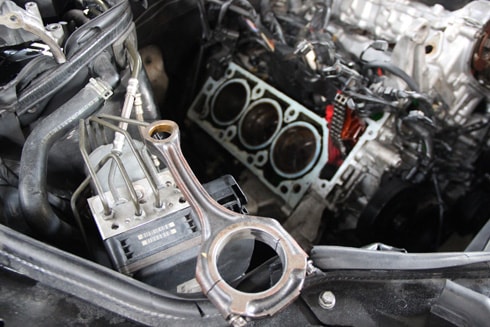 |
| The owner of the Mercedes E-Class forced the car to restart after it stalled due to water damage bending the connecting rod in the engine. |
Attempting to restart the engine will only cause further damage. The incompressible nature of water causes the connecting rod in the combustion chamber to bend due to the reciprocating motion of the piston.
More dangerously, forcing the engine to start multiple times can cause the connecting rod to bend, break, or puncture the cylinder wall (causing engine block damage). The engine will then require repair or replacement at a high cost, depending on the type of vehicle.
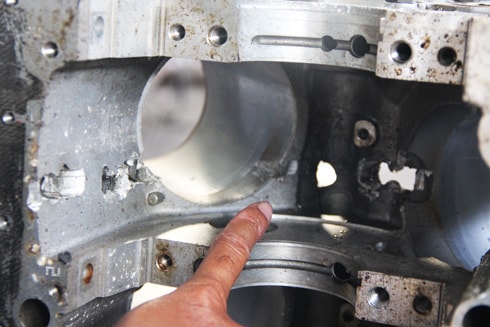 |
| The connecting rod broke, puncturing the cylinder wall in the car engine. |
According to automotive technicians, even when the car is at the garage, starting the engine requires caution. First, manually crank the engine to check for any foreign objects. Then, measure the engine's compression pressure using a specialized tool.
If the compression pressure is still sufficient, meaning water hasn't entered the combustion chamber, the engine is still in good condition. You can then restart the vehicle, but don't forget to check other parts and repair any signs of damage.
If the engine's compression pressure is insufficient, it means the engine is damaged. The engine should be disassembled to inspect internal components such as cylinders, pistons, connecting rods, and crankshafts. Depending on the severity of the damage, repairs or replacements may be necessary.
Electrical system
Similar to the engine, the electrical system is also sensitive to water. Short circuits and control system failures occur when water seeps from the undercarriage to the floor of the vehicle. This leads to error messages for various parts or causes many functions of the car to malfunction. The deeper and longer the car is submerged in water, the more susceptible the electrical system is to damage.
Typically, the electrical system of a flooded car requires detailed computer-aided inspection for repair. The connectors are dried and treated with specialized chemicals to prevent oxidation.
Lubricating oil
When driving through flooded or deep water, the first and most important thing to do after turning off the engine is to check the engine oil. If the oil turns cloudy white due to mixing with water, you need to drain all the old oil and replace it with new oil. Engine oil should be used separately from transmission oil.
Unlike motorcycles, cars with automatic and manual transmissions use oils of different viscosity. Depending on the type of vehicle or manufacturer and its specific technical standards, using the right oil for a car requires careful consideration and should be done by reputable garages.
According to VNE
| RELATED NEWS |
|---|


