
Economy and culture of Nghe An province during the Late Le Dynasty
(Baonghean.vn) - Nghe An province during the Later Le Dynasty was closely linked to 400 years of the country's complex and harsh history. Difficulties outweighed advantages, but it seems that this was the period when generations of Nghe An people shaped the character of their community, actively striving for self-improvement and maturity, and making many important contributions to the historical and cultural progress of the nation.
Many times of war.
The Later Lê Dynasty lasted from the beginning of the 15th century to the end of the 18th century, interspersed with several decades of the Mạc Dynasty. During this period, Nghệ An province continued its migration process, not only of the Vietnamese/Kinh people from the North and Thanh Hóa, but also of the Thái and Mông ethnic groups from the North; this was the process of forming the Thổ ethnic group. Simultaneously, there was a continued migration southward along with the expansion of the territory, temporarily under the Nguyễn lords.
Although no longer the southern border of the nation, due to its unique geopolitical and security position, Nghe An province remained the site of the most warfare, fueled by power struggles, from the North-South dynastic conflict to the Dang Trong-Dang Ngoai divide, the Tay Son movement, and numerous uprisings against the imperial court. The people suffered greatly from war. "Nghe An has repeatedly been ravaged by war. Fields in the districts were abandoned, and the people suffered from hunger. Epidemics broke out, killing more than half the population. The people were displaced, either fleeing south or north. The land of Nghe An was desolate and deserted" (Cuong Muc). Therefore, the economic and cultural development of this region faced immense obstacles.
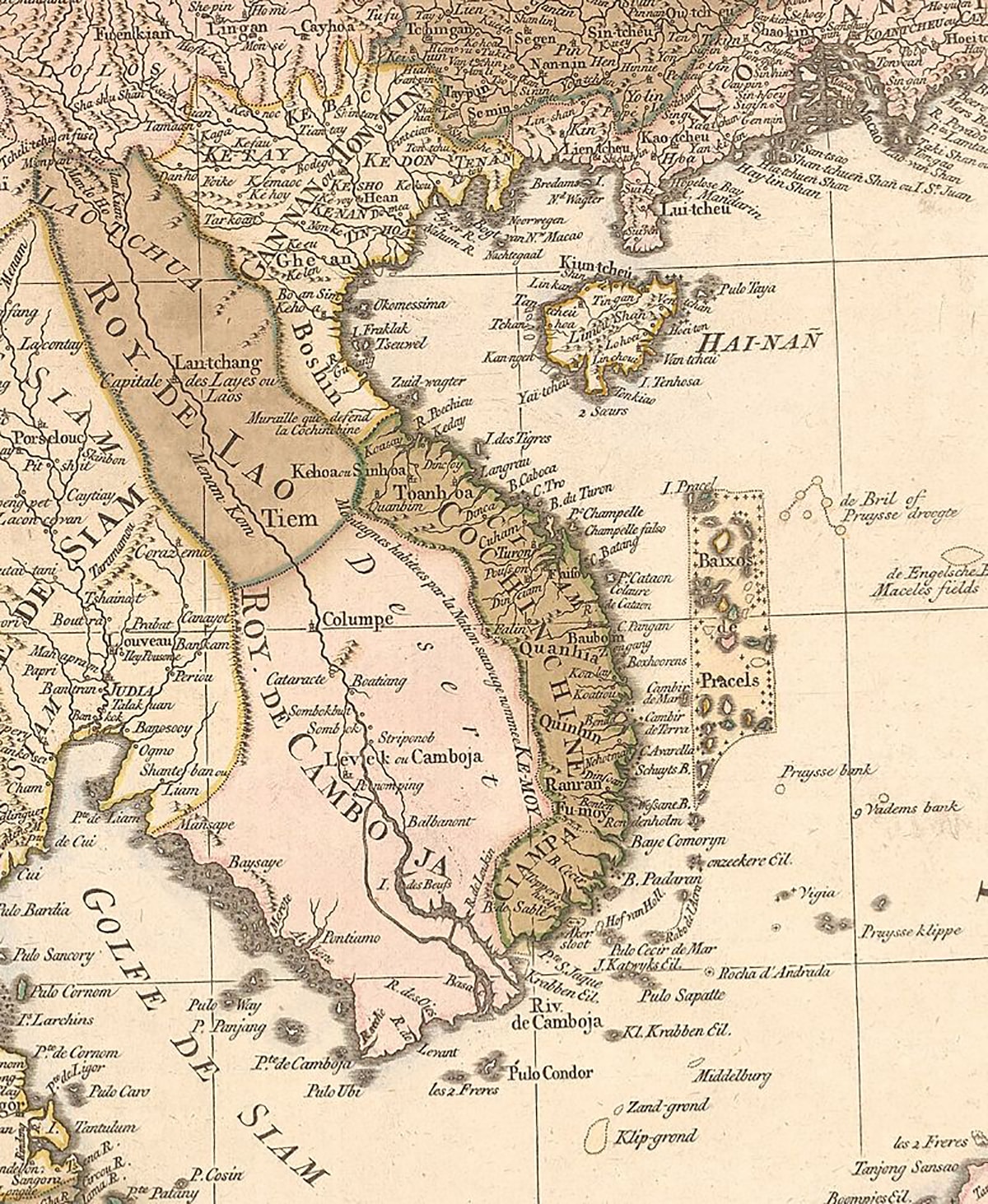 |
| Map of Vietnam around 1760, drawn by the Cóvens e Mortier company, Amsterdam. Photo: Wikipedia |
The economy is fluctuating.
After the liberation war, during the early Le Dynasty, Nghe An's agricultural economy recovered and developed. Land reclamation was intensified, especially in the coastal and midland areas. The Le Dynasty's "military stationed in agriculture" policy encouraged officials and the people to organize land reclamation and establish many new plantations and villages, such as those of Nguyen Xi and Nguyen Su Hoi in Nghi Loc and Nghi Xuan; Nguyen Bien in Cam Xuyen; Le Khoi (Chieu Trung) in Thach Ha; and Nguyen Nham Mo in Nam Dan… Le Thanh Tong's policy allowing the establishment of plantations in 1481 was "primarily aimed at expanding agricultural production and creating reserves for the State" (Complete History). At this time, Nghe An province had four plantations: Ha Hoa plantation (southwest of Thach Ha); Duc Quang plantation (northwest of Ngan Truoi, down to La Son/Duc Tho); Anh Do plantation (southwest of Anh Son up to Con Cuong); and Dien Chau plantation. The plantation laborers were mainly prisoners, criminals, garrison soldiers, and poor people.
Irrigation was given attention, with the position of "Ha De Su" (Elevator) overseeing dike management, water control, and agriculture at the prefecture and district levels. At the commune level, there was a commune head responsible for this. Thanks to this, many large irrigation projects were built, such as the Xuoc Canal, Tang Canal (Quynh Luu), My Canal (Yen Thanh), Thiet, Huong Cai, and Dich Canals (Hung Nguyen), Na Canal (Cam Xuyen), and Lac Canal (Ky Anh). The Nha Le Canal continued to be dug or dredged all the way to the Ngang Pass.
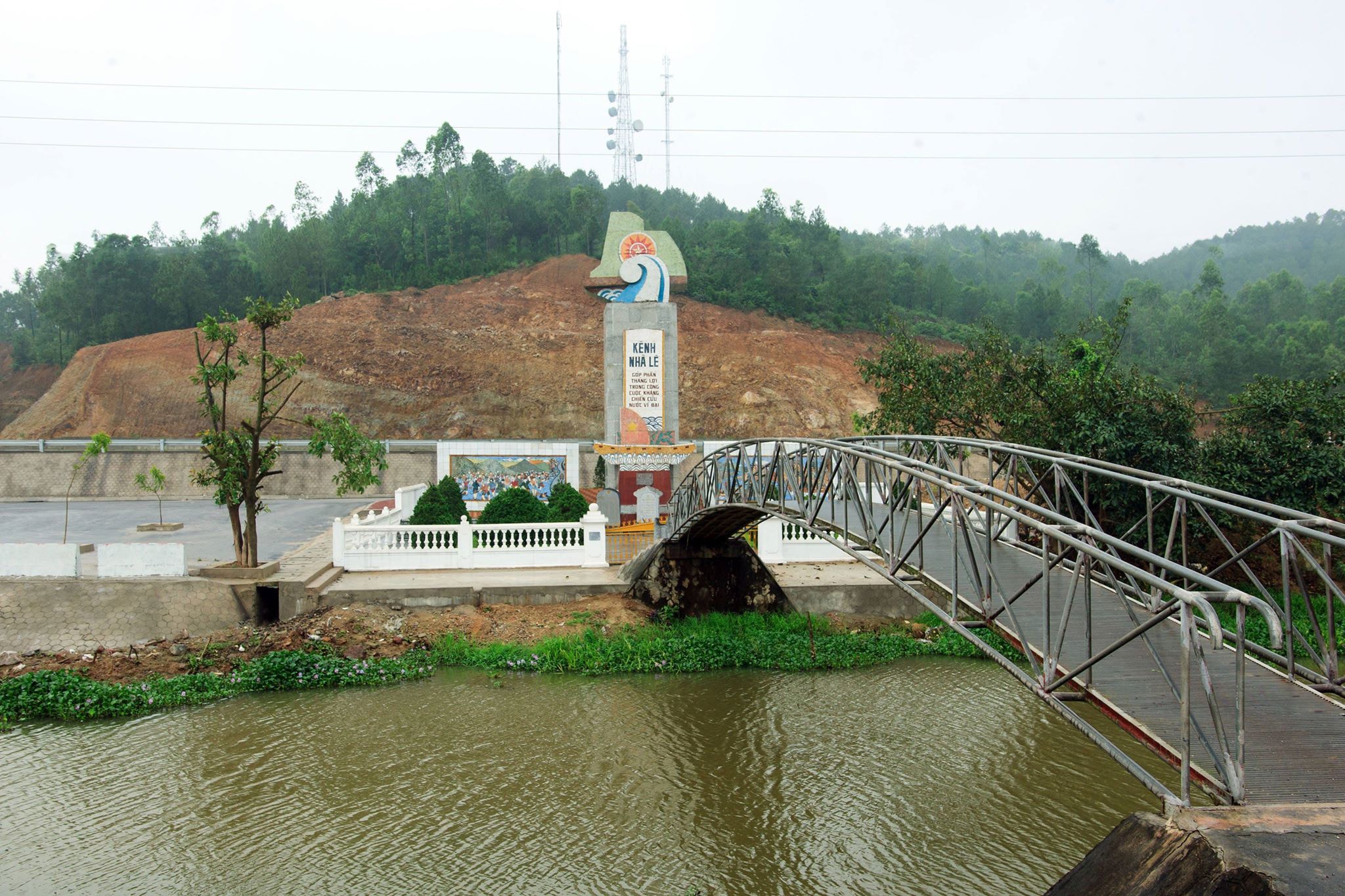 |
| The Le Dynasty Canal in Nghe An is classified as a National Monument. Photo: Nguyen Sach |
During the 16th, 17th, and 18th centuries, due to political upheavals, agriculture in Nghe An was devastated and declined, the population dispersed, and farmland was left fallow. Farmers had to struggle to produce enough to feed themselves and pay taxes, and villages were no longer as prosperous as before.
Regarding handicrafts, during the early Le Dynasty, due to the stable socio-political situation, they developed quite rapidly. In the plains, crafts such as mulberry cultivation and silkworm rearing, silk/fabric weaving, pottery making, iron forging, bronze casting, carpentry, and basket weaving flourished. Along the coast, fishing, boat building, mat weaving, salt production, and fish sauce making were prevalent. In the mountainous regions, logging, pottery making, iron forging, and basket weaving were common crafts.
Some handicraft products from this period were technically advanced and of relatively high quality, such as: Quỳnh Đôi silk (Quỳnh Lưu), Nho Lâm ironware, Vân Chàng forging (Đức Thọ), Chợ Bộng pottery (Đông/Yên Thành), Cẩm Trang pottery (Đức Thọ), Thiên Lộc mats (Can Lộc)... Several craft villages were formed, including: Nhân Lý, Quỳnh Đôi, Phượng An, Hoàn Nghĩa (Quỳnh Lưu); Hoàng Lệ (Kỳ Anh); Đồng Môn, Đại Tiết, Hà Hoàng… (Thạch Hà); Việt Yên, Yên Hồ, Hoa Lâm (La Sơn/Đức Thọ); Quang Trung, Trung Phường (Đông/Yên Thành)…
During the Le Dynasty, trade in Nghe An developed alongside agriculture, handicrafts, and other socio-political factors. In the early Le period, agriculture and handicrafts developed somewhat, but trade remained small-scale, generally a self-sufficient economy. In Nghe An during the Le Restoration period, constant warfare led to agricultural stagnation and slow handicraft development. Nevertheless, following the general trend of the country and taking advantage of the period of truce between opposing forces, commercial activities underwent a transformation. The system of village markets expanded. District and provincial markets were opened in increasing numbers. With the advantage of a natural seaport system and canals running along the coast, several port cities such as Dien Chau, Hoi Thong, Cua Sot, and Nhuong Ban continued to operate. Notably, from the 17th century onwards, Phu Thach town, on the right bank of the Lam River, opposite Lam Citadel, became a major commercial center of Nghe An. Many foreign ships came here to trade. There is a Chinese (Minh Huong) neighborhood here where people came to settle and do business.
A culture that stands alongside the "four fortresses".
During the Tran Dynasty, Nghe An remained a "camp" area, an underdeveloped border region with a low level of education. However, during the Later Le Dynasty, along with socio-economic development, education in Nghe An progressed, laying a solid foundation for the region's cultural development and gradually establishing its position as a national cultural center.
Regarding education and examinations, there were schools teaching literacy, and the number of students and literate people increased. During the Le Dynasty, Nghe An had a provincial examination center in Lam Thanh. The number of talented students and successful candidates increased steadily. According to statistics, during the early Le Dynasty, Nghe An (old) had 51 people who passed the imperial examinations; during the Mac Dynasty, there were 23 people; and during the Le Trung Hung Dynasty, there were 68 people who passed the imperial examinations. In the Nham Thin examination (1590), father and son Ngo Tri Tri and Ngo Tri Hoa (Ly Trai, Dong Thanh) both passed. In the Binh Thin examination (1756), brothers Le Si Triem and Le Si Bang (Noi Thien Loc, Thien/Can Loc) both passed. Three father and sons passed together, such as the Phan Huy Can family and his two sons Phan Huy Ich and Phan Huy On. Many families were honored as scholarly families, such as the Ho family, the Phan Huy family, and the Nguyen Huy family…
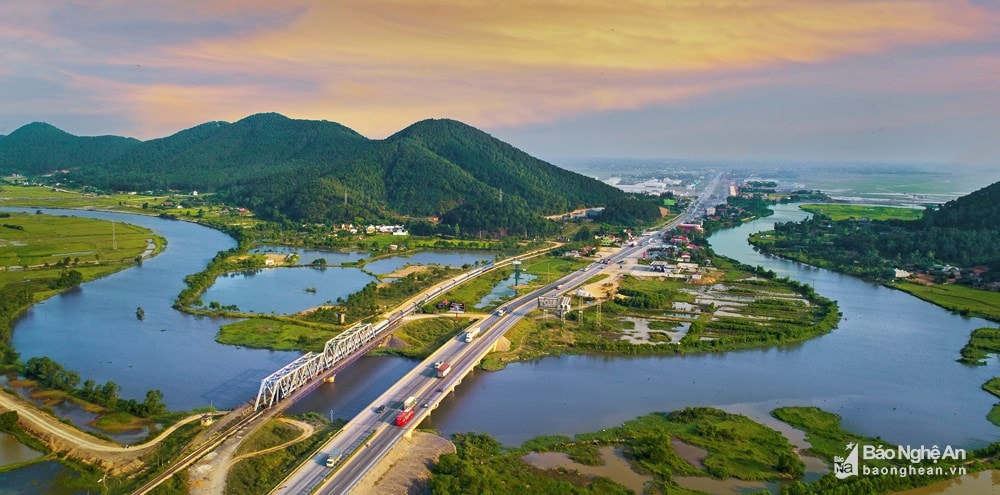 |
| The road to Nghe An province (photo taken at Cau Cam). Photo courtesy of Nguyen Thanh Hai. |
In the fields of education, literature, and history during this period, many famous authors and outstanding works emerged. In literature, there was Ho Si Dong's Dao Dinh Su Tap; Pham Nguyen Du's Duong Hien Vinh Su Thi; and Nguyen Huy Oanh's Nguyen Tham Hoa Thi Tap. In history, there was Dang Minh Khiem's Viet Giam Vinh Su Thi Tap, Nguyen Nghiem's Viet Su Bi Lam; Ho Si Duong's Trung Hung Thuc Luc; Phan Huy On's Liet Truyen Dang Khoa Khao and Khoa Bang Tieu Ky… In Nghe An province, at the end of the 18th century, the Hong Son literary school was formed with many famous authors and works, including many from the Nguyen family – Tien Dien, Nguyen Truong Luu, and Phan Huy Thu Hoach – such as Nguyen Nghiem, Nguyen Khan, Nguyen Hanh, Nguyen Huy Oanh, Nguyen Huy Tuu, Nguyen Huy Vinh, Nguyen Huy Hao, and Phan Huy Ich…
In particular, this was a period of refinement and development of the folk songs Ví and Giặm, with the most prominent being Phường Vải singing and Ả Đào/Ca Trù singing. Folk knowledge about astronomy, medicine, cuisine, etc., was accumulated and compiled.
Along with the Confucian political ideology, the religious and belief life of the community became richer. Besides Buddhism and traditional indigenous beliefs, there were also the worship of Mother Goddesses (the Three Realms Mother Goddess and the Four Holy Mother Goddesses) and Christianity. The four temples – “Cờn, Quả, Bạch Mã, and Chiêu Trưng” – considered the most sacred in Nghe An province, were all established during this period.


