
KNDS reaches milestone of 450 CAESAR Mk I howitzers, 100 CAESAR OCTAVE howitzers.
KNDS announced the production milestone of 450 CAESAR Mk I and 100 CAESAR Mk I OCTAVE; the overall configuration allows for accelerated production and shorter delivery times for the 155 mm cannon.
KNDS announced that it has reached two production milestones with the CAESAR self-propelled howitzer: the 450th CAESAR Mk I and the 100th CAESAR Mk I OCTAVE. According to Olivier Bonfils, Director of Industry and Supply Chain at KNDS, this achievement reflects the growing industrial capacity and extensive cooperation within the French defense industry, and demonstrates the effectiveness of a “common configuration” in standardized production.
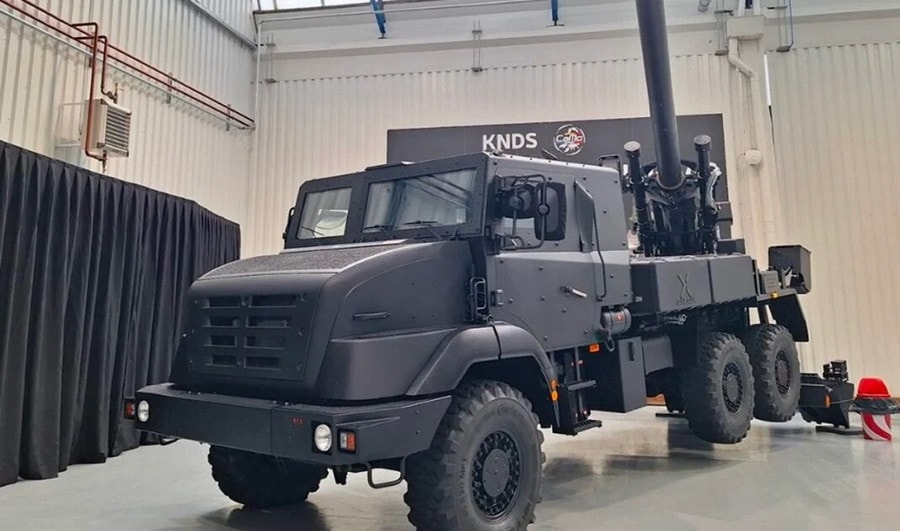
Overview
Information released by Olivier Bonfils highlighted two important production milestones of the CAESAR program. He stated that these milestones illustrate the shared commitment and collaborative strength between KNDS and Arquus, along with other French defense industry partners. KNDS also introduced a “general configuration” for the system, aimed at more quickly meeting customer requirements and increasing production flexibility.
Industrial and supply chain implications
KNDS considers the "general configuration" a major advantage: it increases production speed, enhances flexibility, and allows manufacturing even without knowing the end customer. According to Bonfils, this approach helps maintain a high production rate while shortening delivery times, especially as France and its European partners meet global demand for modern 155 mm artillery systems. KNDS sees this as an inspiring model for building a more integrated and responsive European defense.
Technical aspects and operational value
CAESAR is described as one of the most in-demand artillery systems in Europe. The main reasons, according to KNDS, lie in its combat performance, the mobility of its wheeled platform, and its lower lifecycle costs compared to tracked systems. With its 155 mm caliber, the system meets NATO and international market ammunition standardization requirements (according to Defence Blog), while also being suitable for operational requirements demanding rapid deployment, road mobility, and cost-effective maintenance and operation.
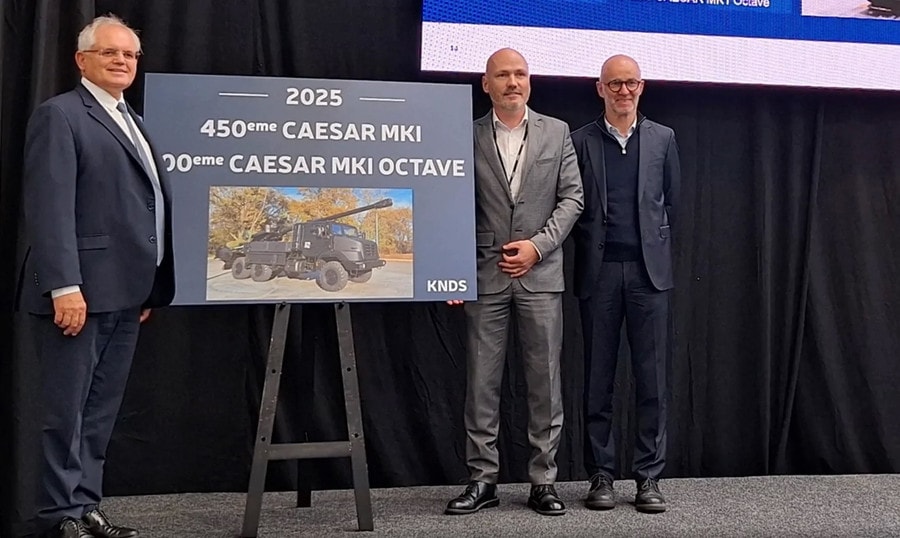
General configuration and its impact on production capacity.
According to KNDS, standardizing configurations simplifies variations, shortens the integration-testing cycle, reduces supply chain risks, and accelerates delivery. This organizational approach also allows for partial pre-production without waiting for final order configuration confirmation, thereby creating an industrial buffer to respond to urgent orders. Mr. Bonfils thanked the KNDS team and partners for their professionalism and dynamism, highlighting the current results and long-term direction of the program.
Key production milestones
| Landmark | Value | Note |
|---|---|---|
| CAESAR Mk I | 450 guns | Confirming production capacity and stable demand. |
| CAESAR Mk 1 OCTAVE | 100 guns | Configuration/version components in the CAESAR program |
Deployment and customers
CAESAR is currently in service with the armed forces of more than a dozen countries, including France, Ukraine, Denmark, Lithuania, Morocco, Thailand, and others. Demand from Europe has been noted to be increasing, aligning with the context of countries prioritizing the addition of 155 mm firepower that is mobile, has optimal lifecycle costs, and can be deployed quickly.
Assessment based on published data.
- The two milestones, 450 CAESAR Mk I and 100 CAESAR Mk I OCTAVE, indicate a stable production trajectory for KNDS.
- Standardizing the “general configuration” is a key factor in shortening delivery times and improving industrial readiness.
- The operational value of wheeled platforms lies in their operational mobility and lower lifecycle costs compared to tracked platforms.
- Official statements emphasized domestic industrial cooperation (KNDS, Arquus, and partners) and the orientation toward European defense integration.
The information and quotations in this article are based on publications by Olivier Bonfils and data cited by KNDS; according to Defence Blog.


