
Part 1: Pioneering Women Who Donated Land to Open Roads
From the narrow, muddy paths of yesteryear, many roads in Nghe An are now spacious and beautifully maintained. Behind this transformation are countless silent contributions, including those of women who dared to set aside their personal interests, voluntarily donating land, and even demolishing newly built gates to open pathways for the community. They have become pioneering role models, contributing to the new face of rural areas today.
.png)
Authors: Thanh Quynh - Thanh Nga
Technical: Diep Thanh
Publication date: September 20, 2025
Part 1:
Pioneering women who donated land to build roads.
From the narrow, muddy paths of yesteryear, many roads in Nghe An are now spacious and beautifully maintained. Behind this transformation are countless silent contributions, including those of women who set aside their personal interests, voluntarily donating land, and even demolishing newly built gates to make way for the community. They have become pioneering role models, contributing to the new face of rural areas today.
Silently contributing land to beautify the country roads…
Anyone who has ever traveled the road connecting from Provincial Road 534 to Self-Management Group No. 1, Hamlet 12, Anh Son Dong Commune, will surely remember the wide, airy road. Right at the beginning of the hamlet is the house of Ms. Le Thi Hue (born in 1971) – the head of Self-Management Group No. 1. With her gentle and simple demeanor, she diligently tends to each flower bed and row of trees in front of her house every day. Few people know that the nearly 70-meter-long, almost 1-meter-wide strip of flowers running along that path is land that her family voluntarily donated to beautify the hamlet.
Speaking about the journey of donating land for the road, Ms. Hue said it was a difficult one. She had fully grasped the policies and guidelines of the commune and village; her family was a model cultural family, so voluntarily donating land was a natural thing to do. However, to gain consensus within the family, she still had to do some persuasion work with the members. Through reasonable and empathetic explanations, not only her parents and children but also her husband understood, and the large road ahead was opened thanks to the family's garden land.

Ms. Tran Thi Hoai An, head of the Women's Association in Hamlet 12, said that besides donating land, Ms. Hue made sacrifices that the women in the association greatly appreciated. Pointing to the wide, clean road today, Ms. An said: "In the 1990s, it was just a narrow path, less than 2 meters wide, overgrown with trees, and frequently eroded during heavy rains because the road ran close to the rice fields. To prevent the road from eroding, Ms. Hue mobilized her family and the women in the association to contribute money to reinforce the road. To encourage the movement, her family and her father-in-law's family alone donated over 80 million VND to build the embankment, widen the road, and give it a new look."
Continuing the story, Ms. Le Thi Thuy, President of the Women's Association of Anh Son Dong commune, said: "The village road runs through an agricultural production area, so during the production and harvest seasons, there is a lot of traffic from buffaloes, cows, and various vehicles. Therefore, Ms. Hue has to mobilize the women to take turns cleaning the road daily to maintain a green, clean, and beautiful landscape."

Thanks to their contributions, in 2024, Hamlet 12 completed the criteria for building a new rural area, moving towards the goal of an advanced new rural area. Specifically, Ms. Le Thi Hue was recognized as an outstanding female member of the commune in 2023, and in 2024 she continued to be recognized as an outstanding self-governing group leader in the locality. Her garden has also been developed into a model garden of Anh Son Dong commune with over 100 Dien pomelo trees combined with beekeeping for honey production.
Looking back on her journey, Ms. Le Thi Hue humbly says that these were just small contributions to her homeland. But from these "small" things, the face of the village has changed significantly, and her "sacrifice" has inspired many women's association members to join hands and contribute to creating clean and beautiful roads.
In Hoa Bac hamlet, Tuong Duong commune, people still talk a lot about the story of Ms. Luong Thi Phui (born in 1982) – the head of the women's association in the hamlet, who agreed to demolish part of her house to donate more than 13 square meters of land for road construction. Her house was right next to the road, with the wall serving as a fence, so when the road expansion project was announced, the decision to donate land meant having to demolish part of her house. "Yet Ms. Phui didn't hesitate at all, even voluntarily demolishing it first to set an example for the villagers. Although her family had to rebuild part of the house, the gate, and the fence in the backyard afterward, she happily accepted it for the common good," shared Mr. Lo Van Phuong, head of Hoa Bac hamlet.
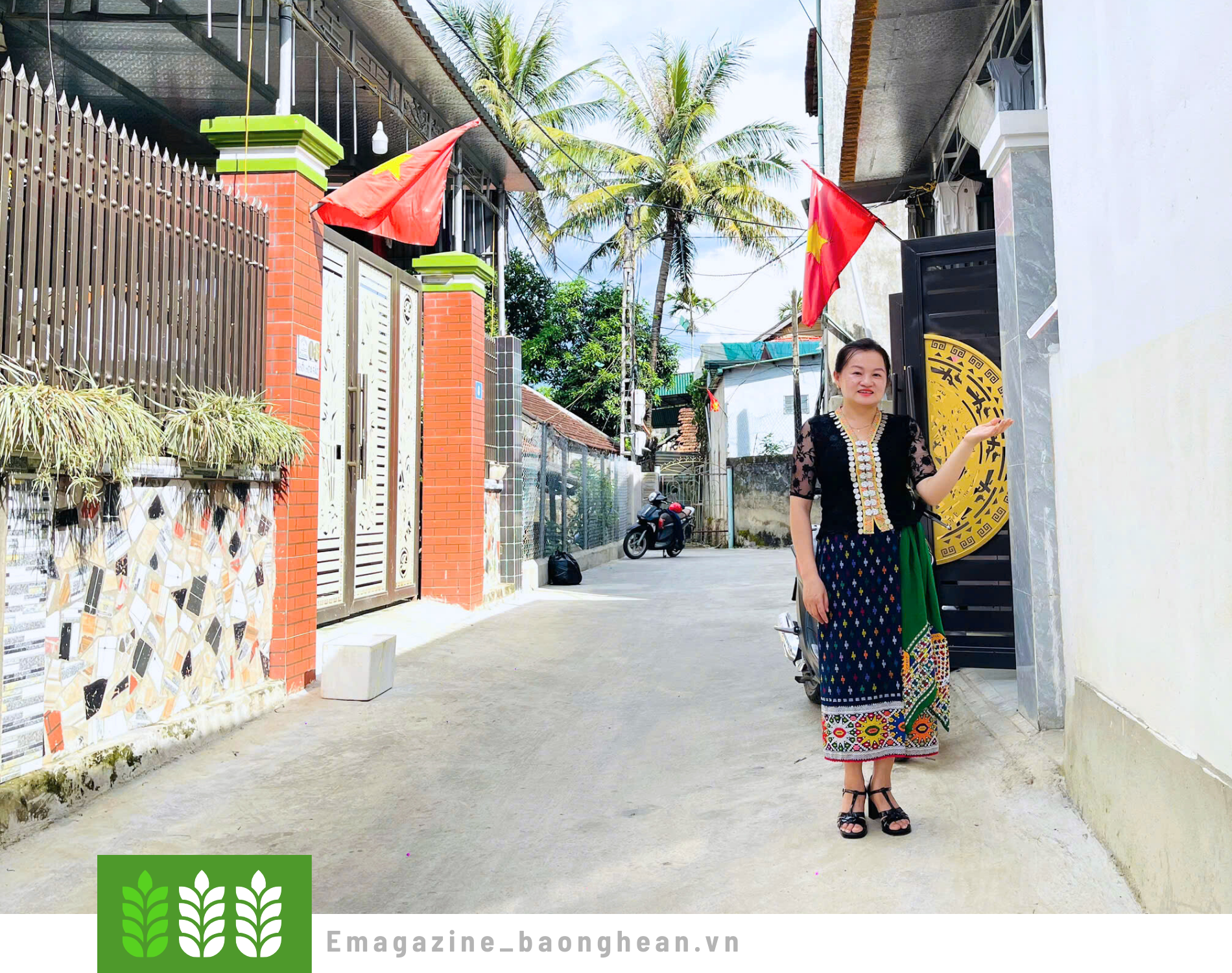
Following that pioneering effort, the movement quickly spread throughout the neighborhood. One by one, families in Neighborhood Group No. 10 unanimously joined in. Eleven households boldly donated land, voluntarily dismantled fences and outbuildings, and cut down old trees to contribute to widening the road. The road, over 120 meters long and originally only 2.6 meters wide, was widened to 3.5 meters, becoming a spacious, clean, and beautiful pathway. People can travel more conveniently, children can play more safely, and the villagers are increasingly delighted as the appearance of their neighborhood changes day by day.
Having served as the head of the Women's Association in Hoa Bac hamlet for over 10 years, Ms. Phui is well-accustomed to sacrificing personal interests for the common good. She shared: “When the government proposed widening the road, I realized that if I didn't make the first 'sacrifice,' it would be difficult to convince the villagers to follow suit. So, I discussed it with my husband and we decided to demolish part of our house to donate the land. Initially, I felt a little regretful, but seeing the road widen and the villagers happy, I felt even more motivated to continue mobilizing my family and association members to work together.”
Working together for change.
new rural appearance
Besides individual pioneers in donating land for road construction, many women's groups in Nghe An province have also made significant contributions. A prime example is the Women's Association of Hung Tan hamlet (Duc Chau commune), where over 30 women have donated land totaling over 400 square meters. Notably, some families even agreed to demolish their newly built gates, worth hundreds of millions of dong, to contribute to beautifying their hometown.
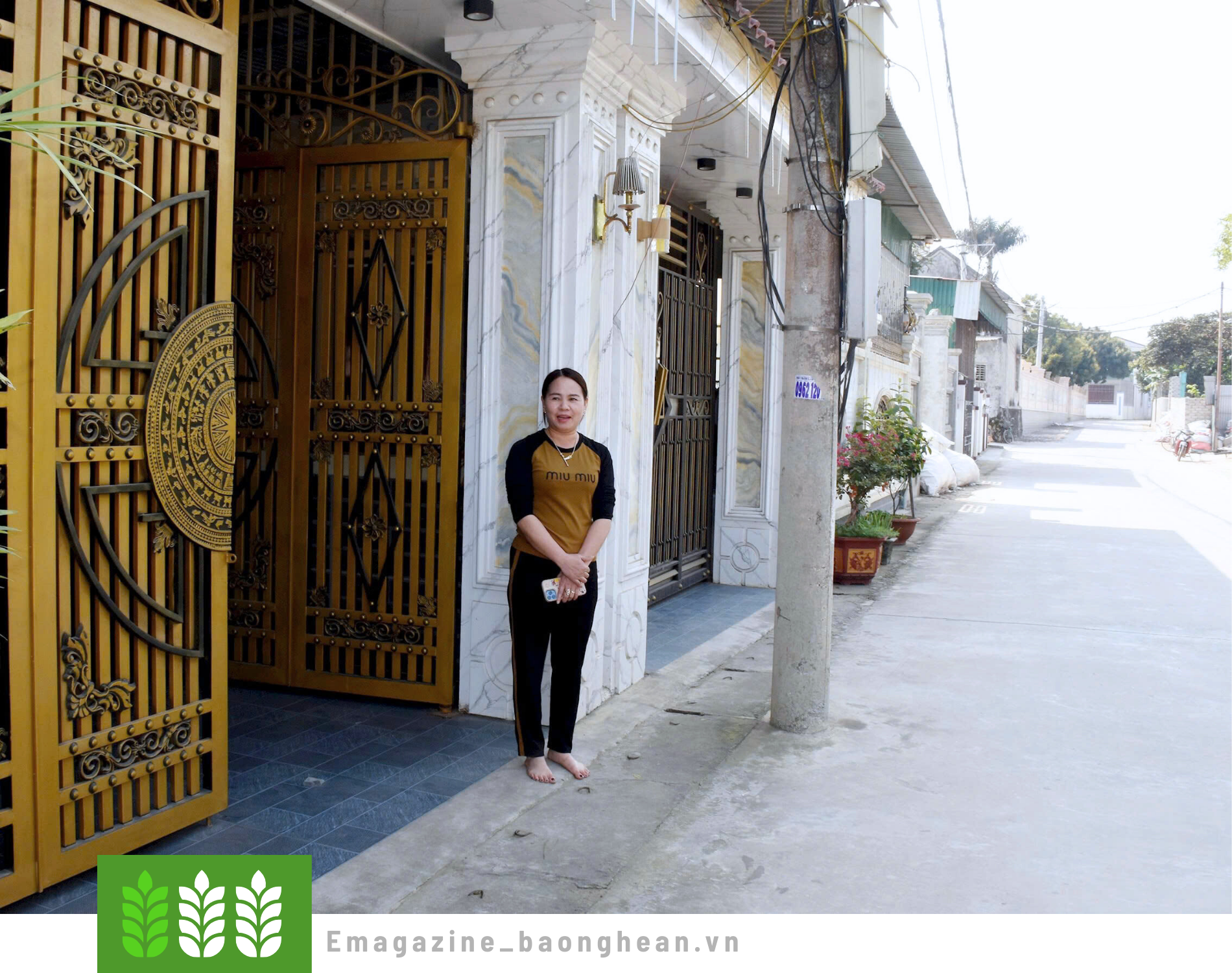
On the way back to Hung Tan hamlet, Ms. Phan Thi Thao (born in 1973) – Head of the Women's Association of the hamlet – proudly shared that for many years, the association has been commended by the Women's Union of the commune as a collective that has made many contributions to the land donation campaign for road construction. Listing each member who donated land would be difficult, as more than 200 members have all made practical contributions. Among the exemplary individuals, we must mention the family of Ms. Nguyen Thi Phuong (born in 1980). Despite having just completed a gate worth over 100 million VND, when the road expansion project was announced, she voluntarily dismantled it to create a walkway and donated nearly 13 square meters of land.2Family land was used to widen the road. Similarly, Ms. Le Thi Hang (born in 1994) also agreed to demolish her old gate, build a new one, and donate over 13 square meters of land when the local government passed a resolution to build a road.
Guided by Ms. Thao, we arrived at the road connecting National Highway 1A to Ben Den Parish – a place that bears the mark of the efforts of hundreds of households in Hung Tan hamlet. Ms. Thao said that out of 370 households in the hamlet, 270 are Catholic parishioners of Ben Den Parish. Their spirit of unity and solidarity has become a strength, enabling them to jointly implement many important local resolutions.
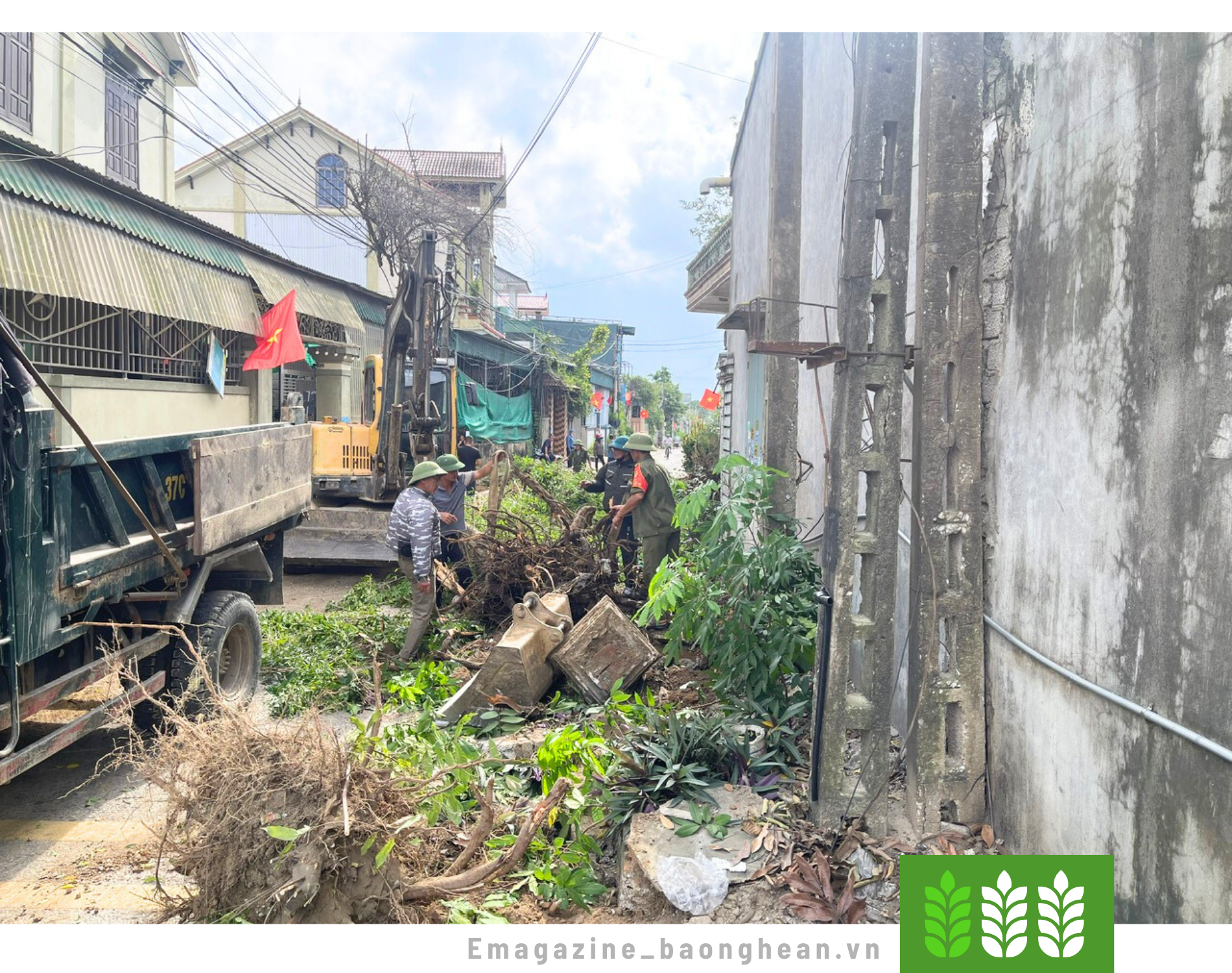
In 2022, when a project to build an inter-communal road through the parish was underway, the road was designed to be 9 meters wide (while the old road was only 5 meters wide). The challenge was to persuade residents to move their fences and donate land. The village committee, the women's association, and the pastoral council persistently went to each house to convince them. As a result, the 1.6km road through Ben Den Parish was completed, with nearly 2,000m² of residential land, over 2,000m² of agricultural land, 1,600m of fences, and 7 house gates voluntarily donated by the residents.
Not stopping there, from 2022 to the present, many roads in the hamlet have continued to be expanded and constructed. The Women's Association has recognized many more exemplary individuals. Among them is Ms. Nguyen Thi Khoa (born in 1996) – a poor household in the hamlet, whose husband suffers from chronic illness, and who does whatever work she can find to support her family. Yet, when the road expansion project was announced, she readily donated 13 square meters of land. Her silent sacrifice has earned her even more admiration from the villagers.
On a provincial level, by the end of 2024, Nghe An had built and upgraded a total of 11,427.4 km of rural roads; in 2024, an additional 147 km of rural roads were completed with a total cost of over 227.85 billion VND; helping to connect rural areas with urban centers, creating favorable conditions for trade, economic development and improving the quality of life for the people.
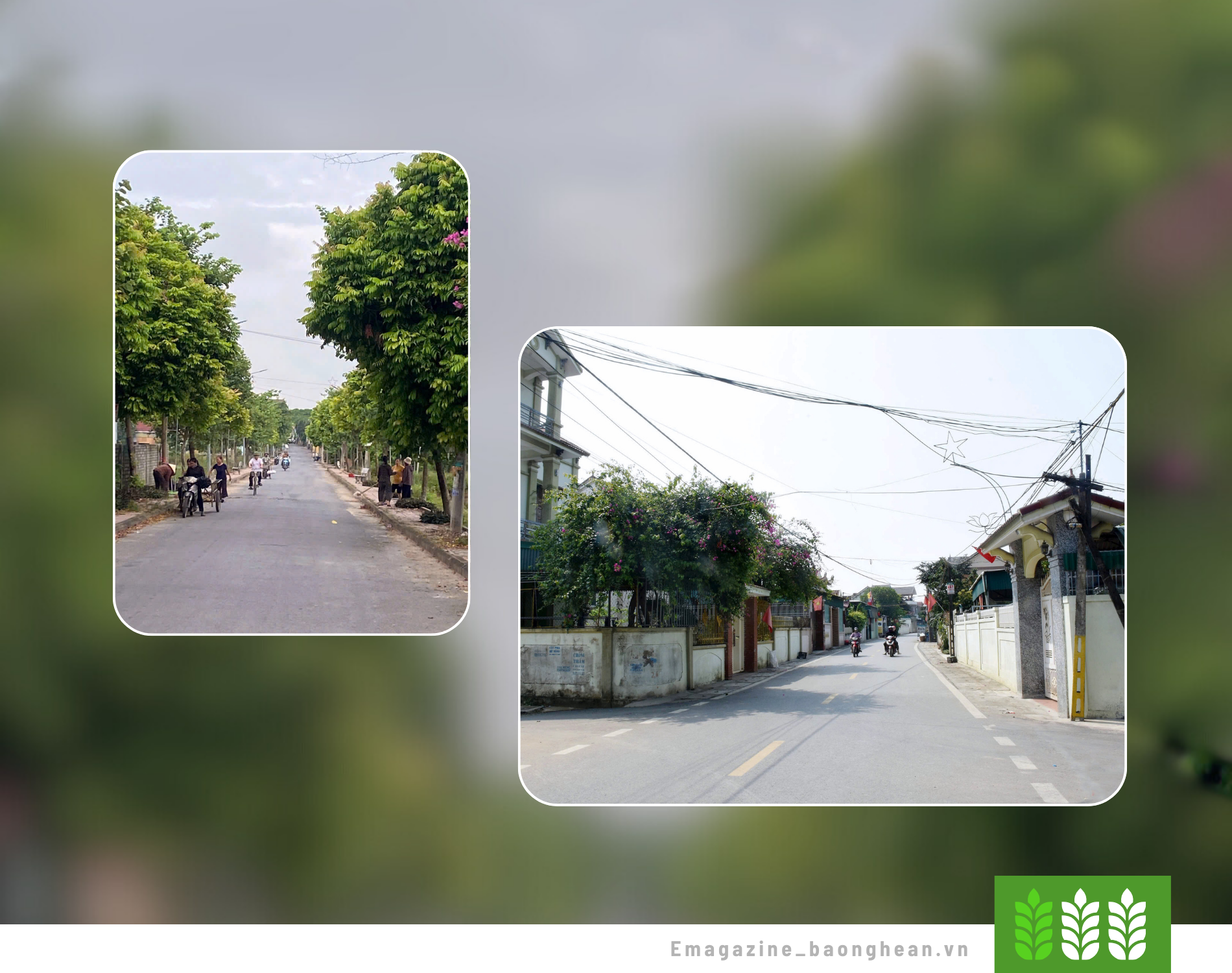
Behind these impressive figures lies the indispensable role of women. They not only set aside their own interests, pioneering the donation of land and voluntarily demolishing their family's structures, but also persistently campaigned and persuaded relatives and neighbors to join hands for the benefit of the community. It is from this silent but meaningful sacrifice that collective strength has been unleashed and spread powerfully, contributing to the realization of the goal of building a new rural area, making Nghe An province increasingly prosperous, civilized, and sustainable.


