
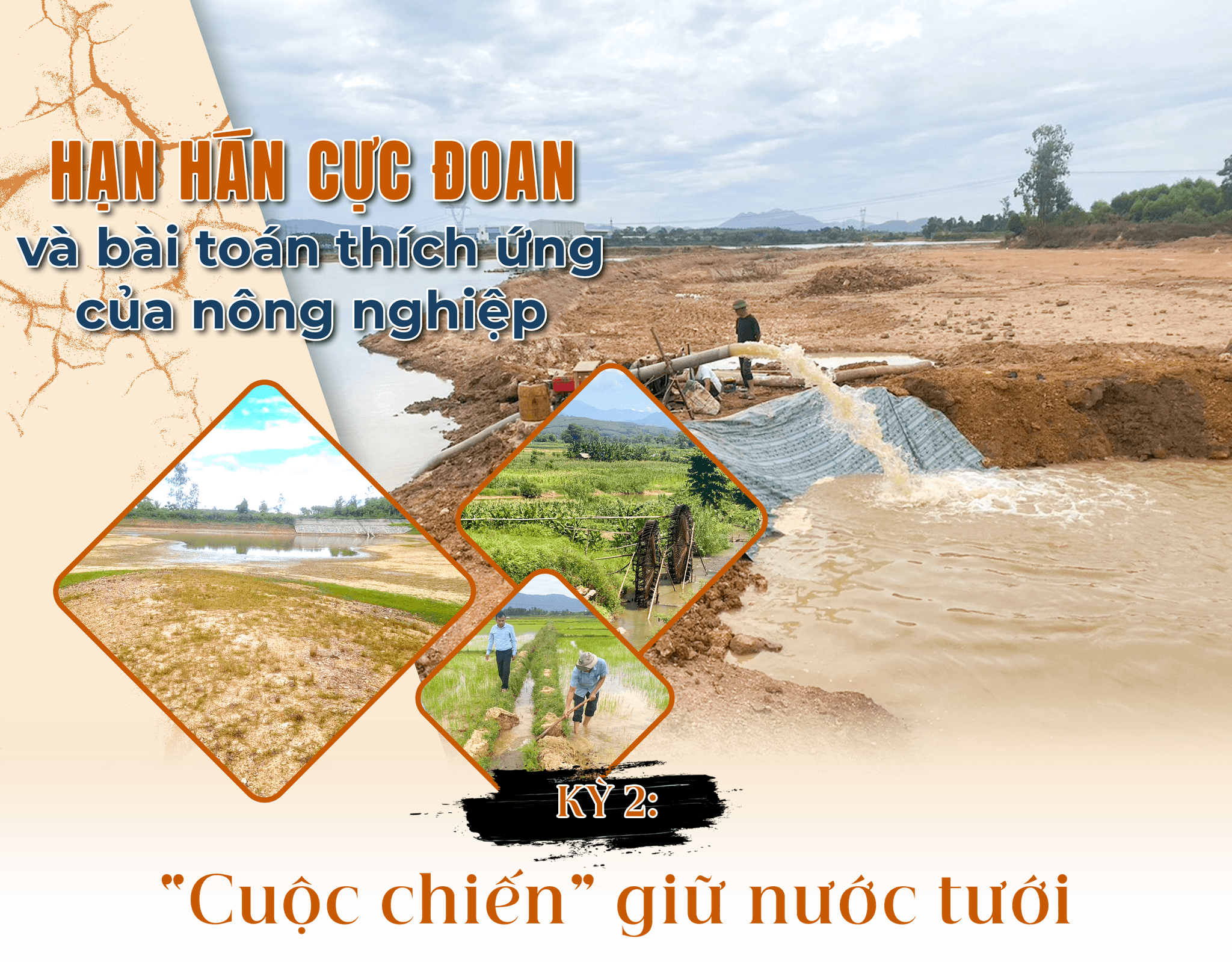
Part 2: The "Battle" to Preserve Irrigation Water
Prolonged heatwaves and a lack of rainfall have caused hundreds of reservoirs in Nghe An to experience a serious decline in capacity, with many falling below the dead water level. In the fields, the government and people are utilizing all available resources and initiatives to protect their production achievements and preserve the crops on their homeland.
Reporters' Team |Design:Huu QuanJune 27, 2026
Prolonged heatwaves and a lack of rainfall have caused hundreds of reservoirs in Nghe An to experience a serious decline in capacity, with many falling below the dead water level. In the fields, the government and people are utilizing all available resources and initiatives to protect their production achievements and preserve the crops on their homeland.

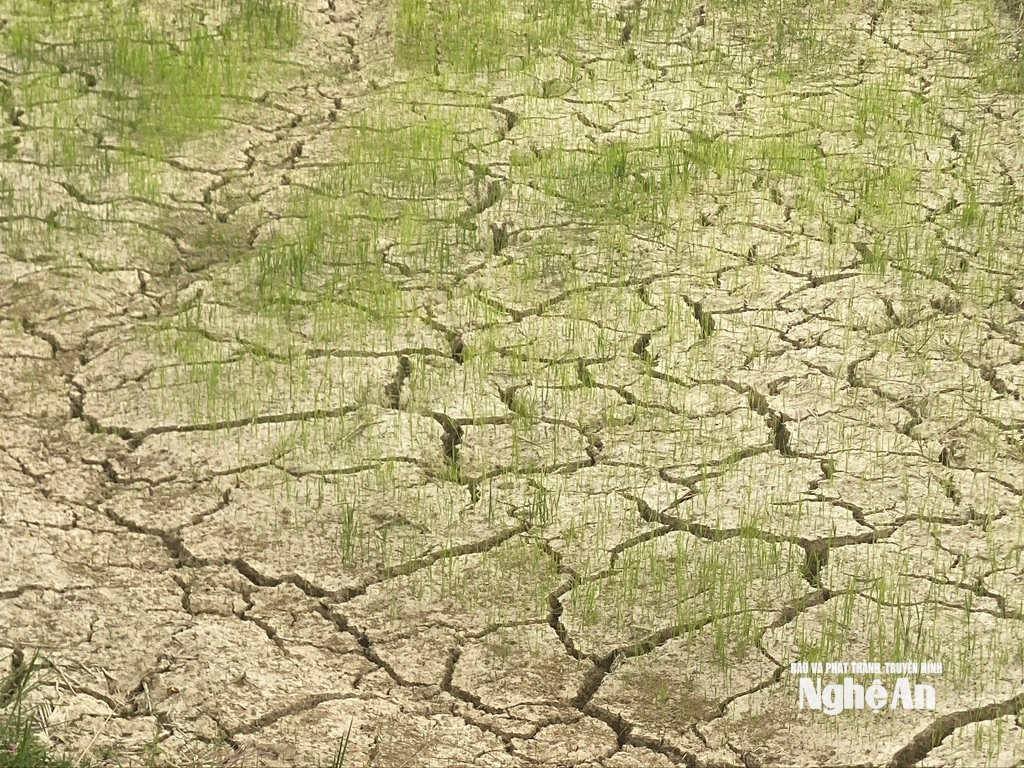
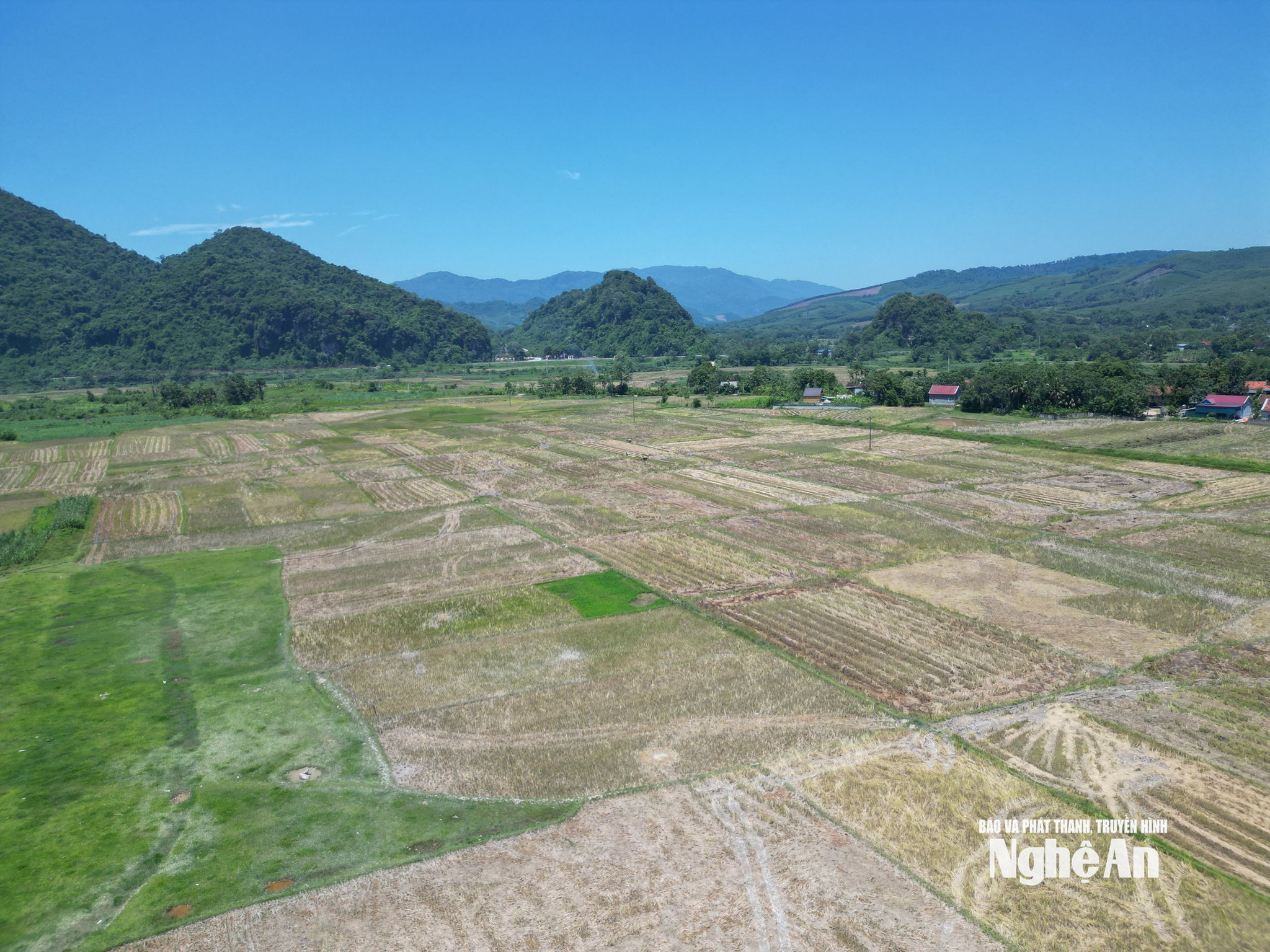
Amidst the scorching sun of late June, the rice fields in Hamlet 6, Bach Ha Commune, are marked by long cracks across the surface. The rice seedlings, sown just over three weeks ago, are in their most critical water-demanding stage, but the irrigation source is almost depleted. The fields are dry and white, with many cracks so deep that an adult's hand can fit through. Mrs. Nguyen Thi Thiet's family has three plots of rice that were sown several days ago. Every morning, her biggest worry is the rice turning from green to yellow. "The rice desperately needs water, but the Cho Ran reservoir has very little water left. We can only hope to pump water from the reservoir to save the rice," Mrs. Thiet said.
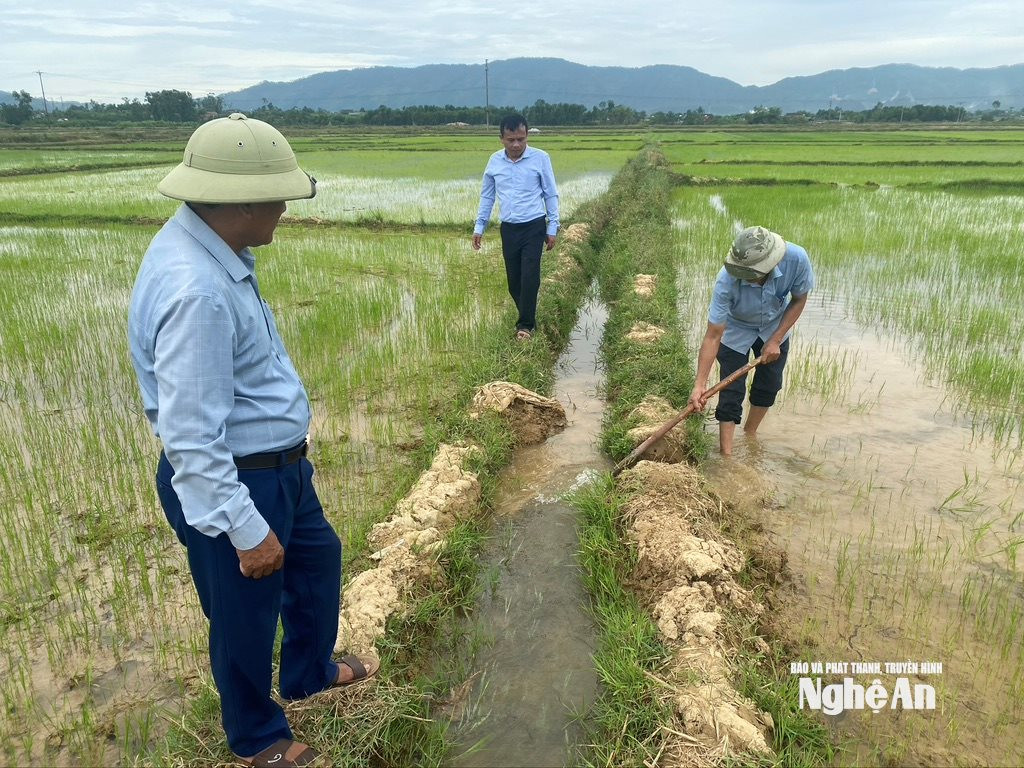
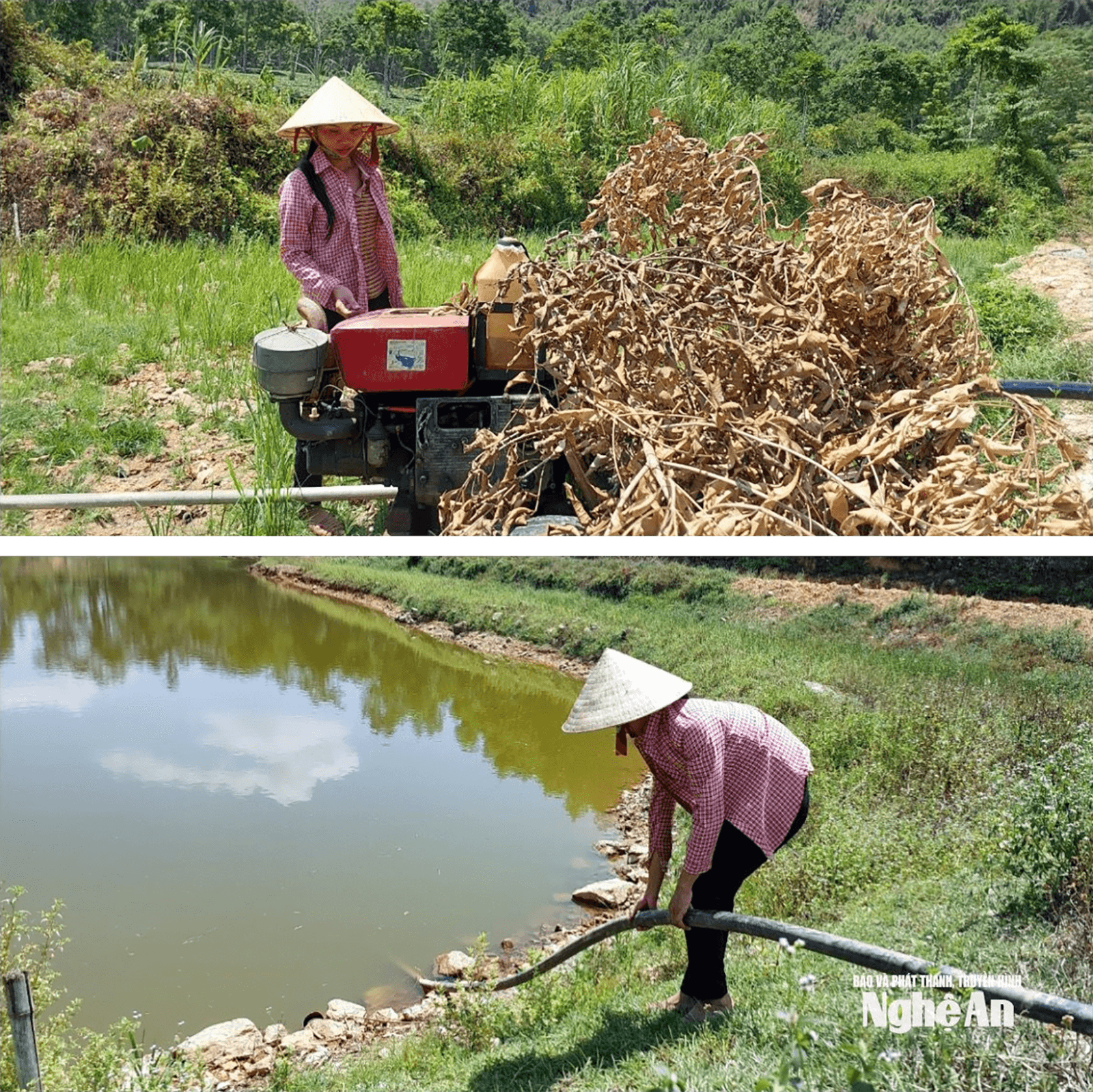
According to Mr. Nguyen Tho Huy, head of Hamlet 6, the entire hamlet has about 75 hectares of summer-autumn rice, entirely dependent on two irrigation reservoirs. However, both reservoirs have reached near-depleted levels, paralyzing water supply. Faced with this urgent situation, the local authorities were forced to implement a temporary pumping plan using the remaining water in the Cho Ran reservoir. To carry out this, the hamlet mobilized excavators to build temporary embankments to gather the meager amount of water into a concentrated area. From there, two high-capacity diesel pumps operate continuously to pump water through the sluice gates into the internal irrigation canal system.
The biggest challenge was the extremely low water level, requiring very careful planning. After the water level rose in the canal, village officials and irrigation teams had to directly regulate and channel the water in batches to reach even the most remote rice fields.”
Mr. Nguyen Tho Huy - Head of Hamlet 6, Bach Ha Commune
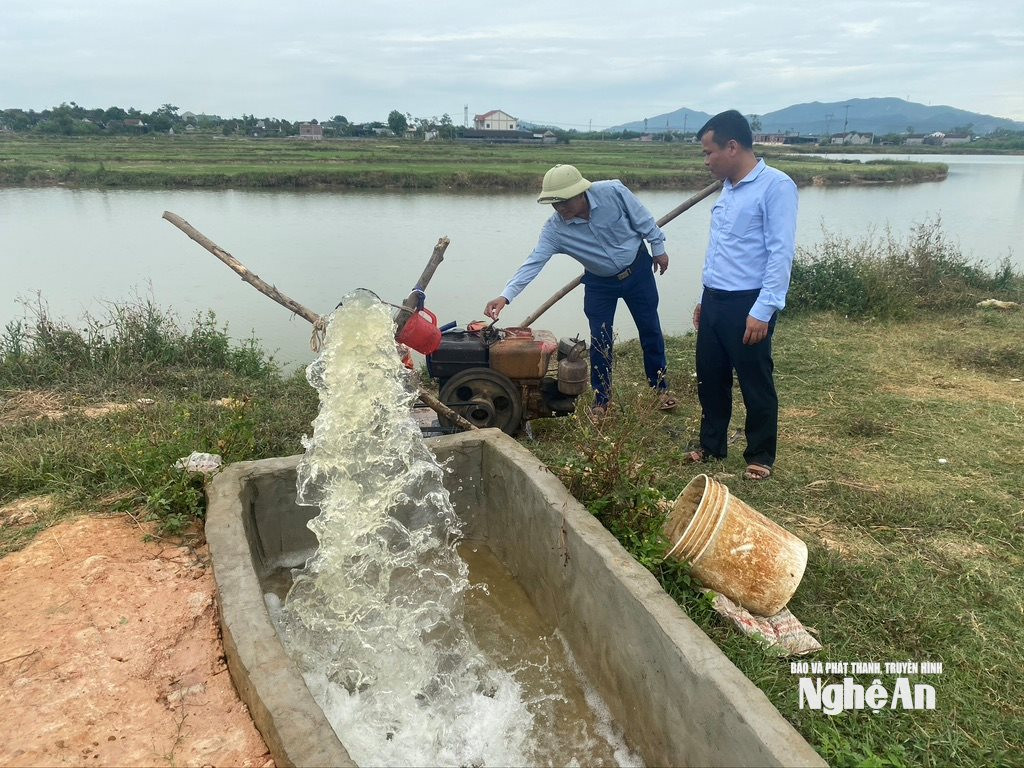
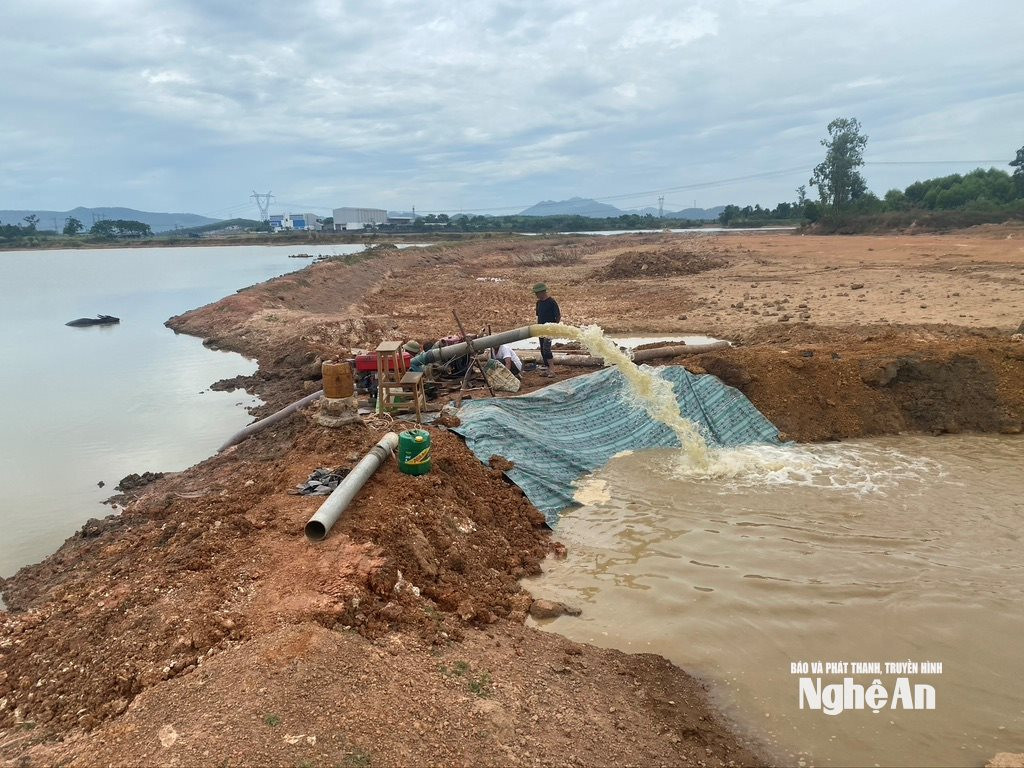
The drought isn't just affecting Hamlet 6; it's raging across many other rice fields in Bach Ha commune. In the Nuoc Bac rice field, Hamlet 5, the sound of diesel pumps is incessant. Water is being pumped from Bau Sen Lake and channeled through the irrigation system to save the wilting rice crops. Mr. Le Van Xuan, head of Hamlet 5, said that out of 46 hectares of summer-autumn rice in the hamlet, more than 36 hectares are facing a serious water shortage. “We installed two mobile pumps at Bau Sen Lake to utilize the remaining water. Irrigation officials and residents are taking turns dredging the irrigation canals and building embankments to retain water. After three days of continuous operation, we've saved more than 10 hectares of rice. However, if the hot weather continues, the current water supply will only last for a short time,” Mr. Xuan shared.
According to Mr. Nguyen Dinh Hien, Deputy Director of the Public Service Supply Center of Bach Ha commune, the locality's plan for this year's summer-autumn rice crop is 1,809 hectares, but so far only over 1,500 hectares have been planted due to water shortages. All 27 reservoirs in the area are currently depleted. Since June 10th, the commune has proactively deployed 5 pumping stations with 9 mobile pumps to combat drought, utilizing all remaining water sources in reservoirs, small ponds, and low-lying areas to save the rice crop. Each pumping session must be maintained continuously for 7 to 8 days. Even a short interruption in the pumps causes the fields to dry up again.
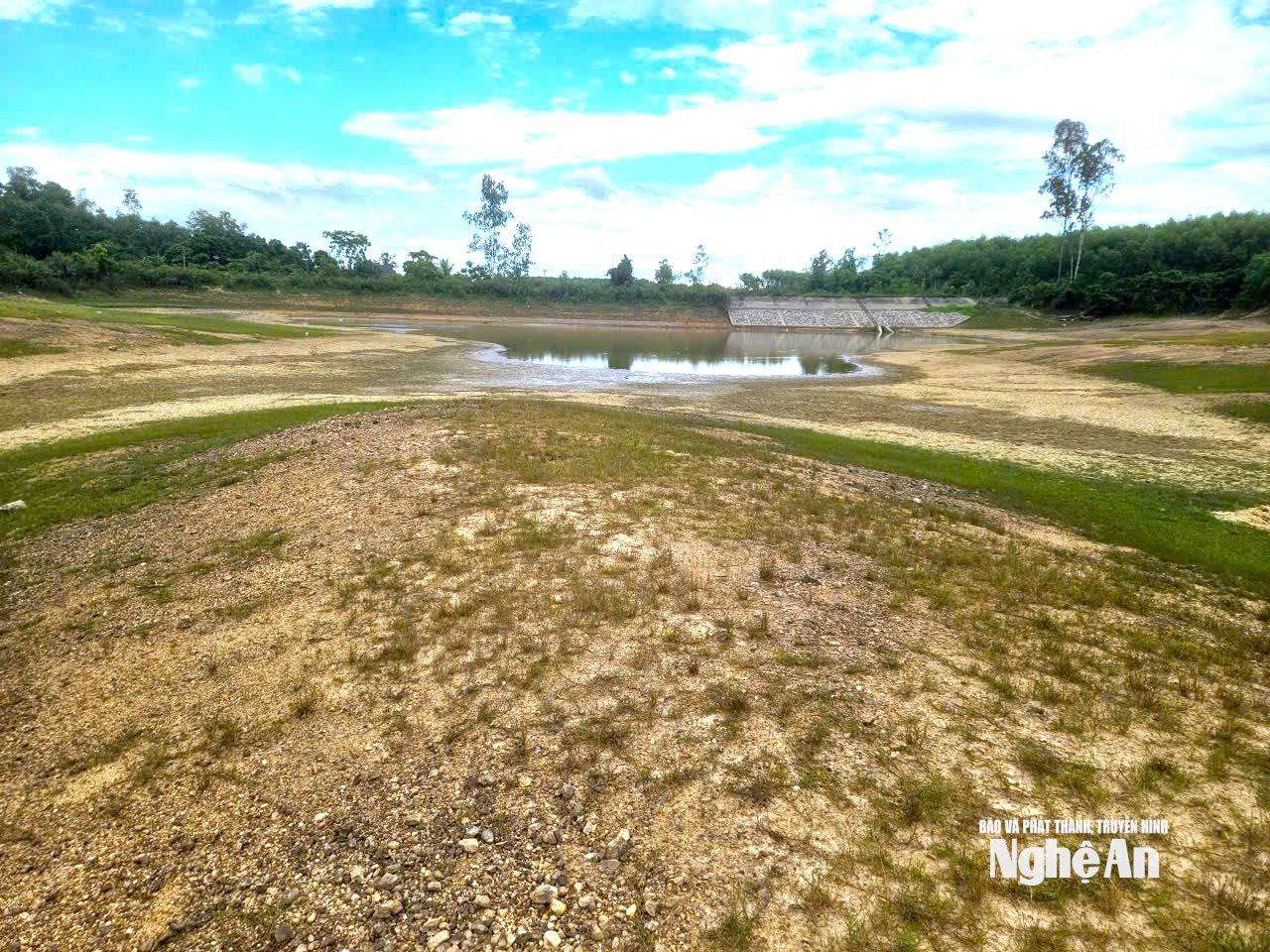
In the Truông reservoir area of Bạch Ngọc commune, the once vast reservoir is now just a small puddle of water in the middle of a cracked, dry lakebed. Herds of buffalo and cattle roam and graze right in the middle of the reservoir. Downstream, many newly planted rice fields face the risk of drying up and dying. Mr. Thái Văn Cường, Director of Giang Sơn Đông Agricultural Service Cooperative, said that the Truông reservoir is responsible for irrigating more than 12 hectares of rice in Tân Thịnh hamlet. However, due to the prolonged heatwave and leakage in the dam, the water level is now very low. The cooperative has implemented a temporary pumping plan to utilize the last remaining water in the reservoir, but with the current rate of evaporation and usage, the water will only last for about 2-3 more days.
In Yen Trung commune, where there are six dams serving irrigation, people are also finding ways to preserve water for their rice fields. The Thach Tien dam, the largest structure in the area, was built a long time ago. Although upgraded in 2013, it is now silted up by about 20-25%, and in many years of severe drought, the dam is completely dry. To overcome the water shortage at the end of the summer-autumn crop season, the commune mobilizes people to dredge water from the dam and pump it into canals leading to the rice fields. The cost of pumping is about 850,000 VND/hectare, which is covered by irrigation fees and local support. Mr. Nguyen Dinh Thao, head of Hung Nguyen Nam 1 hamlet, said that the hamlet's 25 hectares of rice fields depend on water from the Thach Tien, Khe Lot, and Con Loi dams. "Besides proactively delaying the planting season by about 15 days to wait for rain, we also use irrigation fees to buy fuel and use pumps to transfer water from dams to irrigate the rice. The pumping is done on a rotating schedule with specific times and is strictly managed," Mr. Thao said.
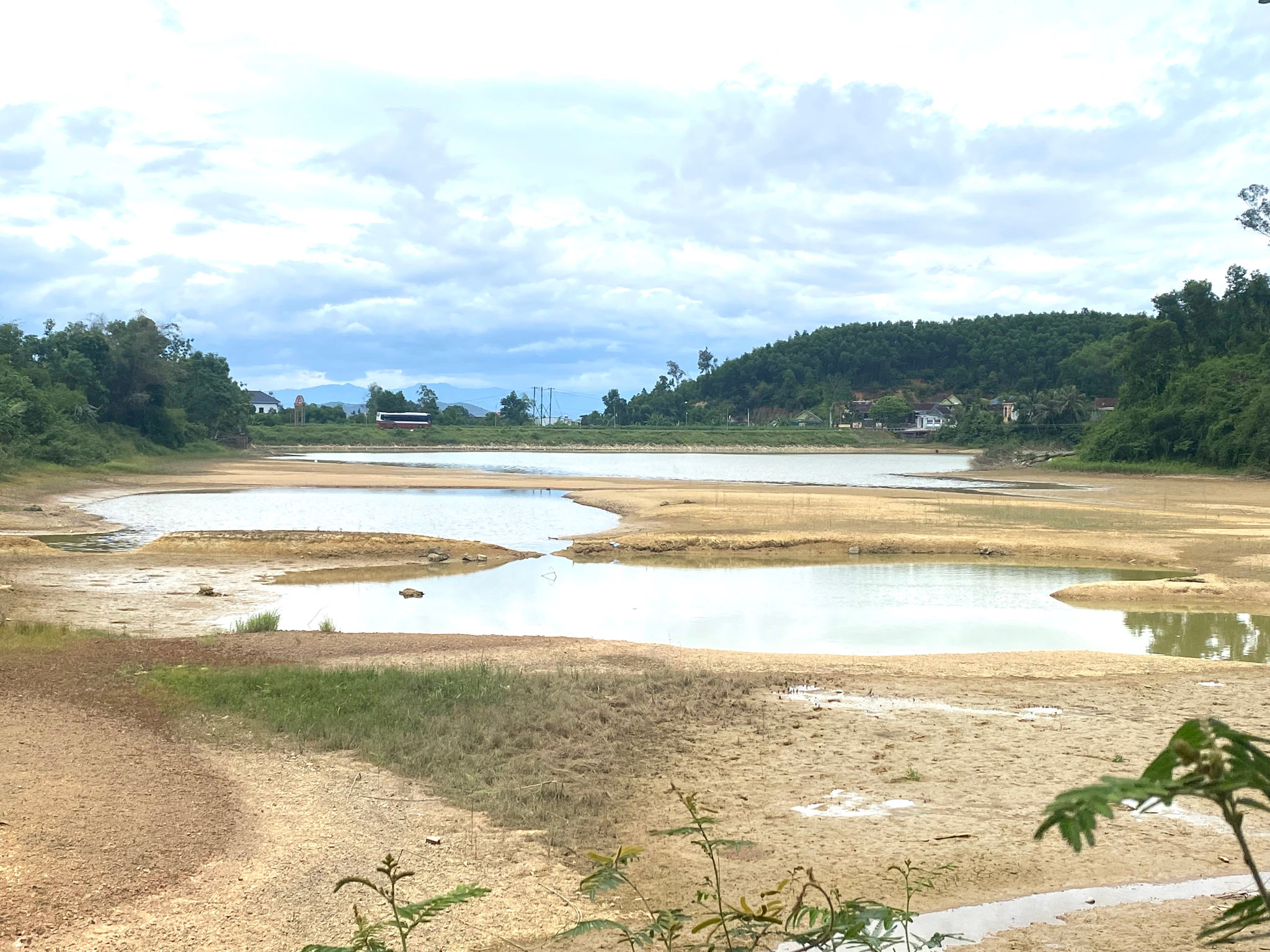
On a larger scale, the Quy Chau Irrigation Enterprise is responsible for supplying irrigation water to over 3,100 hectares of summer-autumn rice in many localities. However, according to Mr. Ho Thanh Tung, Director of the Enterprise, all eight reservoirs under its management have deteriorated, and the amount of water stored has decreased significantly, while the canal system in many places suffers from significant water loss. The unit has prepared 14 mobile diesel pumps, ready to be deployed when needed.

While in many places, portable pumps are the urgent solution to save rice crops, in Chau Tien commune, people are returning to traditional methods that have been passed down through generations. These days, along the Nam Hat river, hundreds of bamboo and reed water wheels are still diligently turning under the scorching sun. The sound of water pouring into the channels blends with the bustling sounds of labor, creating a scene that is both familiar and unique in this age of mechanization.
The family of Mr. Sam Van Duan, in Hoa Tien 2 village, is one of the households heavily affected by the situation due to their production area being located at the end of the irrigation water source. With 6 sao (approximately 0.6 hectares) of rice fields constantly lacking water, he hired people to go into the forest to cut more than 100 old bamboo and reed trees to make a new waterwheel to replace the old, dilapidated one. According to Mr. Duan, making a waterwheel is a meticulous job requiring experience. From selecting materials, creating spokes, assembling the wheel rim, to arranging the water conduit system, everything must be precise so that the wheel can operate stably according to the natural flow. The waterwheels, with diameters ranging from 5 to 10 meters, are designed like giant wheels placed in the middle of the river. On the rim of the wheel, people attach bamboo pipes at the appropriate angle. When the wheel turns, water is scooped up and poured into the channel, through small ditches to the fields.
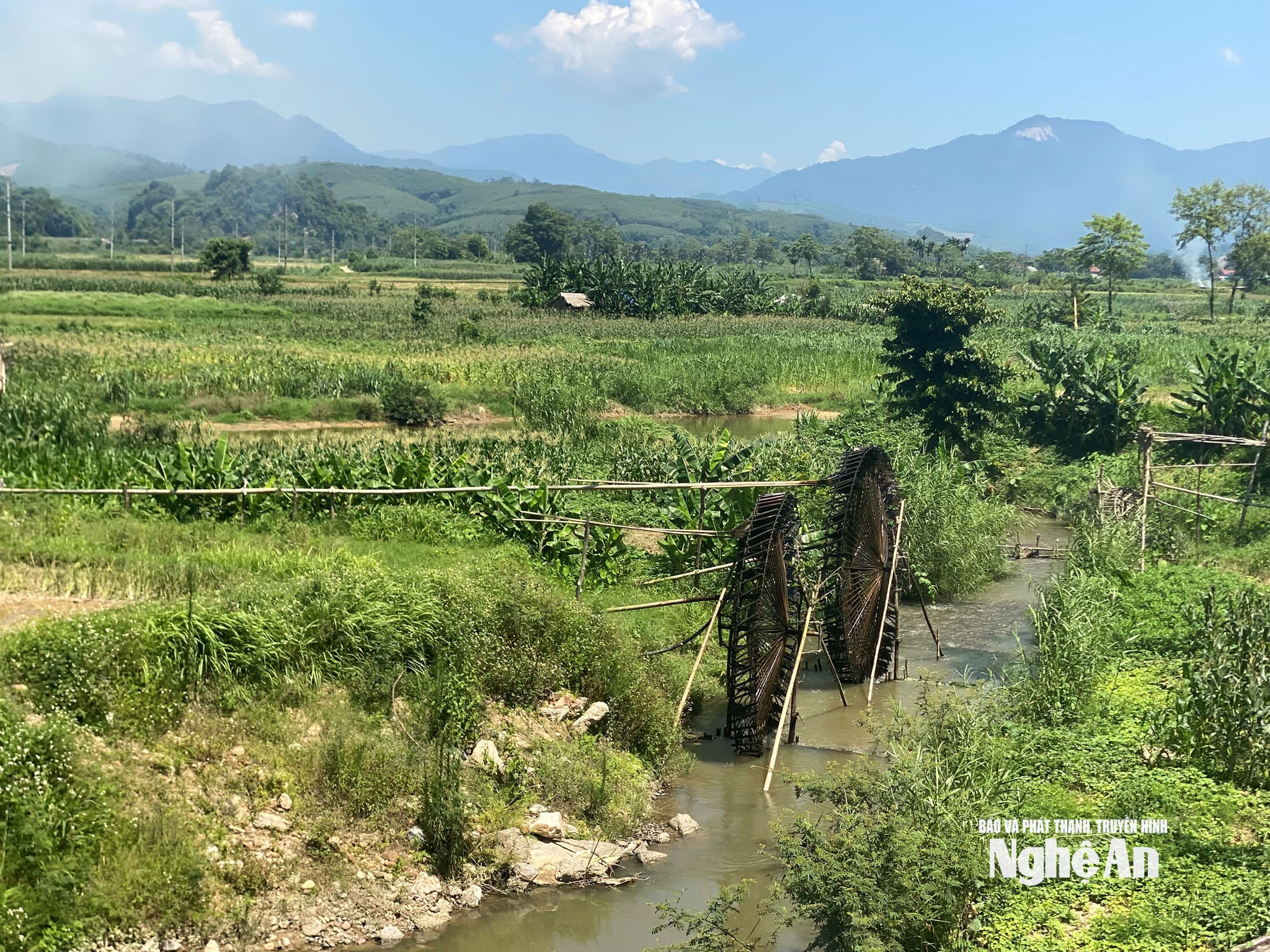
To improve water extraction efficiency, local people have also built temporary dams to raise the water level and create thrust for the waterwheels to operate. In the context of prolonged drought, this seemingly outdated method has proven remarkably effective. Mr. Dang Minh Ngoc, a specialist from the Economic Department of Chau Tien Commune People's Committee, said that this year's summer-autumn rice crop covers approximately 703 hectares. However, most reservoirs and streams have experienced a significant decline in water reserves. From the beginning of the season, the commune directed villages to proactively repair and rebuild the waterwheel system. To date, the entire commune has 205 operational waterwheels, of which more than 70 have been repaired and over 20 have been completely rebuilt. Thanks to this, more than 150 hectares of rice fields along the Nam Hat River have access to additional water for production.
Alongside the restoration of the waterwheel, hundreds of local residents were mobilized to participate in dredging canals and clearing waterways. Statistics from the Chau Tien Commune People's Committee show that from the end of May until now, the locality has mobilized over 600 people to repair and dredge canals and water conduits. Simultaneously, they coordinated with the Quy Chau Irrigation Enterprise to implement a solution of "forcing water" from reservoirs with remaining water into the canal system. Mr. Vi Van Nam, from Cang Bai village, said that his family almost put aside all other work to join the villagers in repairing the water conduit system. "We're making the most of every drop of water we can. But if the hot weather continues without supplemental rain, it will be very difficult," said Ms. Lo Thi Mai, head of Cang Bai village.
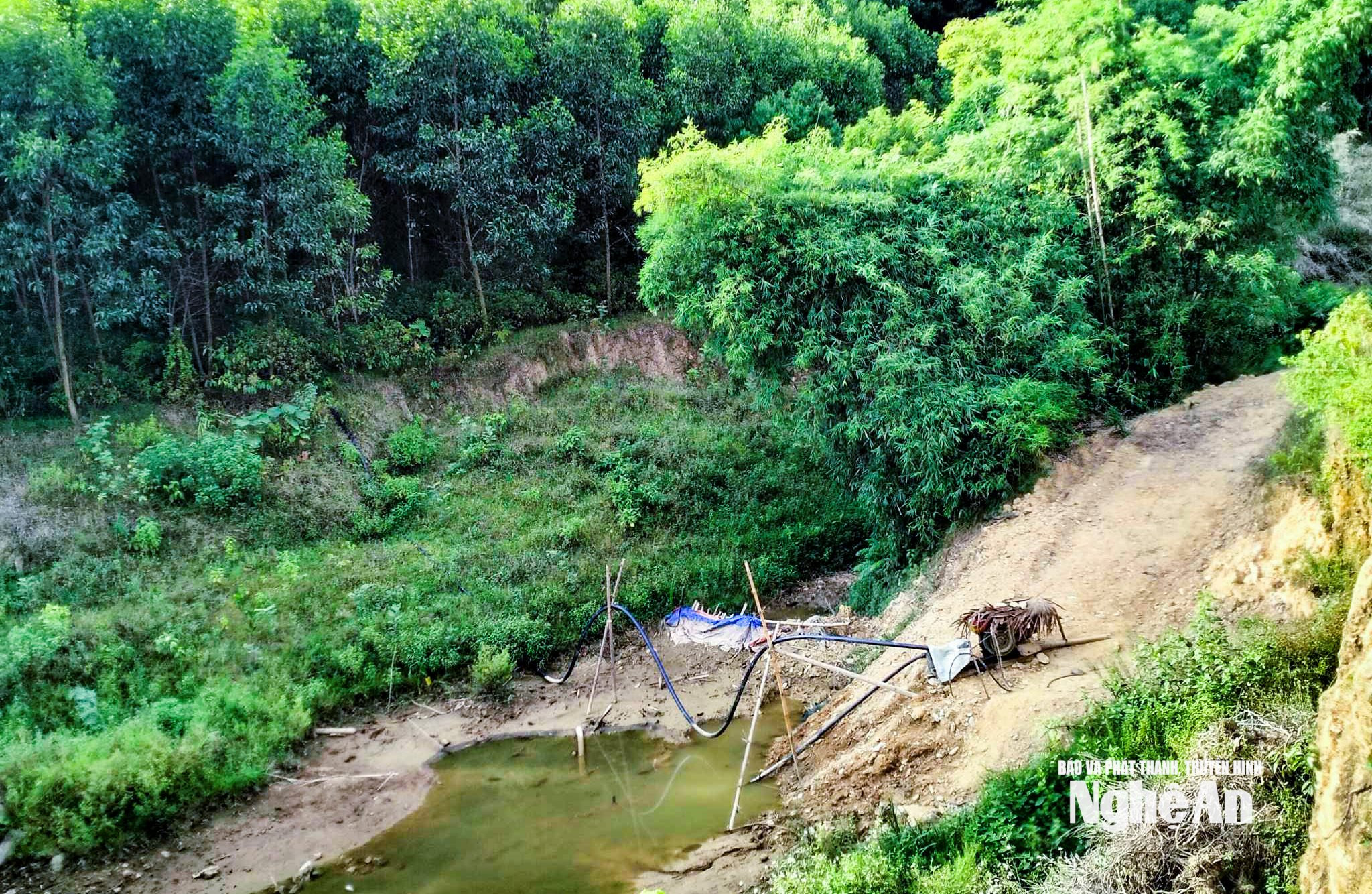
The spirit of proactive adaptation is not limited to rice cultivation; it is also present in many other production areas. In Phong village, Tuong Duong commune, often referred to as the "Indochina cauldron," nearly 30 hectares of vegetables are cultivated by the people in rotation according to the seasons. To maintain production, in addition to installing a system of pipes to draw water from streams, each rice field is also equipped with additional reservoirs to collect rainwater and provide a reserve for irrigation when reservoirs and dams run dry.
For orange growers in Hanh Lam commune, knowing that orange trees are susceptible to drought, households have invested in automatic sprinkler irrigation systems, laying pipes throughout their orchards. This summer, to ensure a stable water supply for thousands of orange trees currently bearing fruit, households are spending hundreds of millions of dong to dig and reinforce water-storage ponds. “Orange trees require careful care during the summer. A lack of water will significantly affect quality and yield. Therefore, families proactively dig water-storage ponds from the beginning of the dry season to ensure irrigation,” said Mr. Tran Dien Vi, an orange grower in Hanh Lam commune.
According to a report from the Department of Irrigation, Nghe An province currently has 1,061 reservoirs. Due to the prolonged heatwave, 415 reservoirs have only about 50% of their designed capacity; 41 reservoirs have only reached 30-40% of their water capacity. If the water level of the Lam River at the main waterworks continues to remain low while the reservoirs are not replenished, the risk of widespread drought is very high. It is estimated that over 6,500 hectares of summer-autumn rice crops may be affected, and many areas may be forced to stop production or urgently switch to other crops.
In the context of increasingly unpredictable climate change, drought mitigation is no longer a temporary solution but requires a long-term adaptive mindset. Besides investing in upgrading irrigation systems, strictly managing water resources, and regulating irrigation appropriately, initiatives stemming from the practical production experiences of the people need to be recognized and replicated. Because after all, behind the pumps running through the night, the water wheels turning tirelessly, and the water reservoirs dug during the dry season lies the perseverance of people who refuse to give up in the face of drought, to preserve their fields, their livelihoods, and their hope for future harvests. This is also the resilience of the farmers of Nghe An in the face of the increasingly harsh challenges of nature.
(To be continued)


