
Part 3: Two-tiered government and new demands on elected representatives
The two-tiered local government system creates a fundamental adjustment in the operation of power: more centralized authority, streamlined processes, and faster decision-making. When power is concentrated, the need for stricter and more substantive control becomes even greater. In this context, elected representatives must transcend their role as mere messengers, becoming active agents of oversight, critical analysis, and policy-making, pursuing issues to the end for the benefit of the people.

Reporters Team• March 12, 2026
The two-tiered local government system creates a fundamental adjustment in the operation of power: more centralized authority, streamlined processes, and faster decision-making. When power is concentrated, the need for stricter and more substantive control becomes even greater. In this context, elected representatives must transcend their role as mere messengers, becoming active agents of oversight, critical analysis, and policy-making, pursuing issues to the end for the benefit of the people.

The practical experience of the Nghe An National Assembly delegation in recent times clearly shows one thing: when delegates possess sufficient courage and perseverance in pursuing issues, the parliamentary chamber can produce landmark decisions.
At the 10th session of the 15th National Assembly, the Resolution on the investment policy for the Vinh - Thanh Thuy Expressway Project was approved. This is not just a transportation infrastructure project. It is a decision to expand the development space in western Nghe An, connect the economic corridor with neighboring Laos, and create new impetus for the mountainous region.

Behind that resolution lies a meticulous preparation process by the local authorities and the rigorous, persuasive argumentation of the National Assembly delegates from Nghe An province. The issue went beyond simply "requesting the central government's attention," elevating it to a policy basis, supported by data, analysis of socio-economic effectiveness, and a strategic vision.
Previously, at its 6th session, the 15th National Assembly decided to allocate an additional 1,275 billion VND from the increased central government revenue in 2022 to definitively resolve the compensation and land clearance issues for National Highway 1A section through Nghe An province. This issue had persisted for many terms, giving rise to complex complaints and potentially becoming a long-term bottleneck. Ultimately, it was resolved thanks to the persistent petitioning and unwavering pursuit of the issue by the delegates.
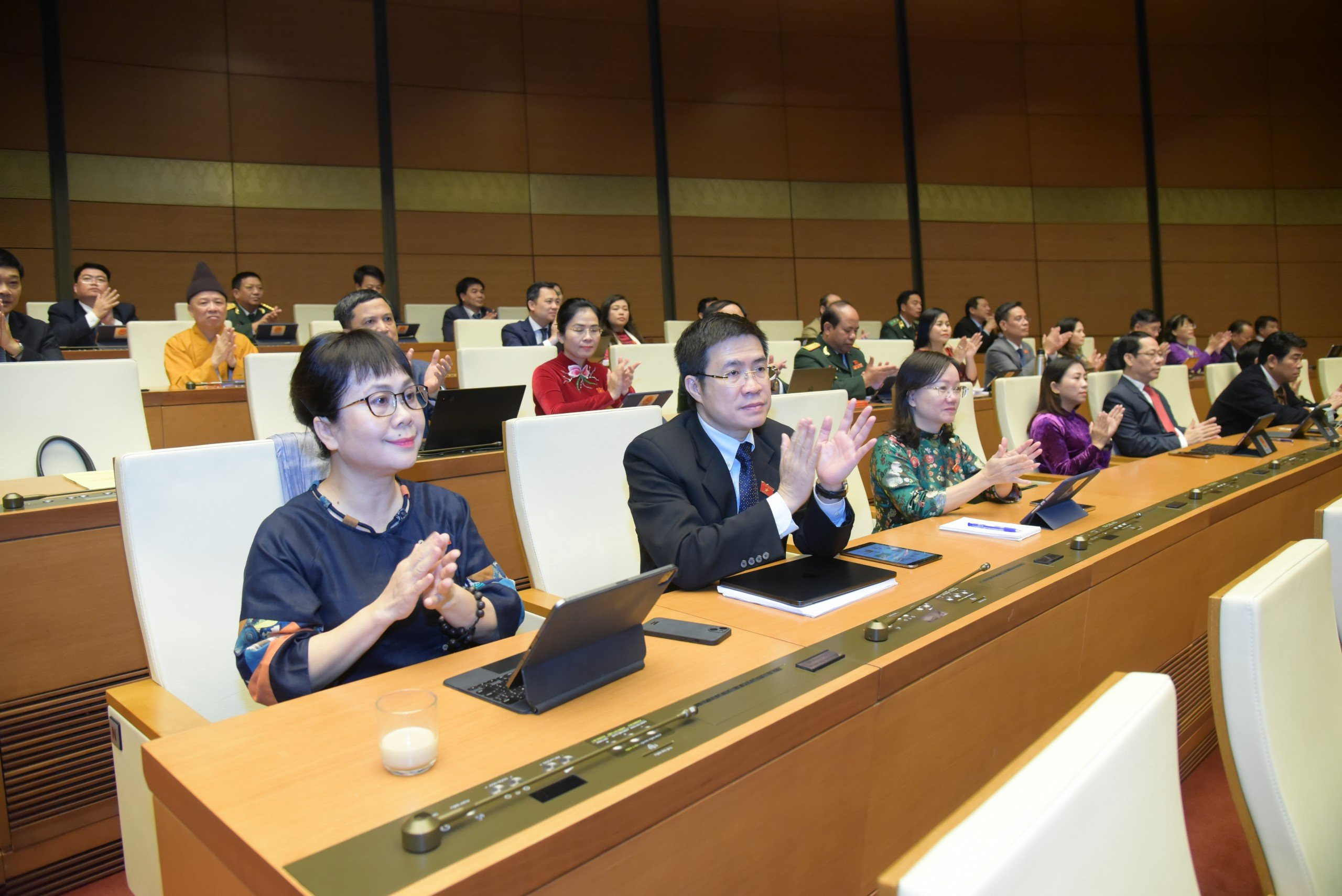
These two hallmarks highlight a core principle: Delegates should not only convey local opinions but also elevate issues to the national agenda; they should not only reflect but also participate in creating solutions.
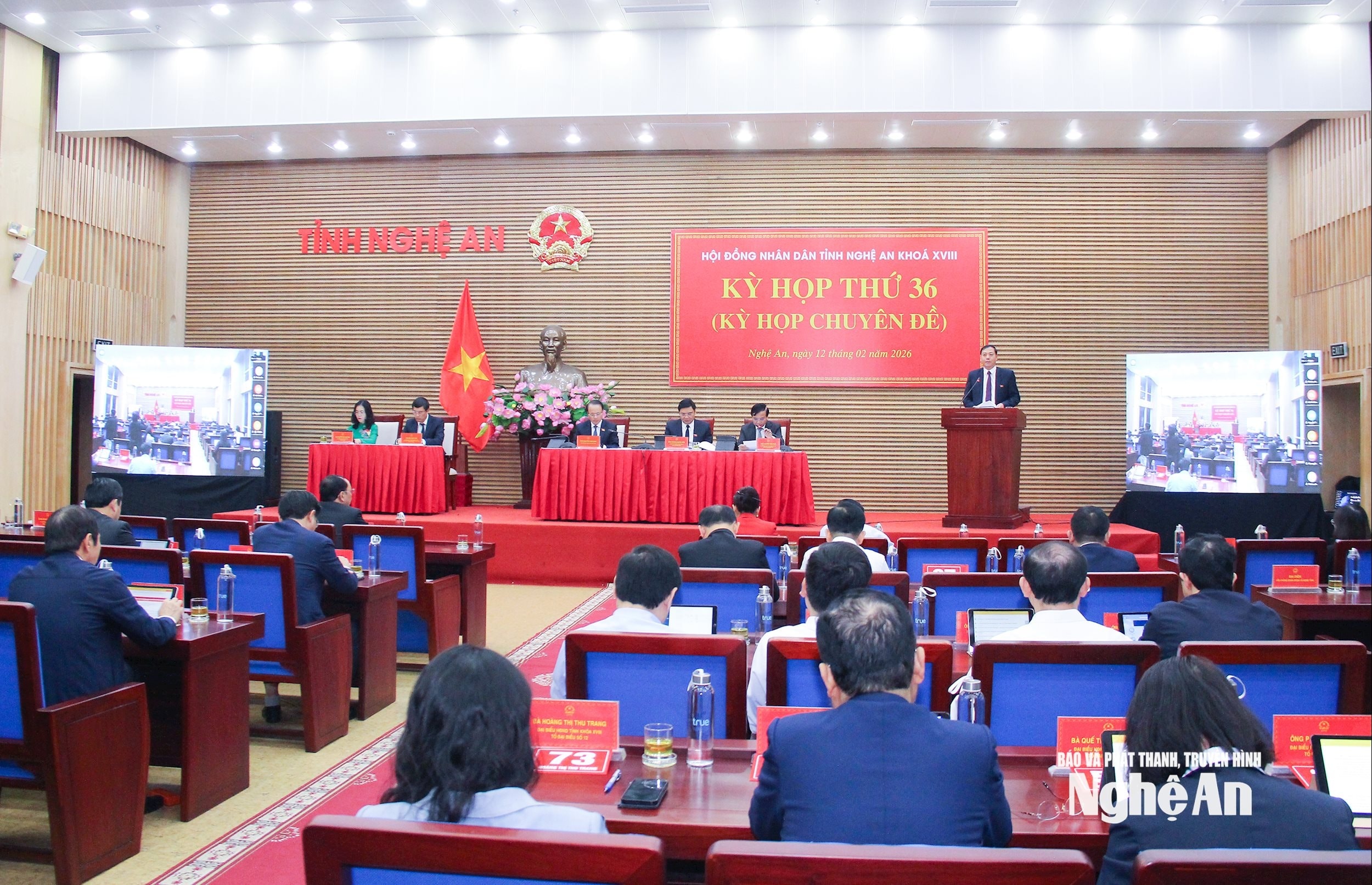
At the provincial level, during the 2021-2026 term, the Nghe An Provincial People's Council held 35 sessions, including 25 specialized sessions; and issued 592 resolutions. These figures not only reflect the frequency of activities but also show a trend towards increasing specialization.
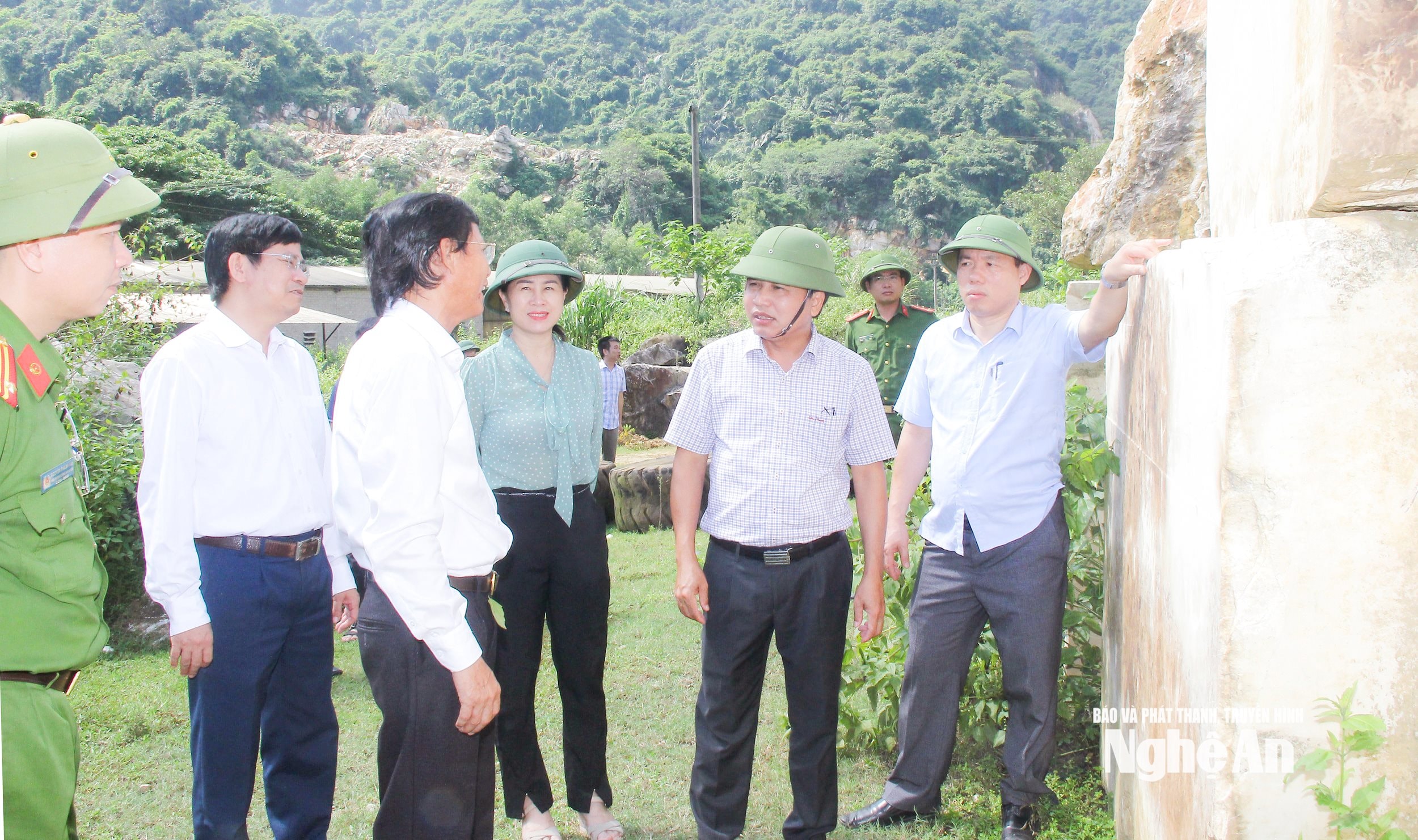
Numerous thematic monitoring sessions have highlighted shortcomings in mineral resource management, project delays, and the implementation of the national sustainable poverty reduction program. Through these monitoring activities, many issues have been promptly rectified, and many mechanisms have been adjusted to better reflect reality.
However, in the context of the nationwide transition from a three-tiered to a two-tiered local government system, streamlined administrative procedures mean clearer individual responsibilities and more centralized decision-making power. When power is concentrated but oversight mechanisms are not strong enough, it is easy for the risk of prioritizing the convenience of the implementing agency over serving the people to arise.
Therefore, representatives cannot simply question the process without following a proper procedure. Questioning must be accompanied by monitoring the fulfillment of promises; it must demand clear identification of responsibilities, a roadmap, and deadlines for remediation. Monitoring cannot stop at conclusions, but must be verified by actual changes.
At the conference summarizing the activities of the 2021-2026 term and commemorating the 80th anniversary of the election of the first term of the Nghe An Provincial People's Council (February 24, 1946 - February 24, 2026), the Secretary of the Nghe An Provincial Party Committee, Nguyen Khac Than, proposed that the Provincial People's Council continue to strongly innovate its organization and operation to meet the requirements of improving overall quality and the increasingly high expectations of voters.
In particular, he emphasized the need to enhance the power of the State and the people in all activities. Accordingly, it is necessary to improve the effectiveness of thematic supervision, questioning, and accountability; focus on major, pressing issues of concern to voters and the people; link supervision with accountability, addressing shortcomings and weaknesses, thereby contributing to strengthening discipline and order, and improving the effectiveness and efficiency of the provincial State apparatus.
Clearly, this message highlights an unavoidable need: In implementing a two-tiered local government system, the scope of responsibility for elected bodies is broader but also heavier. Without self-renewal, elected bodies will fall behind the very reform process they are supposed to oversee.
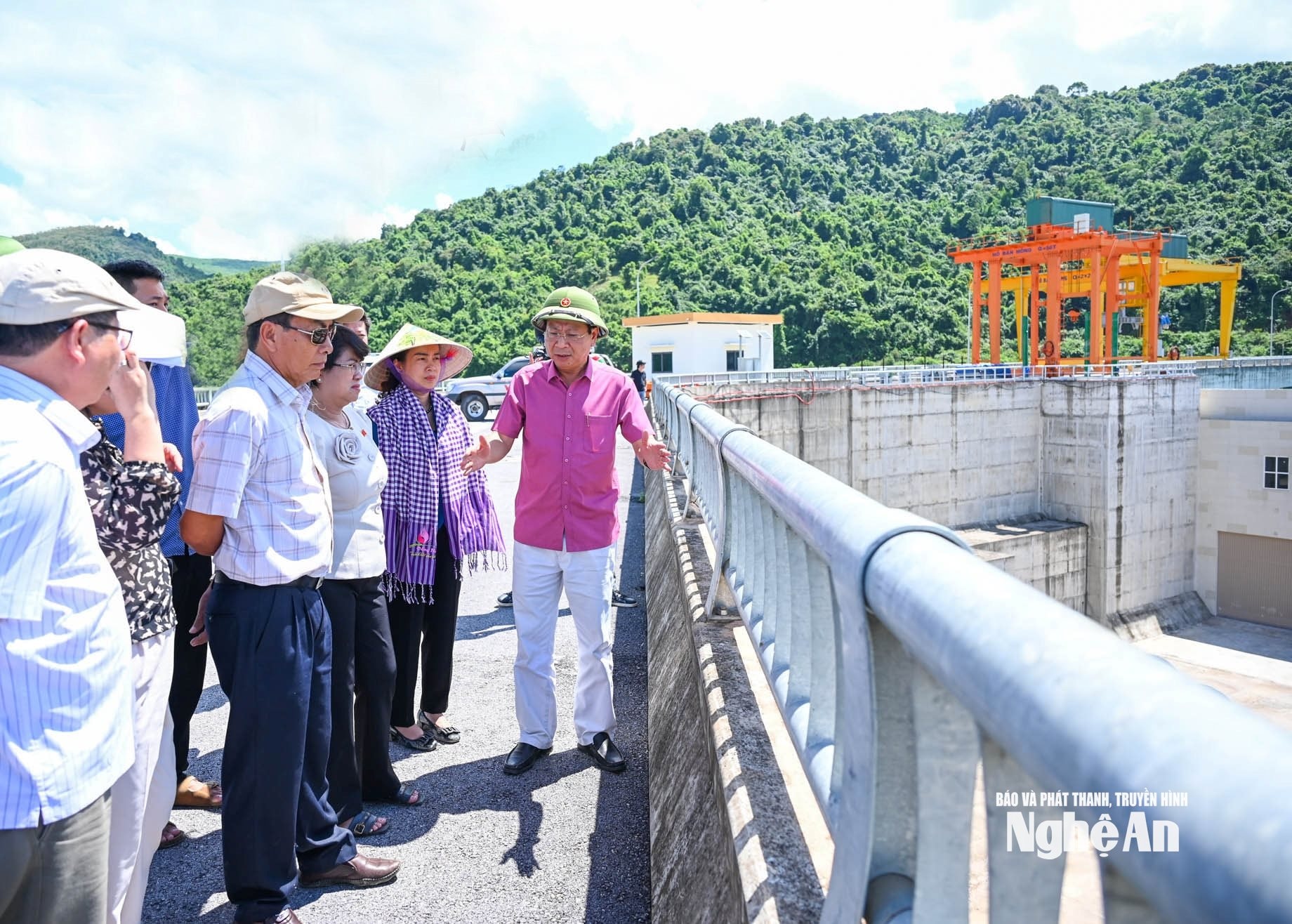

Given the demands of operating a two-tiered local government system, each elected representative cannot simply "fulfill their role." As authority is further decentralized to the local level, processes are streamlined, and decisions are made faster, the representative role must be elevated to a new level—more assertive, more professional, and more profound.
Looking back at the experience of the Nghe An National Assembly Delegation over the past terms, Mr. Le Doan Hop - former Head of the Nghe An National Assembly Delegation in the 11th term - shared a thought-provoking approach: "In some places, there were delegates who didn't speak for an entire term, but we didn't let that happen." According to him, the important thing is not the slogans, but the way activities are organized. The delegation bases its decisions on the National Assembly's discussion topics, considering the talents, strengths, and practical circumstances of each delegate to assign speaking roles; combining assignment with voluntary participation. Those who have never spoken before are encouraged to prepare thoroughly and speak in their respective groups before going to the plenary session; the head of the delegation is ready to offer suggestions, corrections, and support.
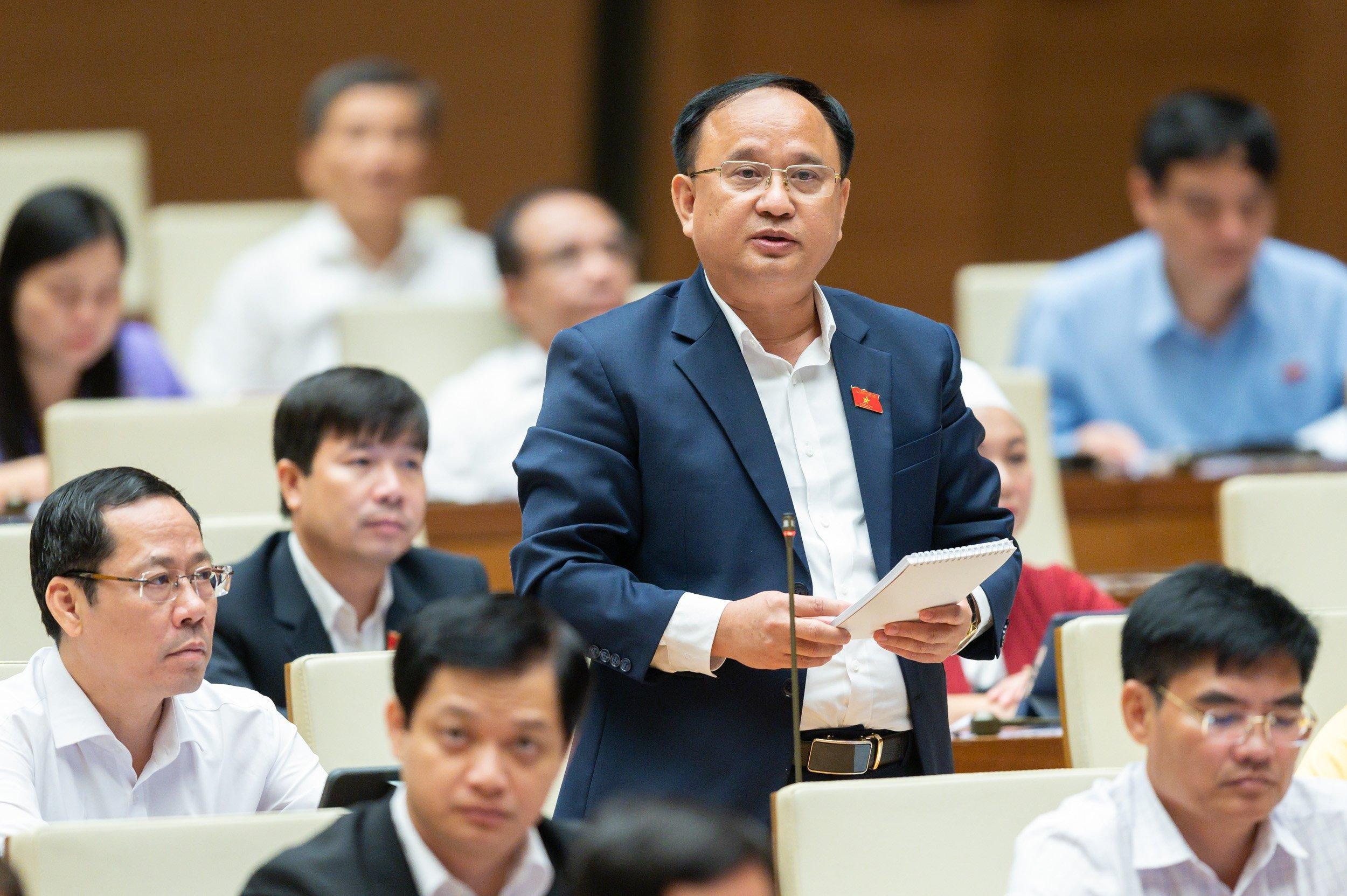
This approach creates both a sense of responsibility and a training ground. Speaking before the National Assembly is not only about expressing one's commitment to representing the voters of Nghe An, but also a process of self-improvement. "When you read something, no one might know whose it is, but when you speak, it's your own," Mr. Le Doan Hop emphasized the personal imprint in each opinion.
Behind those statements lies meticulous preparation and mutual support within the delegation. Mr. Le Doan Hop also believes that it is necessary to combine individual knowledge with the enrichment of collective knowledge; between specific assignments and self-awareness. When each delegate is placed in the right position and given the opportunity to develop their strengths, the overall effectiveness of the delegation is significantly enhanced.
That experience is not only valuable at the central level. Even in interactions with constituents, the assignment of responsibilities is crucial: whoever is in charge of a particular area should directly answer and explain that area. The answers should be straightforward, not evasive, but directly address the issue. This is also a form of "training" in representative competence.
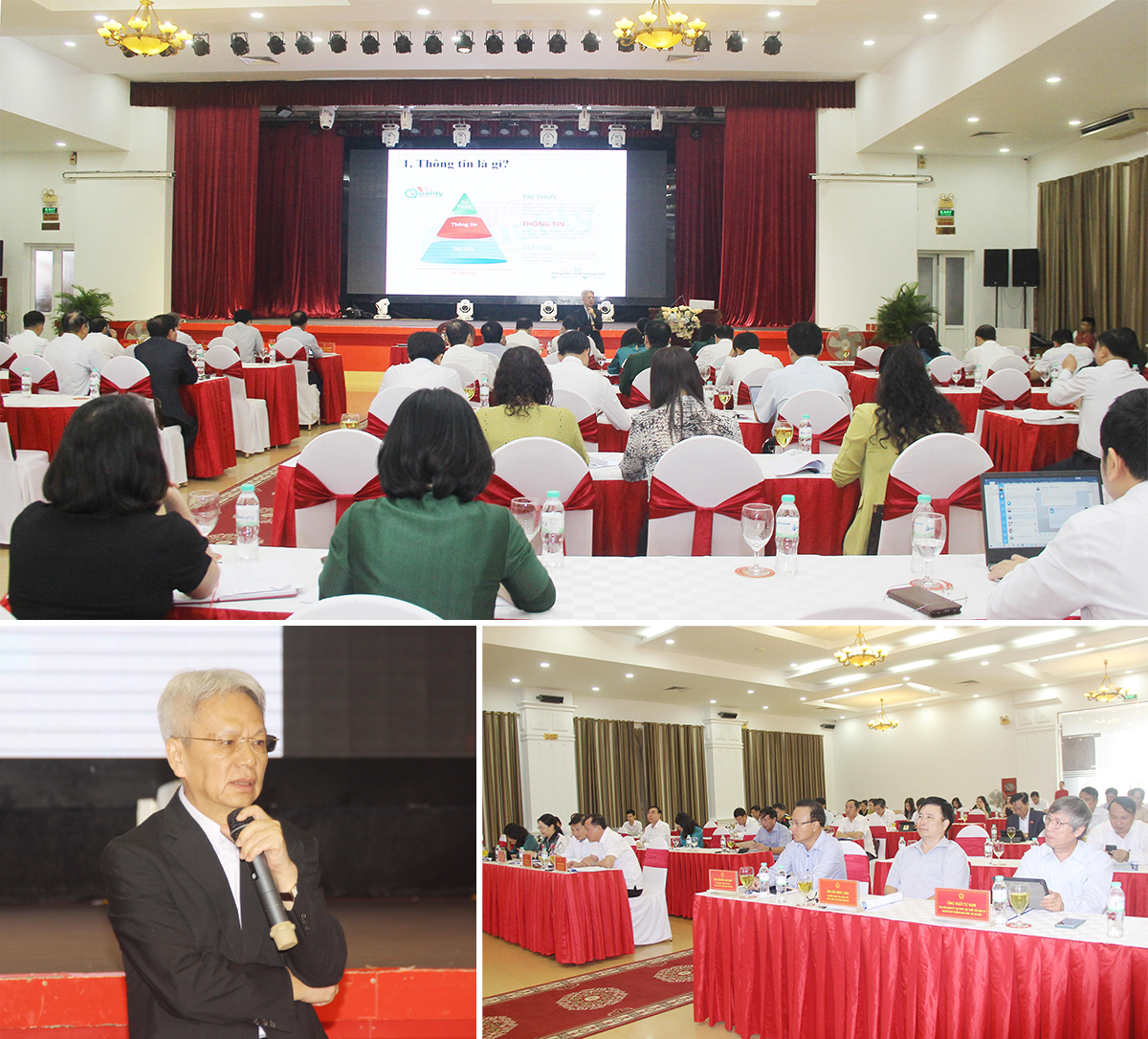
In reality, the specific mechanisms for Nghe An, such as Resolution No. 36/2021/QH15 or Resolution No. 137/2024/QH15, could only be formed during the past term when delegates participated from the proposal and feedback stage to the finalization of the content. If it only stopped at voting, delegates would find it difficult to make a policy impact.
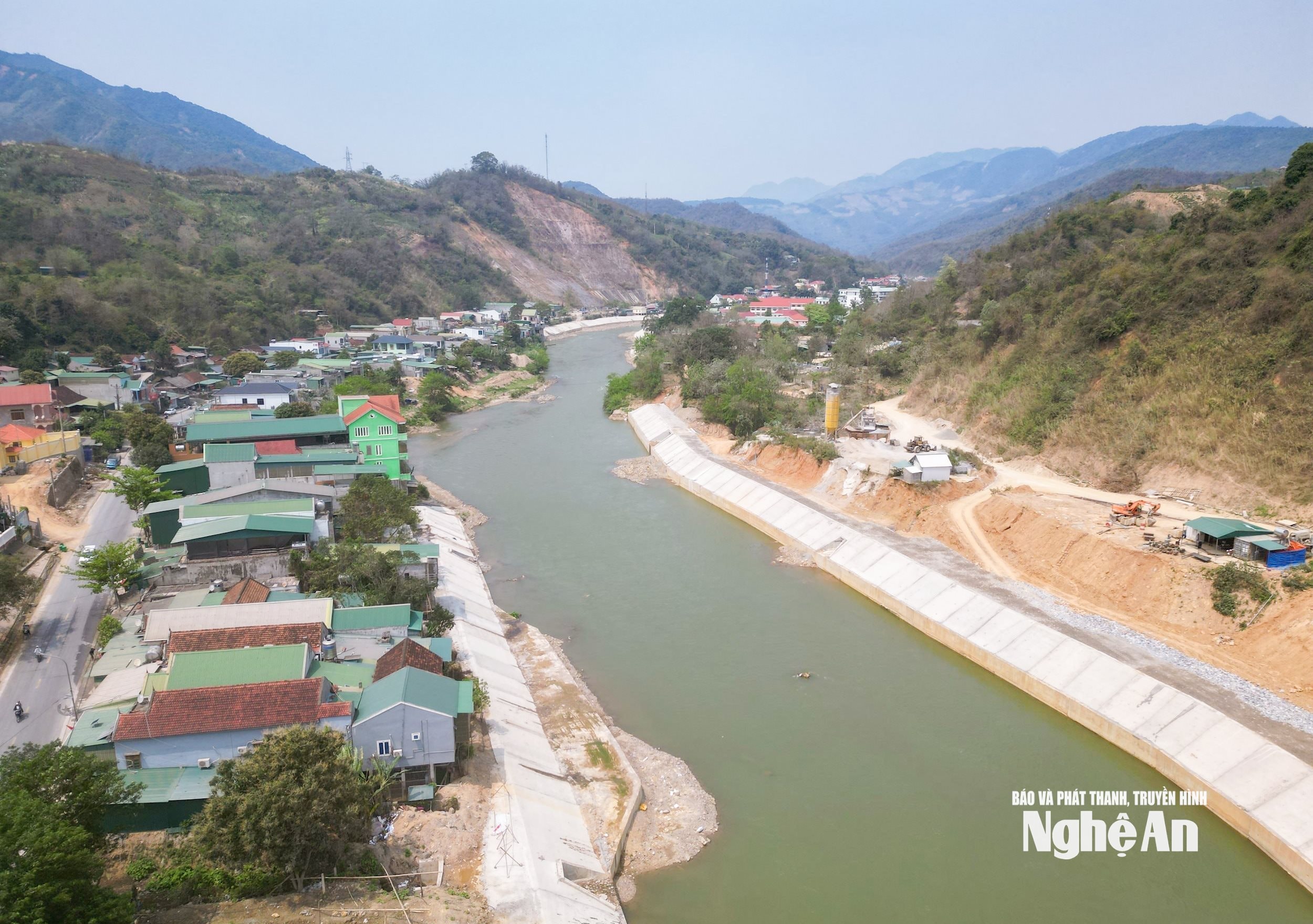
Similarly, resolving resettlement issues in the Bản Vẽ hydroelectric reservoir area, allocating funds for the Nậm Mộ river embankment, and addressing the consequences of flash floods in Kỳ Sơn… all require representatives not only to listen to the people's feedback but also to proactively work with relevant agencies, propose solutions, and monitor implementation progress. Representation, therefore, is a closed cycle: listening - analyzing - making recommendations - monitoring - tracking results.
Mr. Nguyen Thanh Hien, former Deputy Head of the Standing Delegation of the National Assembly of Nghe An province in the 14th term, emphasized: Delegates must prepare thoroughly, grasp the practical realities, and participate in discussions with clear opinions. The parliamentary chamber is not a place to reread reports, but a place to critique policies based on complete information and rigorous argumentation. Critique here is not about creating formal differences, but about clarifying the rationality, feasibility, and impact of policies. Every statement must be supported by data, evidence, and reasoning. When delegates speak from their own understanding and practical experience, the parliamentary chamber truly becomes vibrant and insightful.
In the context of digital transformation, green development, and the promotion of decentralization and delegation of power to local authorities, the issues raised in parliament are increasingly multifaceted, intertwining economic, social, environmental, defense, and security aspects. This requires representatives to possess not only interdisciplinary knowledge but also long-term vision and critical thinking skills. Without continuous self-improvement and the courage to speak frankly and truthfully for the common good, parliaments are easily susceptible to superficial consensus lacking depth.
.jpg)
.jpg)
.jpg)
.jpg)
Major General Nguyen Sy Hoi - Vice Chairman of the Vietnam Fatherland Front Committee of Nghe An province, Chairman of the Provincial Veterans Association (formerly Deputy Commander of Military Region 4), a former member of the Vietnamese National Assembly for the 13th and 14th terms, and currently nominated to run for the 16th National Assembly and the 19th Provincial People's Council for the 2026-2031 term, shared: “The most profound lesson learned after two terms is: To fulfill the role of a representative of the people, one must first be deeply involved with the grassroots, listening with sincerity and responsibility. Representatives cannot simply rely on summary reports, but must directly go to the locality, meet and dialogue with the people, and observe the reality to understand correctly, accurately, and fully before speaking or making decisions.”
According to Major General Nguyen Sy Hoi, the first lesson is to constantly learn and improve one's skills in all aspects, especially legal knowledge and digital technology. In the context of strong digital transformation, delegates must not only grasp policies and guidelines but also know how to exploit information, process data, and interact with voters through new platforms.
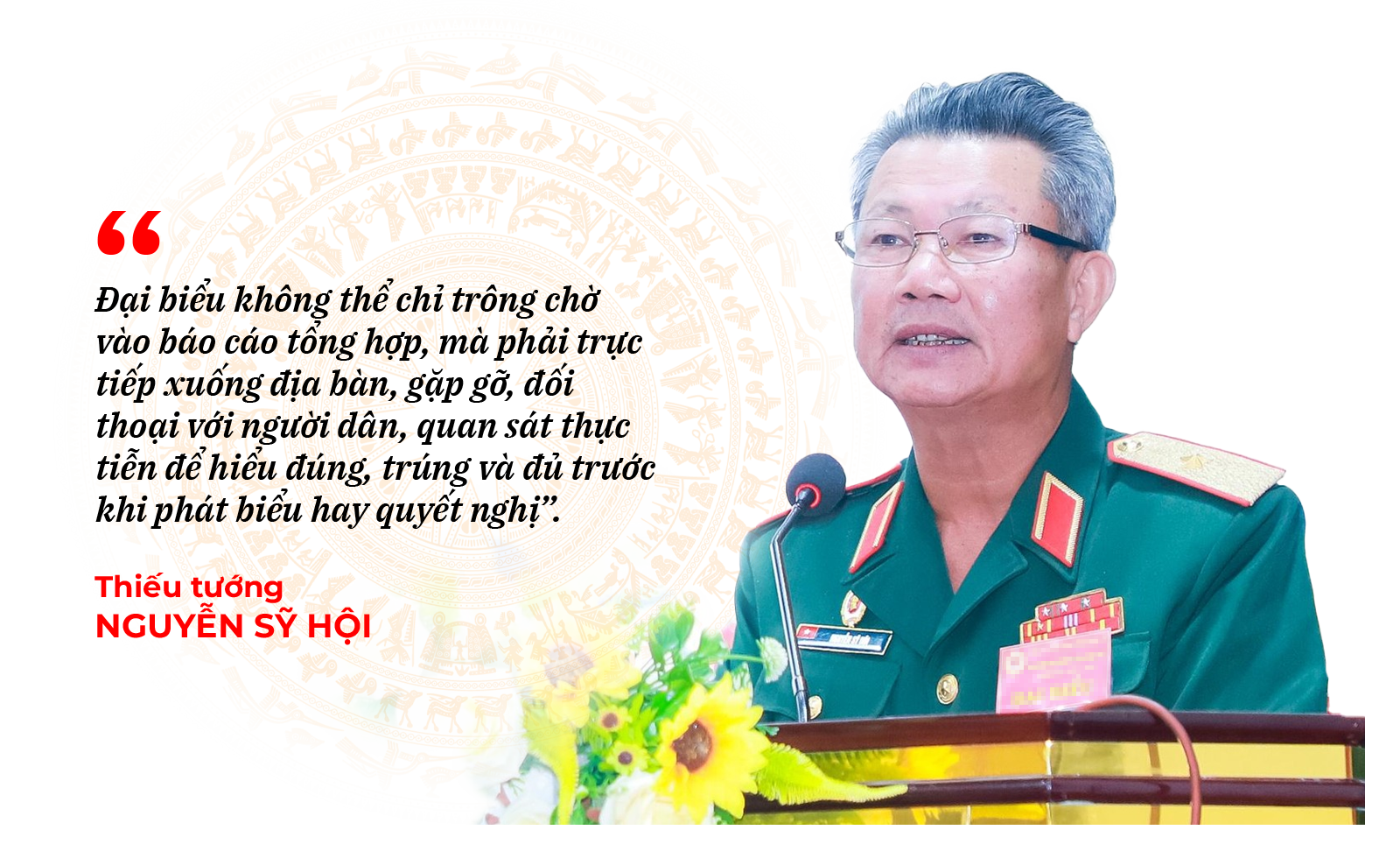
For delegates holding multiple positions, efficient time management is a mandatory requirement. Without time for practical analysis, there is no real-world data to support their statements; without practical experience, their voices in parliament easily become vague. Major General Nguyen Sy Hoi emphasized: The responsibility of delegates does not stop at simply "speaking on behalf of others," but must "follow up" until the resolution of issues is achieved. Have the recommendations been accepted? Have the solutions been implemented?
It is clear that today's voters do not judge their representatives by their presence in the assembly hall, but by the final outcome: whether their petitions are resolved; whether their policies bring about positive changes in people's lives. Therefore, the strength of the two-tiered local government model lies not in its organizational structure, but in the quality of the people who implement and supervise it. In this context, elected representatives must be those who dare to say what needs to be said, dare to protect the legitimate interests of the people, and dare to be accountable to their constituents. When the role of representation is elevated, the assembly hall will truly become the place where the wisdom and will of the people are crystallized in this new stage of development.
(To be continued)


