
Vinh Duc rice paper making village takes flight thanks to OCOP program.
Thanks to OCOP certification, products from the Vinh Duc rice paper making village (Do Luong district) have reached many countries and entered major distribution channels.
Traditional craft villages are in full swing.
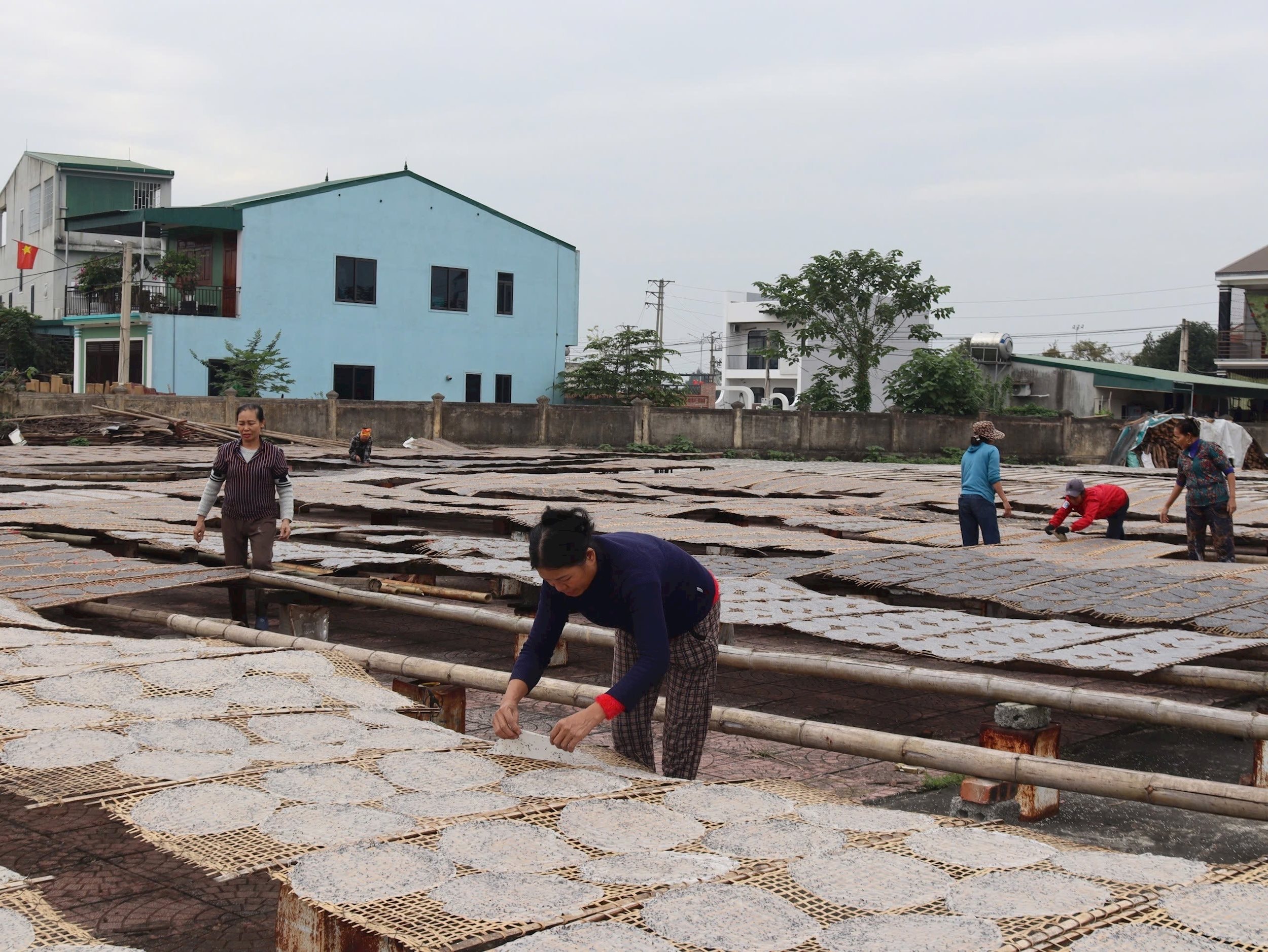
As the year draws to a close, the atmosphere in Vinh Duc rice paper-making village, Do Luong district, is one of urgency, hustle, and excitement as every household and every person is busy grinding, spreading, drying, and cooking rice paper. The fragrant aroma of molasses cooked with ginger and roasted peanuts in large pans signals the approaching Tet (Lunar New Year).
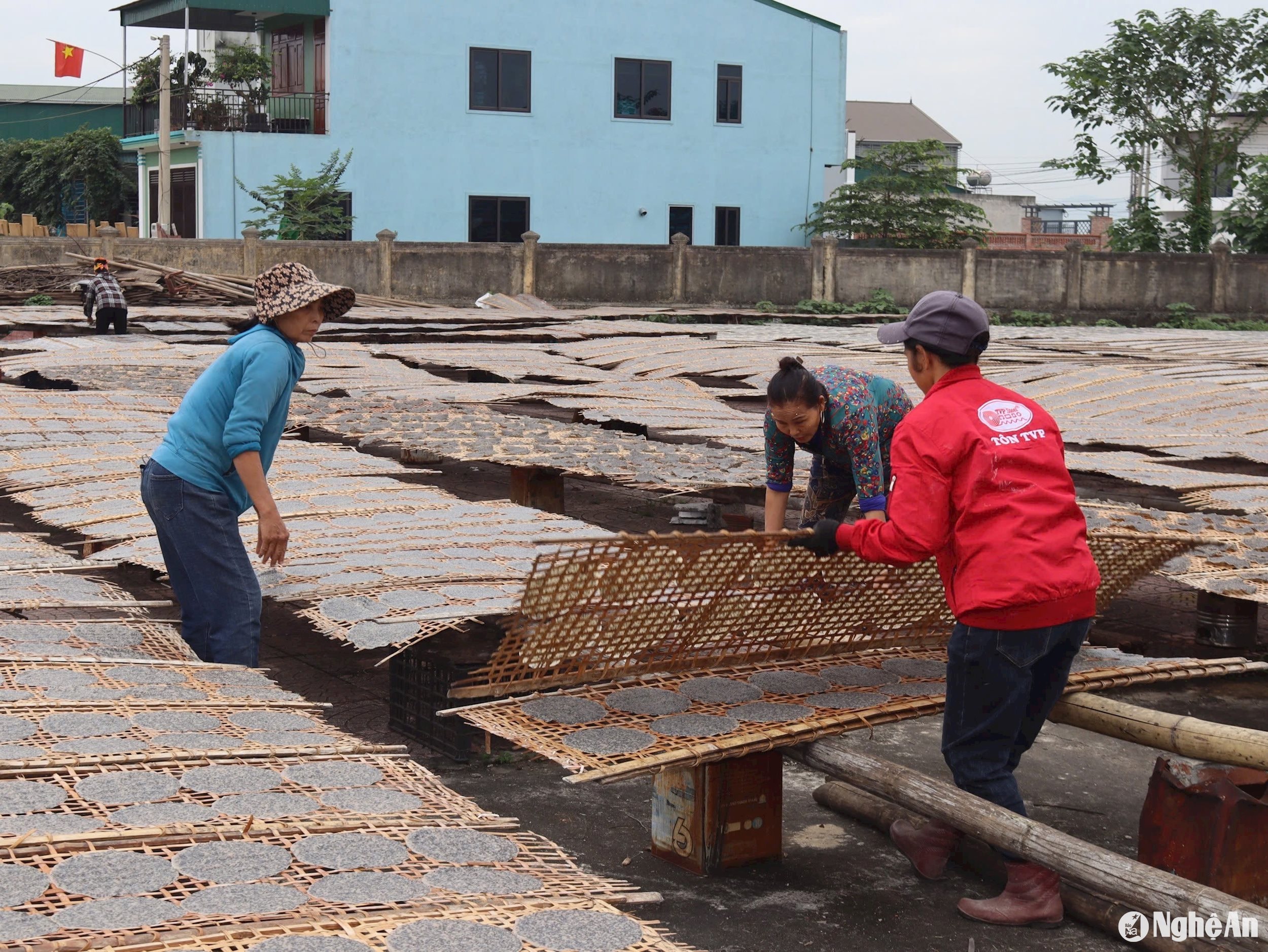
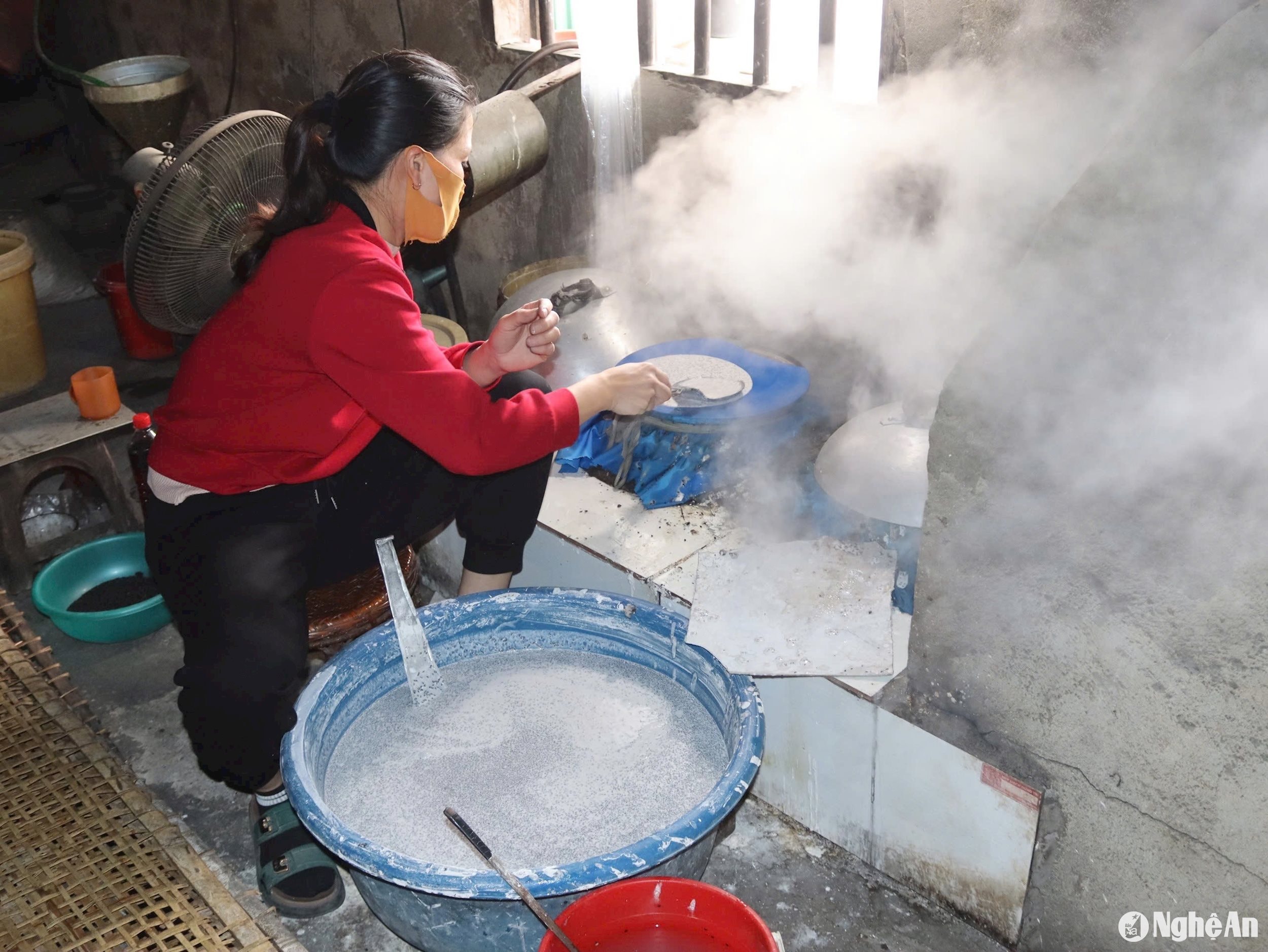
Waking up at 4 a.m., Ms. Thao Cong, a long-time worker in the business, said that every morning she and 10 other workers get up at 4 a.m. to mix the batter and make the pancakes, in time to catch the morning sun.
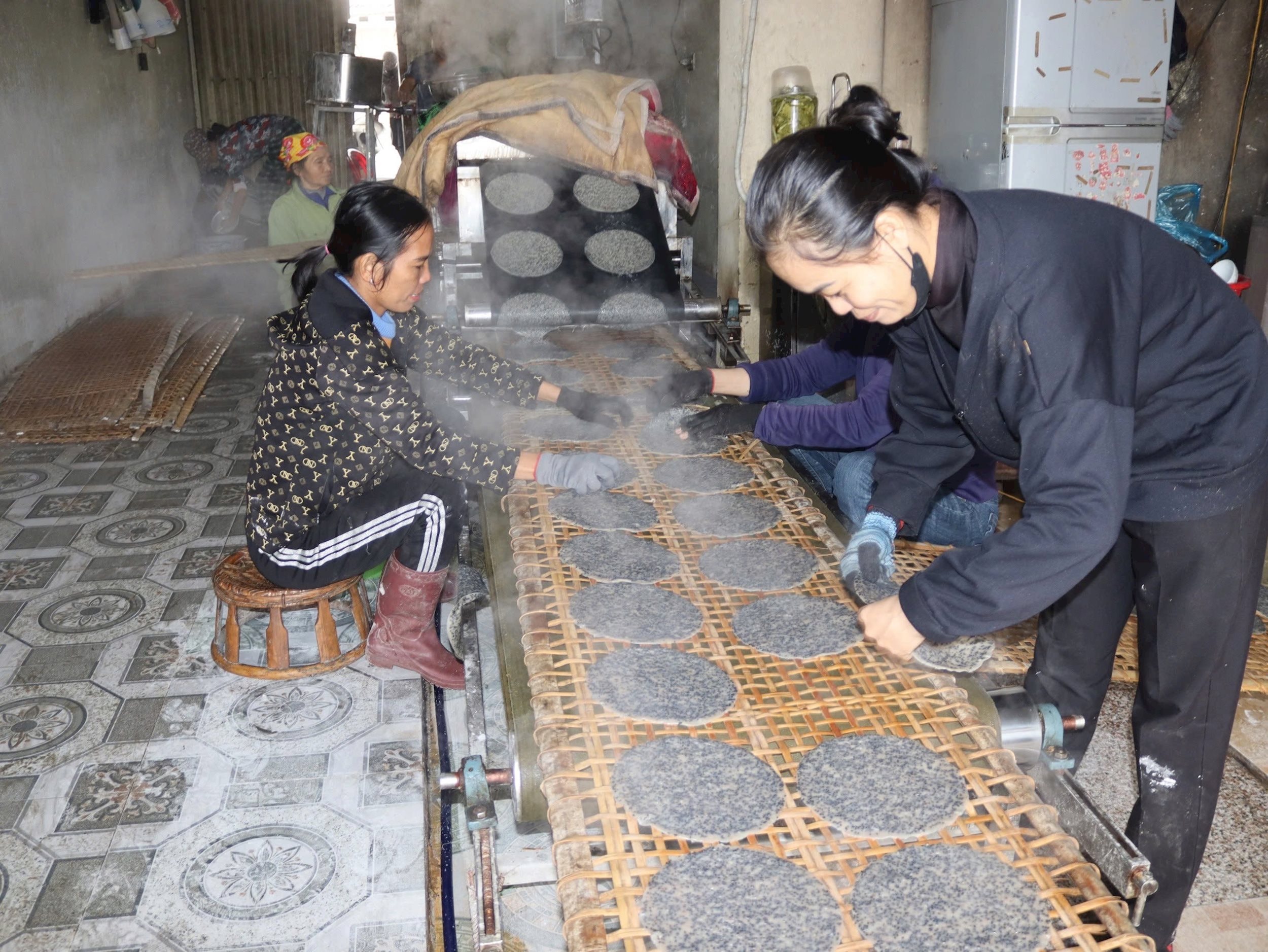
In the kitchens, charcoal blazes brightly as people cook peanut candy and sticky rice candy, while others spread and spread out rice cakes to dry. Outside, strong workers chop and split firewood, and women busily turn the cakes... The work is hectic day and night. Dozens of households engaged in this trade gather in one space, chatting, exchanging information, and supporting each other through the various stages. On the road, vehicles come and go, picking up cakes... All of this creates a vibrant and prosperous picture of a rural village.
The craft village of Vinh Duc has existed for about 300 years. Do Luong rice crackers, with their thick, crispy texture, black sesame seeds, and fragrant, nutty, and rich flavor, have won the hearts and trust of consumers for many years. The crackers are sold not only in Nghe An and Ha Tinh provinces but also in many provinces in the North and Central regions, and are even exported to Japan and Australia by migrant workers from Nghe An.
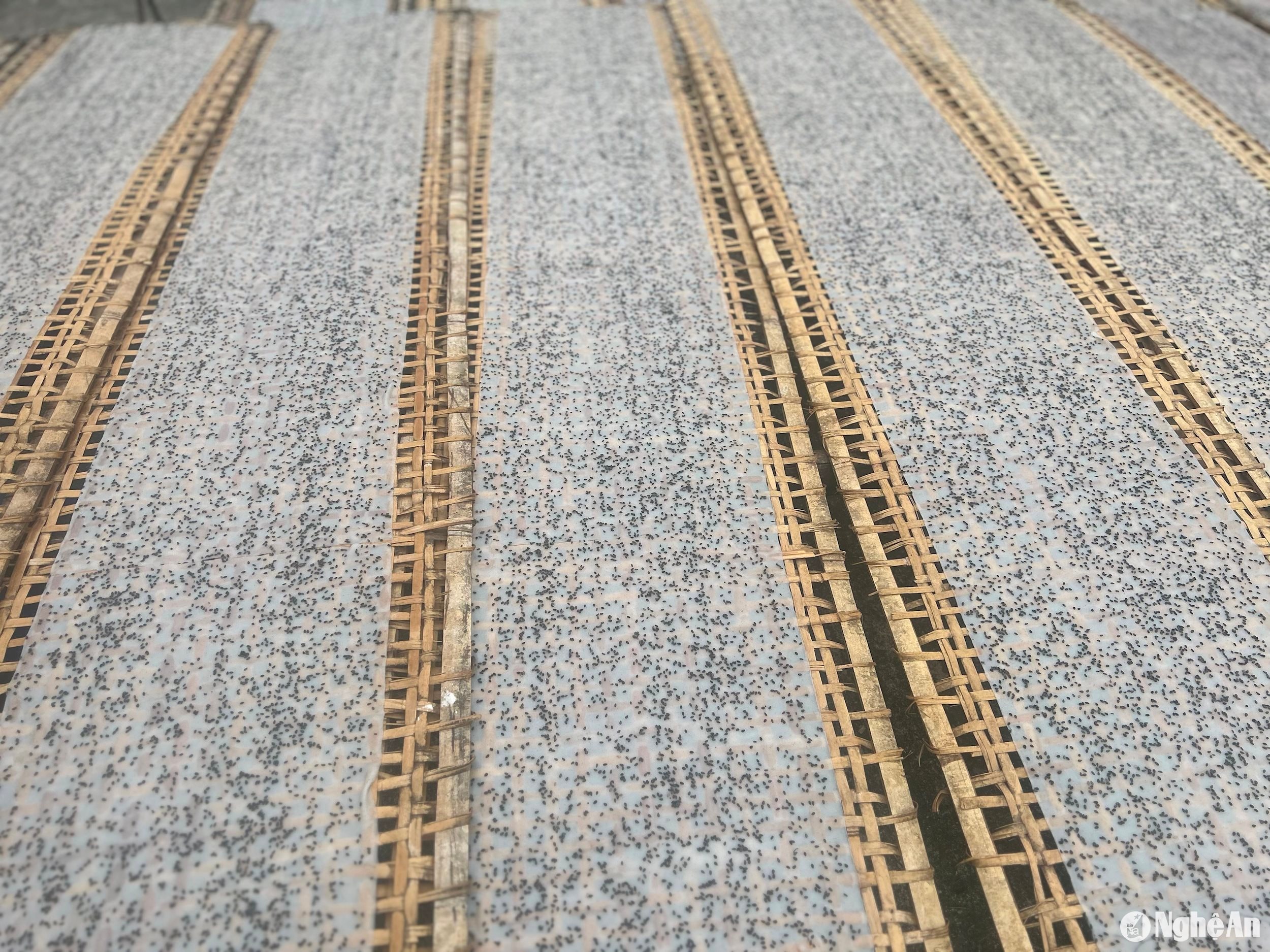
Every day, the craft village consumes tons of rice, sesame seeds, and peanuts. The secret to the famously delicious rice crackers and peanut candy here lies in the use of new Khang Dan rice, molasses from traditional molasses-producing villages in Nghe An, carefully selected sesame seeds and peanuts from Nghe An, and small, spicy ginger from Ky Son district…
Mr. Nguyen Van Cong, who knows the craft village best and is also the most successful seller here, said: "The ingredients are carefully selected. The peanuts must be peelable right away to prove they are dry and not soaked in water; the black sesame seeds are local; and the molasses from Nghia Dan and Tan Ky requires only the middle layer of the jar, discarding the top and middle layers to ensure purity."
To make delicious rice cakes, the soaking and fermentation of the rice, the steaming, turning, and baking processes are crucial. Over the years, experienced bakers have mastered the secrets to ensure that the starch, when soaked for the right amount of time, swells evenly, resulting in soft, fragrant cakes that are not tough or chewy when baked. The charcoal-grilled cakes must be fanned frequently to ensure they cook thoroughly and don't burn.
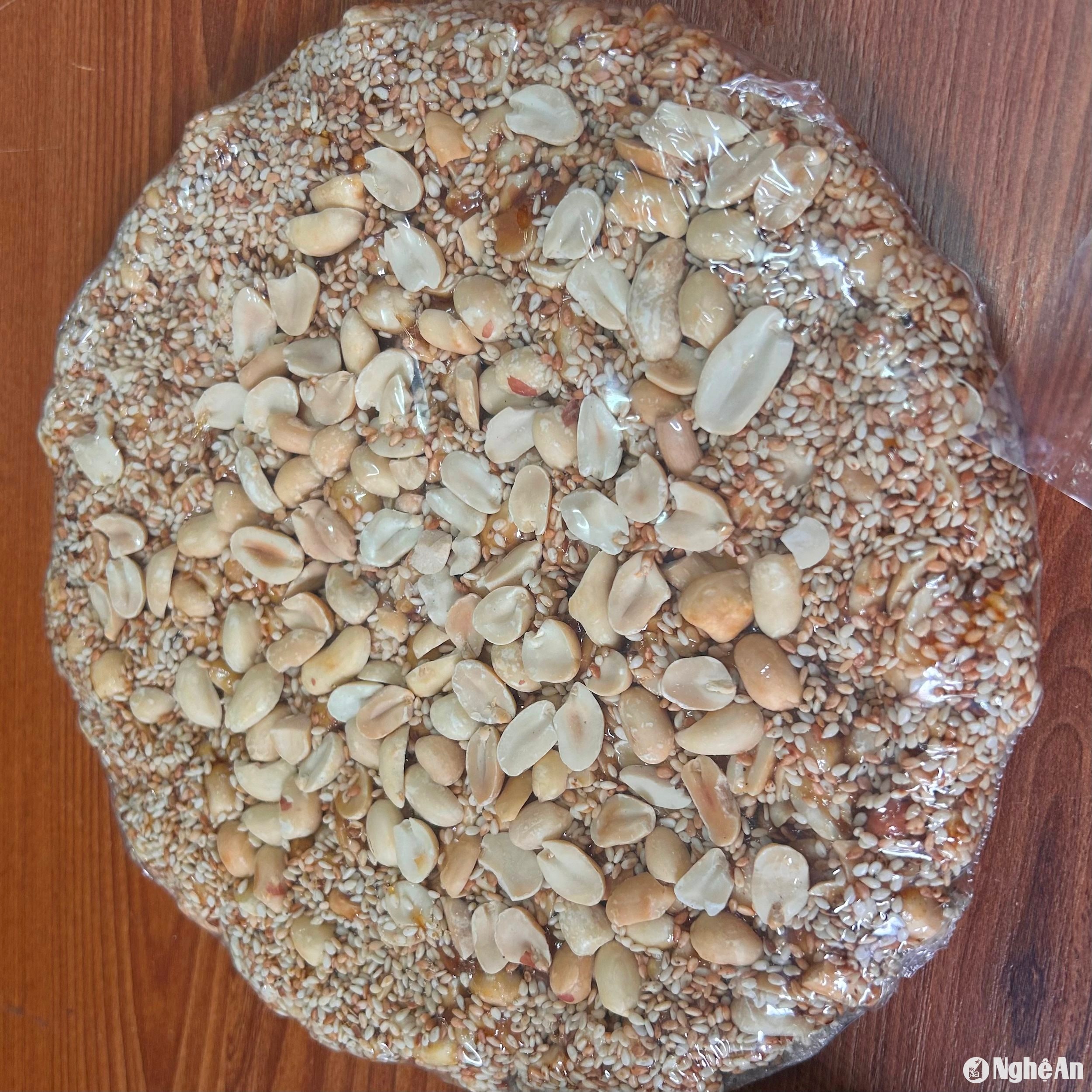
The process of making peanut candy is also very meticulous. Experienced candy makers can tell when the syrup has thickened just by looking at how the syrup boils and the size of the bubbles. When the syrup turns slightly yellow, the candy maker dips a chopstick in the syrup, then drops the chopstick into a glass of cold water. Then, they bring the tip of the chopstick with the syrup to their mouth to test it; if the drop of syrup melts crisply in their mouth, it's ready. Looking at the simmering syrup with tiny bubbles, Mr. Cong says the syrup has thickened and the peanuts are cooked, so it's time to turn off the heat.
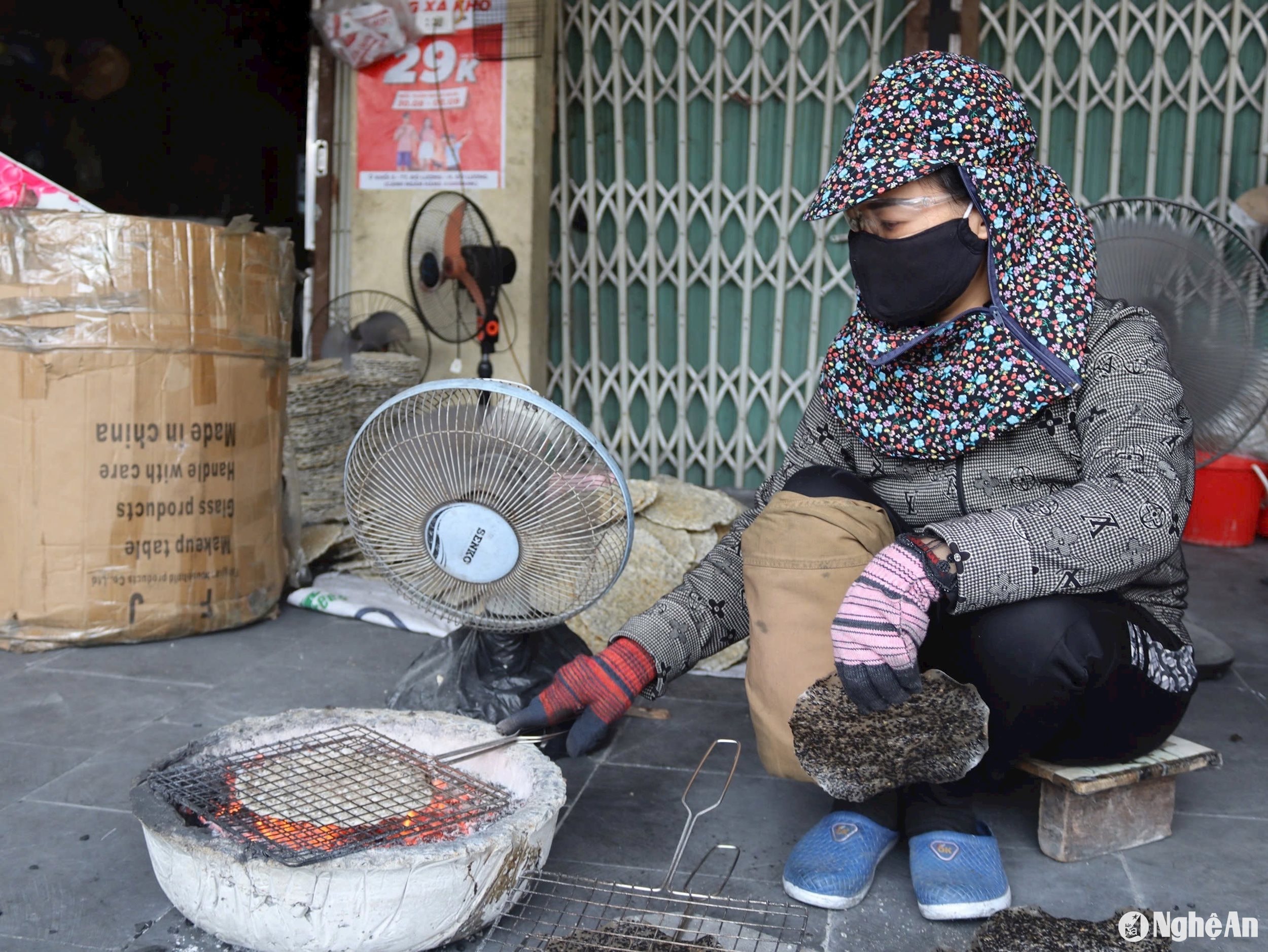
Since ancient times, when cakes and candies were considered luxury treats, the people of Vinh Duc rice paper making village knew how to process ingredients from local agricultural products such as rice, peanuts, sesame seeds, etc., to create delicious and famous rice crackers, peanut candies, and sesame candy.
Despite facing numerous ups and downs and intense competition from other confectionery products, artisans in Vinh Duc craft village have always strived to innovate their thinking, methods, and marketing strategies to help their products reach a wider market. Holding a freshly made, warm package of rice crackers in her hands, Ms. Thao shared that she is delighted that for the past three years, thanks to the OCOP certification, her products have been sold with more confidence to other localities, resulting in higher orders.
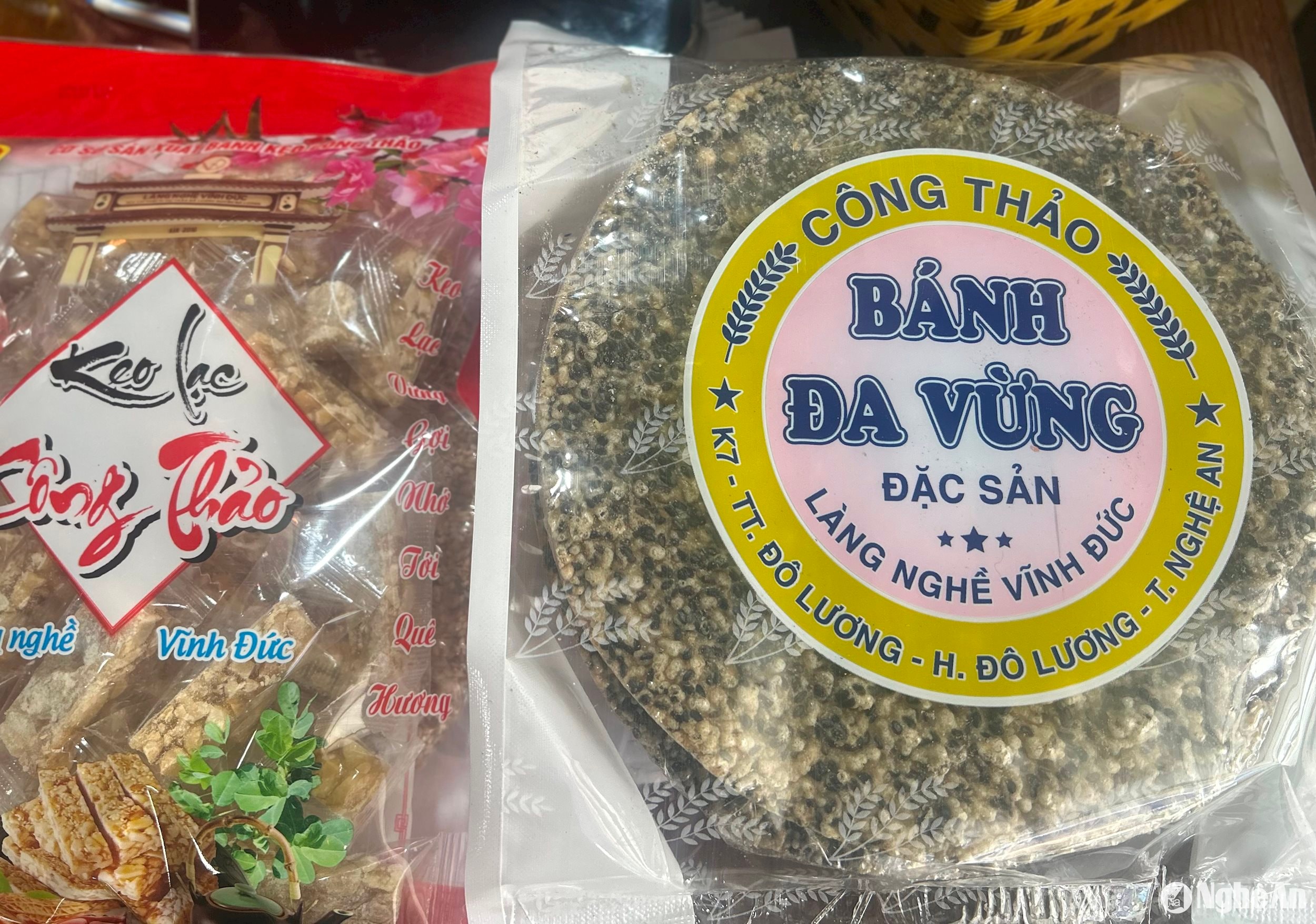
Ms. Thao said: After receiving guidance from the district, commune, and provincial departments and agencies on preparing documents and checking food quality and safety, the households engaged in the trade have invested in packaging, clearly labeling information, origin, and packaging. The products have entered supermarket systems in many provinces, generating over 1 billion VND in sales each month – a dream figure for many years. Currently, the products are selling well in Hanoi, Vinh City, Hoa Binh, Son La, Lai Chau, and other areas.
In addition, the product is also chosen by many agencies, organizations, and tourists from near and far as a gift, as a traditional local delicacy, with a wide variety of sizes and types.
Rice crackers made their way into supermarkets and out to the capital.
Speaking about the importance of OCOP certification, Ms. Thao and Mr. Cong said: To achieve OCOP certification, in addition to quality, attention must be paid to design, appearance, and especially food safety and expiration dates. Once a 3-star OCOP rating is achieved, the product is trusted and showcased at fairs, exhibitions, supermarkets, etc., leading to increased sales and promoting the image of the craft village and the homeland. The people of Vinh Duc craft village are now aware of the competition and pressure from imported goods... so they continue to diligently practice their craft with the heart and ethics of traditional artisans, choosing fresh ingredients, employing skilled and passionate workers... while also strengthening the promotion of the village's image and products. A professional baker can bake 1,000 cakes a day. Hand-baked cakes are still preferred by customers over machine-baked ones.
Mr. Hoang Van Hiep, Chairman of the People's Committee of Do Luong District, said: The Vinh Duc rice paper making village currently provides jobs for more than 200 households, with workers earning a monthly salary of about 6-7 million VND. This is not a high salary, but it helps to utilize agricultural products from the locality, increase the value of processed agricultural products, and preserve the reputation of a 300-year-old traditional craft village.
Each year, the craft village produces approximately 1,400-1,500 tons of products, generating tens of billions of dong in revenue. Vinh Duc craft village products are among the typical products of Do Luong district.
For sustainable development, the craft village hopes to have a spacious showroom to showcase its products and requests that relevant authorities and sectors strengthen efforts to promote and sell its products.


