
Nhi Hoa Village: A day of slow, rustic living with the people of the Southwest region of Vietnam.
Located in Nhi Long commune (Vinh Long province), Nhi Hoa community tourism village invites visitors to step through a 20-30 year old coconut gate, listen to the elders tell village stories, participate in farming activities, and gather around a traditional meal in the riverside countryside.
The Nhi Hoa community tourism village in Nhi Long commune (Vinh Long province) doesn't try to impress with grandiose structures or luxurious services. Instead, it chooses to touch emotions through its simple way of life, rural memories, and community spirit, true to its message: "Love for the land, love for the people – to remember, to cherish."
A new tourist village amidst the changing landscape of Vinh Long.
Nhi Hoa Community Tourism Village is located in Nhi Long commune (Vinh Long province), formed in the context of the newly merged Vinh Long province after its merger with Ben Tre and Tra Vinh provinces. In the increasingly diversified tourism landscape, Nhi Hoa doesn't pursue cutting-edge models or record-breaking achievements, but instead chooses a path that connects tourism with the lifestyle, memories, and intact community relationships of the countryside.
The goal here is to create more tourism products and services that are suitable for the new context, but without losing their identity. Each experience stems from the daily lives of the local people, allowing tourists to both explore and better understand the Southwestern region of Vietnam.
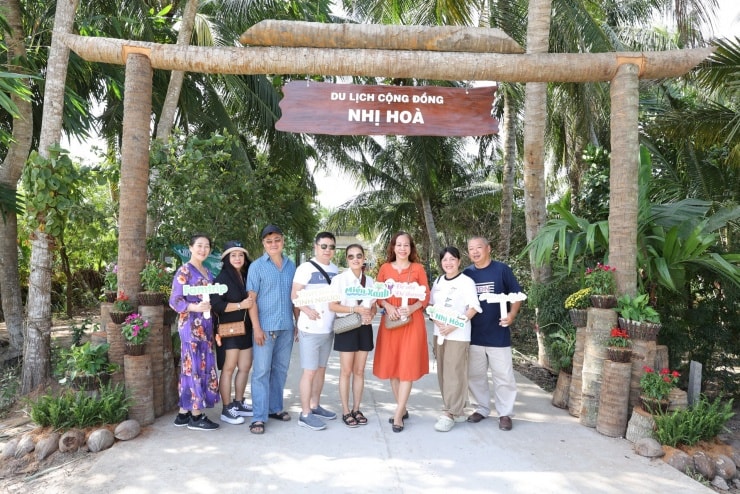
The rustic coconut gate and the greeting of the entire village.
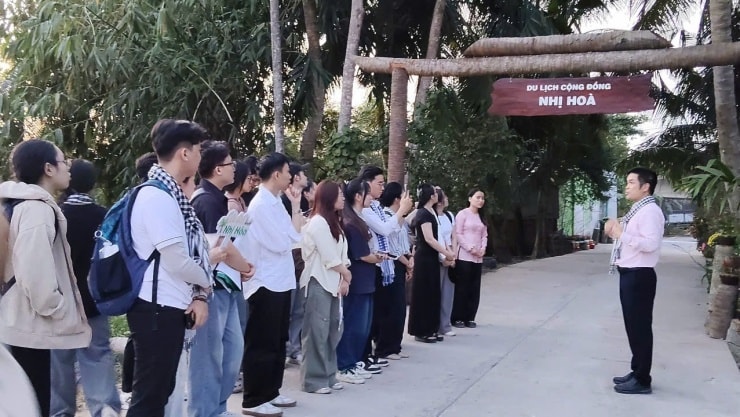
The first impression upon arriving in Nhi Hoa is the community tourism gateway, constructed from coconut trees that are 20-30 years old. Unpretentious and simple, the coconut gate becomes a gentle yet memorable landmark, a rustic greeting from the entire village to the traveler.
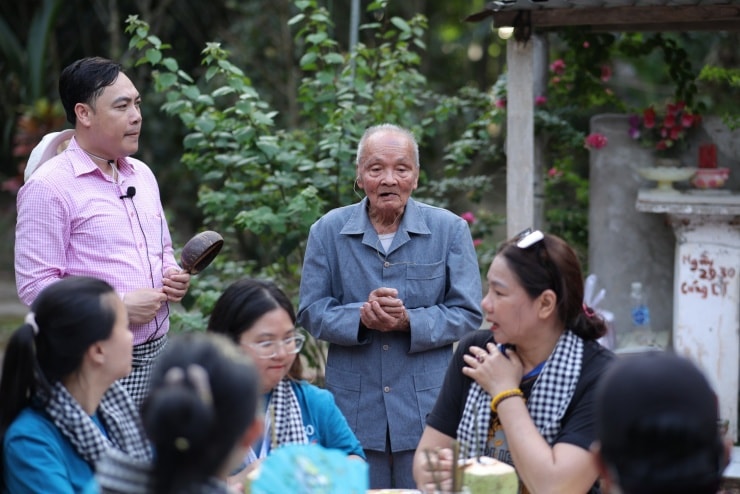
Stepping through the gate, visitors don't enter a staged tourist area, but rather a village living its own rhythm. An elderly man in his 80s greets guests with the warmth of family returning home. Not far away, a man nearing 90 slowly recounts the village's history, stories not found in books but preserved through memory, experience, and love for the land he has been connected to his entire life.
The tradition of four generations living together and the cultural heritage.
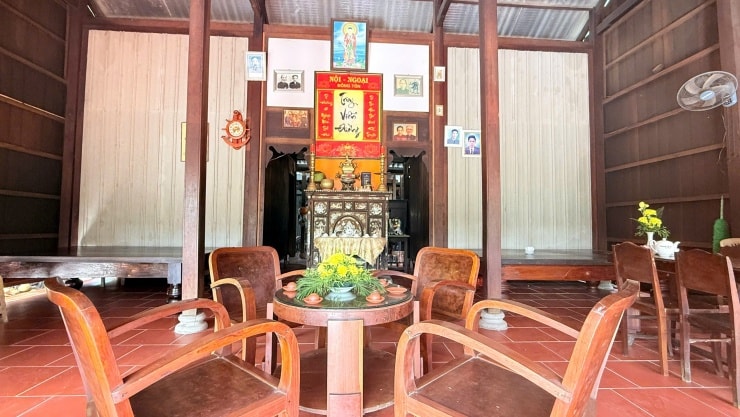
The stories of the elders resonate amidst the traditional Southwestern-style houses, where four generations live together. In Nhi Hoa, the elderly are not only witnesses to history but also the living cultural capital of the village, adding depth to the experience and making the community-based tourism model here unique.
In the setting of tiled roofs, wooden pillars, and gardens, visitors are welcomed like honored guests of the family. A cup of hot tea, friendly greetings, and leisurely conversation quickly bridge the gap between visitors and locals, transforming the tour into a truly meaningful home visit.
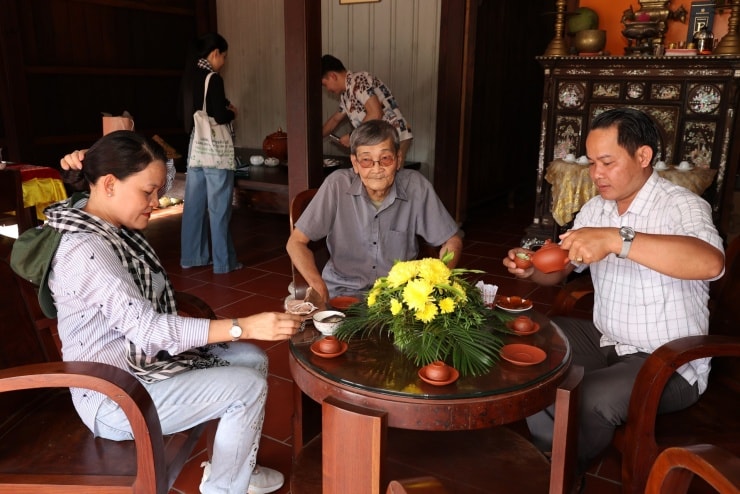
A day living in the village: experience after experience.
Nhi Hoa Community Tourism Village is organized according to a closed-loop tourism service supply chain model linked to each household. Each household offers a unique, non-repetitive experiential product; activities are linked together to form a seamless journey, accurately reflecting the livelihoods and daily lives of the local people.
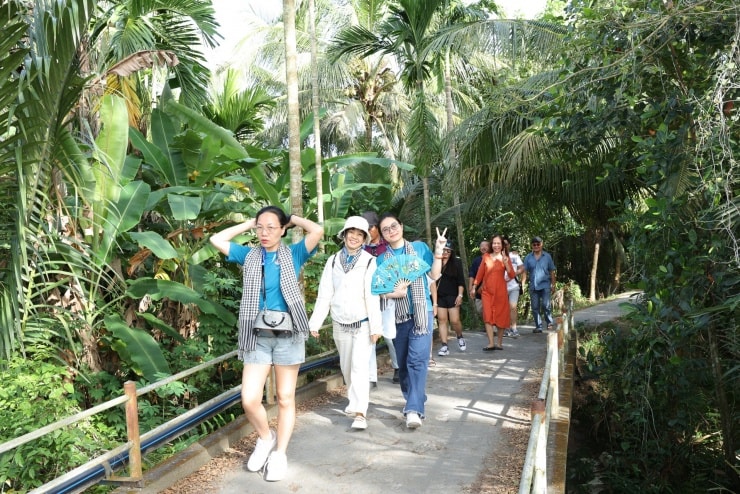
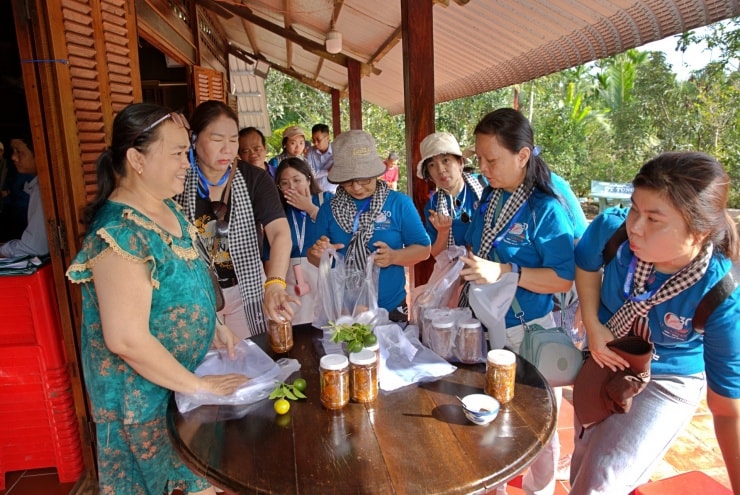
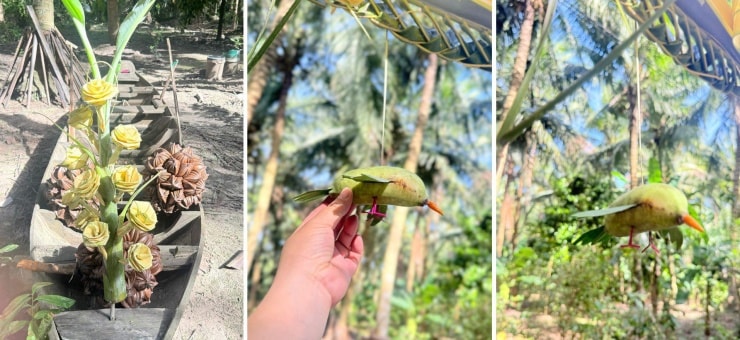
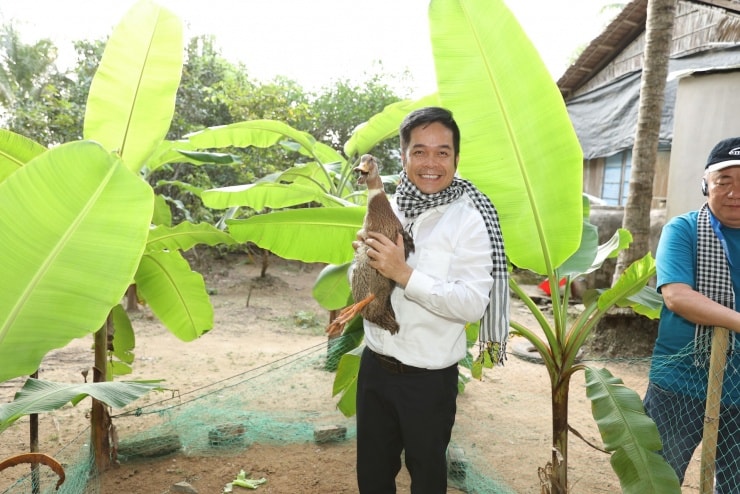
Tourists not only "watch" the locals work, but also participate directly. Things that seem so ordinary suddenly become unforgettable "memory stations": sitting and weaving leaves to create shapes, relearning skills they thought they had forgotten; playing blindfolded duck catching, laughter echoing across the dirt field; collecting eggs from nests, getting up close to the rhythm of rural life.
The journey concludes gently on a boat drifting along a peaceful river, with calm waters and serene scenery. In that moment, the pace of life slows down, allowing visitors to better appreciate the leisurely and tranquil rhythm that is familiar to the people of the Southwest region of Vietnam.
In Nhi Hoa, the locals don't "put on a show" for tourists. They live authentically, just as they live every day, and tourism is simply a bridge to share everything naturally.
A simple meal in the countryside of the river region.
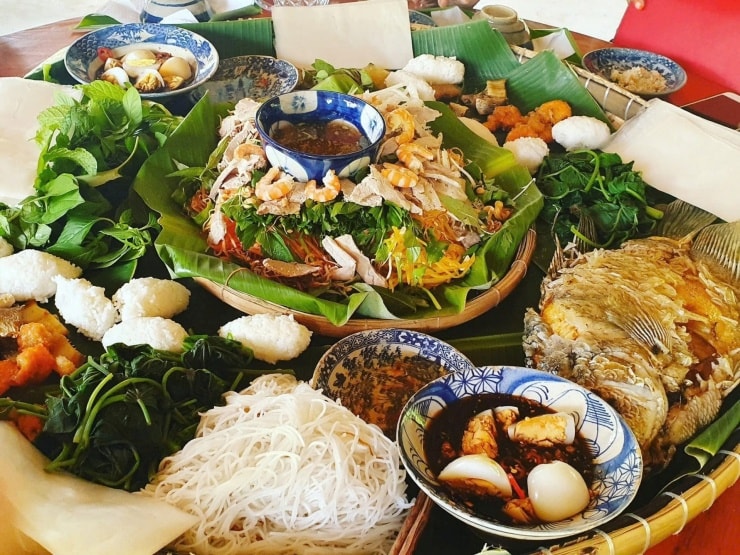
After outdoor activities, a hearty meal with delicious dishes from the riverine region is a warm and comforting reward. It's not just a meal, but an opportunity for visitors to sit with the hosts, listen to stories about the fields, rivers, and life connected to the water.
Simple rice and soup, fresh vegetables from the garden, and delicious dishes prepared by the family themselves make the meal more meaningful than just a typical culinary service. Each dish is a small slice of life on the river, presented in the most heartfelt way.
Towards sustainable tourism and experiential education.
In the initial phase of implementation, Nhi Hoa Community Tourism Village welcomed a survey team of over 50 members, including tourism product operators, experts, and representatives from development programs. The goal was to prepare for accessing the American and European markets, which have high demands for authentic experiences and sustainable development.
In addition, Nhi Hoa village also welcomed a survey team to develop an educational and environmental tourism program, contributing to diversifying tourism products and spreading learning values from the community tourism model.
The formation and operation of the village is the result of coordination between the Department of Culture, Sports and Tourism of Vinh Long province, the Nhi Long commune government, the Institute for Economic and Tourism Development Research (the consulting unit), and especially the local community – who are both the cultural subjects and the center of all tourism activities.
Suggestions for exploring Nhi Hoa
Nhi Hoa is perfect for those who want to escape the urban atmosphere and find a cool, green space with a slow pace of life and authentic village stories told by real people. It's also a great option for tourists interested in community tourism, local experiences, and sustainable development models.
When arriving in a village, the most important thing is to be ready to participate in the daily life: chat with the elders, help the homeowners with small tasks, and listen to the stories behind each house. Respecting local life and a spirit of community engagement will make the trip more fulfilling.
And when I left Nhi Hoa, what remained wasn't just a few check-in photos, but the feeling that I had been welcomed and cherished by an entire village – just as the message said: "Love for the land, love for the people – to remember, to cherish."


