
Filling the gaps in public etiquette.
A story that has garnered significant attention and criticism on social media in recent days involves a young woman climbing onto the roof of the Vietnam Military History Museum in Hanoi to film and take photos. This is not only an offensive act but also reveals a gap in public etiquette among some young people.
Starting this November,Vietnam Military History MuseumA newly opened museum in Nam Tu Liem district, Hanoi, has attracted a large number of locals and tourists who come to visit and explore, offering free admission. Over the past weekend, the museum received a record number of visitors, approximately 40,000, causing prolonged traffic congestion along Thang Long Boulevard.
With a large number of visitors simultaneously, coupled with a shortage of staff at the museum for management, traffic control, guidance, and explanations, numerous problems arose regarding security, order, and the protection of exhibits. Visitors freely moved around, touched, and even climbed on exhibits, creating an unpleasant scene.
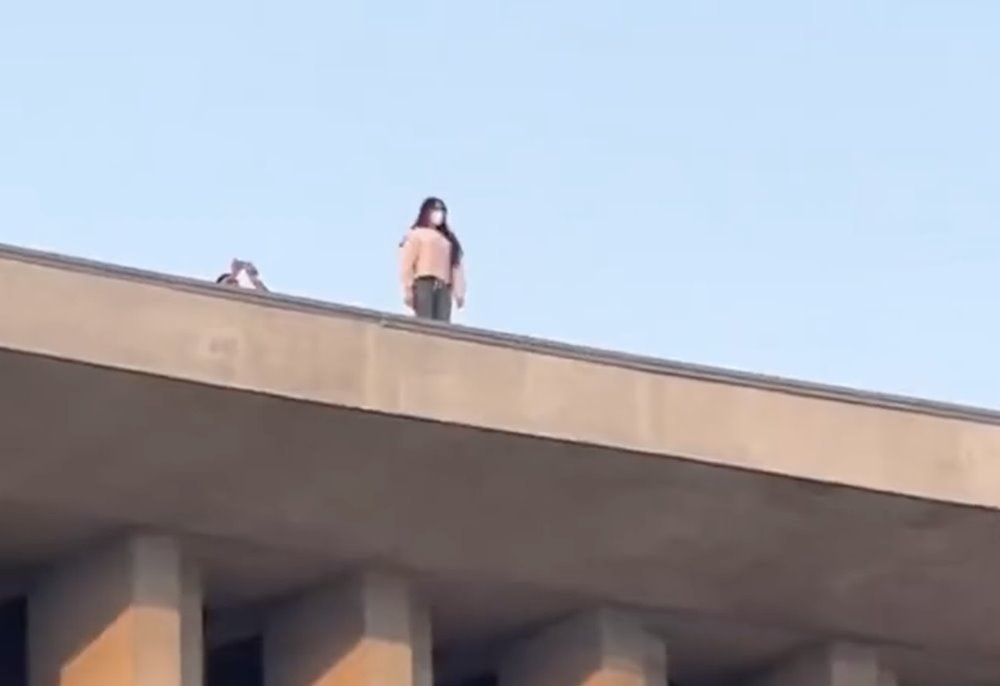
Most notably, an 8-second clip circulating on social media showing a girl climbing onto the roof of the Vietnam Military History Museum to pose for photos and videos has attracted widespread attention. Many people have expressed outrage and criticized the girl's irresponsible behavior, while also questioning the security and order management at the museum.
There are problems with public etiquette.
While it's understandable that visitors, especially children, tend to want to explore and learn about exhibits firsthand, and enjoy taking impressive photos, climbing onto the museum roof to pose for pictures is simply unacceptable.
This is not the first time offensive images in public places, or at Vietnamese historical sites and scenic spots, have been criticized. Not long ago, the online community also expressed disapproval of an image of a Vietnamese woman wearing tight workout clothes and performing an upside-down yoga pose outside the fence of Gyeongbokgung Palace (Seoul, South Korea).
Many people believe that palaces are sacred places with special historical and cultural significance, and therefore require a serious and discreet demeanor to avoid causing offense. On several forums and in newspapers in both Vietnam and South Korea, the woman received fierce criticism.

Earlier this year, in July, singer Duc Tuan also attracted attention when he shared a series of photos taken on the yin-yang tiled roofs of ancient houses in Hoi An. Although Duc Tuan stated that he had obtained permission from the coffee shop owner to take the photos, he later had to delete the post due to the strong backlash from the online community. In recent years, Hoi An has also been repeatedly criticized for the inappropriate and revealing clothing worn by tourists visiting the ancient town with its many centuries-old temples and pagodas. Some tourists even wore bikinis and went braless in the ancient town, causing widespread outrage.
Each ancient house in Hoi An is part of the UNESCO World Heritage Site that was recognized 25 years ago. Every brick and tile on these moss-covered ancient roofs that have survived to this day is a part of the memories of the people of Hoi An, preserved over time. To trample on them is to trample on the memories of the people, to trample on the heritage left by their ancestors. That is why people are upset.
How can we bridge the gap in public etiquette?
The incidents of a young woman climbing onto the roof of the Vietnam Military History Museum, or singer Duc Tuan climbing onto the roof of an ancient house in Hoi An to take photos, reveal significant gaps in the public etiquette of young people.

It's not uncommon to see brawls after traffic accidents, public fights involving stripping people naked in public, people posing on baggage conveyor belts at airports, or smoking on airplanes despite safety regulations; using foul language, swearing, and vandalizing walls...
Although these uncivilized behaviors may only occur among a few individuals, they are a significant societal problem, happening daily, hourly, and everywhere. This not only affects individuals but also impacts the safety and comfort of those around them; it creates major "cultural gaps" because "a small mistake can have far-reaching consequences." If left unchecked, it increases the risk of public disorder and insecurity, creating an unsafe environment for the community and potentially increasing crime and conflict, reducing the quality of life and increasing feelings of insecurity. More dangerously, these uncivilized behaviors negatively impact economic development and tourism. An uncivilized and unsafe environment can diminish a destination's attractiveness to tourists and investors.
According to experts, this situation stems from many causes, one of the most important being a lack of awareness and insufficient deterrent penalties. Therefore, strong measures are needed to "fill this cultural gap." "By strictly addressing inappropriate behavior, we can contribute to creating a harmonious, civilized, and safe social environment for everyone."
Visitors' failure to comply with regulations for protecting artifacts can be considered a violation of cultural heritage preservation. Therefore, it is necessary to improve management, supervision, and public awareness campaigns for visitors. Cultural management agencies need to have clear regulations and support museums and historical sites in protecting artifacts. Each individual also needs to be aware of and respect historical artifacts and relics.
Building a civilized public environment requires coordination among management agencies and social organizations, especially young people such as the Youth Union and student organizations. Organizing communication and education campaigns, as well as competitions on public etiquette, will also be an effective way to raise community awareness.
Civilized behavior in public means respecting those around you and voluntarily obeying the law. Civilized conduct in public is part of what constitutes cultural values. While each nation may differ in wealth, the culture within each individual and the level of civilization of society as a whole are the foundation for sustainable development. This is considered one of the important indicators of a country's spiritual culture. Therefore, along with legal regulations, each citizen has a responsibility to contribute to this indicator through their own civilized behavior and conduct in public places.


