
Pentagon: Iran possesses a large arsenal of weapons if it enters a conflict with the US.
US War Secretary Pete Hegseth acknowledged Iran's missile capabilities and affirmed that Washington is stepping up military operations to neutralize this arsenal.
U.S. War Secretary Pete Hegseth has just delivered important assessments of Iran's arsenal and the U.S. military's operational roadmap. In a Pentagon press briefing on the evening of March 19th, Hegseth acknowledged Tehran's significant military potential and affirmed that Washington will continue its decisive actions targeting the enemy's missile network.
According to Pentagon leaders, the US is still on track to achieve its military objectives. However, the US has not given a specific timeframe for ending the conflict, emphasizing that the final decision will be made by President Donald Trump based on the actual developments on the battlefield.
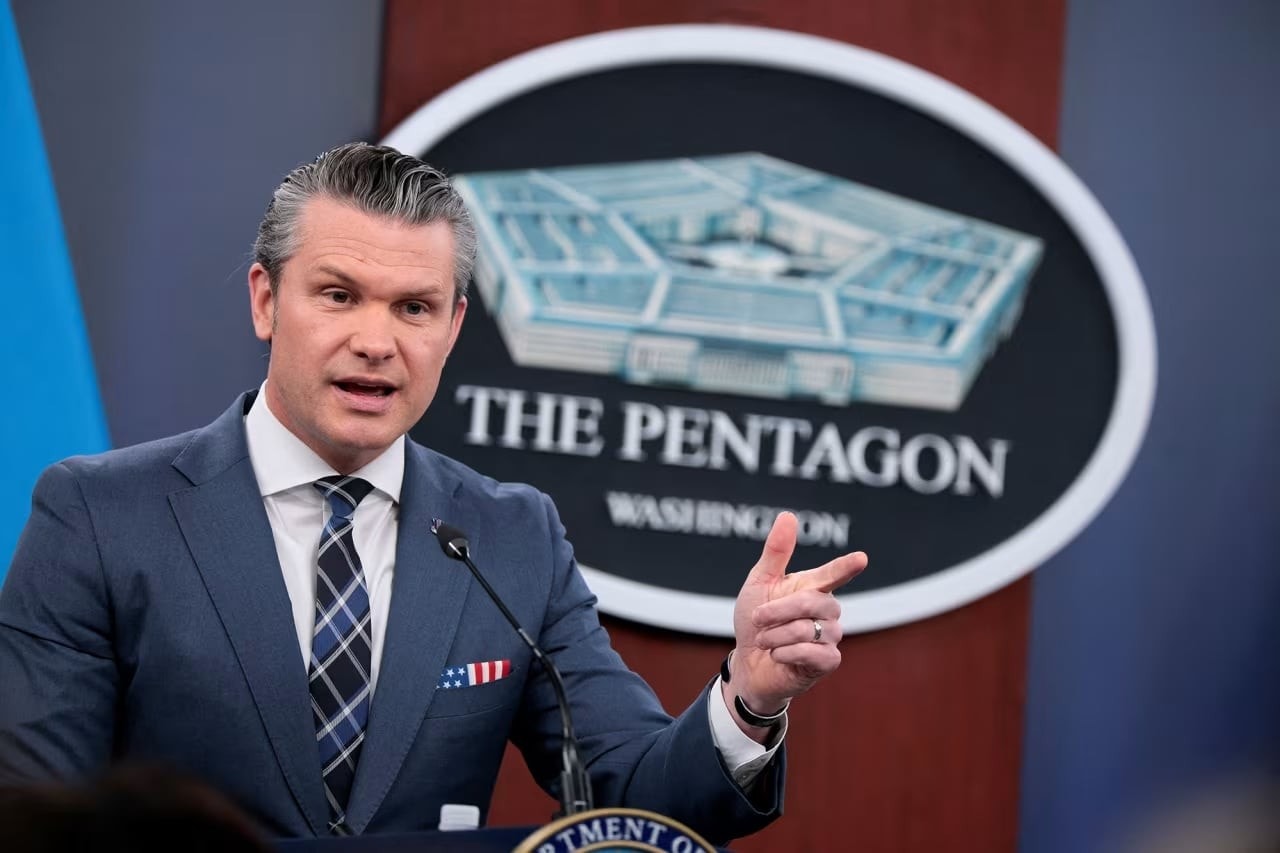
Efforts to neutralize Iran's missile capabilities.
Notably, when addressing the possibility of Iran attacking U.S. allies, Hegseth confirmed that Iran had entered the conflict with a large arsenal of weapons. This is why the U.S. military is focusing heavily on striking Tehran's ballistic missile capabilities. However, the U.S. side noted that Iran still retains certain combat capabilities.
In addition, the Pentagon has requested the White House to approve a plan to submit to Congress for more than $200 billion in funding for military operations in the region. This budget is intended to maintain current operations, replenish ammunition stockpiles, and ensure resources for future combat scenarios.
The goal is to prevent the nuclear program.
Regarding the nuclear issue, Secretary Hegseth affirmed President Donald Trump's position that he would not accept Iran approaching the capability to possess nuclear weapons. Despite previous intelligence assessments suggesting that Tehran's nuclear program had been compromised following last year's airstrikes, the US remains highly vigilant.
Furthermore, Hegseth accused Iran of exploiting past negotiations to buy time, while simultaneously increasing its production of missiles, drones (UAVs), and strengthening its defenses. He argued that Tehran had underestimated the Washington administration's ability to respond to these actions.
Countering information warfare and AI technology.
Amid Tehran's tightening internet control, the US Secretary of War stated that Washington is implementing countermeasures to ensure accurate information reaches the Iranian people. He emphasized the importance of breaking down information barriers established by the Iranian government.
More importantly, the U.S. is facing the challenge of increasing artificial intelligence (AI)-generated fake content. Distinguishing between real and fake videos and images online is becoming increasingly difficult, requiring authorities to develop methods for filtering and refuting misinformation to shape public perception of the war.


