
Quả Sơn Temple Festival - The cultural origin of the Bạch Ngọc region.
Quả Sơn Temple is located in Hamlet 6, Bồi Sơn Commune, Đô Lương District (now Bạch Ngọc Commune), Nghệ An Province. Historically, this was a sacred area belonging to Bạch Đường Commune, Bạch Ngọc Township, Nam Đường District, Nghệ An Province. The temple is traditionally considered one of the four most sacred and largest temples in Nghệ An, ranked by the locals as: "First Cờn, second Quả, third Bạch Mã, fourth Chiêu Trưng".
Not only famous for its magnificent architecture, artistic value, and sacredness, Quả Sơn Temple is also a place of worship for Uy Minh Vương Lý Nhật Quang - the governor of Nghệ An under the Lý dynasty, who made many contributions to the construction and development of Nghệ An and the protection of the Đại Việt national borders.
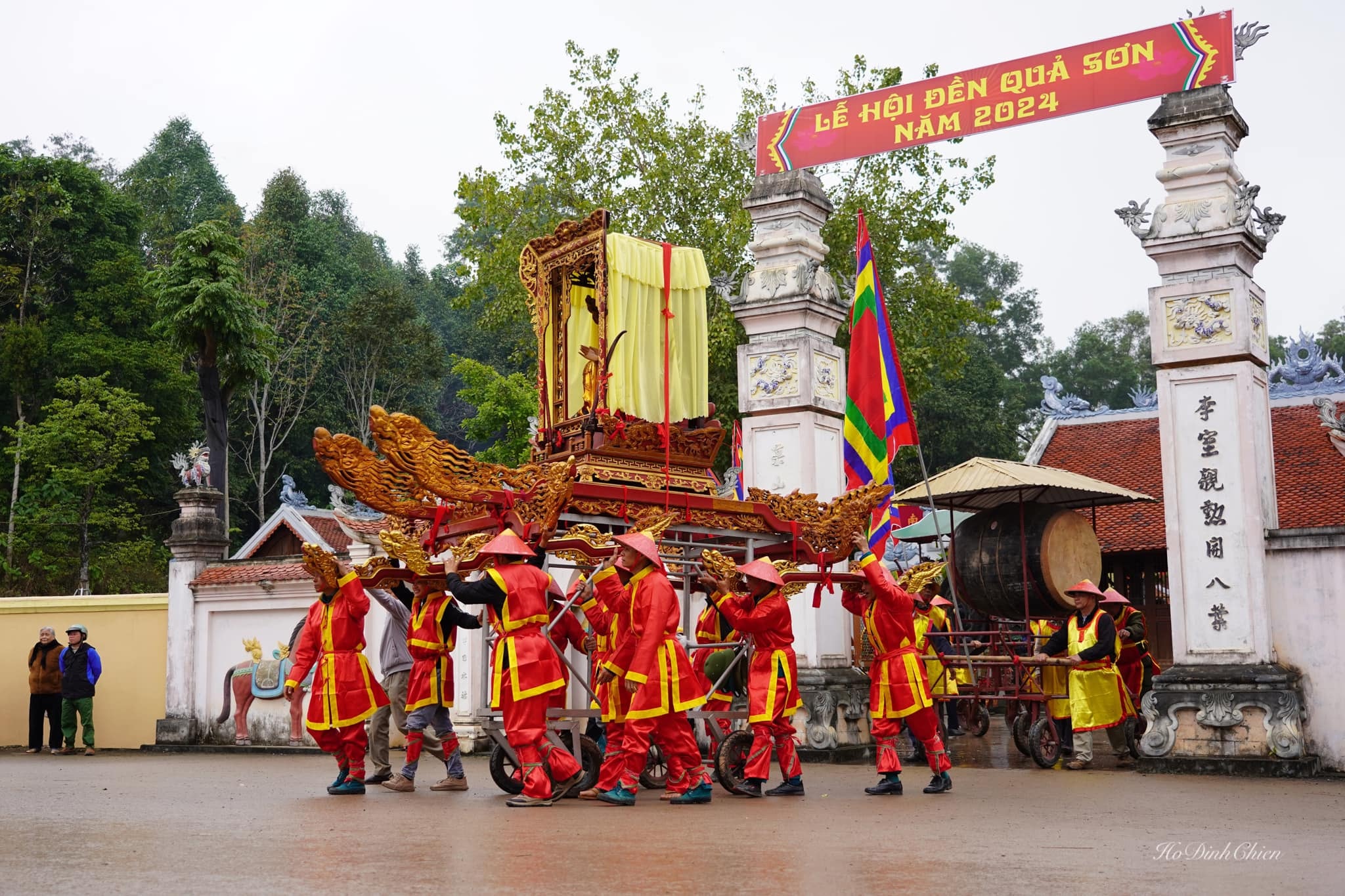
According to the historical records of Quả Sơn Temple, Lý Nhật Quang was the eighth son of King Lý Thái Tổ. In 1039, he was appointed by the court to Nghệ An to oversee tax collection. In November 1041, he was appointed Governor of Nghệ An. During his reign, Uy Minh Vương implemented many reforms in the economy, politics, and culture, contributing to transforming Nghệ An from a remote region into a vital frontier and a key strategic location for the Đại Việt nation. To commemorate his great contributions, the people of Nghệ An have erected numerous temples and shrines, among which Quả Sơn Temple is considered the largest.
According to the historical records of Quả Sơn Temple, Lý Nhật Quang was the eighth son of King Lý Thái Tổ. In 1039, he was appointed by the court to Nghệ An to oversee tax collection. In November 1041, he was appointed Governor of Nghệ An. During his reign, Uy Minh Vương implemented many reforms in the economy, politics, and culture, contributing to transforming Nghệ An from a remote region into a vital frontier and a key strategic location for the Đại Việt nation. To commemorate his great contributions, the people of Nghệ An have erected numerous temples and shrines, among which Quả Sơn Temple is considered the largest.
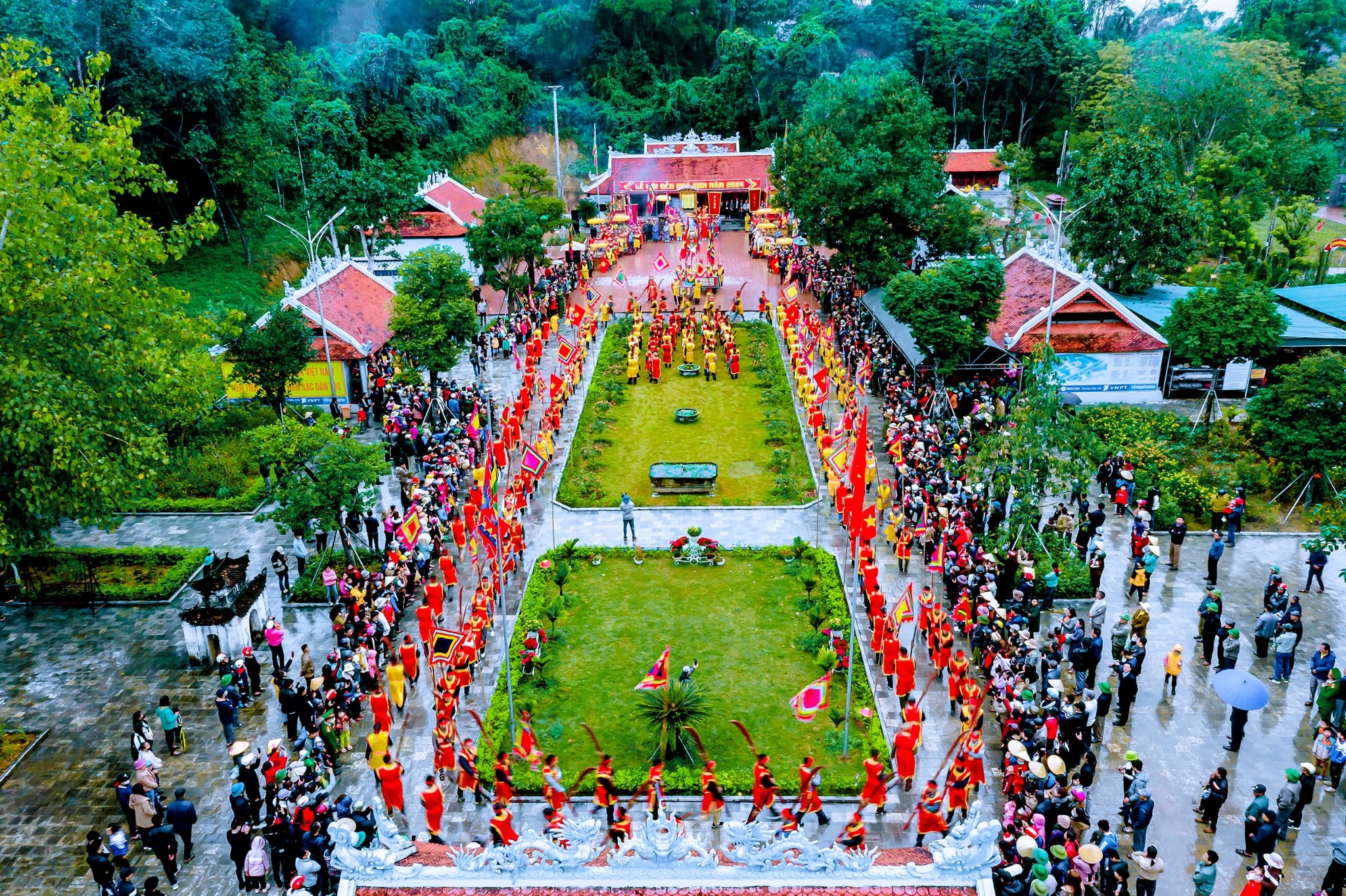
The Quả Sơn Temple historical site is an ancient architectural complex, including the ceremonial gate, horse stable, stele house, upper, middle, and lower halls, left and right wings, and the tomb of Uy Minh Vương. The complex is situated on a spacious, picturesque site, connected to the historical sites of seven ancient villages in the area, such as Nhân Bồi communal house, Tập Phúc communal house, Phúc Hậu communal house, Nhân Trung communal house, Trạch Thanh communal house, Bà Bụt pagoda, etc., forming a self-contained cultural and religious space with close ties in the festival cycle.
Every year, the Quả Sơn Temple Festival is held from the 19th to the 21st of the first lunar month, attracting tens of thousands of visitors from all over and a large number of local people. The festival consists of two main parts: the ceremonial part and the festive part.
The ceremonial part includes traditional rituals such as: the Opening Ceremony, the Announcement Ceremony, the Main Sacrifice Ceremony, the Procession Ceremony, the Thanksgiving Ceremony to the Goddess, and the Thanksgiving Ceremony. The Opening Ceremony and the Announcement Ceremony are held on the morning and evening of the 19th day of the first lunar month. The Main Sacrifice Ceremony, also known as the "spirit possession" ceremony, takes place at midnight on the 19th to the morning of the 20th day of the first lunar month. This ceremony involves carrying the statue of Uy Minh Vương Lý Nhật Quang and other deities onto a palanquin, in preparation for the procession the following morning.
The highlight of the festival is the "Turning of the Army" ritual, which takes place early in the morning of the 20th day of the first lunar month. This unique ceremony demonstrates the spirit of unity and the authority of Uy Minh Vuong. The army is selected from strong young men in the villages, divided into two teams: "regular troops" and "militia," fully equipped with flags, banners, canopies, chariots, horses, uniforms, and weapons. When the drum signal sounds, the two left and right wings move simultaneously, creating clockwise and counterclockwise circles around the temple grounds in a heroic atmosphere, accompanied by the resounding drums and gongs, attracting the cheers of a large crowd of locals and tourists. The turning of the army ritual concludes with the procession of the divine palanquin from Quả Sơn Temple to Bà Bụt Pagoda.
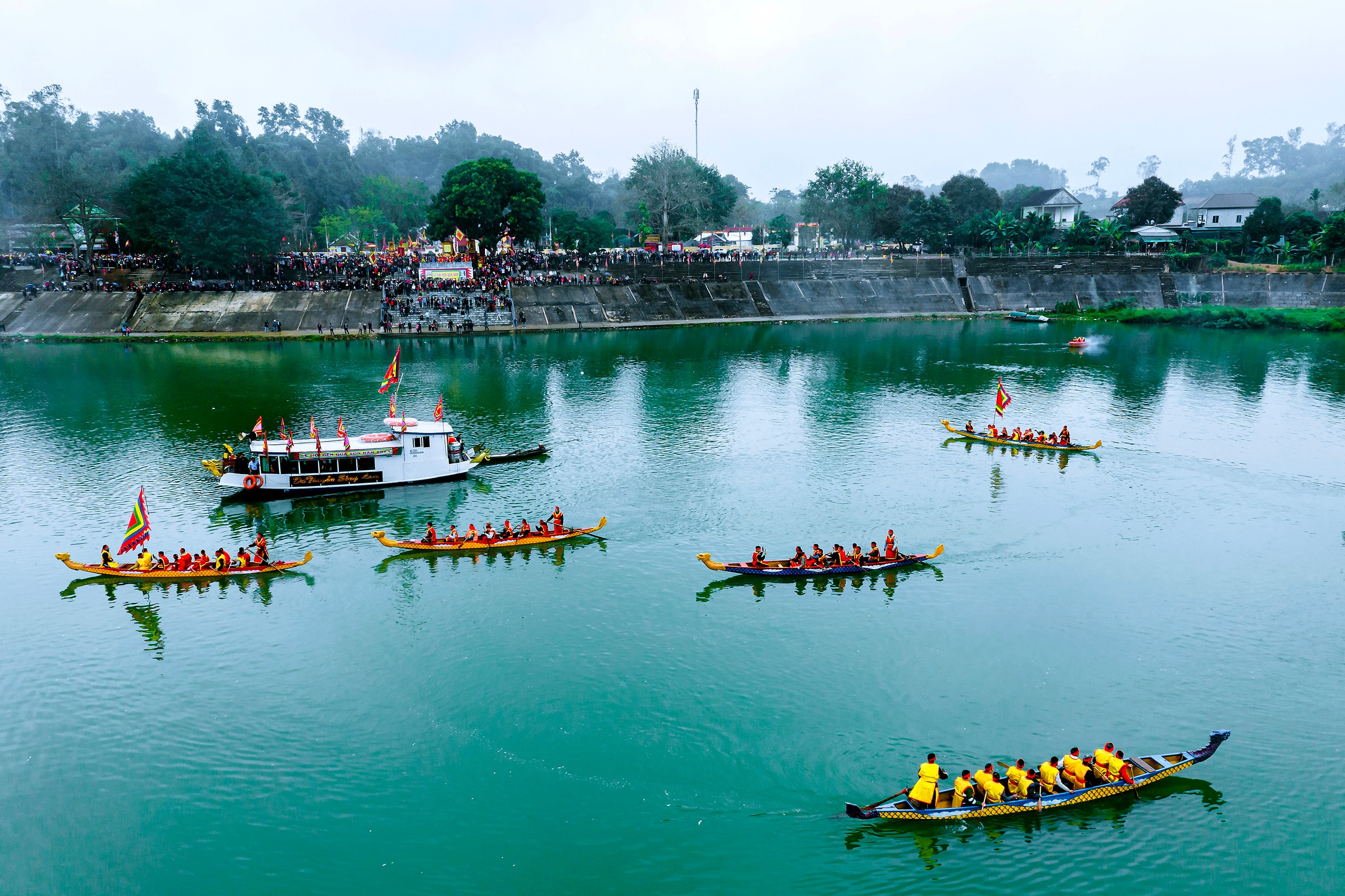
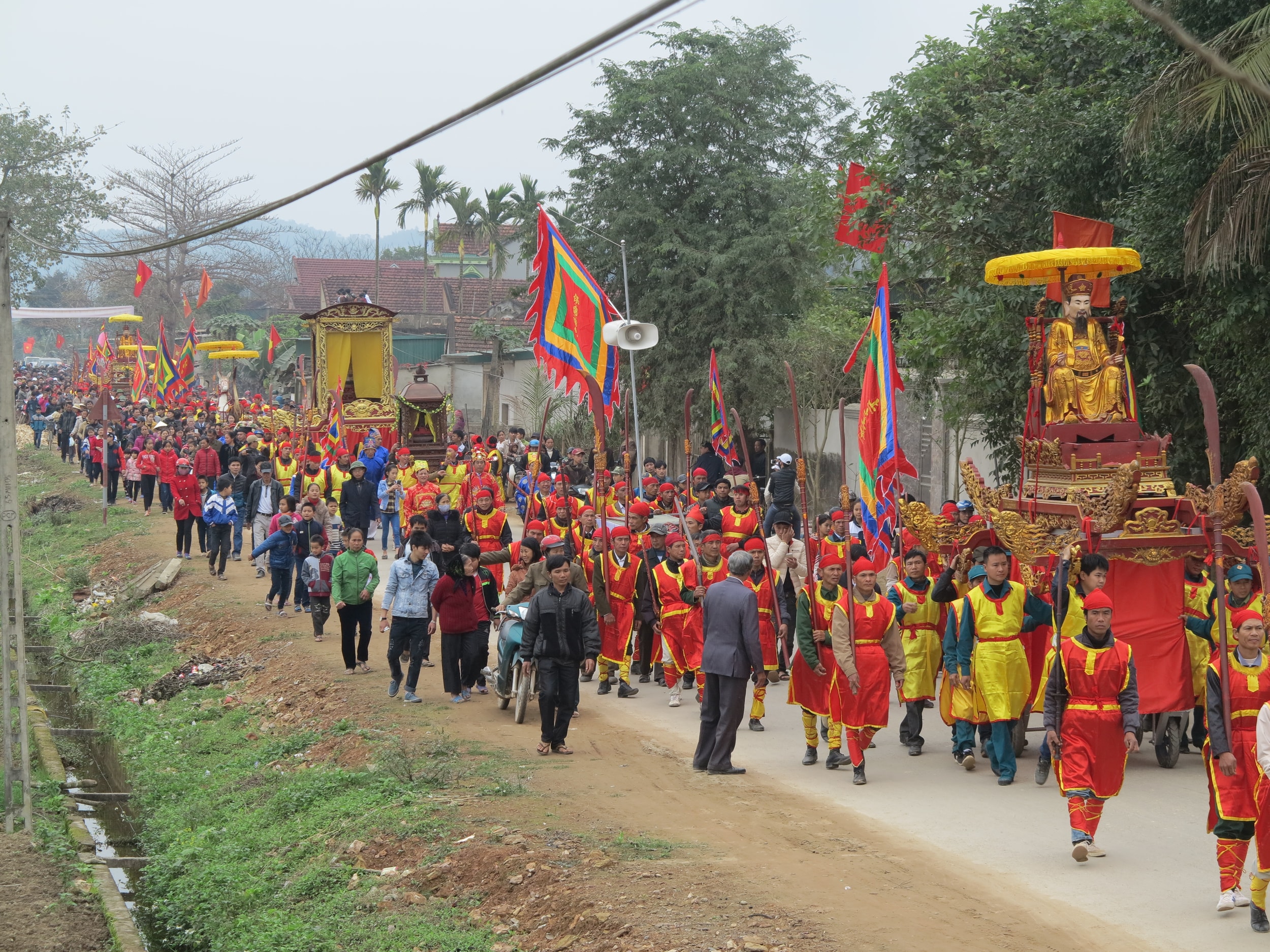
The procession was organized on a grand scale, complete with ceremonial flags, five-colored banners, canopies, musical instruments, ceremonial objects, and the sacred palanquin. Leading the procession was the five-colored banner bearers, followed by the sacred animals, palanquins, incense altars, and the Uy Minh Vuong dragon pavilion. Parallel to the land procession was a water procession on the Lam River, with elaborately decorated dragon boats recreating the scene of the Saint reviewing his naval forces.
When the procession reached villages with historical sites such as Nhan Boi Pagoda, Tap Phuc Temple, Phuc Hau Temple, Nhan Trung Temple, and Trach Thanh Temple, the palanquin carrying the Holy Saint and other deities stopped so that officials, dignitaries, and local people could offer prayers of thanksgiving. Around noon, the procession by water and land converged at Ba But Pagoda to hold a thanksgiving ceremony, commemorating the Goddess of Mercy, who is said to have helped King Uy Minh Ly Nhat Quang. Afterwards, the procession continued with a military parade and the return of the deities to Qua Son Temple, concluding the festival around the beginning of the Rooster hour with a solemn enthronement ceremony.
Besides traditional rituals, during the festival days, visitors can also immerse themselves in many folk games such as swinging, cockfighting, wrestling, tug-of-war, etc., bearing the strong imprint of history and cultural identity of the semi-mountainous region. In particular, the ritual of the army's toss and the water procession not only have spiritual significance but are also forms of folk performance, recreating the image of King Uy Minh Ly Nhat Quang training his troops, fighting invaders, and expanding the territory of Dai Viet nearly a millennium ago.
The Quả Sơn Temple Festival is a typical traditional festival, embodying many unique historical and cultural values, reflecting the national principle of "drinking water, remembering the source." It is not only an occasion to commemorate the contributions of our ancestors but also a space for preserving, maintaining, and promoting the distinctive folk cultural values of the Đô Lương region.
In the face of the changes of modern social life, the preservation and promotion of the cultural heritage of the Quả Sơn Temple Festival is receiving attention from the government and people of Nghe An province in general, and the locality in particular, in order to ensure that these precious traditional values continue to be passed down and endure in the flow of national culture.


